

What to Wear in Bergamo in March: Packing Tips & Outfit Ideas
March in Bergamo brings mild days, rain showers, and cool winds in the upper town. Learn what to wear, from waterproof jackets to non-slip shoes.
On this page
Bergamo in March: the weather in numbers
Typical March conditions from 30 years of daily weather data, split into early, mid and late month so you can match them to your travel dates.
| Dates | Early Mar (1–10) | Mid Mar (11–20) | Late Mar (21–31) |
|---|---|---|---|
| Afternoon high | 11°C (52°F) | 14°C (57°F) | 14°C (57°F) |
| Night-time low | 0°C (32°F) | 2°C (35°F) | 3°C (37°F) |
| Feels like (afternoon) | 8°C (47°F) | 11°C (52°F) | 11°C (53°F) |
| Range of afternoon highs | 6–15°C | 9–18°C | 9–18°C |
| Days with rain | 4 in 10 days | 3 in 10 days | 4 in 10 days |
| Days with snow | 2 in 10 days | 1 in 10 days | 1 in 10 days |
| Afternoon humidity | 52% | 48% | 50% |
| Average wind | 5 km/h | 6 km/h | 6 km/h |
| Daylight | 11.1 h | 11.6 h | 12.2 h |
What this means for your suitcase
- Cool days: a warm sweater and a proper jacket — think wool or a light insulated coat.
- Evenings run about 11°C (20°F) cooler than afternoons — carry a layer for after sunset.
- Snow falls on about 1 in 10 days — waterproof boots with good grip.
- Showers on roughly 3 in 10 days — a packable rain jacket or compact umbrella.
- Day-to-day swings: afternoon highs range from about 8°C to 18°C, so pack for both.
Travelling on specific dates? Use our What to Wear Planner for the weather, outfits and a packing list for your exact days in Bergamo.
Averages for 1991-2020, modelled from Copernicus ERA5-Land and ERA5 reanalysis via Open-Meteo open data (CC BY 4.0), adjusted to Bergamo's elevation. Modelled afternoon highs can read 1–2°C below airport weather-station records.
Bergamo in March is a city of contrasts: the lowland Bassa begins to feel springlike, while the hilltop Città Alta remains warier of winter. Rain showers are a regular companion, and warm afternoons can turn into chilly evenings within an hour. Packing for this transition means prioritizing flexibility over heavy winter gear.
The key is a three-layer system that you can adjust through the day. A waterproof outer shell, a mid-layer for warmth, and a breathable base will see you through most weather. Good footwear matters just as much: the city's cobblestones become slippery when wet, and you'll be walking far more than you expect.
This guide covers historical climate tendencies, what to wear in each part of town, and a compact packing list for a week. We'll also flag what to leave behind and how to check the forecast before you go.
Bergamo's March Climate: Averages, Rain, and the Alta-Bassa Divide
According to 1991–2020 climatological averages from Climates to Travel, Bergamo in March typically sees minimum temperatures around 4.4°C (39.9°F) and maximums around 14.4°C (57.9°F), with a mean of 9.4°C (48.9°F). Precipitation averages 70 mm over about 7 days, and the city gets roughly 4.5 hours of sunshine per day. These are historical norms, not a forecast for any specific March.
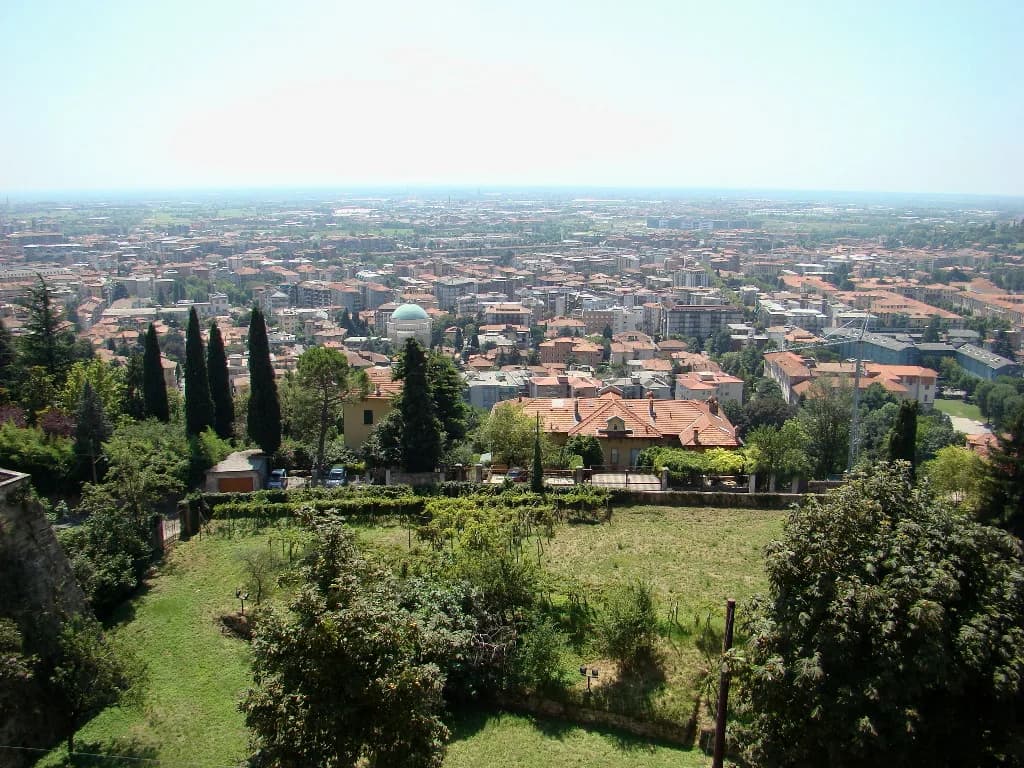
The upper town, Città Alta, sits at a higher elevation than the lower Bassa, and it tends to be windier and cooler, especially in March. Even on a mild day, the breeze through the historic lanes can cut through a light jacket. You'll often experience a temperature difference of a few degrees between the two areas, so it's wise to be prepared for both.
Rain is a defining feature of March. Showers can be brief but intense, and the cobblestones in the Città Alta become slick. A compact umbrella and a waterproof jacket are non-negotiable, and you'll want shoes that provide grip on wet stone.
The Three-Layer Foundation: Base, Mid, and Outer
Think of your outfit as a customizable system. Start with a breathable base layer: a long-sleeve cotton or merino top works well under a sweater. Merino wool is an excellent choice because it regulates temperature and resists odor, making it ideal for multi-day travel.
Your mid-layer provides the insulation. A lightweight sweater, cardigan, or fleece can be added or removed as temperatures shift. For a smarter look, Italian style favors knits in muted tones like charcoal, navy, or olive. Avoid bulky sweaters that are hard to pack; a fine-gauge knit is more versatile.
The outer layer is your shield against rain and wind. A waterproof jacket with a hood is essential—pack one that is breathable to avoid overheating during uphill walks. If you prefer a more polished look, a trench coat with a water-repellent finish can work, but always check that it's genuinely waterproof, not just shower-resistant.
Footwear for Cobblestones: Waterproof, Non-Slip, and Comfortable
Your shoes will make or break your trip. Cobblestones are uneven, and when wet they become treacherously slippery. Look for shoes with a rubber sole and good tread; leather-soled shoes or smooth sneakers will leave you sliding.
Waterproof ankle boots are your best bet for March. They keep your feet dry during showers, provide ankle support on uneven ground, and pair well with both jeans and trousers. If you prefer sneakers, choose a pair with a water-resistant upper and a grippy outsole—style matters less than safety.
Dressing for the Città Alta: Windier and Cooler Conditions
When you venture up to the Città Alta, expect a noticeable chill from the wind. Even if the Bassa feels mild, the upper town can be several degrees cooler. Add an extra mid-layer, and keep your scarf and gloves accessible—they make a big difference in comfort.
A practical outfit for exploring the historic center might include a thermal base, a merino sweater, and a waterproof shell. Pair that with dark jeans or trousers and ankle boots. This combination adapts easily to moving in and out of churches, museums, and cafés, where heating can be sporadic.
Dressing for the Città Bassa: Milder but Still Rainy
Down in the Bassa, the weather is generally a touch milder, and you might see more locals shedding their coats on sunny afternoons. However, rain is just as likely, so your waterproof layers should stay close at hand. A light jacket, a scarf, and comfortable walking shoes will serve you well here.
In the lower town, you'll find broad streets and modern pavements, so you can get away with less rugged footwear. Still, a non-slip sole is wise, and closed-toe shoes are more appropriate than sandals for March. You can be a bit more fashion-forward, but layers remain the rule.
A Week in March: Capsule Outfit Combinations
For a seven-day trip, aim for a capsule wardrobe that mixes and matches. Bring 3–4 breathable tops, 2–3 sweaters or cardigans, 2 pairs of jeans or dark trousers, and 1–2 dresses or nicer shirts for evenings. Add a scarf for warmth and style, and you have the foundation for countless outfits.
Stick to a muted color palette—dark blues, grays, blacks, and earth tones. This not only looks effortlessly chic but also hides the occasional rain splatter. Bright neon colors and athletic wear will mark you as a tourist; Italian style is all about understated elegance.
Plan for laundry: you can re-wear jeans and sweaters multiple times, so don't overpack. Bring enough base layers and socks to last the week, but you can always hand-wash in a sink if needed. A scarf can double as a shawl for cooler evenings or for covering your shoulders when visiting religious sites.
What to Leave Behind: Items That Won't Work in March
Leave the high heels at home—they are a hazard on cobblestones, and you'll quickly regret them. Similarly, white sneakers will show dirt and water spots almost immediately; dark leather or waterproof options are far more practical. Skip heavy winter coats that take up suitcase space; layers are more effective.
Summer clothes, such as shorts and sandals, are out of place in March. Avoid packing sleeveless blouses or dresses without tights; the weather will rarely be warm enough unless you hit an unusually mild spell. Also, leave behind any clothing with loud prints or logos—you'll stand out in a way that screams tourist.
You'll rarely need formalwear unless you have a special occasion planned, so a smart casual outfit will suffice. A light packable daypack is more useful than a large handbag, especially when you're climbing to the Città Alta.
Before You Go: Check the Forecast and Adjust Layers
Because March weather in Bergamo can vary from year to year—sometimes feeling more like winter, sometimes like spring—check the actual forecast a few days before departure. Reliable sources like the Italian national weather service or major meteorological websites will give you day-by-day temperatures and rain probability. Use that information to fine-tune your layers.
If the forecast shows a colder-than-usual spell, you might add an extra mid-layer or a packable down vest. Conversely, if it's looking milder, you can swap a heavy sweater for a lighter cardigan. The beauty of layering is that it provides a buffer for unexpected changes.
Plan Your Visit
Packing for Bergamo in March is all about preparation for variability. A waterproof jacket, non-slip footwear, and a well-chosen mix of layers will let you enjoy both the historic Città Alta and the modern Bassa without a second thought. You'll be ready for rain, wind, and those first warm rays of spring.
For more comprehensive guidance on what to bring throughout the year, consult the Bergamo packing list, and if you're traveling earlier in the season, you might also check what to wear in Bergamo in February or what to wear in Bergamo in April for a sense of how the climate shifts. Safe travels!
Frequently Asked Questions
Do I need an umbrella in Bergamo in March?
Yes, a compact umbrella is highly recommended. March is a rainy month in Bergamo, with precipitation expected on about one in four days on average. Rain showers can be sudden, so an umbrella—along with a waterproof jacket—is a smart addition to your daypack.
Are jeans okay to wear in Bergamo in March?
Yes, jeans are perfectly acceptable and worn by locals. Choose darker washes that look more polished and don't show stains easily. Pair them with layers and comfortable footwear for the best experience.
How should I layer my clothing for Bergamo's weather?
Start with a breathable base layer, add a mid-layer like a sweater or fleece, and finish with a waterproof outer shell. This way you can add or remove layers as temperatures fluctuate, especially when moving between the Città Alta and Bassa.
What type of shoes are best for Bergamo's cobblestones?
The best shoes have grippy rubber soles and provide good ankle support. Waterproof ankle boots are ideal, and dark-colored leather sneakers (waterproofed) are a stylish alternative. Avoid high heels and smooth-soled shoes.
Sources
Free: The Ultimate Packing Cheat Sheet
A carry-on capsule wardrobe, the complete packing checklist, layering made simple, and what to wear by season — one printable page you'll use on every trip.
You might also like


Continue reading
More guides you'll find useful


