
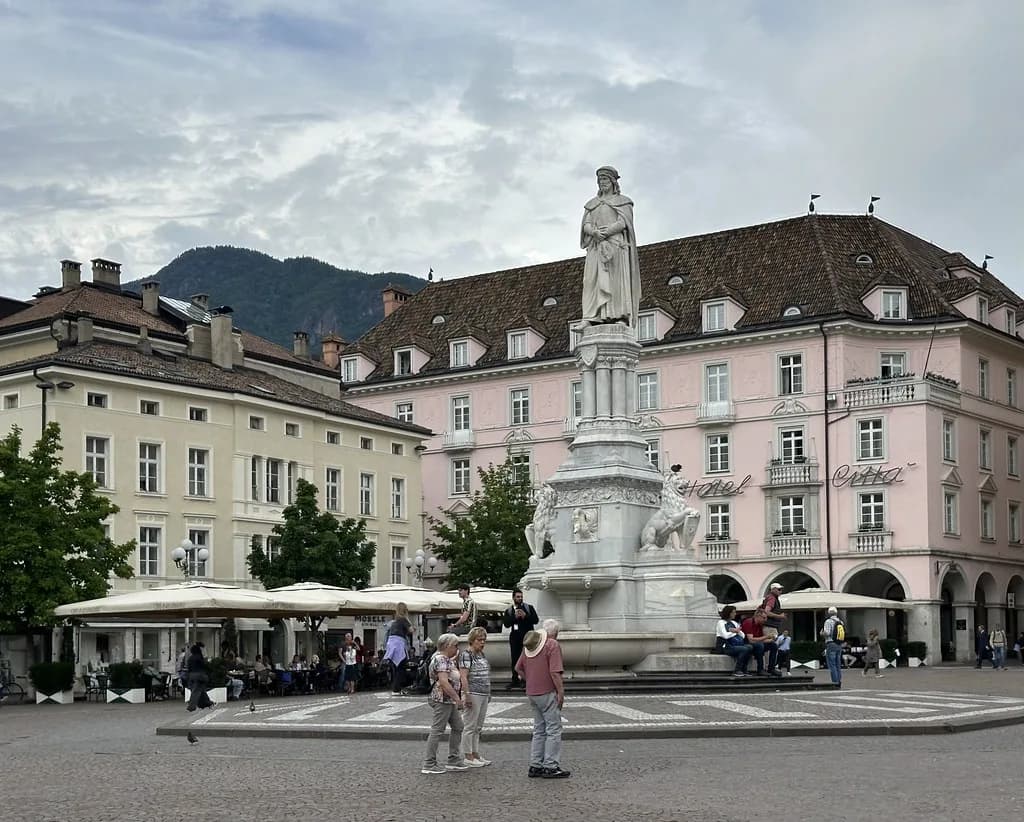
What to Wear in Bolzano in November: Layering, Footwear & Packing Tips
Bolzano in November is cold and humid, with highs near 5°C. Learn what to pack, how to layer, and which footwear handles wet cobblestones and Dolomites day trips.
On this page
Bolzano in November: the weather in numbers
Typical November conditions from 30 years of daily weather data, split into early, mid and late month so you can match them to your travel dates.
| Dates | Early Nov (1–10) | Mid Nov (11–20) | Late Nov (21–30) |
|---|---|---|---|
| Afternoon high | 14°C (58°F) | 12°C (53°F) | 10°C (50°F) |
| Night-time low | 7°C (45°F) | 4°C (39°F) | 3°C (37°F) |
| Feels like (afternoon) | 12°C (54°F) | 9°C (48°F) | 7°C (45°F) |
| Range of afternoon highs | 10–18°C | 7–16°C | 6–14°C |
| Days with rain | 5 in 10 days | 4 in 10 days | 4 in 10 days |
| Days with snow | 1 in 10 days | 2 in 10 days | 2 in 10 days |
| Afternoon humidity | 49% | 45% | 44% |
| Average wind | 3 km/h | 3 km/h | 3 km/h |
| Daylight | 9.6 h | 9.1 h | 8.8 h |
What this means for your suitcase
- Cool days: a warm sweater and a proper jacket — think wool or a light insulated coat.
- Snow falls on about 1 in 10 days — waterproof boots with good grip.
- Rain on about 4 in 10 days — a waterproof jacket and water-resistant shoes.
- Day-to-day swings: afternoon highs range from about 7°C to 17°C, so pack for both.
Travelling on specific dates? Use our What to Wear Planner for the weather, outfits and a packing list for your exact days in Bolzano.
Averages for 1991-2020, modelled from Copernicus ERA5-Land and ERA5 reanalysis via Open-Meteo open data (CC BY 4.0), adjusted to Bolzano's elevation. Modelled afternoon highs can read 1–2°C below airport weather-station records.
Bolzano in November sits in an awkward in-between season. October’s lingering mild afternoons are gone, while December’s festive lights and holiday markets haven’t fully arrived. The result is a cold, humid, and often foggy city where dressing well means planning for temperature swings between morning and afternoon.
The typical temperature range in November is about -3°C to 5°C (27–41°F), with high humidity and short daylight hours, according to historical data summarized on Wanderlog. The air feels damp, and the sun sets early, so your outfits need to work from a chilly morning walk to a cozy dinner without requiring a trip back to the hotel.
This guide focuses on what to wear: how to layer, which fabrics and footwear to choose, and how to adapt your capsule for day trips into the Dolomites or a visit to the South Tyrol Museum of Archaeology, home of Ötzi the Iceman. For a full overview of what to bring, check the Bolzano packing list.
Bolzano’s November Climate
November in Bolzano is defined by humid cold and persistent fog in the valleys, with a high chance of rain—the source notes a 31% chance of rain on a typical day. The average high reaches about 5°C (41°F) with overnight lows near -3°C (27°F), as Wanderlog notes. That dampness makes temperatures feel colder than the thermometer suggests, so windproof and water-resistant layers are more useful than a heavy coat alone.
Daylight runs short—sunrise around 7:14 AM and sunset near 4:43 PM for an average day, according to the same source—so most outdoor sightseeing happens in low-angle light and cooler temperatures. Fog often lingers in the Adige valley until late morning, burning off only partially. Dress for dampness and limited sun, not just the low numbers on a thermometer.
Compared with October, November is colder and damper; compared with December, the festive season hasn't begun, so you won’t need special-occasion attire for Christmas markets. Verifying the local forecast a week before your trip remains the best way to adjust your layers for any unusual warm or cold spell.
The Three-Layer System
A successful Bolzano November outfit starts with a warm base layer against your skin. Fine merino wool or a synthetic thermal top traps heat without adding bulk under sweaters, and it resists odors when you re-wear it across multiple days. Cotton turtlenecks also work as a base or a standalone on milder afternoons, but they lose insulation when damp.
The mid layer provides the visible insulation: wool or cashmere sweaters, cardigans, or a sweater-blazer that reads polished for city evenings. Chunky knits look great but take up suitcase space; a couple of fine-gauge wool crewnecks in versatile colors—navy, charcoal, or rust—cover both day and evening without bulk.
Your outer layer must handle cold and wet at once. A packable down or synthetic puffer is the best all-rounder for Bolzano and the Dolomites because it compresses easily and cuts the chill. A waterproof rain shell worn over an insulating mid layer offers similar weather protection when you expect steady rain, and it doubles as a windbreaker on foggy days.
Choosing Your Coat
In the city, a structured wool coat is a classic South Tyrolean look and works well for milder days, but it isn’t always enough for November’s damp cold or a mountain outing. Many travelers discuss bringing a lined trench or a quilted jacket on community forums, yet those garments may not withstand a heavy downpour. Your decision should hinge on your activity plan: purely urban sightseeing allows a wool coat plus scarf; a Dolomites drive demands something warmer and more weatherproof.
A packable puffer is your most versatile companion because it works for both city strolls and higher elevations, and it layers under a rain shell when conditions turn wet. If a trench coat is a favorite, treat it as a mid layer or a light option for dry days, not your primary defense—most are water-resistant at best and won’t keep you comfortable in a real November downpour.
Best Fabrics for Sweaters and Pants
Wool and cashmere are the standouts for sweaters in November because they provide real insulation without added bulk. Merino and lambswool are durable and easy to care for, while cashmere is softer and packs lighter but needs more careful handling. For trousers, wool and wool-blend pants offer warmth and breathability, and their weight holds up better against cold winds than cotton chinos.
Corduroy and ponte knits are excellent choices—they have the weight and texture to feel autumn-appropriate. Skinny jeans tucked into boots are practical because denim blocks wind well, but if you run cold, add thermal leggings underneath—just try them on at home first to ensure the fit works with your trousers.
Leave linen and thin cotton shirts at home; they don’t provide enough warmth for Bolzano’s chill and can leave you shivering on foggy days. And while dresses can still work, choose wool or cashmere knits and pair them with opaque tights or thermal leggings underneath.
Footwear: Waterproof and Grip
Wet cobblestones are a fact of life in Bolzano in November, so your footwear choice can make or break your trip. Comfortable, waterproof ankle boots with a non-slip sole are the single most important item you pack. They’ll keep your feet dry through puddles and light rain, and they transition well from the medieval arcades to a casual dinner.
If you’re planning a day trip into the Dolomites or even a short hike, waterproof hiking shoes or boots are worth the extra weight. Trails may be muddy or lightly snow-covered, and the same boots also handle city walking after you return. Avoid suede or fabric sneakers that soak through easily, and break in any new boots before you leave to prevent blisters.
For evenings, you can switch to low-heeled leather ankle boots or dressier shoes as long as you’re only walking short distances, but many travelers stick with their daytime boots to keep things simple. Carry a compact pair of foldable flats or loafers for indoor venues if you want to give your feet a break.
Accessories That Earn Their Place
Scarves, gloves, and hats are non-negotiable for Bolzano in November. A wool or cashmere scarf adds a layer of warmth around your neck and can be easily removed indoors, while insulated gloves and a beanie keep your extremities comfortable during long walks in the cold. Choose materials like merino or fleece that dry quickly if they get damp.
A compact travel umbrella is a wise addition because rain can be unpredictable, but note that the reliable solution is a water-resistant outer layer—an umbrella won’t help when the wind picks up. Sunglasses may still be useful on bright days, though the sun is generally low and weak. A reusable water bottle and a small daypack are practical for carrying layers you shed as the day warms.
Day Trips and Activities
If you plan to drive through the Dolomites or hike around the South Tyrol countryside, your packing needs to account for altitude and variable conditions. The key adjustments are sturdier footwear, an extra warm layer, and a waterproof shell. When you stop for views or a short walk, the air gets noticeably colder, so keep those layers accessible rather than buried in the boot.
A wine tour or a visit to a local farm may involve some outdoor time between tastings, but much of the experience is indoors and heated. Vertical dressing—light base, sweater, and a removable coat—lets you adapt without carrying bulky outerwear inside. For museum visits like the South Tyrol Museum of Archaeology, you’ll be mostly indoors, so your main challenge is managing the transition from the cold street to the heated lobby without overheating.
Evening Outfits
Evenings in Bolzano in November are cold and dark, so your dinner outfit needs to keep you warm even if the restaurant is a short walk away. A wool or cashmere sweater over trousers or a knit dress, paired with your daytime boots, works for casual dining and also for an evening at a cultural venue. Adding a blazer or structured cardigan elevates the look without needing an extra coat.
South Tyrolean style is generally understated and practical. You won’t need formal wear unless you’re attending a special event, and local preferences lean toward neutral, high-quality fabrics that fit well. For women, a cashmere sweater dress with opaque tights is an easy one-piece option; for men, a dark wool crewneck over a collared shirt reads polished and fits the region’s Alpine-modern vibe.
What Not to Bring
As tempting as they are for warmer trips, leave behind linen shirts, thin cotton tees, and any sandals or open-toe shoes. These items don’t provide enough warmth or protection against the damp cold. Similarly, a trench coat alone isn’t suitable for November in Bolzano—it might look stylish but won’t keep you warm in the humid chill or during a mountain drive. Skip bulky jeans that don’t allow for thermal base layers; instead, opt for stretchy or straight-leg styles that fit over leggings or thermal tights.
Packing Example: 5-Day Carry-On
If you’re spending five days in Bolzano—mixing city walks, a museum visit, and a day in the Dolomites—here’s a capsule that fits in a standard carry-on: two wool or cashmere sweaters, one thermal base layer set (top and leggings), one warm turtleneck, two pairs of wool-blend trousers or dark jeans, and a packable puffer as your main coat. Add a scarf, gloves, beanie, and two pairs of sturdy, waterproof ankle boots (wear one pair on the plane, pack the other if needed).
For a capsule that works on all days, choose a palette of neutrals—black, navy, gray, olive, or rust—so every top coordinates with every bottom. Include a cardigan or blazer for dressier evenings. A simple approach is to bring one warm jacket, one pair of boots, and layer everything else; you can rewear items multiple times when you’re layering, because the visible sweater is often the one that matters.
Before You Go
A few days before departure, check the local forecast for Bolzano and the Dolomites to understand whether you’ll face unusually cold snaps, rain, or sunshine. Adjust your layering system accordingly: if a warm spell is predicted, you can skip thermal bottoms; if snow is forecast, ensure your boots have good grip and consider adding a heavier mid layer. A quick forecast check helps fine-tune your capsule without overpacking.
Remember that historical climate data gives you a sense of what’s typical but not what you’ll actually experience on your specific dates. Verify current conditions closer to your trip, and always pack a water-resistant outer layer regardless of the forecast, given November’s tendency to surprise.
Plan Your Visit
Dressing for Bolzano in November comes down to three principles: layer for temperature swings, choose water-resistant footwear and outerwear, and prioritize wool over cotton. This approach keeps you comfortable both on wet cobblestones in town and on a misty Dolomites drive—without requiring a suitcase full of bulky items.
For more month-by-month guidance, see What to wear in Bolzano in January for colder winter dressing, or check the February guide if you’re planning a ski trip. If your itinerary extends beyond Bolzano, these same layering techniques work across northern Italy’s November chill.
Frequently Asked Questions
Can I wear jeans in Bolzano in November?
Yes, jeans are practical for Bolzano in November, especially during the day. Choose a thicker denim and consider wearing thermal leggings underneath for extra warmth. For dinners or more polished settings, wool trousers or ponte pants are a better match for the local style.
How do locals dress in Bolzano in November?
Locals favor practical, high-quality layers: wool coats or puffer jackets, knitwear, and sturdy boots. The style is understated and neutral, with an Alpine-modern edge. You won’t see flashy logos; instead, expect well-fitted, functional garments that handle the cold and wet.
Is a heavy coat necessary for Bolzano in November?
A heavy, down-filled coat is not strictly necessary, but a warm parka or puffer is a good idea if you easily feel cold. A layering system with a packable puffer and a waterproof shell can be more versatile than one heavy coat, letting you adapt to changing conditions and indoor heating.
What should I wear for a day trip to the Dolomites in November?
For the Dolomites, wear waterproof hiking boots, thermal base layers, a warm mid layer (wool or fleece), and a waterproof shell. Bring extra gloves, a hat, and a scarf, as temperatures drop with altitude. A small backpack to stow layers is essential.
Sources
Free: The Ultimate Packing Cheat Sheet
A carry-on capsule wardrobe, the complete packing checklist, layering made simple, and what to wear by season — one printable page you'll use on every trip.
You might also like


Continue reading
More guides you'll find useful


