
What to Wear in Hoi An in September: Rain-Ready Packing Guide
Plan what to wear in Hoi An in September with quick-dry outfits, rain-ready footwear, and respectful layers for temples and lantern evenings.
On this page
Hoi An in September: the weather in numbers
Typical September conditions from 30 years of daily weather data, split into early, mid and late month so you can match them to your travel dates.
| Dates | Early Sep (1–10) | Mid Sep (11–20) | Late Sep (21–30) |
|---|---|---|---|
| Afternoon high | 31°C (88°F) | 30°C (86°F) | 29°C (85°F) |
| Night-time low | 26°C (79°F) | 25°C (78°F) | 25°C (77°F) |
| Feels like (afternoon) | 36°C (97°F) | 35°C (94°F) | 33°C (92°F) |
| Range of afternoon highs | 29–34°C | 28–32°C | 27–31°C |
| Days with rain | 8 in 10 days | 8 in 10 days | 7 in 10 days |
| Afternoon humidity | 68% | 72% | 74% |
| Average wind | 6 km/h | 7 km/h | 8 km/h |
| Daylight | 12.2 h | 12.1 h | 11.9 h |
What this means for your suitcase
- Hot afternoons: loose, breathable fabrics like linen or cotton, short sleeves and a sun hat.
- Heavy downpours are common — quick-dry clothes and shoes or sandals that cope with puddles.
- Muggy air — moisture-wicking fabrics beat denim and heavy cotton.
Travelling on specific dates? Use our What to Wear Planner for the weather, outfits and a packing list for your exact days in Hoi An.
Averages for 1991-2020, modelled from Copernicus ERA5-Land and ERA5 reanalysis via Open-Meteo open data (CC BY 4.0), adjusted to Hoi An's elevation. Modelled afternoon highs can read 1–2°C below airport weather-station records.
September sits at the hinge between Hoi An's dry months and its wetter season, so the useful packing question is not what to wear on a single perfect day, but what to wear when a bright morning turns into a wet afternoon. Rainy-season outfit advice for Hoi An points to quick-dry tops, lightweight trousers, easy dresses and a light cardigan for cooler evenings, with rain protection and practical footwear as the core. Because that is a historical seasonal tendency rather than a forecast, recheck conditions for your own dates before you finalise your bag.
That single fact drives one controlling rule: choose fabric that dries rather than fabric that holds water. Cotton denim, heavy canvas and thick knits stay damp for hours in humid air, which makes an evening stroll or a second day of sightseeing genuinely uncomfortable. A quick-dry top, loose trousers or an easy dress, plus one packable rain layer, covers far more of September's moods than a larger, heavier wardrobe would.
The September Packing Logic in One Decision
If you only make one decision before packing, make it this: every item in your bag should either dry fast or keep water off you. Rainy-season outfit guidance for Hoi An points to quick-dry tops, lightweight trousers, easy dresses and a light cardigan for cooler evenings, alongside rain protection and practical footwear. Read that as an instruction about material rather than colour, and most other choices fall into place.
Apply the rule as a filter rather than a checklist. A linen shirt passes because it dries quickly and packs small; a heavy cotton sweatshirt fails because it soaks up humidity and stays clammy. Two quick-dry tops and one pair of loose trousers will out-perform a larger stack of heavier garments you cannot rotate when something gets wet.
The same logic extends to what you carry rather than wear. Rainy-season advice bundles a compact poncho or light rain jacket with an umbrella, a waterproof pouch and a dry bag so that electronics and documents stay dry alongside your clothing. That single grouping is worth planning as one step, because a rain shell that keeps you dry while your phone sits unprotected in a tote solves only half the problem.
If you want a fuller inventory built around the same rule, use the Hoi An packing list as a reference point and then trim it to September conditions. The goal is not to pack for every scenario, but to carry items that each do at least two jobs across a wet day.
What September Usually Feels Like
Hoi An's year divides into a dry stretch and a rainy stretch, and September is commonly described as the transition point into the wetter half. One travel source characterises August and September as the shift into the rainy season with light rain and cooler nights before heavier rain arrives later in the year. Treat that as a historical pattern, not a promise about your specific travel dates.
The practical consequence is variability within a single day rather than a washout week. Plan outfits that tolerate a warm, humid midday and a noticeably fresher evening without a full change of clothes. A light layer you can add after dark matters more than a heavier daytime outfit.
That is exactly why historical climate summaries should never be the last word. Before departure, check a current forecast for your dates and adjust quantities, especially how many dry layers you bring. A packing list tuned to the pattern still needs a final check against the actual week you are travelling.
Daytime Outfit Combinations for Old Town Walking
For walking the lanes of Hoi An Old Town, start with a breathable top and pair it with loose trousers, a midi skirt or a casual sundress. Source outfit guidance for casual Old Town walks suggests exactly this kind of breathable, easy-moving combination with comfortable sandals or sneakers. Loose cuts matter more than style here, because humid air and narrow, busy streets reward airflow over structure.
Add one light shawl or overshirt to the day bag rather than wearing it. It doubles as sun coverage at midday and as a modest layer if you step into a worship space, which removes the need to return to your hotel to change. This is an editorial suggestion for convenience, not a rule about how anyone must dress on the street.
Keep the outfit to light, cheerful colours if you plan photographs, since pale and bright tones read well against the town's yellow walls without absorbing heat. The trade-off is that light fabrics show rain spots sooner, so a quick-dry material matters more than the colour itself. If you are planning a mix of town and shore time, the same breathable layers work for a beach day, where a cover-up lets you move from sand into cafés without changing.
Footwear Trade-Offs for Wet Streets
Footwear is where September packing decisions get genuinely difficult, because grip, dry time and comfort pull in different directions. Rainy-season guides recommend waterproof sandals or slip-resistant shoes that handle wet streets, and specifically caution against slippery sandals and trailing clothing. The caution is about traction and manageability rather than brand or style.
The trade-off is straightforward. A shoe with a grippy sole and covered upper keeps feet stable on slick paving but takes longer to dry once soaked through; an open sandal dries almost instantly but offers less grip and less protection where lanes hold water. Many travellers solve this by bringing one pair of each and rotating, accepting that two pairs take more space than one.
Think about the surfaces you will actually meet. Old Town lanes, riverside paths and the routes out toward craft villages such as Tra Que and Thanh Ha can all be uneven or hold standing water after rain. A low, stable sole with visible tread is a more useful criterion than how a shoe looks in photographs.
One more practical point: shoes you can slip on and off easily repay their space at worship sites that ask visitors to remove footwear. That convenience is separate from the traction question, but it affects which pair you reach for on a day that mixes streets and temples.
Rain Kit That Fits in a Day Bag
The rain kit is the part of a September bag that earns its weight every time it is used, so build it as a compact set rather than scattering items between luggage and pockets. Rainy-season packing advice for Hoi An lists a compact poncho, a light rain jacket, an umbrella, a waterproof pouch and a dry bag for phone, passport copy, cash and camera gear. Choose between poncho and jacket rather than carrying both unless you expect long spells outdoors.
A poncho covers your day bag as well as your shoulders, which a fitted rain jacket does not, but it flaps in wind and is awkward on a bicycle. A light jacket is tidier for walking and easier to layer, yet it leaves your bag exposed unless it has its own cover. Pick based on whether your September days are mostly on foot in town or include cycling and boat time.
A small umbrella handles sudden showers on open streets but is useless on a crowded bridge or in a boat, which is why the pouch and dry bag matter independently of the shell. Keep the pouch for phone, cash and a passport copy, and the dry bag for anything electronic you cannot replace easily. Storing all three in one place means you never search for them while standing in the rain.
A compact day bag sized to hold these items plus a water bottle keeps the kit portable rather than burdensome. If it does not fit comfortably under a poncho, it is too large for a wet-season day.
Cooler Evenings and Lantern Hours
Evenings in Hoi An during the transition into the wetter season can feel noticeably fresher than the middle of the day, so one light layer belongs in the bag even on a warm morning. Rainy-season outfit guidance suggests a light cardigan or similar layer for cooler evenings alongside the quick-dry daytime pieces. Treat it as insurance rather than a second wardrobe.
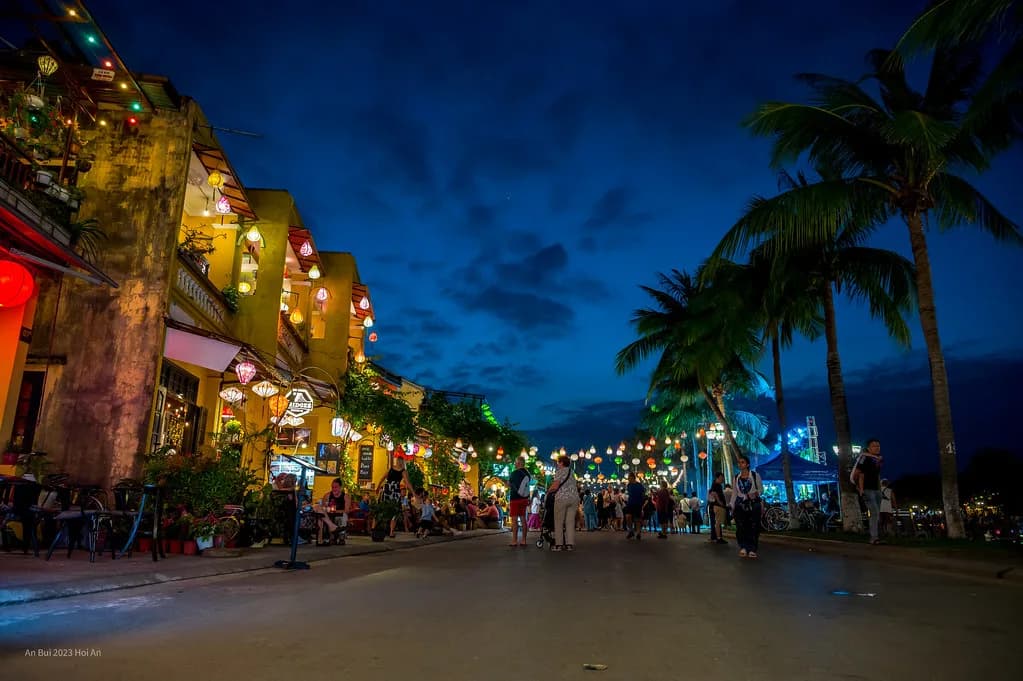
For lantern-lit walks along the Hoai River and short boat rides, choose something you can sit and move in comfortably. Outfit suggestions for lantern evenings and boat rides point to flowy dresses, linen trousers and relaxed smart-casual clothing with flat sandals or low wedges, plus a small crossbody bag. The reasoning is practical: you may walk, sit on a boat and continue to dinner in the same outfit.
Avoid anything tight or very short if a boat ride is on the plan, and avoid trailing hems that can catch on steps or soak up water from wet boards. A light layer that packs flat covers the temperature drop without adding bulk to the day bag.
Respectful Layers for Temples, Pagodas and Assembly Halls
Old Town is relaxed for casual walking, but its religious and worship-related spaces ask for more coverage. Guidance for temples, pagodas and heritage buildings suggests covering the shoulders, chest, back, midriff and knees or upper knees, with sleeved tops, long trousers, midi skirts or a light shawl. A separate Hoi An Old Town dress code reference describes similar coverage expectations at worship sites, including removing hats, sunglasses and rain cover before entering.
Some spaces are more relaxed than others, so the sensible approach is to carry rather than wear the modest layer. A shawl or long piece of fabric can be wrapped on when needed and removed afterwards, which keeps a casual walking outfit workable for the rest of the day. Easy-to-remove shoes are also useful where a site asks visitors to take footwear off.
Frame all of this as courtesy and site practice rather than a legal requirement. Rules vary by venue and can change, so check signage or an official site page if a particular visit matters to you. If you want the broader packing context for cultural stops, the Hoi An packing list covers coverage layers alongside the rest of the wardrobe.
Beach and Pool Days Near Hoi An
An Bang Beach and Cua Dai Beach remain part of many September trips, even though the month leans wetter. Swimwear is appropriate on the sand, but a cover-up, linen shirt or casual dress makes the return into town far easier than changing entirely. This is a comfort suggestion, not a statement about what is required anywhere.
Wet-season beach days need a slightly different bag from a dry-season one. A waterproof sandal or easy beach footwear handles sand and sudden rain better than fabric trainers, and a compact dry bag protects a phone between swims. Pack the cover-up at the top of the bag so you can pull it on without unpacking everything.
If the weather turns, the same day can shift to Old Town cafés and shops without a trip back to your room. That flexibility is the real argument for a cover-up and one dry layer rather than a dedicated beach outfit.
A Compact Three-Day Packing Example
For a three-day September trip, think in terms of items that each appear more than once rather than one outfit per day. A workable core is two quick-dry tops, one easy dress or a pair of loose trousers, one light evening layer, one rain shell, one compact poncho, one pair of grip sandals and one pair of covered shoes. Everything on that list either dries quickly, keeps rain off, or covers a coverage need.
The two-top approach works because one can dry while you wear the other, and a single light layer covers both evening cool and temple coverage. Choose the dress or the trousers based on your own plan, not both, unless you know you will want variety. Sandals and covered shoes cover the two footwear trade-offs described earlier without a third pair.
Laundry availability and your tolerance for hand-washing decide whether three days needs exactly this much or slightly less. Quick-dry fabric shrinks the required quantity because a rinsed top can be wearable again sooner. If your trip runs longer, add a second bottom rather than a second rain shell.
What to Leave at Home
Heavy denim, thick cotton and bulky knits are the first things to cut, because they hold moisture and take far too long to dry in humid air. Lightweight, breathable clothing is consistently recommended over thick, heavy fabrics for Hoi An, and the wetter shoulder weeks make that advice more relevant rather than less. One pair of jeans is rarely worth the space it occupies.
Leave trailing hems and long, loose skirts that drag, since rain guidance specifically warns against trailing clothing in wet conditions. Slippery flat sandals with smooth soles are another poor choice on slick lanes, however fashionable they look. And resist packing multiple pairs of shoes that will never fully dry between outings.
Formalwear is usually unnecessary unless you have a specific booking that calls for it, and beachwear alone is not a town outfit. If evening plans are casual dinners and riverside walks, the light layer already in your bag does the job.
Before You Go: Check the Forecast, Not Just the Season
A seasonal pattern tells you how to pack; a forecast tells you how much to pack. Before departure, check conditions for your actual travel dates and adjust the number of dry layers, socks and footwear accordingly. If a wetter stretch is expected, an extra quick-dry top is more useful than an extra pair of shoes.
The same check applies on the ground, since a September day in Hoi An can change character between morning and evening. Look at the forecast each morning and decide whether the poncho or the light jacket is the better carry for that day. Local advice to check the weather before going out reflects how quickly conditions can shift.
If your dates sit at the very start of the month, remember you are near the boundary between two seasonal patterns, so conditions can resemble either one. Pack for adaptability and let the forecast fill in the rest.
Plan Your Visit
Packing for Hoi An in September comes down to material choices rather than a long list. Build the bag around quick-dry fabric and one packable rain layer, then add footwear that grips wet lanes and a covered option for heritage sites. If you are also considering the cooler, drier end of the year for a future trip, what to wear in Hoi An in January follows a different logic and is worth reading separately.
Then close the loop with a forecast check for your specific dates, because a historical tendency toward lighter rain and cooler nights is context rather than a prediction. Adjust quantities, not principles: fewer, faster-drying items will serve you better than a heavy bag you cannot rotate. Pack light, keep the rain kit together, and the month's variability stops being a problem.
Frequently Asked Questions
Is September a good time to visit Hoi An?
September marks the transition into the wetter half of the year, so you should expect a mix rather than consistently dry days. Many travellers find the softer light and cooler evenings pleasant, and the rain is often showery rather than constant. The key is to pack for changeable conditions and check the forecast for your dates before you go.
What should I pack for Hoi An in September?
Prioritise quick-dry tops, lightweight trousers or an easy dress, and one light layer for cooler evenings. Add a compact poncho or light rain jacket, a small umbrella, a waterproof pouch and a dry bag for phone, cash and documents. Finish with one pair of grip sandals and one pair of covered shoes so you can handle both wet streets and sites that ask you to remove footwear.
Does it rain a lot in Hoi An in September?
September is generally described as the start of the rainy season, with lighter rain arriving before the heavier months later in the year. That is a historical seasonal pattern, not a forecast, and the amount varies from year to year. Check a current forecast close to departure rather than relying on a general monthly description.
What shoes are best for Hoi An in September?
Look for grip and quick drying rather than a specific brand. Waterproof sandals or slip-resistant shoes are commonly recommended for wet streets, while smooth-soled sandals are worth leaving behind because they offer little traction. Bringing one pair of each lets you rotate so a soaked pair has time to dry.
What should I wear to temples and heritage sites in Hoi An Old Town?
Coverage is the practical guide: shoulders, chest, back, midriff and knees or upper knees. A sleeved top with long trousers, a midi skirt or a below-knee dress works well, and a light shawl can be wrapped on for an unexpected stop. Treat this as respectful practice and site guidance rather than a legal rule, and check signage at the venue because expectations vary.
Do I need warmer clothes for September evenings in Hoi An?
Nights can feel cooler than the daytime hours during this transition period, so one light cardigan or layer is worth carrying. It should pack flat and double as coverage if you enter a worship space. If you are out on the river or on a boat after dark, the layer is more useful than during a midday walk.
What should I leave at home when packing for Hoi An in September?
Leave heavy denim, thick cotton, bulky knits and trailing hems, because they hold moisture and are awkward in wet conditions. Skip smooth-soled sandals with poor grip and extra pairs of shoes that will not dry between outings. Formalwear is usually unnecessary unless you have a booking that specifically requires it.
What should I keep dry in my day bag?
Phone, cash, a passport copy and any camera gear are the priority, which is why a waterproof pouch and a dry bag belong in the same kit as your rain layer. Keeping them together means you can reach everything quickly when a shower starts. If you carry the pouch and bag packed in one place, nothing important sits loose in a tote.
Sources
Free: The Ultimate Packing Cheat Sheet
A carry-on capsule wardrobe, the complete packing checklist, layering made simple, and what to wear by season — one printable page you'll use on every trip.
You might also like


Continue reading
More guides you'll find useful


