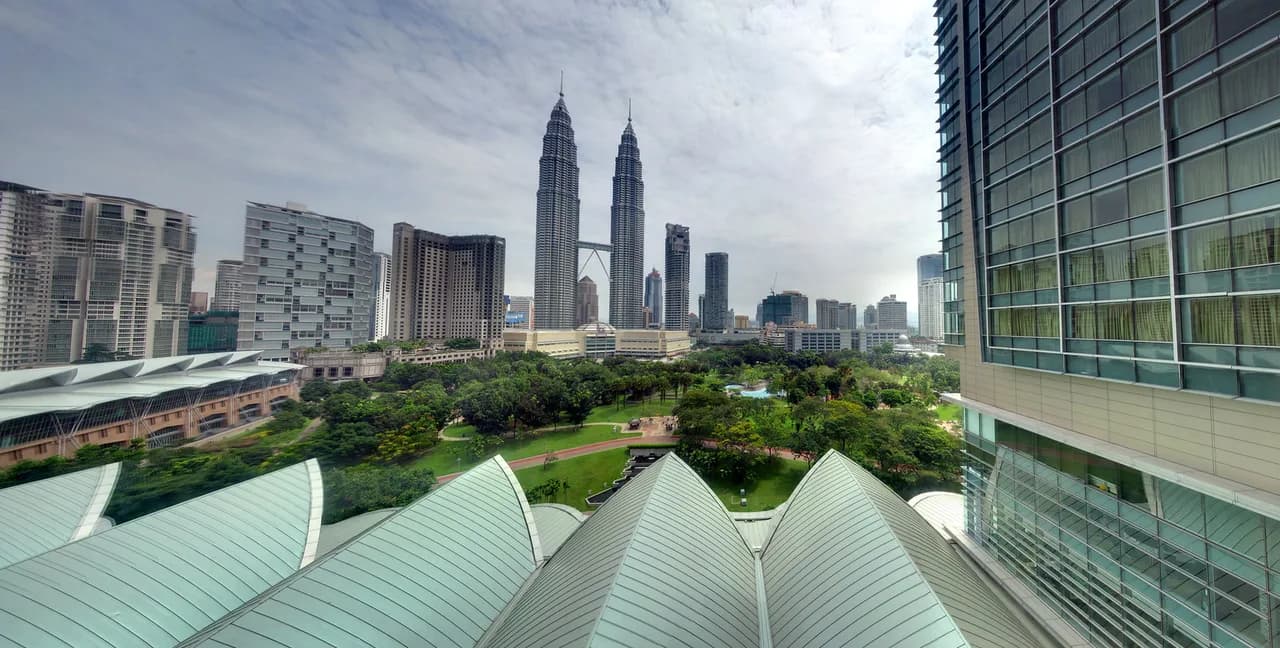
What to Wear in Kuala Lumpur for Air Conditioning
Dress for Kuala Lumpur's tropical heat and chilled malls, trains, and offices with breathable layers, smart fabrics, and versatile footwear.
On this page
Kuala Lumpur's climate is hot and humid year-round, but the real packing challenge is the contrast between the street and the spaces you enter. Malls, trains, museums, cinemas, and offices often run air conditioning at levels that feel cold after minutes outdoors. Planning for both environments is what makes a KL wardrobe work.
The solution is not a heavy coat or a separate cold-weather outfit. A breathable base layer, one packable mid-layer, and footwear that handles hot pavement and chilled indoor floors will cover most days. The sections below break down the formula, fabric choices, and a compact packing example so you can decide what earns space in your bag.
The Core Layering Formula
The base layer should be light, breathable, and quick to dry because it spends most of its time against humid outdoor air. A short-sleeved shirt, a loose top, or a light dress in cotton or a moisture-wicking fabric works well for the street. This layer is what you will wear for most of the day, so prioritize comfort over coverage.
The mid-layer is the piece that solves the air-conditioning problem: a long-sleeve shirt, a thin cardigan, a lightweight blazer, or a large scarf. It should pack down small and add warmth without weight. Keep it in your day bag rather than wearing it outdoors, so it stays dry and ready when you step into a chilled mall or train. Travelers commonly pack a light layer because malls, planes, and buses crank the AC and it can feel chilly after a few minutes indoors, a tip echoed in Malaysia packing guides such as this Malaysia packing list, which recommends a long sleeve shirt or light layer for chilly interiors and suggests a pashmina for long flights.
A scarf or pashmina is the most flexible third element because it can cover shoulders, wrap around the neck, or act as a lap blanket on a cold bus or plane. It also doubles as sun protection at outdoor sites. Choose one that packs flat and does not wrinkle easily.
Fabric Choices for Humidity and Chilled Interiors
Cotton is the default for hot, humid days because it breathes and feels soft against the skin, though it absorbs sweat and dries slowly. Moisture-wicking synthetics or merino wool move sweat away faster and resist odors, which matters when you are moving between humid streets and dry indoor air several times a day. A practical compromise is a lightweight cotton blend or a merino T-shirt for the base, with a synthetic or wool mid-layer for warmth.
Avoid heavy fabrics such as thick denim, canvas, or fleece for daytime wear. They trap heat outdoors and become uncomfortable when you step back into humidity. For the mid-layer, choose a fine knit, a light technical fabric, or a thin wool blend rather than a bulky sweater. The goal is warmth without bulk, so the layer can disappear into a small bag when not needed.
What to Wear Outdoors in Kuala Lumpur's Tropical Heat
For daytime exploring, choose a loose short-sleeved shirt or top in a light color, paired with shorts, a skirt, or lightweight trousers. Loose cuts allow air to circulate and reduce sweat marks. Shorts and skirts are common in tourist areas, but if your plans include a religious site or a formal office, pack one pair of long pants or a longer skirt that covers the knees.
A wide-brimmed hat or cap and sunglasses help with the strong sun, and a small umbrella or packable rain jacket is useful because short, heavy showers can occur even outside the monsoon season. Breathable, quick-dry fabrics are more comfortable than heavy cotton when rain catches you between stops. Keep a small microfiber towel or face towel in your bag to dry off before entering an air-conditioned space.
What to Add for Air-Conditioned Malls, Trains, Museums, Cinemas, and Offices
Indoor spaces in Kuala Lumpur are often cooled aggressively, so the same outfit that felt right outside can feel cold after twenty minutes inside. A long-sleeve shirt, cardigan, or lightweight blazer is the simplest addition for malls, museums, and cinemas. For trains and buses, a scarf or wrap is easier to manage because you can adjust it as the carriage temperature changes. Forum replies from travelers to Malaysia note that a long sleeve shirt should suffice when the AC is turned up in shopping malls, hotels, and cinemas, and that a face towel helps you dry off before entering a fully air-conditioned building.
If you are visiting an office for business, smart casual is the safer default: a collared shirt or blouse with long trousers or a skirt, plus a blazer or cardigan. This combination handles both the outdoor walk and the cold meeting room. For evenings at a cinema or a long dinner in a chilled restaurant, the same mid-layer works; there is no need for a separate outfit.
A portable fan can help outdoors, but it will not replace a layer indoors. Some travelers find that a light scarf is enough, while others prefer a full cardigan; pack one mid-layer and adjust based on how cold you personally feel. The key is to have the option with you rather than leaving it at the hotel.
Footwear Trade-offs: Sandals vs Closed-Toe Slip-Ons
Sandals are comfortable for hot, humid streets and let your feet breathe, but they leave toes exposed on crowded transit and can feel cold in air-conditioned spaces. Closed-toe slip-on shoes or lightweight sneakers protect your feet and pair better with long pants for indoor venues. A practical approach is to bring one pair of each and choose based on the day's plan.
If you expect rain, a quick-drying shoe or a pair of waterproof sandals is more useful than heavy leather shoes that stay wet. Slip-on styles are also convenient for religious sites where you may need to remove your shoes. Avoid bringing more than two pairs; footwear is heavy and takes up space that is better used for versatile layers.
A Compact 3-Day Packing Example
For a three-day trip, start with three lightweight tops in cotton or moisture-wicking fabric, one pair of shorts or a skirt, and one pair of lightweight travel pants. Add one long-sleeve shirt or cardigan as your mid-layer and one large scarf or pashmina. This gives you a fresh base each day while the mid-layer and scarf do the work of adapting to cold interiors.
Footwear should be limited to one pair of walking sandals and one pair of closed-toe slip-ons. Pack a small umbrella or packable rain jacket, a portable fan, and a microfiber towel. If you plan to visit a mosque or temple, add a lightweight long skirt or sarong and a top that covers your shoulders; these items also serve as extra warmth indoors.
What to Leave Behind
Leave heavy jeans, thick sweaters, and bulky coats at home. They are uncomfortable outdoors, too warm for most indoor spaces, and take up space that could go to layers you will actually use. A single packable mid-layer is enough for air-conditioned environments; you do not need a full winter wardrobe.
Also skip multiple pairs of shoes, formal heels if you will be walking, and clothing that requires ironing. Kuala Lumpur's humidity means heavy fabrics stay damp and wrinkled. Instead, prioritize quick-dry materials and pieces that can be worn more than once between washes.
Dressing Respectfully at Religious and Cultural Sites
Many mosques and temples in Malaysia ask visitors to cover shoulders and knees, and some provide robes or wraps at the entrance. A light long-sleeve top and long pants or a long skirt will usually meet these expectations. Carrying a scarf is useful for women who wish to cover their hair at a mosque, and a guide to clothes in Malaysia notes that women visiting religious spots should cover their hair with a scarf. These are cultural norms rather than legal requirements, and specific sites may have their own rules posted at the entrance. For a fuller rundown of expectations at religious sites, see this Kuala Lumpur packing list.
If your itinerary includes Batu Caves or another religious site, check the site's own visitor information before you go. The same modest layer you pack for air-conditioned interiors often works here, which is why a scarf and long pants earn their place in your bag. Respectful dress is about covering up, not about wearing heavy or uncomfortable clothing.
Before-Departure Weather Check
Kuala Lumpur has a tropical climate with warm temperatures and high humidity year-round, but rainfall patterns vary seasonally. Check the forecast for your travel dates to decide whether to pack a rain jacket or umbrella, but keep the layering formula unchanged because indoor air conditioning remains a constant.
If you are traveling during the Northeast Monsoon, which typically affects the east coast of Peninsular Malaysia and can bring heavier rain to some areas, plan for more wet days and quick-dry clothing. Even in wetter months, the core advice of breathable base layers plus one warm layer for indoors still applies.
Plan Your Visit
Packing for Kuala Lumpur's air-conditioning contrast comes down to three decisions: a breathable base layer, one packable mid-layer, and footwear that works on hot streets and cold floors. A scarf or pashmina adds flexibility without much weight, and a compact rain layer handles tropical showers. With this approach, you can move between outdoor heat and chilled interiors without carrying a heavy bag.
Check the forecast before you leave, but do not overpack for it. The layering system is designed to work in any month, so focus on fabrics and fit rather than specific temperatures. A small, flexible wardrobe will serve you better than a large one in Kuala Lumpur's climate.
Frequently Asked Questions
Do I need a jacket for air-conditioned malls in Kuala Lumpur?
A lightweight layer is worth carrying because indoor spaces are often cooled more than outdoor temperatures would suggest. A thin cardigan, long-sleeve shirt, or large scarf is usually enough. You do not need a heavy jacket; the goal is a small layer you can add or remove quickly.
What should women wear in Kuala Lumpur for air conditioning?
A breathable top with shorts, a skirt, or light trousers works outdoors, and a cardigan or scarf adds warmth indoors. For religious sites, cover shoulders and knees with a long top and long pants or a skirt. These are practical suggestions, not fixed rules, and individual venues may have their own expectations.
What should men wear in Kuala Lumpur for air conditioning?
A short-sleeved shirt or polo with light trousers or shorts is comfortable outside, and a long-sleeve shirt or thin blazer handles cold interiors. For business settings, a collared shirt with long pants is a safe default. One packable layer is sufficient for most trips.
What shoes are best for Kuala Lumpur's hot streets and cold indoor spaces?
Slip-on closed-toe shoes or lightweight sneakers work for both environments and are easier to remove at religious sites. Sandals are comfortable outdoors but can leave feet cold indoors. Bringing one pair of each gives you flexibility without excess weight.
How do you dress for air-conditioned offices in Kuala Lumpur?
Smart casual is a practical default: a collared shirt or blouse, long trousers or a skirt, and a light blazer or cardigan. This combination handles the outdoor walk and the cold office. If you are unsure about a specific workplace, ask your host rather than guessing at a formal dress code.
Sources
Free: The Ultimate Packing Cheat Sheet
A carry-on capsule wardrobe, the complete packing checklist, layering made simple, and what to wear by season — one printable page you'll use on every trip.
You might also like
Continue reading
More guides you'll find useful