
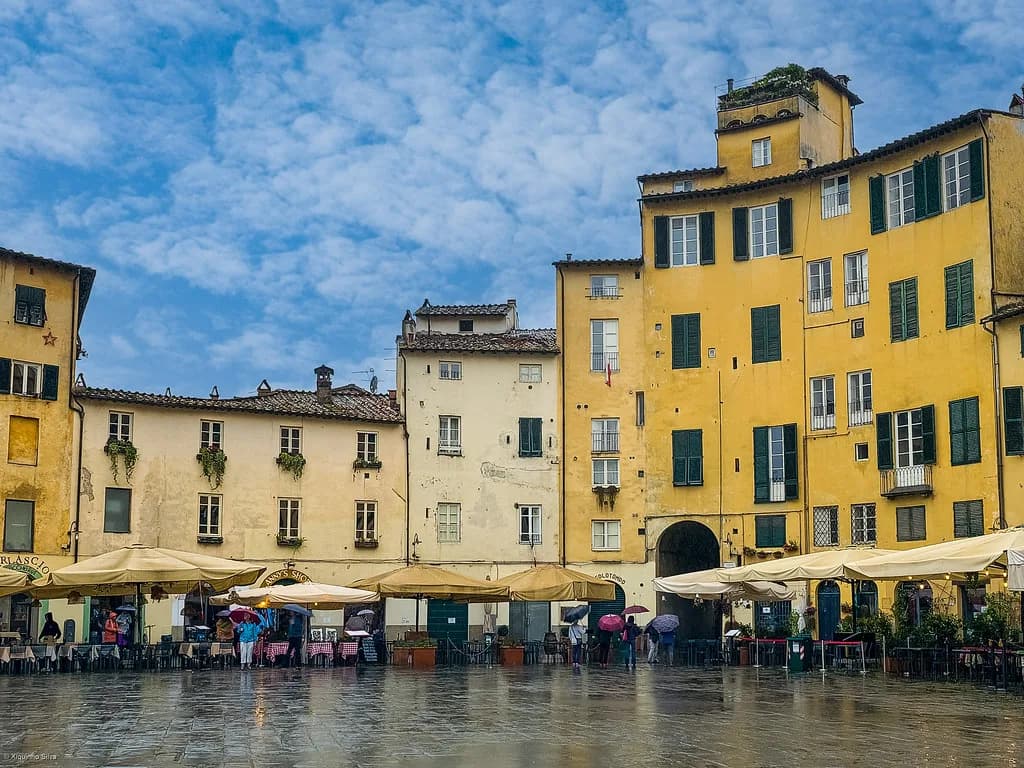
What to Wear in Lucca in January: A Practical Packing Guide
January in Lucca is cold and damp. Layer up, pack waterproof boots, and add a warm scarf to explore comfortably. Get a practical packing list for the walled city.
On this page
What to Wear in Lucca in January: A Practical Packing Guide
Lucca in January offers a quieter, atmospheric side of Tuscany, but the damp cold can seep through an unprepared wardrobe. Your packing strategy, therefore, is not about heavy single garments but about layers that you can adjust as you move between outdoor sightseeing, cozy cafés, and museums. Whenever you plan a trip, consult the Lucca packing list for a foundation, then fine-tune it with the month-specific advice below.
Free: The Ultimate Packing Cheat Sheet
A carry-on capsule wardrobe, the complete packing checklist, layering made simple, and what to wear by season — one printable page you'll use on every trip.
Understanding Lucca's January Climate
January is Lucca’s coldest month. According to a local holiday-lettings blog, average highs hover around 11°C (52°F) and lows dip to about 2°C (36°F). Rain and fog are common, and there can be frost in the mornings (casa campolattaro). Another regional guide notes typical daytime highs of 10°C (50°F) and overnight lows of 3°C (37°F) for Tuscany as a whole (tuscanynowandmore). These figures are historical tendencies, not a forecast.
Lucca’s mild Mediterranean climate means winters are less harsh than in inland Tuscan cities, yet the dampness makes the cold feel penetrating. The city’s famous tree-lined walls are a popular walking circuit, but they are exposed to chilling winds, especially in January. Snowfall is rare, but temperatures can drop near freezing at night, and frost on the cobblestones can make them slippery in the early hours. Another source describes Lucca’s winter temperatures ranging between 5°C and 10°C (41°F to 50°F), with rain more frequent this season (luccaapartmentsandvillas). Always check the local forecast before you pack, as climate is a tendency, not a prediction.
Essential Layering System for Cold and Damp Conditions
A successful January wardrobe for Lucca is a three-layer system: a moisture-wicking base, a warm mid-layer, and a waterproof or water-resistant outer shell. Start with a thermal top and leggings made of merino wool or a synthetic blend that stays dry even when you sweat. Over that, wear a cozy sweater, a fleece, or a light down mid-layer; wool and down retain warmth even when damp, unlike cotton, which loses all insulating power once wet.
For your outer layer, choose a waterproof jacket that is long enough to cover your hips, or a wool coat that you can treat with a protective spray. Look for taped seams and storm flaps for added protection against rain. Many travelers pack both a mid-weight jacket that easily layers under a rain shell and a separate packable raincoat, but for a short trip, one versatile waterproof jacket that accommodates your layers underneath is usually enough.
Trousers should be dark and quick-drying: wool trousers, denim, or travel pants with some stretch. Jeans are acceptable in Italy, but when soaked, they stay damp for hours, so reserve them for dry days; otherwise, bring a pair of non-cotton trousers. On colder days, add a pair of thermal leggings under your trousers for extra warmth without bulk. This system works for both men and women, with variations in fit and style.
Italians, especially in Lucca, dress according to the season rather than the actual temperature, so you’ll see scarves, coats, and boots even on days that feel mild. In Lucca, layering is the norm. Mornings may start with frost, afternoons can be mild, and evenings return to cold, so a mid-layer that you can remove is essential. The goal is to be able to adjust quickly as you step from a chilly alley into a heated museum or trattoria.
Footwear: Waterproof Boots and Grippy Soles
Your feet carry you across Lucca’s ancient cobblestones, which become slippery and uneven when wet. Waterproof leather or synthetic boots with a robust tread are your best allies, as they keep your feet dry and provide the grip needed to avoid slips. Look for boots that cover the ankle to protect against strain on uneven pavement, and make sure they are broken in before your trip.
A second pair of comfortable shoes—such as stylish sneakers with a good sole—can be handy for indoor visits or when the sun breaks, but they must also dry quickly if they get wet. Many hotels and holiday rentals offer shoe-drying racks or radiators, but you can speed up the process by bringing moisture-wicking socks. Consider using a waterproofing spray on any leather shoes you bring, even if they are not labeled waterproof.
Leave behind high heels, open-toed shoes, flats with slick soles, and overly worn-out trainers that provide little traction; they are impractical for Lucca’s wet January. If you have a dressier evening planned, low-heeled boots or leather loafers with a rubber sole can bridge style and function without risking a fall. For anyone who usually wears athletic wear, remember that Italians rarely wear workout clothes outside the gym; you’ll feel more comfortable blending in with stylish jeans and boots.
Accessories That Matter: Scarves, Gloves, and Hats
A scarf is practically a uniform item in Italy in winter, and it serves as a stylish yet functional accessory that fills the gap between your jacket and neck. Cashmere or Merino wool scarves offer unmatched warmth without bulk and add a touch of Italian elegance. A winter hat, preferably a beanie, covers your head—a significant heat loss area—while gloves keep your fingers functional for taking photographs. Choose gloves that are touchscreen-compatible for map navigation on your phone, but if you expect heavy rain, consider waterproof gloves or keep a pair of liner gloves under your waterproof outer layer.
When choosing accessories, invest in quality over quantity. A well-chosen scarf can elevate even a simple outfit. A crossbody bag is more practical than a backpack for keeping belongings close and accessible, and wearing it over your coat makes it easy to reach. For men, a structured bag in leather or canvas, worn across the body, is both stylish and practical.
What to Leave at Home
You can skip heavy winter items that are overkill for this temperate part of Tuscany: a full ski parka, thick snow boots, and thermal ski underwear will be too bulky. Also leave behind sandals, flip-flops, and light linen or denim jackets that offer little protection from the damp cold. Instead, focus on versatile pieces that are easy to layer and quick to dry.
Forget items you are unlikely to use, such as a swimsuit—pools are generally closed in January—and an extensive collection of non-waterproof sneakers. Umbrellas are useful, so pack a compact travel umbrella, but you can also buy one locally if yours leaks. Electronics and valuables like laptops add weight, but a small tablet or e-reader can be nice for downtime.
Sample Capsule Wardrobe for a 4-Day Trip
A streamlined capsule wardrobe for four days in Lucca includes: two thermal base tops and one pair of thermal leggings; three sweaters (wool or cashmere for warmth); one pair of dark, quick-drying trousers and one pair of dark jeans; four long-sleeve shirts or turtlenecks; one waterproof jacket; one warm scarf, one beanie, and one pair of gloves; two pairs of comfortable, waterproof boots; and several pairs of wool or moisture-wicking socks.
This might seem like a lot, but you can mix tops and bottoms to create several different looks. For women, a dark midi skirt with thermal tights can work for evenings, while for men, a pair of tailored chinos or dress trousers can be dressed up with a blazer or a smart sweater. Keep colors neutral—blacks, grays, navy, and camel—so everything coordinates easily.
Local Style Cues and Blending In
Italians, especially in Lucca, dress according to the season rather than the actual temperature. It is common to see locals in scarves, coats, and boots in early spring, even on warmer days. While there is no need to stress about blending in, a casual yet put-together look is more in line with local fashion—Italians rarely wear workout clothes outside of the gym. Many Americans are used to wearing leggings, sweatpants, and athletic wear as everyday outfits, but in Italy, this style is generally reserved for actual exercise.
To blend in without sacrificing comfort, choose well-fitted jeans in a dark wash, a quality sweater, and a wool coat. Jeans are worn by Italians every season, but well-fitting and stylish pairs are key. Leave athletic wear at home, and avoid loud branded sportswear for sightseeing. A scarf is an easy way to feel more local, and it adds a layer of warmth.
Outfit Ideas for Specific Scenarios
For a day walking or cycling along the city walls, start with a thermal base, a long-sleeve shirt, a fleece or wool sweater, and your waterproof jacket as the outermost layer. Add jeans or quick-dry trousers, warm socks, and waterproof boots. As you exercise, you can easily tie the jacket around your waist or stow it in a tote bag.
If you have a dinner reservation in the evening, you may want to swap your jeans for a pair of tailored chinos or a dress (for women, add thermal tights). Keep your scarf or replace it with a silk or cashmere version for elegance, and wear ankle boots with a slight heel if you have them. A crossbody bag in leather finishes the look.
Before You Depart: Weather Check and Adjustments
A week before your trip, check the local forecast for Lucca using a reliable weather service, and adapt your packing list accordingly. If the forecast shows sunny days with higher temperatures—say, above 10°C (50°F) in the day—you might lighten your mid-layer and swap a padded coat for a lighter wool jacket. Conversely, if cold snaps and precipitation are predicted, you may want to include a packable down vest or add thermal base layer pants.
Remember that the climate data you’ve read is historical average, not a precise forecast. January in Tuscany can bring anything from dry, sunny interludes to overcast, damp stretches with occasional fog. Your ability to layer will help you respond to whatever comes your way, and a flexible attitude will make your winter visit to Lucca enjoyable.
Plan Your Visit
Packing for Lucca in January is about smart layering and waterproof protection. The damp cold, the chance of rain, and the slippery cobblestones dictate specific choices: a warm waterproof coat, boots with grip, and plenty of wool accessories. Leave the heavy ski gear behind, and aim for a versatile, casual-elegant wardrobe that reflects the local style. Before you zip your suitcase, it's worth a final glance at the extended forecast from an official weather service, so you can fine-tune the exact weight of your layers. If you're planning a longer stay or need to adjust as the season shifts, our guide to what to wear in Lucca in February covers the transition.
Once you master the art of layering, you'll be able to enjoy Lucca's quiet squares, cozy enotecas, and the serene pathways atop the walls without distraction. With this guide, you'll be well-equipped to face January's chill in style.
Frequently Asked Questions
What is the weather like in Lucca during January?
January is Lucca's coldest month. Historical averages show highs around 11°C (52°F) and lows near 2°C (36°F). Rain, fog, and occasional frost are common, but snowfall is rare. Days are often damp and overcast, so waterproof clothing is essential.
How do I dress for Italy in January?
Layering is key: start with thermal underwear, add a sweater, and finish with a warm coat. Waterproof boots are a must for rainy days, and a scarf, gloves, and hat are essential. Avoid athletic wear; instead, choose stylish yet practical outfits that you can wear in cities and towns.
What is the 3-3-3 rule for packing clothes?
The 3-3-3 rule is a packing method: take three tops, three bottoms, and three pairs of shoes, and mix them to create multiple outfits. For a winter trip to Lucca, adapt it by bringing three base layers, three sweaters, and two pairs of boots or shoes, ensuring they all coordinate.
How should a woman over 50 dress in Italy to look stylish?
The key is smart, comfortable elegance: well-fitted trousers or dark jeans, quality knitwear, a tailored coat, and leather boots or sneakers. Add a silk scarf for polish and avoid overly casual or athletic wear. Accessories like a leather handbag elevate the look. You don't need to dress like anyone else; just aim for a put-together appearance.
Sources
Free: The Ultimate Packing Cheat Sheet
A carry-on capsule wardrobe, the complete packing checklist, layering made simple, and what to wear by season — one printable page you'll use on every trip.
You might also like


Continue reading
More guides you'll find useful


