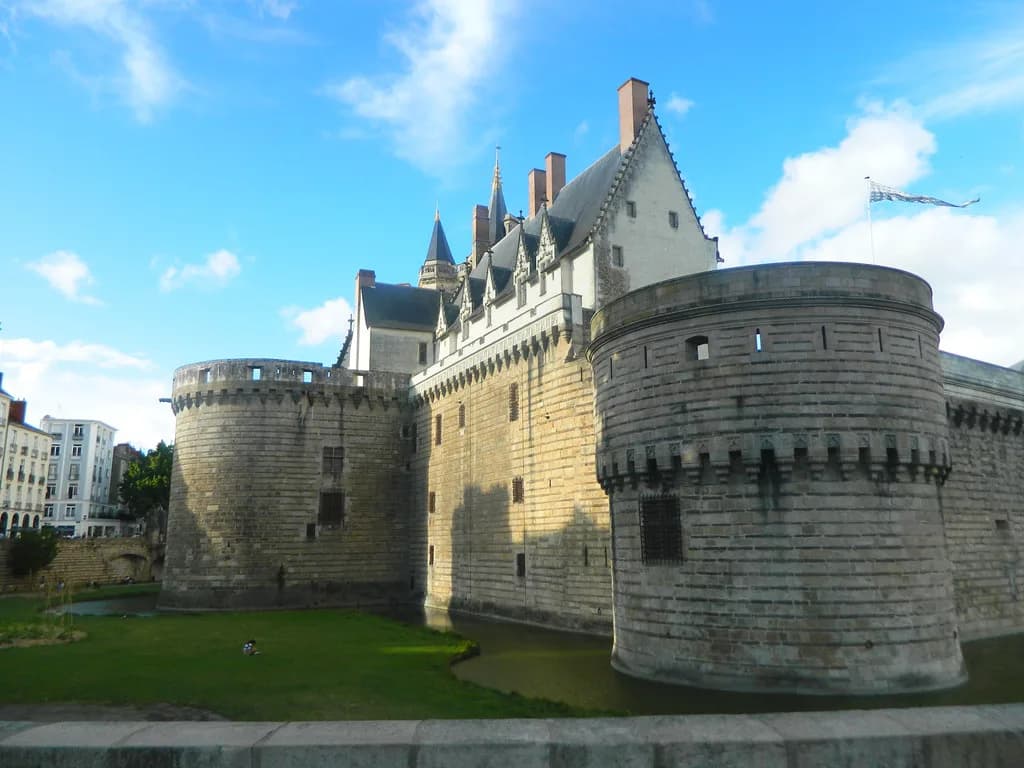
What to Wear in Nantes in September: Shoulder-Season Packing
Nantes in September means warm, bright days but a real chill after sunset. Pack light layers, rain-ready shoes and a day bag that carries the difference.
On this page
Nantes in September: the weather in numbers
Typical September conditions from 30 years of daily weather data, split into early, mid and late month so you can match them to your travel dates.
| Dates | Early Sep (1–10) | Mid Sep (11–20) | Late Sep (21–30) |
|---|---|---|---|
| Afternoon high | 23°C (73°F) | 21°C (70°F) | 20°C (68°F) |
| Night-time low | 14°C (57°F) | 13°C (55°F) | 12°C (54°F) |
| Feels like (afternoon) | 21°C (70°F) | 19°C (66°F) | 18°C (65°F) |
| Range of afternoon highs | 19–27°C | 17–26°C | 17–25°C |
| Days with rain | 2 in 10 days | 3 in 10 days | 3 in 10 days |
| Afternoon humidity | 53% | 56% | 58% |
| Average wind | 13 km/h | 12 km/h | 13 km/h |
| Daylight | 12.9 h | 12.3 h | 11.7 h |
What this means for your suitcase
- Mild days: long sleeves with a light sweater or jacket you can take off at midday.
- Showers on roughly 2 in 10 days — a packable rain jacket or compact umbrella.
- Day-to-day swings: afternoon highs range from about 17°C to 27°C, so pack for both.
Travelling on specific dates? Use our What to Wear Planner for the weather, outfits and a packing list for your exact days in Nantes.
Averages for 1991-2020, modelled from Copernicus ERA5-Land and ERA5 reanalysis via Open-Meteo open data (CC BY 4.0), adjusted to Nantes's elevation. Modelled afternoon highs can read 1–2°C below airport weather-station records.
A September day in Nantes does not behave like a July day, even when the afternoon sun feels just as generous. The difference is timing: warmth arrives late and leaves early, and the hours after sunset turn cool enough that summer-only clothing stops working. Packing for this month is less about choosing a season and more about planning for two temperatures in one day.
The practical consequence is that your day bag matters as much as your suitcase. Whatever you wear out in the morning needs to be paired with a light layer you can pull on later, plus shoes that still feel sensible if the pavement is wet. Get those two decisions right and the rest of the list falls into place, so it helps to work from a structured packing list rather than improvising each morning.
This guide covers clothing and footwear choices, treated as suggestions rather than rules, with the reasoning behind each trade-off explained. Climate figures describe historical tendencies, not a forecast for your trip, so the final step before departure is always to check current conditions yourself.
September in Nantes: The Shoulder-Season Switch
September sits at the hinge of the Nantes year. The city still gets bright, usable daylight that makes walking between neighbourhoods pleasant, but the long, reliably warm evenings of midsummer are gone. In practice, a September packing list looks different from a July one even though both months can produce very similar afternoons.
September is typically mild rather than hot, with rain arriving on more days than in the drier summer months. Historical records for Nantes put the month's average high near 22°C (about 72°F) and the average low near 12°C (about 54°F), with roughly 65 mm of rain spread over about eight days — a useful planning figure rather than a guarantee. Those averages hide the real story: the gap between afternoon high and overnight low is the whole reason layering matters here.
A useful mental model is to treat September as two short seasons stacked into one day. The middle of the day behaves like late summer, the evening behaves like early autumn, and daylight ends noticeably sooner than in July. That contrast is the single biggest influence on what you should carry, and it is why a lightweight extra layer belongs in your bag rather than your hotel room.
What the Historical Climate Means for Packing
The published climate figures for Nantes come from long-term records, so they are best read as a description of tendencies rather than a prediction. September's averages point to very mild conditions overall, with warmer days early in the month and a gradual cooling as it progresses. Treating the averages as a promise usually means overpacking warm-weather clothing and underpacking the layer you actually need after dark.
Rain in September is a moderate rather than dominant factor, which shapes the trade-off you make when choosing outerwear. A fully rainproof shell is rarely needed for a city day, but a jacket that sheds a shower is more useful than an umbrella alone when you are moving between stops. If you plan for a wet afternoon and a cool evening on the same day, your packing decisions become much simpler — and this is where a waterproof shell differs from a warm winter coat.
The wider pattern for the city is a mild oceanic climate with rain possible throughout the year, heaviest outside the summer months. Shoulder-season travel here rewards flexibility over specialisation, because you may well get sunshine, cloud, a brief shower and a cool breeze across a single afternoon. Build your wardrobe around adaptable pieces and you will not need to revise your plan when the weather shifts.
Daytime Layers: What Works When the Sun Is Out
For the middle of the day, pack as you would for a warm-weather city break, using light, breathable fabrics that dry quickly. A short-sleeved cotton or linen shirt, a simple tee or a light dress will usually be comfortable while you are walking in the sun. The mistake is treating these pieces as your whole outfit; they are the base of a layered system.
Choose tops thin enough to sit under a layer without bunching, and favour lighter colours if you expect to be outside for long stretches. Cotton and linen feel best against the skin when it is warm, but a small amount of synthetic content helps a garment dry overnight if it gets rained on. Thick, bulky tops that fit under nothing are the one thing that can undermine an otherwise easy September wardrobe.
Light-to-mid-weight trousers or a skirt work better than heavy denim for daytime walking, mainly because they dry faster and pack smaller. If you prefer jeans, one pair is enough for a short trip, and it is worth checking they are genuinely comfortable rather than tight, since you may be in them for a long day on your feet. Pair daywear with the one pair of shoes you have decided to walk in, and keep the rest of your footwear choices distinct so nothing is duplicated.
After-Sunset Layers: The Piece You Will Be Glad You Packed
The evening drop is the defining feature of September packing in Nantes, and it is where a July wardrobe fails. A light mid-layer such as a sweatshirt, fine-knit sweater or long-sleeved top adds enough warmth for a late dinner or a walk along the water without being bulky. Keep it in your day bag from the morning onward so it is with you when the temperature turns.
Over that mid-layer, a light jacket or an unlined trench-type coat handles both the cool air and a passing shower. The trade-off is between breathability and rain protection: a fully rainproof shell keeps you dry but can feel clammy on a warm, humid afternoon, while a shower-resistant jacket packs smaller and looks less out of place in the city. For most September trips, the lighter option is the more versatile choice — save the heavier shell for a colder visit.
Two small accessories are worth the pocket space. A scarf adds warmth around the neck at little weight and can double as cover if a breeze picks up near the river, while a compact umbrella is more practical than relying on a hood in a city where much of your day is spent walking between buildings. Neither is essential, but both reduce how often you need to change your plans.
Footwear: Cobbles, Tram Tracks and Early Autumn Rain
Nantes is a walking city, and its surfaces range from smooth modern paving to older cobbled streets and the metal rails of the tram network. The practical requirement is a sole with real grip, because wet cobbles and metal tracks are the two surfaces most likely to catch you out after a shower. Thin, smooth-soled shoes look fine and behave badly in those conditions.
Your second trade-off is drying time. Leather and coated materials resist a short shower but take longer to dry if they get soaked through, while mesh-heavy trainers dry faster and let water in just as fast. If unsettled weather looks likely, a water-resistant pair you are happy to wear all day beats a beautifully rainproof pair that leaves your feet sore by mid-afternoon.
Bring one comfortable walking pair as your default and, at most, one lighter alternative for evenings, so you are not carrying shoes you never wear. Break in anything new before you travel, since a long day on hard paving is unkind to untested footwear. If rain is forecast for your dates, swap the lighter pair for a second weather-ready option rather than packing both.
A Compact Capsule for a Long Weekend
For a three- to four-day trip, a workable capsule is two or three lightweight tops, one pair of trousers or a skirt, one mid-layer, one light jacket, and one or two pairs of shoes. Everything should work with everything else, so each top can be worn under the mid-layer and over the same trousers. That combination covers warm afternoons, cool evenings and a wet walk without a single redundant piece.
Underwear and socks take up little space, so a couple of extra pairs are worth packing in case something gets soaked or dries slowly. Sleepwear and preferred toiletries should go in small containers to keep the day bag usable. Fold or roll by fabric weight, keeping the heaviest items at the bottom, and a long weekend fits into a single carry-on without effort. On a rainy day the same capsule can be reworked rather than added to, which keeps the bag light if you are also planning outdoor activities on the river paths.
Keep the day bag itself minimal: the mid-layer, the umbrella, a water bottle and a small pouch for your phone and cards. A structured but light city daypack, or a crossbody bag that sits close to your body, works better than a large tote when you are on your feet for hours. The goal is that nothing in the bag is there just in case you feel like carrying it.
What to Leave Behind in September
Heavy winter gear is the clearest thing to cut. A thick insulated coat, thermal base layers and bulky knitwear belong to a later visit, when the city turns properly cold and rainy, which is a different packing problem entirely. If you are travelling on into the autumn, add what you need for that leg rather than carrying it through the mild September days.
Also cut the high-summer extras you will not use. Beachwear, sun hats and open summer sandals make little sense for a city break in a month when evenings cool down and rain is possible, and they only add weight. Equally, leave out formal outfits you are not certain you will need, because a smart-casual evening look can be assembled from the layers you are already carrying.
Finally, resist packing multiples of anything you can rewear. Three pairs of shoes, four jackets or a separate outfit for every day will make the bag heavy and the choices harder each morning. A small, deliberate set of layers that suits both a warm afternoon and a cool evening is the more reliable approach for this month.
Before You Fly: Checking the Forecast
A two- or three-day forecast is far more useful than any seasonal average, so check it in the days before departure and again the night before you fly. Look specifically at the daily high and low, the overnight temperature and the chance of rain rather than the general description. Those details tell you whether to lean toward lighter or warmer versions of the same capsule.
If the forecast shows a warmer spell, swap the mid-layer for a lighter one and leave the second pair of shoes at home. If it shows a cooler or wetter pattern, keep the jacket, add the umbrella and make sure your walking shoes are the water-resistant pair. This is the one adjustment that makes a generic shoulder-season list fit your actual trip.
Plan Your Visit
September in Nantes rewards a layered approach built around two temperatures rather than one. Pack light, breathable daytime clothing, add a mid-layer and a light jacket for the evening, and choose shoes that grip on wet cobbles and tram tracks. That core set covers almost everything the month is likely to offer.
Confirm the actual conditions shortly before you travel, since historical tendencies describe the season rather than your specific dates. If the forecast turns cool or wet, reinforce the layer and the footwear and drop the lighter alternatives. With a compact capsule and a day bag that carries your extra layer, a September trip here is easy to pack for and comfortable to walk through.
More packing guides for Nantes
Frequently Asked Questions
Is September warm enough for summer clothes in Nantes?
Daytime conditions in September are often mild enough for short sleeves and light trousers while the sun is out, so summer clothing still has a role. The problem is the evening, when temperatures fall noticeably and a layer becomes necessary. Treat summer pieces as your daytime base and pack something to wear over them after sunset.
Do I need a jacket in Nantes in September?
A light jacket is one of the most useful items for this month. It handles the cooler air after dark, adds a little protection if a shower passes, and packs small enough to live in your day bag. A heavy insulated coat is unnecessary and will simply take up space.
What shoes should I pack for walking in Nantes in September?
Choose one comfortable pair with a grippy sole as your main walking shoes, since wet cobbles and tram tracks can be slippery after rain. A second, lighter pair for evenings is optional. Test anything new before you travel, as long days on hard paving are hard on untried footwear.
Does it rain in Nantes in September?
Rain is possible in September, though the month is generally moderate rather than constantly wet, and showers tend to pass through rather than settle in. A compact umbrella and a jacket that sheds light rain will cover most situations. Check the forecast for your specific dates to see how wet the pattern looks.
How does September in Nantes compare to July?
September is typically somewhat cooler, more likely to be wet, and has shorter days than July, so the packing logic shifts from high-summer dress to layering. The afternoons can still feel warm and bright, but the evenings cool down enough that carrying an extra layer becomes worthwhile.
What can I leave behind when packing for Nantes in September?
Leave the heavy winter coat, thermal layers, beachwear and summer sandals at home. Avoid packing multiple pairs of shoes or several jackets, since a small set of layers that works across warm afternoons and cool evenings is enough. If your trip continues into colder months, pack for that part separately.
Sources
Free: The Ultimate Packing Cheat Sheet
A carry-on capsule wardrobe, the complete packing checklist, layering made simple, and what to wear by season — one printable page you'll use on every trip.
You might also like


Continue reading
More guides you'll find useful