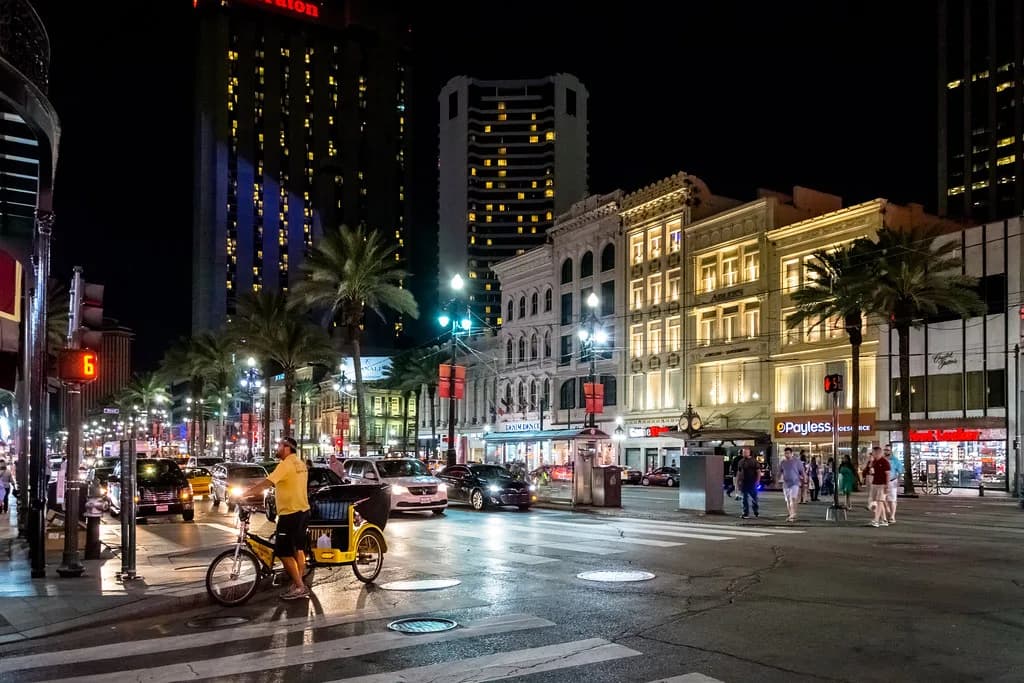
What to Wear in New Orleans in April: Packing Guide
April in New Orleans means warm, humid afternoons, cooler nights, and spring showers. Pack breathable layers, rain and sun protection, and festival-ready shoes.
On this page
New Orleans in April: the weather in numbers
Typical April conditions from 30 years of daily weather data, split into early, mid and late month so you can match them to your travel dates.
| Dates | Early Apr (1–10) | Mid Apr (11–20) | Late Apr (21–30) |
|---|---|---|---|
| Afternoon high | 23°C (73°F) | 24°C (75°F) | 25°C (78°F) |
| Night-time low | 16°C (61°F) | 17°C (63°F) | 19°C (65°F) |
| Feels like (afternoon) | 22°C (71°F) | 23°C (74°F) | 25°C (77°F) |
| Range of afternoon highs | 19–27°C | 21–27°C | 22–28°C |
| Days with rain | 3 in 10 days | 3 in 10 days | 3 in 10 days |
| Afternoon humidity | 60% | 60% | 60% |
| Average wind | 15 km/h | 15 km/h | 15 km/h |
| Daylight | 12.4 h | 12.7 h | 13 h |
What this means for your suitcase
- Warm days: T-shirts and light trousers or skirts, plus one light layer.
- Showers on roughly 3 in 10 days — a packable rain jacket or compact umbrella.
Travelling on specific dates? Use our What to Wear Planner for the weather, outfits and a packing list for your exact days in New Orleans.
Averages for 1991-2020, modelled from Copernicus ERA5-Land and ERA5 reanalysis via Open-Meteo open data (CC BY 4.0), adjusted to New Orleans's elevation. Modelled afternoon highs can read 1–2°C below airport weather-station records.
April falls in the middle of New Orleans festival season, when long outdoor days, humid afternoons, and busy streets shape what you should pack. The most useful planning idea is the day-to-night swing: an outfit that works at midday often needs an extra layer after dark. Treat everything here as an editorial suggestion rather than a rule, and check the actual forecast close to departure.
April Packing Snapshot: Warm, Humid Afternoons and Cooler Evenings
Spring packing guidance for New Orleans describes daytime temperatures rising into a warm range with crowds drawn by festivals, which is why light, breathable clothing and a rain layer are staples of the season. That is a seasonal tendency, not a forecast, so check your specific dates rather than packing for an average.
Travelers who have visited in April describe wearing shorts and light shirts or tank tops during the day, and switching to cropped pants or trousers with a light jacket or sweater at night, with a compact umbrella for showers. That pattern is the clearest signal for how to build your bag: plan for two temperatures per day, not one. If you build outfits around a base layer plus an outer layer, you rarely need a separate evening wardrobe.
Daytime Layering Formula for Humid Afternoons
Start with a breathable base layer that sits away from the skin, add a loose mid-layer you can remove without changing outfits, and finish with a light shell that packs down small. The mid-layer is your humidity tool because it lets you vent heat while still covering up for sun. The shell is your shower tool, and on a day with both sun and rain you will use each at least once. Packing guides for the city consistently recommend breathable, weather-appropriate clothing with layers for varying temperatures.
If you are traveling earlier in spring, compare the conditions you would pack for in the weeks before your trip. A visit that spans late March into early April can swing enough that one thicker mid-layer earns its space, so it is worth reviewing what to wear in New Orleans in March before you finalize the bag. Otherwise, keep the same layering formula and swap only the weight of the layers.
Fabric and Color Trade-Offs for Humidity and Sweat
Cotton and linen feel best against the skin in humid heat and look relaxed, but they hold moisture and wrinkle in a suitcase. Quick-dry synthetics and blends dry faster overnight, which matters when you are reusing pieces across several days. A practical compromise is breathable natural fibers for tops you will wash or wear once, and quick-dry fabrics for anything likely to get soaked, such as a rain shell or a festival-day top.
Lighter colors and prints hide sweat marks better than heavy dark fabrics, and they feel cooler in direct sun. Avoid tight, heavyweight denim during the day; it traps heat and takes a long time to dry if a shower catches you. Save the one pair of jeans you pack for an evening when the temperature drops, or leave denim at home if your trip is mostly outdoors.
Footwear for Uneven Sidewalks, Puddles, and Long Days
New Orleans is a walking city, and its older sidewalks can be uneven, so supportive sneakers or comfortable closed-toe sandals are the most practical base for long days. Packing guidance for the city recommends comfortable walking shoes, a crossbody bag or small backpack to keep your hands free, plus sunscreen and sunglasses for bright days. Test any shoe for blisters before you leave rather than breaking it in on a festival day.
Rain can leave standing water along curbs and in the French Quarter, so a shoe that dries and grips matters more than one that looks polished. If rain is likely during your dates, plan a water-friendly second pair so one can dry while you wear the other. April visitors often pair sandals for daytime with an umbrella kept in the bag for sudden showers.
Sun and Heat Protection Even Under Cloud
Sun protection belongs in the bag even when the sky looks overcast, because humid haze and cloud do not block UV the way shade does. A hat with a brim, sunglasses, and sunscreen cover the three exposures you will notice most: scalp, eyes, and shoulders. Festival packing lists for New Orleans treat sunscreen as a must even in cooler months, since the sun can be strong during daytime events.
Hydration is the other half of heat management, especially on days that mix walking with standing outdoors. A refillable water bottle reduces waste and lets you top up between stops, and electrolyte packets are worth the space if you are spending full days outside. Pack a small sunscreen tube to reapply rather than one large bottle you leave at the hotel. These are comfort tools, not medical advice, so check with your own clinician about anything personal.
Evening Plan: Air-Conditioned Rooms and Cooler Nights
New Orleans venues tend to run air conditioning hard, so a light jacket or sweater does double duty on a mild evening. Indoors it keeps you comfortable; outside after dark it handles the temperature drop. Packing guides for the city recommend a lightweight jacket or sweater for cooler evenings and strong A/C, so choose one layer that packs flat and reads well over both a dress and a button-down, then wear it on the plane to save space.
To convert a daytime outfit into an evening one, swap the shoes, add the layer, and change the bag rather than changing all your clothes. A breezy maxi dress or jumpsuit works for many evening settings as easily as daytime ones, and a button-down with chinos covers a similar range. Keep the transformation to one or two swaps so your bag stays light.
Festival Day: Hands-Free Gear That Earns Its Space
A crossbody or belt bag keeps your hands free and your essentials organized in dense crowds, which matters more at outdoor events than on a normal walking day. Add a portable charger, since photos and messages drain a phone faster across a long festival day. A refillable bottle and a packable poncho or compact umbrella round out the kit, and packing guidance notes that reusable bottles are useful especially where events allow them and offer refill stations.
Statement accessories such as sequins, bold jewelry, or beads fit the festival mood and take almost no packing space. If you like dressing up for events, plan one standout piece rather than a second full outfit. Check the organizer's own published guidance for what a specific event allows inside, since entry rules vary and are set by each operator.
A Four-Day April Packing Example
For a four-day trip, a workable starting point is roughly four breathable tops, two bottoms you can rotate, one dress or jumpsuit if you wear them, one mid-layer, one light shell, and two pairs of shoes. That set lets you build eight or more combinations, which is usually enough for a short spring visit. Adjust for laundry access and for how much time you will spend outdoors.
Reuse logic beats packing volume: wear the heaviest shoes and outer layer in transit, wash quick-dry tops in the sink, and choose bottoms that work with every top you bring. Keep small items in one pouch so you are not repacking the whole bag each morning. If you are traveling carry-on only, that discipline is what makes the trip easy rather than the size of the bag.
What to Leave Behind
Formal wear, multiple pairs of heavy shoes, and thick denim are the most common overpacking mistakes for a humid spring trip. You will almost certainly not need a second jacket if the first one layers well, and shoes take the most space per use. Leave the outfits that exist for only one exact scenario at home.
Skip duplicate toiletries and full-size products if you can decant, and leave behind anything you can only wear in cool weather. Anything you genuinely forgot is usually easy to buy locally, though you may pay more in tourist-heavy areas. Fewer, more versatile pieces also make packing for the return trip far less stressful.
Before You Leave: Check the Forecast, Adjust Layers
Seasonal patterns describe tendencies, not your specific dates, so check a reliable forecast for the days you will be there about a week out. Adjust the weight of your layers and the amount of rain gear, but keep the same core packing structure. If the trend is warmer or wetter than expected, change the pieces rather than rebuilding the entire bag.
If your trip leans late in spring or into early summer, review how the packing changes as heat and humidity build. Comparing what to wear in New Orleans in May helps you decide whether to bring heavier sun protection and lighter fabrics. Otherwise, pack the plan above and leave room for anything you pick up along the way.
Plan Your Visit
April packing for New Orleans comes down to one habit: dress for two temperatures a day, with a breathable base, a removable mid-layer, and a light shell. Add shoes that handle uneven, sometimes wet ground, sun protection for exposed afternoons, and hands-free festival gear if your dates include outdoor events. The rest is preference.
Before you zip the bag, check the forecast for your actual dates and adjust the weight of your layers rather than the size of your suitcase. Confirm any event-specific rules with the organizer publishing them, since those requirements are not yours to assume. Then pack less than you think you need and leave room to enjoy the city.
Frequently Asked Questions
How warm is it in New Orleans in April?
April trends warm and humid during the day and cooler after dark, which is why layered outfits work better than a single heavy or single light option. Rather than relying on an average, check the forecast for your specific dates shortly before departure and adjust the weight of your layers.
Do I need a jacket in New Orleans in April at night?
A light jacket or sweater is a sensible item to pack, both for cooler evenings and for heavily air-conditioned indoor spaces. Travelers who have visited in April describe evenings that call for pants or cropped pants plus a light layer, while days often suit shorts and short sleeves.
What shoes are best for walking in New Orleans in April?
Supportive sneakers are the most practical choice for long walking days on older, uneven sidewalks, with a second pair that handles wet pavement if rain is likely. Bring shoes you have already broken in, since festival days involve a lot of standing and walking.
Should I pack rain gear for an April trip to New Orleans?
Yes, a compact umbrella or packable rain shell is a reasonable inclusion because spring showers are common in the region. It costs little space and protects an outfit you had planned to wear later that day.
What do people wear to New Orleans festivals in April?
Editorially, expect a mix of breathable clothing, comfortable shoes, and statement accents such as bold jewelry, sequins, or beads. Practical items like a crossbody bag, a refillable bottle, and a portable charger are useful at outdoor events. Check the organizer's published guidance for any rules about what you may bring inside.
What should I pack for four days in New Orleans?
A compact example is four breathable tops, two versatile bottoms, one dress or jumpsuit, one mid-layer, one light shell, and two pairs of shoes. Plan to reuse pieces and wash quick-dry items so the bag stays carry-on friendly.
What should I leave at home for an April trip?
Leave behind formal wear, multiple heavy shoes, and thick denim that traps heat and dries slowly. Anything you can only wear in cool weather and duplicate toiletries also take space you could use for layers you will actually wear.
Sources
Free: The Ultimate Packing Cheat Sheet
A carry-on capsule wardrobe, the complete packing checklist, layering made simple, and what to wear by season — one printable page you'll use on every trip.
You might also like


Continue reading
More guides you'll find useful