

What to Wear in Warsaw in September: Layers, Shoes, and Rain Prep
Pack for Warsaw in September with a three-layer system, cobblestone-ready shoes, rain strategy, smart-casual options, and a compact capsule for a short trip.
On this page
Warsaw in September: the weather in numbers
Typical September conditions from 30 years of daily weather data, split into early, mid and late month so you can match them to your travel dates.
| Dates | Early Sep (1–10) | Mid Sep (11–20) | Late Sep (21–30) |
|---|---|---|---|
| Afternoon high | 20°C (68°F) | 18°C (65°F) | 17°C (62°F) |
| Night-time low | 12°C (53°F) | 11°C (51°F) | 9°C (49°F) |
| Feels like (afternoon) | 18°C (64°F) | 16°C (61°F) | 14°C (57°F) |
| Range of afternoon highs | 15–25°C | 13–23°C | 12–22°C |
| Days with rain | 4 in 10 days | 3 in 10 days | 3 in 10 days |
| Afternoon humidity | 58% | 58% | 60% |
| Average wind | 12 km/h | 12 km/h | 12 km/h |
| Daylight | 13.1 h | 12.4 h | 11.7 h |
What this means for your suitcase
- Mild days: long sleeves with a light sweater or jacket you can take off at midday.
- Showers on roughly 3 in 10 days — a packable rain jacket or compact umbrella.
- Day-to-day swings: afternoon highs range from about 13°C to 23°C, so pack for both.
Travelling on specific dates? Use our What to Wear Planner for the weather, outfits and a packing list for your exact days in Warsaw.
Averages for 1991-2020, modelled from Copernicus ERA5-Land and ERA5 reanalysis via Open-Meteo open data (CC BY 4.0), adjusted to Warsaw's elevation. Modelled afternoon highs can read 1–2°C below airport weather-station records.
September in Warsaw sits on the edge of early autumn, and the packing problem is not a single season but a single day. General guidance on what to wear in Warsaw describes a continental pattern in which spring and autumn swing between roughly 5 and 18°C, with rain possible at any time of year, so a warm afternoon and a cool evening can land on the same date. That range is historical context from a packing source, not a forecast for your dates.
This is a packing guide, not an itinerary. Every recommendation below ties back to the two-temperature day: what you wear at midday in a park or along the river, what you add after sunset, and what you carry in your day bag so you are not caught out between the two. Treat all outfit suggestions as editorial ideas for visitors rather than rules about what everyone in the city wears.
If you already know the whole-city checklist you want, start from the Warsaw packing list and then use this page to make the September-specific layering decisions. If you are weighing a colder trip instead, the trade-offs change completely, and what to wear in Warsaw in January covers insulation, not light layers.
What September Weather Tendencies Mean for Packing
General guidance describes Warsaw's autumn as a swing season, with the cited packing source putting spring and autumn in a range of about 5 to 18°C. Treat those numbers as a historical seasonal tendency, not a prediction. The practical takeaway is a layer system rather than a single outfit choice.
The same source notes that rain can strike at any time of year in Warsaw, so September should be planned as a month where a light shell earns its place in your bag. Because the published figures describe the season broadly and not your specific dates, the days around your trip can sit anywhere in or outside that band. Check a forecast for your travel dates before departure rather than trusting seasonal averages.
Build the Core Layer System
The core of a September wardrobe in Warsaw is three working parts: a light base layer, a packable mid-layer, and a light folding waterproof jacket as the outer shell. The base layer is a t-shirt or light shirt that handles a warm afternoon on its own. The mid-layer, such as merino or fleece, folds small and adds warmth for a cool morning or an evening walk, then comes off when the sun is out. The shell sits on top as the rain and wind response.
You can also build this around blouses or button-downs, as packing lists for Warsaw typically treat a mix of short and long sleeves as the most flexible approach. Because the range is wide, you are not dressing for one temperature, so you are dressing for the ability to adjust. That logic is what makes packing light work in Warsaw, and Polish autumn weather can be unpredictable, so layers remain the safest strategy.
If you want the full breadth of a city wardrobe, the packing list covers all seasons and contexts, while this page stays on the September layer decisions. The full list is the reference; this page is the decision filter.
Bottoms and Legs
General guidance suggests lightweight trousers or jeans from April through September, which makes both a reasonable starting point for Warsaw. The trade-off is speed versus warmth. Denim is warmer and more structured on a cool evening but holds water on a wet day and takes longer to dry, while a quick-dry travel fabric is lighter in a warm afternoon and recovers faster after a shower.
The practical plan is one of each: a pair of jeans or warmer trousers for cool mornings and evenings, and a lighter pair for warmer afternoons. One warmer option also gives you a second outfit for a smart-casual evening. Keep the number small, since packing lists for Warsaw recommend a few days of clothing with laundry rather than a fresh outfit for every day.
Footwear: Comfortable Walking Shoes or Trainers
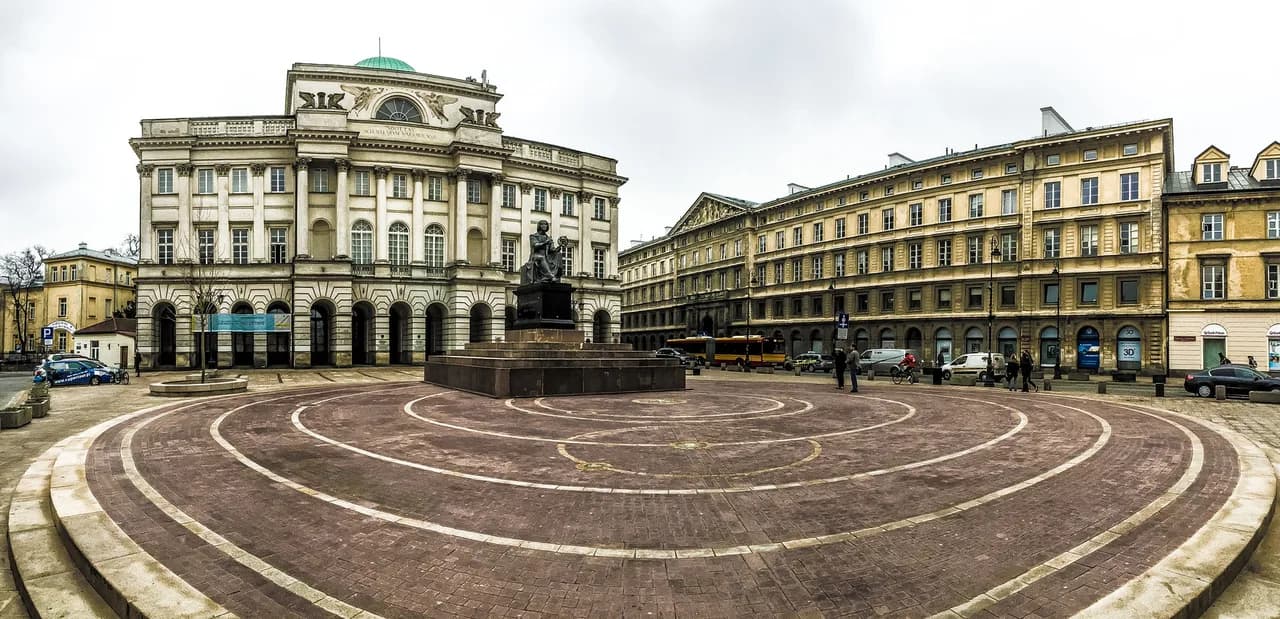
You will likely be on your feet for long stretches, and the terrain in the historic center is uneven cobblestone. The footwear that works for this is comfortable walking shoes or trainers with grip, cushioning, and a sole that does not slide on a wet paving stone. General packing guidance for Warsaw specifically calls for cushioned sneakers with grippy soles for cobblestones and long walking days.
Fit matters more than type, so break in your main pair before you travel and test them on a walk that lasts longer than a typical day in the city. If you bring a second, lighter pair, you gain a dry option after a wet day and a slightly dressier look for an evening out, but you also add weight and volume. For a short trip, one well-chosen pair plus a backup that takes little space is usually the better trade.
Rain and Wind Extras
A compact umbrella and a packable rain shell are two different answers to the same problem, and September is a good month to carry one of each strategy. A folding waterproof jacket keeps both hands free, works in wind, and layers over your mid-layer without much bulk. A compact umbrella gives you quick coverage when a shower arrives and works over any outfit you already have on.
Warsaw can feel breezy because of wide streets and tall buildings, which is another reason the shell is worth bringing even on a day that starts clear. General guidance notes that rain in Warsaw can arrive at any time of year, which is the argument for keeping a rain layer in your day bag rather than in your suitcase. Choose your primary response and treat the other as a light backup.
Smart-Casual for Museums, Dinners, and Concerts
A clean smart-casual outfit handles many museum afternoons, dinners, and concerts in Warsaw. Dark trousers with a sharp top layer, such as a light blazer or a polished knit, is a low-effort way to look put together without packing a separate formal outfit. This is an editorial suggestion for visitors, not a mandatory dress code.
Some venues may have their own expectations, and you cannot assume the same rule applies across a museum, a restaurant, and a concert hall. If you are unsure about a specific place, check with that venue directly before you go. That one check is more reliable than any general rule.
Day Bag and Transit-Relevant Items
A compact crossbody or a small zippered daypack is useful for trams and busy streets, because it keeps your hands free and your valuables in front of you. Carry a compact umbrella or the shell in it, along with a water bottle and a power bank. The power bank matters more on a long walking day, when maps and transit apps drain a phone battery faster than you expect.
Keep the rest of the load small so the bag stays comfortable on cobblestones. A few snacks and a blister kit take almost no room and cover the two most common day-out problems. This keeps the day bag a working tool rather than a second suitcase.
A Compact Packing Example for a Short Trip
For a trip of a few days in September, a lean capsule starts with three or four base tops in a mix of short and long sleeves. Add one or two packable mid-layers, one light waterproof shell, and two bottoms, one lighter and one warmer. One broken-in pair of walking shoes plus a backup that packs flat is enough.
Layer the small items on top of that: a compact umbrella, a crossbody or daypack, a power bank, and the smart-casual top layer you would wear to dinner. General packing advice for Warsaw suggests packing a few days of clothing and doing laundry rather than bringing a piece for every day, which is what keeps the capsule workable. If something is missing, clothing is widely available in the city.
What to Leave Behind
Leave the heavy winter coat at home in September; it will be dead weight on a warm afternoon and it does not layer well under a light shell. Skip several pairs of bulky shoes, since one comfortable walking pair and one lighter backup cover nearly every day. Do not build an outfit for each day of the trip.
Because essentials are widely available locally, overpacking is not necessary for a Warsaw trip, and the general packing source for the city makes exactly that point. This is also true of toiletries and small accessories. Pack light and treat a forgotten item as a small, solvable problem.
Before You Go
Recheck the forecast for your specific dates rather than relying on seasonal averages. Test your walking shoes on a longer route at home so a blister does not become part of your trip. Move the shell and the umbrella into your day bag so they are already with you.
Confirm baggage rules with your own airline directly, since limits vary by carrier and fare. If you are travelling at a colder time and want to see how the packing logic shifts, what to wear in Warsaw in December applies the same system with real insulation. A short final check on the forecast and your bag weight is the last step before you go.
Plan Your Visit
September in Warsaw rewards a three-layer system and a single broken-in pair of walking shoes. Build around a light base, a packable mid-layer, and a folding waterproof shell, then add one smart-casual top layer for museums and dinners. That combination handles a warm afternoon and a cool evening without weighing down your bag.
Check the forecast for your dates shortly before departure and confirm your airline's baggage rules with the airline. Keep your rain layer in your day bag and leave the winter coat at home. For colder months, switch the system rather than adding to it.
Frequently Asked Questions
What clothes should I pack for Warsaw in September?
Build around layers: a light base top, a packable mid-layer such as merino or fleece, and a light folding waterproof jacket. Add lightweight trousers or jeans, comfortable walking shoes, and one smart-casual top layer for evenings. Check the forecast for your specific dates before you pack.
Is Warsaw cold in September?
General guidance describes Warsaw's autumn as a swing season rather than a consistently cold one. That is a historical seasonal tendency, not a forecast, so September can bring warm afternoons and cool evenings in the same week. Check the forecast for your travel dates.
Do I need a rain jacket for Warsaw in September?
A light folding waterproof jacket is the more versatile choice because it keeps your hands free and layers over a mid-layer without much bulk. A compact umbrella is a useful secondary option for quick coverage. General guidance notes that rain in Warsaw can arrive at any time of year, which supports carrying at least one rain layer.
What shoes are best for walking in Warsaw?
Comfortable walking shoes or trainers with grip and cushioning work best for cobblestones and long walking days. Break them in before you travel, and consider a second lighter pair as an optional dry backup rather than an essential. Avoid anything slippery on wet paving stones.
What does the 3-3-3 rule for packing clothes mean?
It is a common capsule formula that keeps a bag light by limiting tops, bottoms, and shoes to a small set that mixes together. It is a packing convention, not a rule from any Warsaw authority. For a short trip, a lean capsule plus laundry is enough, and general guidance for Warsaw suggests packing a few days of clothing.
Is there a dress code for tourists in Poland?
There is no single general dress code for visitors. Outfit suggestions for museums, dinners, and concerts are editorial ideas rather than mandatory rules, and specific venues may have their own expectations. If you are unsure about a particular place, check with that venue directly.
What should I not pack for a September trip to Warsaw?
Skip the heavy winter coat, several pairs of bulky shoes, and a separate outfit for each day. Warsaw has plenty of clothing shops, and the general packing source for the city says the golden rule is to pack less, so a forgotten small item is easy to replace. Keep the bag light and the layers flexible.
How many outfits do I need for a few days in Warsaw?
For a trip of a few days, plan on a few base tops, one or two mid-layers, two bottoms, and one or two pairs of shoes, then repeat combinations. General guidance for Warsaw suggests packing several days of clothing and doing laundry rather than bringing a fresh outfit for every day. Check your airline's baggage rules directly before you finalize the count.
Sources
Free: The Ultimate Packing Cheat Sheet
A carry-on capsule wardrobe, the complete packing checklist, layering made simple, and what to wear by season — one printable page you'll use on every trip.
You might also like


Continue reading
More guides you'll find useful


