

Arequipa Packing List: What to Wear in the White City and Colca
Plan an Arequipa packing list for high-altitude sun, cold evenings, and Colca day trips with layer systems, footwear trade-offs, and a compact carry example.
On this page
Arequipa weather month by month
Typical conditions from 30 years of daily weather data — use it to see how much to pack for the month you are travelling.
| Month | High / low | Days with rain | Afternoon humidity | Daylight |
|---|---|---|---|---|
| January | 19° / 12°C (66° / 53°F) | 9 in 10 days | 61% | 12.9 h |
| February | 19° / 12°C (65° / 53°F) | 10 in 10 days | 65% | 12.5 h |
| March | 19° / 11°C (66° / 52°F) | 9 in 10 days | 63% | 12.1 h |
| April | 20° / 10°C (67° / 51°F) | 5 in 10 days | 53% | 11.6 h |
| May | 21° / 9°C (70° / 47°F) | 1 in 10 days | 33% | 11.2 h |
| June | 21° / 7°C (71° / 45°F) | Rare | 21% | 11 h |
| July | 21° / 7°C (70° / 45°F) | Rare | 20% | 11.1 h |
| August | 22° / 8°C (72° / 46°F) | Rare | 20% | 11.4 h |
| September | 23° / 9°C (73° / 47°F) | Rare | 23% | 11.9 h |
| October | 23° / 10°C (73° / 50°F) | 1 in 10 days | 27% | 12.4 h |
| November | 22° / 11°C (72° / 52°F) | 1 in 10 days | 33% | 12.8 h |
| December | 21° / 12°C (70° / 54°F) | 4 in 10 days | 46% | 13 h |
Travelling on specific dates? Use our What to Wear Planner for the weather, outfits and a packing list for your exact days in Arequipa.
Averages for 1991-2020, modelled from Copernicus ERA5-Land and ERA5 reanalysis via Open-Meteo open data (CC BY 4.0), adjusted to Arequipa's elevation. Modelled afternoon highs can read 1–2°C below airport weather-station records.
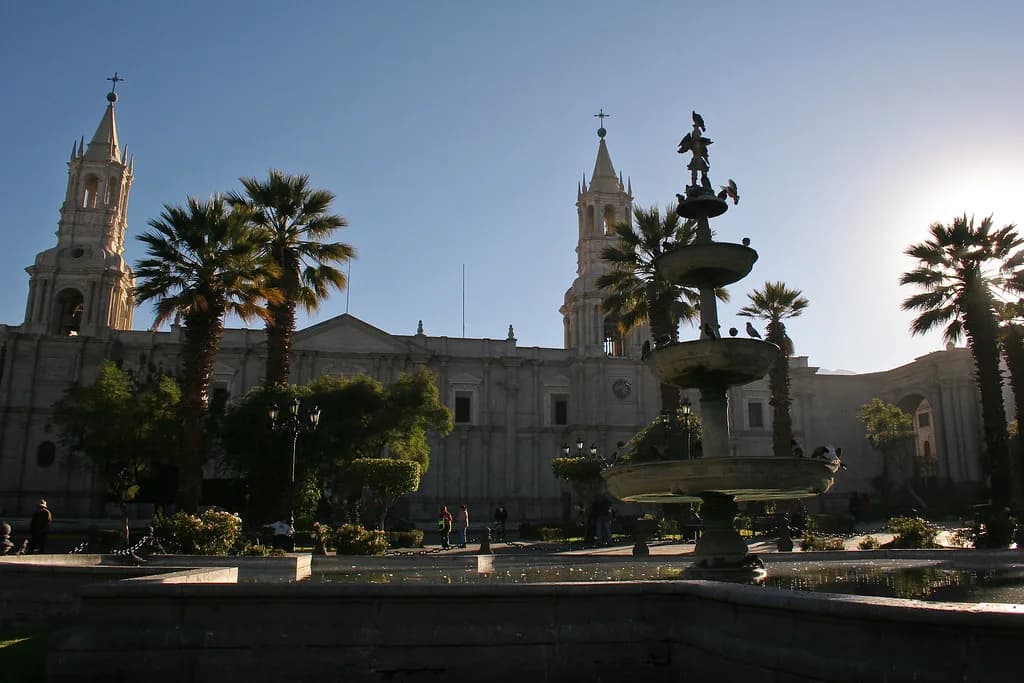
Arequipa sits in a high-altitude desert where the same afternoon can deliver strong overhead sun and a sharp drop in temperature after sunset. The city is nicknamed the White City because so much of it is built from sillar, the pale volcanic rock quarried nearby, and that bright stone reflects light onto streets where you will spend a lot of time on foot. Packing well here is less about one perfect outfit and more about a layer system you can strip down and build back up.
The practical approach is to plan two packing zones: city days and canyon day trips. City days reward breathable, sun-blocking clothing and comfortable walking shoes; canyon trips add a pre-dawn start, a small day pack, water, snacks, and a shell for wind or light rain. Keeping those zones separate stops you from hauling canyon gear through the plaza at midday.
Historical seasonal tendencies matter more than a single forecast. Published guidance describes mid-September to mid-April as dry, hot, and strongly sunlit, and mid-April to mid-September as colder, especially between June and August, with no rain in either stretch. Use those tendencies to choose fabrics and layers, then confirm the actual outlook for Arequipa and for Chivay shortly before you leave.
Arequipa Packing Zones: City Days and Canyon Day Trips
Treat Arequipa as two packing problems rather than one. City days involve cobblestone streets, long lunches, and afternoon walking under reflected light, so you want a brimmed sun hat, dark glasses, a light jacket for the afternoon, a long-sleeve light shirt, light pants, and running shoes. Published packing guidance for Arequipa city tours also names high-SPF sunblock as necessary rather than optional.
Canyon day trips pull you out of the city before dawn and return you after dark, so the clothing decisions shift. You still want sun protection for the middle of the day, but you also need a warm mid layer, a windproof or waterproof shell, and a compact day pack that holds water, snacks, a camera or binoculars, and the layers you shed as the morning warms.
The overlap between the two zones is your core wardrobe: moisture-wicking tops, one or two medium layers, light pants, and a shell. Everything else is either a city accessory or a canyon add-on. Keeping that distinction visible while you pack is the simplest way to avoid a bag that is heavy in the plaza and still cold at altitude.
Arequipa Weather Tendencies by Season
Published guidance splits the year into two broad tendencies. From mid-September to mid-April, Arequipa is described as rain-free, hot, and strongly sunlit, with more solar radiation than average. From mid-April to mid-September, the climate turns cold, most noticeably between June and August, and remains dry.
For the warmer stretch, choose breathable long sleeves and light pants over heavy cotton, and plan on a sun hat and high-SPF sunblock doing real work. For the cooler stretch, add a warm jacket, warm pants or jeans, and winter socks to the same base clothing rather than replacing it. If your trip falls in the cooler months, the what to wear in Arequipa in May page walks through that wardrobe shift in more detail.
Shoulder months reward flexibility. April sits at the transition between the hotter and colder tendencies, so a wardrobe that handles a warm afternoon and a cold evening is more useful than a wardrobe optimised for one extreme; the what to wear in Arequipa in April page is useful for that shoulder-season packing decision. Whichever month you travel, treat these as historical patterns and check a current forecast for both Arequipa and Chivay before you finalise your bag.
The Layer System That Works at Altitude
Start with a moisture-wicking base layer in a synthetic or wool blend rather than cotton. Published Peru packing guidance recommends several moisture-wicking tops and a thin thermal base layer that can sit under everything at higher altitudes. Two or three base tops let you re-wear one while another dries, which matters more than raw quantity.
Over that, carry one or two medium layers such as a fleece or a packable down jacket. These are the pieces you stuff into a day pack and pull on when the afternoon shade arrives or when a Colca morning starts cold. A waterproof and windproof outer shell with a hood sits on top and handles wind, drizzle, and the temperature drop after sunset.
Add a warm hat and gloves for cold evenings, and keep a light brimmed hat for sunny days. A buff or bandana is a small, useful extra that works as a neck gaiter, headband, or sweat rag. Packing both a sun hat and a warm beanie is a deliberate choice, not duplication: they solve opposite problems on the same day.
Outfit Combinations to Copy
For a city afternoon, combine a long-sleeve light shirt, light pants, running shoes, a brimmed hat, and UV-blocking sunglasses, with a light jacket in your bag for later. This is an editorial suggestion based on published Arequipa packing advice, not a dress code, and it is easy to adjust for personal comfort. The hat and sunglasses matter because the pale stone and open plaza amplify the midday light.
For a cool evening, swap the light jacket for your warm mid layer and add a beanie and gloves if you run cold. For a Colca day trip, build the same base but add a windproof shell, warm socks, and a small day pack with water and snacks. For a travel day, wear your bulkiest shoes and your heaviest jacket so they do not consume bag space.
If your trip includes a smart dinner, bring one wrinkle-resistant outfit that works with your walking shoes. A general Peru packing list suggests one wrinkle-free dress and a mix of neutral pieces for that purpose. Keep it to a single outfit so it does not compete with the layers you will actually wear during the day.
Sun Protection You Will Actually Use
A brimmed hat, UV-blocking sunglasses, high-SPF sunblock, and lip balm with SPF are the four items that earn their space in Arequipa. Published guidance treats high-SPF sunblock as necessary for city touring, and separate guidance calls sunscreen and lip screen must-haves in strong mountain sun. Reapply through the day rather than relying on a single morning application.
Sunglasses should block UV and ideally be polarised, since glare off pale stone and bright high-altitude light is constant. A light long-sleeve shirt doubles as sun protection, which is why published guidance recommends long sleeves in Arequipa even when temperatures are high. If you wear a cap instead of a brimmed hat, add sunscreen to your ears and neck.
Carry sunblock in your day pack, not just in your suitcase, so it is available during a long canyon day. A small tube or solid stick is easier to reapply on the move than a large bottle. Check the expiry date before you travel and replace anything that has been open for a long time.
Footwear for Cobblestone Streets and Uneven Terrain
Published Arequipa packing guidance recommends running shoes for city comfort, while broader Peru packing guidance recommends one pair of well broken-in hiking boots. The honest trade-off is weight versus grip: running shoes are lighter and easier on long paved walks, while hiking boots offer more support and traction on rougher ground. Neither is strictly required for the other's terrain.
If you bring hiking boots, break them in before departure and pair them with warm hiking socks. If you bring running shoes, accept that you may want to step carefully on uneven sections and consider a shoe with a grippy sole. Whichever you choose, bring only one primary walking pair and add closed, easy-to-slip-on camp shoes for evenings.
A second pair of sturdy shoes is usually the heaviest thing you can leave behind. If your itinerary is mostly city walking with one canyon day, a single versatile pair plus camp shoes covers it. If you plan longer hikes around the valleys, prioritise the hiking boots and treat the city as a bonus.
What to Pack for a Colca Canyon Day Trip
A small day pack is the centre of a Colca day trip. Published Arequipa guidance suggests a light backpack with bottled water in a reusable container, snacks, a camera, and binoculars for the viewpoints. Add your warm mid layer, shell, sun protection, and a warm hat for the pre-dawn start.
Carry more water than you think you need and refill from a reusable bottle rather than buying single-use plastic. A water bladder or a wide-mouth bottle both work; the goal is easy access without stopping. Pack snacks with some fibre and protein so a long morning between meals does not derail the day.
A light rain poncho or shell belongs in the pack even in the dry season, because canyon weather can differ from the city. A buff, a compact first-aid kit, and a headlamp are small additions that earn their place on an early start. Confirm pickup time and meeting point with your operator the day before, since those details change by provider.
A Compact Five-Night Arequipa Packing Example
For five nights split between city days and one canyon day trip, three moisture-wicking tops, two medium layers, one shell, two pairs of pants, one warm hat, one sun hat, one pair of gloves, and three pairs of socks form a workable core. Add one smart outfit, one swimsuit, and one pair of walking shoes plus camp shoes. That mix covers warm afternoons, cold evenings, and a pre-dawn canyon start without a separate wardrobe for each.
Packing cubes keep the layers organised and make it obvious when you are overpacking. Laundry is a realistic space-saving strategy on a longer trip: one Peru packing guide describes a mid-trip laundry day costing about ten dollars, though prices vary by provider and location, so treat that as an example rather than a fixed rate and confirm locally.
Plan one laundry stop rather than packing seven of everything. A wash-and-stain bar or a few dryer sheets handle small refreshes between washes. If your trip extends into November or December, the what to wear in Arequipa in November and what to wear in Arequipa in December pages can help you adjust the same core for those months.
What to Leave Behind
Leave heavy cotton at home. It holds sweat, dries slowly, and works against the layer system that high-altitude days reward. Published guidance specifically favours wool and synthetic fabrics that wick moisture instead. A single cotton t-shirt for evenings is fine; a cotton wardrobe is not.
Skip extra shoes beyond your walking pair and camp shoes, and think twice about bulky camera gear. A Peru packing guide notes that DSLRs can be cumbersome while trekking and that a compact camera or phone often suffices. If photography is a priority, bring one versatile lens rather than a full kit.
Avoid single-use plastics, including disposable ponchos, and bring a reusable bottle instead. Leave duplicate layer items behind: a third mid layer or a second shell adds weight without adding range. Also leave formal shoes at home unless you have a specific event that requires them.
Documents and Day-Carry Essentials
Carry your passport, since published guidance says to always carry it while travelling in Peru, and keep a photocopy or photo stored separately. Carry some cash in soles for small purchases and souvenirs, because not every stall or small vendor takes cards. Keep documents in a waterproof bag or pouch inside your day pack.
Your day pack should hold water, snacks, sun protection, a layer, and your documents without becoming heavy. A 25-litre pack is a reasonable size for city and canyon days, based on one Peru packing guide's recommendation. Add a small umbrella or shell, hand sanitiser, and tissues, since not every stop will have them.
Check the entry rules and document validity requirements with the relevant official authority rather than relying on a packing guide. Requirements can change, and only the issuing authority can confirm what applies to your passport and itinerary.
Before You Leave: Weather, Pickup, and Gear Checks
Check the forecast for Arequipa and for Chivay in the days before departure. The two locations can differ, and a canyon day trip starts early enough that morning temperatures matter more than the city afternoon. Use the historical tendencies in this guide to choose your layers, then adjust the final bag to the current outlook.
Confirm your day-trip pickup time and meeting point directly with the operator, because those details are set by the provider rather than by a general guide. Test your layers and shoes at home: wear the walking shoes on a long errand, pack the day bag with water, and check that your shell fits over your mid layer. Small fit problems are much easier to fix before you fly.
Plan Your Arequipa Packing Around Layers, Not Lists
Arequipa packing comes down to a small set of decisions: one layer system for city and canyon, one walking pair of shoes plus camp shoes, and sun protection you will actually reapply. Separate city gear from canyon gear, and you avoid carrying a heavy pack through the plaza on a sunny afternoon.
Use historical seasonal tendencies to choose fabrics and insulation, then confirm current conditions for Arequipa and Chivay before departure. Check requirements with official sources, and confirm day-trip logistics with your operator. With those checks done, a compact five-night bag is enough for the White City and the valleys around it.
More packing guides for Peru
- Arequipa Altitude Layering Guide: What to Wear
- Colca Canyon Trekking Packing List: Clothing, Footwear and Gear
- What to Wear in Arequipa in April: Post-Rainy-Season Layers
- What to Wear in Arequipa in December: Rain-Ready Layers
- What to Wear in Arequipa in May: Layers for Bright Days and Cold Nights
- What to Wear in Arequipa in November: Layering & Rain-Ready Packing
- Lima Packing List: What to Wear on the Desert Coast
- Cusco Packing List: Layers, Rain Gear, and Footwear
Frequently Asked Questions
Do I need hiking boots for Arequipa?
Not strictly. Published Arequipa packing guidance recommends running shoes for city comfort, while broader Peru guidance favours well broken-in hiking boots for support and grip. If your itinerary is mostly city walking with one canyon day, a single versatile walking pair plus camp shoes is usually enough. If you plan longer hikes around the valleys, bring the hiking boots and break them in beforehand.
Is a down jacket necessary for Arequipa evenings?
Not necessarily, but a warm mid layer is. Published guidance for the colder stretch from mid-April to mid-September recommends a warm jacket, and general Peru packing advice includes a packable down jacket as one option. A fleece works for many travellers; a down jacket packs smaller and adds more warmth for its weight. Add a beanie and gloves for cold evenings.
Can I wear shorts in Arequipa?
Shorts are an editorial option rather than a rule, and how comfortable they are depends on the season and the time of day. Sun protection matters more than the length of your trousers, so long sleeves and a hat are often more useful for daytime walking than switching to shorts. For canyon mornings, light pants are the more versatile choice.
Do I need rain gear for Arequipa?
Published guidance describes both main stretches of the Arequipa year as rain-free, but canyon weather can differ from the city. A light shell or compact poncho is a small addition that covers wind, drizzle, and the temperature drop after sunset. Bring a reusable poncho rather than single-use plastic.
What should I leave behind when packing for Arequipa?
Leave heavy cotton, extra shoes beyond a walking pair and camp shoes, duplicate layers, and bulky camera gear. Single-use plastics are also worth avoiding; bring a reusable water bottle instead. If you are not attending a specific formal event, formal shoes can stay home too.
How many outfits do I need for a five-night Arequipa trip?
A compact example is three moisture-wicking tops, two medium layers, one shell, two pairs of pants, three pairs of socks, one smart outfit, and a swimsuit. Add a warm hat, sun hat, and gloves, plus one walking pair and camp shoes. Plan one laundry stop if you would rather pack less.
What should I bring for a Colca Canyon day trip?
A small day pack with water, snacks, sun protection, a warm mid layer, a shell, and a hat for the pre-dawn start. A camera and binoculars are useful at the viewpoints. Confirm pickup time and meeting point with your operator the day before.
Should I carry my passport in Arequipa?
Published guidance says to always carry your passport while travelling in Peru, and cash in soles for small purchases. Keep a photocopy or photo stored separately. Check current document requirements with the relevant official authority before you travel, since those rules can change.
Sources
Free: The Ultimate Packing Cheat Sheet
A carry-on capsule wardrobe, the complete packing checklist, layering made simple, and what to wear by season — one printable page you'll use on every trip.
You might also like


Continue reading
More guides you'll find useful


