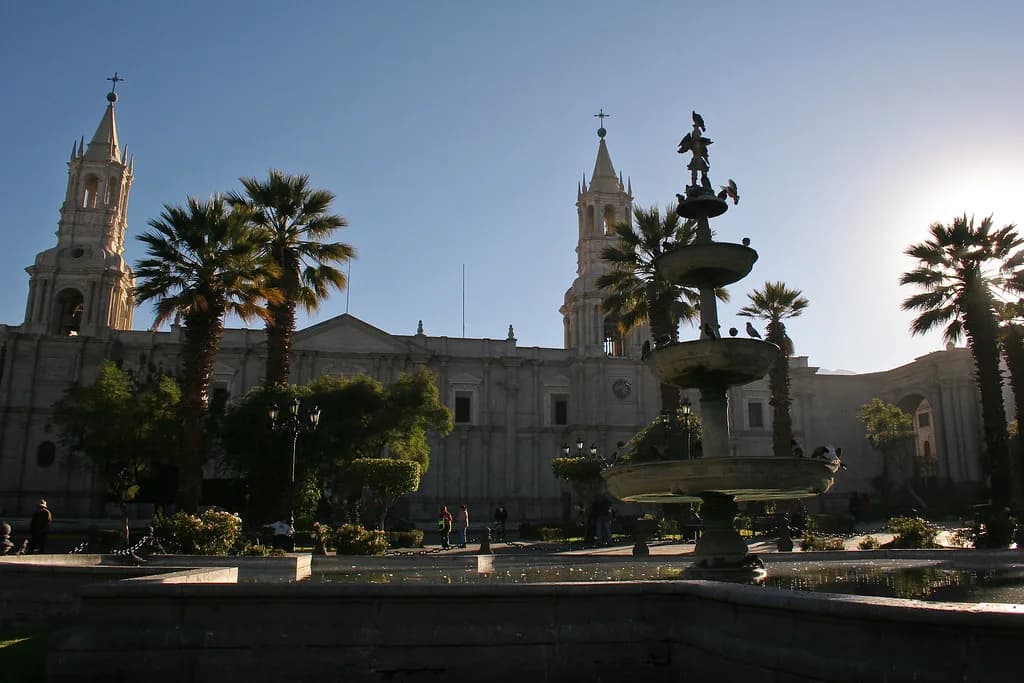
What to Wear in Arequipa in November: Layering & Rain-Ready Packing
Plan what to wear in Arequipa in November with quick-dry layers, a light raincoat and grippy shoes for changeable Andean days and cool evenings.
On this page
Arequipa in November: the weather in numbers
Typical November conditions from 30 years of daily weather data, split into early, mid and late month so you can match them to your travel dates.
| Dates | Early Nov (1–10) | Mid Nov (11–20) | Late Nov (21–30) |
|---|---|---|---|
| Afternoon high | 23°C (73°F) | 22°C (72°F) | 22°C (72°F) |
| Night-time low | 11°C (51°F) | 11°C (52°F) | 12°C (53°F) |
| Feels like (afternoon) | 20°C (68°F) | 20°C (67°F) | 20°C (68°F) |
| Range of afternoon highs | 21–24°C | 20–24°C | 20–24°C |
| Days with rain | 1 in 10 days | 2 in 10 days | 1 in 10 days |
| Afternoon humidity | 30% | 34% | 35% |
| Average wind | 7 km/h | 6 km/h | 6 km/h |
| Daylight | 12.7 h | 12.8 h | 12.9 h |
What this means for your suitcase
- Mild days: long sleeves with a light sweater or jacket you can take off at midday.
- Evenings run about 11°C (20°F) cooler than afternoons — carry a layer for after sunset.
Travelling on specific dates? Use our What to Wear Planner for the weather, outfits and a packing list for your exact days in Arequipa.
Averages for 1991-2020, modelled from Copernicus ERA5-Land and ERA5 reanalysis via Open-Meteo open data (CC BY 4.0), adjusted to Arequipa's elevation. Modelled afternoon highs can read 1–2°C below airport weather-station records.
November sits in the transition between the Andean dry season and the wetter months, which makes it one of the harder months to pack for in a single pass. Days can feel warm and bright in the sun, while evenings and early starts call for a warm mid-layer, and showers can arrive without much warning. Regional travel guidance for highland Peru treats November as part of a wetter, unpredictable stretch, so plan for variety rather than one fixed outfit.
The practical answer is a compact layering system: a breathable base, an insulating mid-layer, and a packable rain shell that lives in your day bag. Footwear matters just as much, since Arequipa's centre mixes paved streets, stone surfaces and uneven ground, and day trips can add rougher terrain.
November in Arequipa: What the Season Means for Packing Decisions
Broad regional guidance for Peru describes November to April as the summer or rainy season in the Andes, with warm and rainy conditions in highland areas and a transition feel in November specifically. Guidance for Cusco, elsewhere in the same Andean highland region, describes November through March as warmer but wetter, with cloudy and rainy afternoons. Treat these as historical seasonal tendencies rather than a forecast for your dates, and treat Arequipa's own numbers as something you confirm from a current local source.
That regional pattern has a direct packing consequence: you are packing for two modes in one day, sun and shower, rather than for a single climate. The most useful items are the ones that serve both, such as a light shell that doubles as a windbreaker and a base layer that dries quickly if it gets damp. If you want a broader month-by-month view before locking your bag, the Arequipa packing list breaks down what each season asks of you.
The Three-Layer Formula: Breathable Base, Warm Mid-Layer, Packable Rain Shell
A breathable base layer, a warm mid-layer and a packable rain shell cover most of what November can throw at you in the Andes. Packing advice for Peru's wetter season recommends quick-drying clothes, a raincoat and a fleece for chilly Andean nights, which maps neatly onto this three-part system. Because the mid-layer and shell are the pieces you add and remove, they should be the easiest items to access in your day bag.
Choose a long-sleeve base in a light synthetic or merino blend so it can sit under a fleece without bunching, and keep one short-sleeve option for genuinely warm midday hours. The mid-layer should be warm enough for a cool evening but thin enough to compress when the sun is out, and the shell should be light rather than heavily insulated so it layers over everything. Regional guidance notes that a raincoat is worth carrying for the shoulder and transition months because showers are unpredictable then.
Daytime in the City: What Works for Walking Arequipa's Streets and Squares
For daytime walking around the centre, think casual and comfortable: trousers or jeans you can move in, a light top, and a layer you can shed when the sun comes out. Guidance for Andean cities suggests casual, low-key clothing and comfortable walking or athletic shoes for days spent touring, with ankle boots as a warm and stable option for uneven cobblestone streets in the evening. That combination works well for Arequipa's mix of paved squares and older stone-surfaced lanes without looking out of place.
A small day bag keeps the system functional, because you will be adding and removing layers through the afternoon rather than wearing one fixed outfit. Keep the shell, a refillable water bottle and sun protection in the bag, and leave the heavy mid-layer at your accommodation if you are only out for the middle of the day.
Evenings and Early Starts: Why a Fleece or Sweater Earns Its Space
Evenings and early departures are where a warm mid-layer stops being optional, because Andean nights in highland Peru run considerably cooler than the afternoon. Regional advice for the wetter season still recommends packing a fleece for chilly Andean nights, which is the clearest signal that a warm layer belongs in the bag even when the daytime forecast looks mild. A compact fleece or fine-knit sweater adds little weight and covers the gap between a shirt and a proper jacket.
If you have an early tour departure, lay the fleece out the night before so you are not digging through a suitcase in the dark. A light scarf or buff is a small addition that helps on windy evenings and doubles as sun protection at altitude. For travellers heading onward to higher ground, the same logic scales up, and the Arequipa altitude layering guide explains how to extend the system for cooler and thinner-air conditions.
Footwear: Walking Shoes, Trail Shoes or Ankle Boots
Footwear is the decision that most affects how a November trip actually feels, and the honest answer is that the right choice depends on your terrain rather than a single rule. Regional guidance for Peru recommends sturdy footwear for cobblestone streets and uneven surfaces, and waterproof hiking shoes plus a raincoat and dry bag for the wetter season. For a city-focused Arequipa stay, cushioned walking shoes or light athletic shoes handle paved squares and stone lanes well; if your plans include rougher day-trip terrain, a grippier trail shoe with a deeper tread is the more useful trade-off.
Ankle boots sit between the two: warmer and more stable than a thin trainer on uneven cobblestones, but not a substitute for proper tread on loose ground. Whichever you choose, break them in before you fly and pair them with moisture-wicking socks so a damp afternoon does not turn into a blister. Editorial suggestion, not a requirement: grip and support are comfort decisions you make for your own itinerary, and no venue or site rule should be assumed from this guide.
Rain-Readiness Without Overpacking: Dry Bag, Compact Umbrella or Hooded Shell
You do not need a full wet-weather kit to handle a November shower, but you do need one reliable way to keep yourself and your electronics dry. Regional packing guidance for Peru's rainy season lists a dry bag alongside quick-drying clothes, waterproof shoes and a raincoat, which is a good indication that a small dry bag is worth the space. Choose one of three approaches: a hooded shell if you want your hands free, a compact umbrella if you prefer shade as well as rain cover, or a dry bag as a backup for camera gear and documents.
The lightest combination for most travellers is a hooded shell plus a small dry bag inside the day pack, which covers both sudden showers and the occasional soaking of a bag left open. Skip the heavy poncho unless you already own one and expect long exposure, since it is bulky and rarely needed for city days. Check your accommodation's laundry options before you rely on washing and drying mid-trip, as damp clothing dries slowly in cooler, cloudier conditions.
Fabric Choices: Why Quick-Dry Beats Heavy Cotton
Fabric choice matters more than item count on a wet-season trip, because a damp cotton shirt stays cold and heavy while a synthetic or wool blend keeps its shape and dries fast. Organised trip guidance for Peru specifically recommends quick-drying clothes, with sportswear as a practical example, along with a fleece for chilly Andean nights. If you only make one material upgrade for November, make it your base layers and socks.
Denim is fine for a city day if you are not expecting a soaking, but it is slow to dry and uncomfortable once wet, so many travellers take one pair and lean on lighter trousers for the rest of the trip. Wool or synthetic socks reduce the risk of cold, damp feet and pair better with waterproof footwear than cotton. When packing layers, favour pieces that can be worn twice between washes so a small bag still covers a full week. Specifically for Arequipa, source-based seasonal notes for September through November recommend packing a mix of short- and long-sleeve tops, one or two mid-layers such as a fleece or sweater, and a light jacket or windbreaker for shoulder-dry months; the final mid-layer and outer-layer pieces are best confirmed against a current local forecast for your travel dates rather than a fixed list.
Sun and Altitude: Hat, Sunglasses and What to Keep Accessible
November is not only a rain month; clearer intervals and high-altitude sun can still burn, especially around midday. Regional packing lists for Peru consistently include a sunhat, sunglasses and sunscreen, and pair them with a light raincoat because showers remain possible even in drier stretches. Keep these items in the top of your day bag so a change in conditions does not mean unpacking everything.
At altitude, sun exposure is often stronger than the temperature suggests, so a brimmed hat and sunglasses are useful even on cloudy afternoons. A refillable water bottle belongs in the same accessible pocket, since hydration is easier to maintain when the bottle is visible rather than buried.
A Compact Packing Example for a Five-Day November Trip
For a five-day trip, a workable editorial example is two quick-dry base layers, one short-sleeve top, one fleece or sweater, one packable rain shell, one pair of comfortable trousers plus one lighter pair, and one pair of broken-in walking or trail shoes. Regional guidance for the shoulder months suggests long-sleeved shirts and a warm midweight layer, with a raincoat as a must because showers are unpredictable, which matches this short list. Wash one base layer mid-trip rather than packing five separate outfits.
Add moisture-wicking socks, a hat and sunglasses, a refillable bottle, a small dry bag and a compact day pack, and you have covered both the warm and cool ends of a November day. This is an example rather than a rule: adjust quantities for your own laundry access, and swap the second pair of trousers for a warmer layer if you run cold. If your trip extends into December, the packing breakdown for what to wear in Arequipa in December will help you extend the same system rather than rebuild it.
What to Leave Behind, and Why
Leave the heavy insulated parka at home unless your itinerary includes high-altitude trekking or cold overnight conditions, because it is bulky and the layer you will actually use most is a light fleece plus a shell. Skip multiple pairs of heavy jeans, dressy shoes you cannot walk in, and expensive jewellery, since regional guidance suggests casual, low-key clothing and warns that valuable items attract unwanted attention in cities. Anything you would be upset to lose is better left in a hotel safe than carried around.
Also leave behind a large umbrella if you already carry a hooded shell, and reconsider a second camera bag if a small dry bag does the job. Bulk is the real cost in a one-bag trip, and a November wardrobe works best when every item layers with at least two others. If you are unsure whether a piece earns its space, ask whether it works on a warm afternoon and a cool evening; if not, it is probably a single-use item.
Before You Fly: A Quick Weather Check and Last-Minute Adjustments
Historical seasonal tendencies are not a forecast, so check a current local forecast in the days before departure and adjust the shell-to-sun ratio accordingly. If showers dominate the outlook, add the dry bag and confirm your shoes are genuinely waterproof; if the pattern looks drier, you can still keep the shell because highland showers can be unpredictable in transition months. Pack the mid-layer regardless, since evening temperatures in the Andes fall well below daytime levels.
Two practical checks before you zip the bag: confirm what your accommodation offers for drying damp clothing, and confirm the baggage rules with your specific airline rather than relying on general advice. If you are continuing to another part of Peru, compare that region's season with Arequipa's, since the coast, the Amazon and the highlands behave differently in November. A fifteen-minute check the night before is enough to move one or two items in or out of the bag.
Plan Your Visit
The core of a November wardrobe for Arequipa is a light, breathable base, a warm mid-layer, a packable rain shell and footwear you have already broken in on uneven ground. Add sun protection, a small dry bag and a refillable bottle, and you can move between a sunny square and a cool, damp afternoon without repacking. Keep the system small enough that every item layers with at least two others.
Because November conditions shift from year to year within the broader wet-season pattern, treat the list as a flexible framework and confirm the forecast close to departure. If your dates stretch into the following month, the guidance on what to wear in Arequipa in December shows how the same layers carry forward. Use the fuller Arequipa packing list to fill in the non-clothing essentials before you travel.
Frequently Asked Questions
What clothes should I pack for Arequipa in November?
Pack a small layering system rather than a single outfit: quick-dry base layers, one warm mid-layer such as a fleece or sweater, a packable rain shell, comfortable trousers and broken-in walking shoes. Add sun protection and a small dry bag for wet-weather days. Regional guidance for highland Peru treats November as part of a wetter, unpredictable stretch, so plan to adjust layers through the day rather than dressing for one fixed temperature.
Is it cold in Arequipa in November?
Days can feel warm in the sun while evenings and early mornings are considerably cooler, which is typical of highland Andean conditions. Pack a warm mid-layer for the cool ends of the day and a lighter base for midday. Check a current local forecast for your dates rather than relying on historical tendencies.
Do I need a raincoat in Arequipa in November?
A light raincoat or hooded shell is one of the most useful items you can carry, because November falls in Peru's wetter season in the Andes and in the shoulder months when showers are unpredictable. A compact shell layers over a fleece without adding much weight, and it also works as a windbreaker on cool evenings. If you prefer an umbrella, a compact one can replace the shell, but the shell leaves your hands free.
What shoes should I wear in Arequipa in November?
Choose based on terrain. Comfortable walking shoes or light athletic shoes handle paved squares and stone lanes well, while a grippier trail shoe with deeper tread is more useful if your plans include rougher day-trip ground. Ankle boots are a middle option that adds warmth and stability on uneven cobblestones. Whichever you pick, break them in before you fly, and treat grip and support as comfort decisions rather than a requirement.
What should I not bring to Arequipa in November?
Leave behind bulk that only serves one condition, such as a heavy insulated parka, multiple pairs of heavy jeans, or dressy shoes you cannot walk in. Expensive jewellery is best left at home, since regional guidance suggests casual, low-key clothing and notes that valuable items can attract unwanted attention in cities. If you already carry a hooded shell, a large umbrella is usually redundant.
How should women dress in Arequipa in November?
There is no verified dress code for visitors, so the practical approach is the same layering system that works for anyone: quick-dry base layers, a warm mid-layer, a packable rain shell and comfortable shoes. Regional guidance for Andean cities suggests casual, low-key clothing, which also keeps you comfortable moving between sun and shade. Check with any specific site you plan to visit if you want to know whether it publishes its own guidance.
Sources
Free: The Ultimate Packing Cheat Sheet
A carry-on capsule wardrobe, the complete packing checklist, layering made simple, and what to wear by season — one printable page you'll use on every trip.
You might also like


Continue reading
More guides you'll find useful