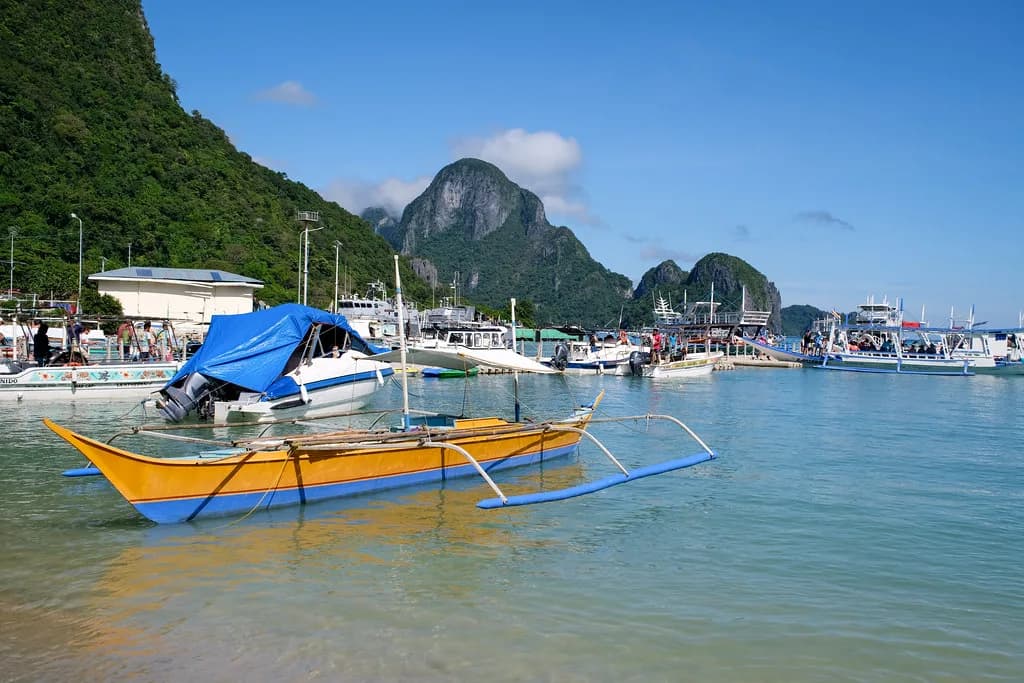
El Nido Rainy Season Packing: What to Bring for Wet Weather
Pack fast-drying layers, a compact rain shell, dry bags and grippy footwear for El Nido's rainy season so wet boat days and slick paths stay manageable.
On this page
El Nido's rainy season changes what belongs in your bag. When rain and choppy seas are more frequent, the goal shifts from looking beach-ready to keeping gear dry and clothes wearable between soakings. This guide covers the packing decisions that matter most from roughly June through September, with May and October as shoulder months when the same logic still helps.
The emphasis here is wet-season robustness rather than a generic beach list. Fast-drying layers, a compact rain shell, dry bags sized for a bangka boat, and footwear that handles wet limestone and slick town paths all earn their place. The companion piece on what to wear in El Nido in November covers the transition into drier months, so this article stays focused on the wettest window.
How the Wet Season Behaves in El Nido
Monsoon season in Palawan is typically at its strongest from June to September and can seep into the shoulder months of May and October. That is a historical seasonal tendency rather than a forecast, so treat any given week as uncertain. The practical packing response is to assume rain is possible most days and plan clothes that tolerate dampness. If your dates slip toward the drier end of that window, the November guide covers different layering choices.
Choppy seas are a real risk during the rainy off-season, and boat schedules can shift when conditions turn. Island-hopping departures may be delayed, rerouted, or cancelled on short notice, which means your packing needs a contingency layer. Keep a dry change of clothes and your electronics sealed even if the morning looks calm.
Rain does not usually mean a total washout of the day. Forum reports from the El Nido area note it generally should not rain all day long, which supports planning covered or indoor activities rather than writing off the day. Pack for intermittent rain and you will use more of your bag than if you packed only for sunshine.
Quick-Dry Fabrics Beat Cotton in El Nido's Humidity
Cotton holds water and dries slowly in humid air, which is the wrong combination when you may get rained on twice in one day. Quick-dry synthetics and merino wool release moisture faster and pack smaller, so a wet shirt from the morning can be wearable again by evening. If you only swap one clothing habit for this trip, make it this one.
Build the core of your wardrobe from two or three quick-dry shirts, one pair of light pants or linen trousers, and one light layer for cooler evenings or air-conditioned spaces. That gives you a rotation that survives a soaking without needing a full laundry day. The rest of your space can go to swimwear, a rash guard, and the rain gear that keeps the whole system working.
Use the broader El Nido packing list as the baseline for items that stay useful all year, then add the rain-specific layers described here. The combination keeps you from overpacking warm-weather clothes that never dry.
Rain Shell and Light Layer: What Both Add
A compact rain shell earns its place because it blocks wind-driven spray on bangka boats and handles town showers without soaking your shirt underneath. Look for something that packs into its own pocket or a small stuff sack, since space in cottage-style guesthouses is tight. A shell also doubles as a windbreak on choppy crossings when spray comes over the side.
The light layer underneath is a separate decision. Air-conditioned restaurants and buses can feel cool after a wet afternoon, and a light cardigan or long-sleeve layer bridges that gap without adding bulk. Both pieces together are more useful than either alone, because the shell handles rain and the layer handles temperature.
Do not treat a rain shell as optional just because El Nido is tropical. The rainy off-season is when you are most likely to be on open water in unsettled conditions, and a shell that fits in a day bag is the difference between a wet afternoon and a ruined one. Test the fit over your daypack before you leave so you know it works with the layers you actually carry.
Swimwear Rotation When Nothing Dries
Swimwear is the hardest item to dry in El Nido's humidity, so plan the rotation around drying time rather than a fixed number. Packing two to three sets is an editorial suggestion that lets one dry while you wear another and keeps a third in reserve for a second boat day. If you only bring one set, you will be putting on damp swimwear every morning.
A long-sleeve rash guard is one of the most useful items for wet-season boat days. It protects against sun on open water, adds warmth when the boat gets breezy, and dries faster than a cotton shirt. It also reduces how much sunscreen you need on your shoulders and back, which matters when you are in and out of the water all day.
Wring swimwear and rash guards in a towel before hanging them, and choose a spot with moving air rather than a closed bathroom. In small guesthouse rooms, a travel clothesline or a few hooks near a fan makes the difference between dry and permanently damp. This is also where a second swimwear set pays off, because you are never waiting on a single piece to dry.
Footwear for Wet Limestone, Bangka Wading, and Slick Town Paths
El Nido's terrain splits into three footwear problems. Water shoes or sandals with gripping soles handle rocky beaches, wading to bangka boats, and snorkel spots with sea urchins. A separate pair of sandals or flip-flops covers town and casual walks. The El Nido footwear guide goes deeper on specific models and trade-offs if you want to narrow the choice.
Wet limestone and slick town paths are the reason grip matters more than cushioning in rainy season. Smooth-soled sandals can slide on wet rock steps and polished pavement near the beach, so look for tread with actual lugs. Closed-toe shoes are useful if you plan to walk to Nacpan Beach or tackle Taraw Cliff, but they are not the right pick for wading to a boat.
Bring both a wading pair and a dry pair so you are not stuck in soaking shoes for dinner. Water shoes pack flat and dry faster than closed-toe trainers, which makes them the better second pair for a wet-season week. If you only have room for one, prioritize the pair that can get wet and still grip.
Dry Bags and Waterproofing Electronics
Bangka boats have no watertight storage and splashing is constant, so a dry bag is the single most important gear item for island hopping. A 10-liter dry bag fits a phone, wallet, camera, and sunscreen. A 20-liter bag adds room for a spare shirt, a quick-dry towel, and snacks. Choose the size based on whether you are carrying for one person or sharing with a partner.
Double-bag valuables by putting your phone and wallet in a ziplock inside the dry bag. This costs almost nothing in weight and protects against a poorly sealed roll-top or a bag that gets submerged during a wet landing. A waterproof phone case is a lighter alternative for days when you want to take photos near the water without pulling out the full dry bag.
Keep the dry bag inside your daypack on the boat rather than clipped outside, and check the seal before every departure. Roll the top at least three times and clip it closed; a dry bag with a loose roll is just a wet bag with extra steps. Test it at home with a tissue inside before you trust it with a camera.
Quick-Dry Towel and Post-Soak Recovery
A quick-dry microfiber towel is worth the space because guesthouse towels are often provided but not always suited to beach days. It dries much faster than terry cloth, so it is ready for the next boat morning instead of sitting damp in your bag. Pack one large towel for the room and a smaller one for day trips if you have room.
The post-soak routine matters as much as the towel itself. Rinse salt water out of swimwear and rash guards in fresh water when you get back, wring them in the towel, and hang them where air moves. Rinsing prevents salt crystals from stiffening fabrics and keeps the next day's wear more comfortable.
If you get caught in a downpour, change out of wet clothes rather than waiting for them to dry on your body. Tropical humidity plus wet fabric is a recipe for chafing and feeling cold on an air-conditioned bus. A dry set of town clothes in the dry bag solves this without a trip back to the guesthouse.
Power Banks and Occasional Outages
Power outages are occasional in El Nido, so a power bank is a practical item rather than a luxury. A 10,000 mAh or larger battery keeps your phone alive through a long boat day with no charging access and covers you if the guesthouse power cuts out overnight. Charge it every evening so it is full for the next morning.
Extra camera batteries follow the same logic: full days on the water with no charging access drain a mirrorless camera quickly. A compact headlamp or flashlight is useful when path lighting is limited at night, especially if the power is out. None of these items are heavy, but together they make an outage a minor inconvenience instead of a ruined evening.
Check what your guesthouse provides before you pack a full charging kit. Many places have outlets in the room, but a universal adapter is worth confirming against your own plugs rather than assuming. If you need specific voltage or plug compatibility, verify it with your accommodation or the manufacturer of your device.
Compressed Example Packing List for a Wet-Season Week
For a week in El Nido during the rainy season, start with two to three swimwear sets, one long-sleeve rash guard, two to three quick-dry shirts, one pair of light pants, and one light layer. Add a compact rain shell, water shoes, sandals, a 10- to 20-liter dry bag, a quick-dry microfiber towel, and a power bank. That set covers boat days, town evenings, and a wet afternoon without needing a second bag.
Adjust quantities by laundry access, not by a fixed rule. If your guesthouse offers same-day laundry, you can drop one shirt and one swimwear set; if not, keep the full rotation so you always have something dry. A soft-sided backpack or duffel works better than a hard suitcase because it fits in small guesthouse rooms and is easier to carry on and off bangka boats.
Leave a little room for souvenirs such as woven bags, honey, or dried seafood, and weigh your bag before flying. Domestic Philippine airlines on Palawan routes can have strict carry-on limits, so check your specific airline's allowance rather than assuming a standard. If you are close to the limit, move the heaviest items into a personal item or wear your bulkiest layer on the plane.
What to Leave Behind in Rainy Season
Leave the heavy cotton clothing at home, because it will be wet for most of your trip and slow to dry. Skip valuable jewelry and anything that gets damaged by salt water, sand, and constant outdoor use. A hair dryer is usually unnecessary, since power can be limited and air-drying is the norm.
Do not bring bulky snorkel gear if you are not particular about fit; most island-hopping tours provide basic equipment. If you do bring your own mask for hygiene or a prescription fit, keep it compact and skip fins, which are too bulky to pack and can be rented locally. Packing light makes the wet-season logistics easier because you have less to keep dry.
Leave the hard-shell suitcase behind in favor of a soft bag. It stores more easily in small rooms and is simpler to handle on wet boat transfers where you may be carrying your own luggage. If you are deciding between two bags, the smaller one that still fits your dry bag and footwear is the better choice.
Before You Go: Weather Check and Schedule Flexibility
Check the forecast for El Nido in the days before departure and again the morning of any boat trip. Seasonal patterns tell you what is likely, not what will happen on your specific date, so the forecast is the tool that adjusts your packing at the last minute. If heavy rain is expected, move the rain shell and dry bag to the top of your daypack.
Keep your island-hopping schedule flexible because boat departures can shift with sea conditions. If you book tours in advance, ask the operator about their policy for rescheduling or cancelling due to weather, and avoid stacking two boat days back-to-back if you can spread them out. A buffer day also gives wet clothing and footwear time to dry.
For days when the water is too rough, plan alternatives that do not depend on a boat. Massage, reading, cards, and covered cafes are all reasonable options that forum contributors mention for rainy days in El Nido. None of those require a separate packing category, so they work with the same bag you already built.
Plan Your Visit
Wet-season packing for El Nido comes down to four decisions: quick-dry fabrics, a compact rain shell with a light layer, a dry bag sized for your electronics, and footwear that grips wet surfaces. Get those right and the rain becomes a manageable variable rather than a trip-defining problem. Add a power bank, a quick-dry towel, and a flexible boat schedule, and you have a kit that works whether the forecast holds or not.
Start from the full El Nido packing list and strip it down to the wet-weather essentials described here. If your travel dates fall later in the year, the November guide covers the transition into drier conditions and different layering choices. Either way, check the forecast before you leave and keep one dry change of clothes sealed in your day bag.
Frequently Asked Questions
What should I pack for El Nido during the rainy season?
Focus on fast-drying clothing, a compact rain shell, a light layer, water shoes, sandals, a dry bag for electronics, and a quick-dry microfiber towel. Add a power bank and pack two to three swimwear sets so one can dry while you wear another. The goal is a rotation that survives repeated soakings without a laundry day.
Does it rain all day in El Nido during wet season?
Not usually. Rain in the wet season tends to come in bouts rather than lasting all day, though the timing and intensity vary. Plan for intermittent rain, keep a dry change of clothes in a dry bag, and have a covered backup activity ready for the wettest hours.
What kind of shoes do I need for El Nido in the rain?
Water shoes or sandals with gripping soles work best for wading to bangka boats, rocky beaches, and snorkel spots. Bring a separate pair of sandals or flip-flops for town, and choose tread with real grip because wet limestone and slick pavement are common in the rainy season. Closed-toe shoes are optional and better suited to land walks than boat days.
How do I keep my phone and camera dry on a bangka boat?
Use a 10- to 20-liter dry bag and double-bag valuables by putting your phone and wallet in a ziplock inside it. Bangka boats have no watertight storage and splashing is constant, so keep the dry bag inside your daypack and check the roll-top seal before every departure. A waterproof phone case is a lighter option for quick photos near the water.
How many swimsuits should I bring to El Nido in wet season?
Two to three sets is a practical suggestion, since swimwear dries slowly in humid air and you may be in and out of the water multiple times a day. One set can dry while you wear another, and a third gives you a buffer on back-to-back boat days. A long-sleeve rash guard also dries fast and reduces how much you rely on swimwear alone.
Do I need a rain jacket in El Nido?
A compact rain shell is worth bringing because it blocks wind-driven spray on boat crossings and handles town showers without soaking your clothes. Pair it with a light layer for air-conditioned spaces and cooler evenings. Look for a shell that packs into its own pocket so it fits in a day bag.
What should I leave at home for a rainy season trip to El Nido?
Leave heavy cotton clothing, valuable jewelry, a hair dryer, and a hard-shell suitcase at home. Bulky snorkel gear is also skippable if you are not particular about fit, since most tours provide basic equipment. A soft-sided bag and quick-dry fabrics handle wet transfers and small guesthouse rooms much better.
Will island hopping tours still run if it rains in El Nido?
Tours often run in rain, but choppy seas can delay, reroute, or cancel departures during the rainy off-season. Ask your operator about their weather policy when you book and keep at least one flexible day in your schedule. If the water is too rough, massage, reading, cards, and covered cafes are reasonable alternatives that require no extra packing.
Sources
Free: The Ultimate Packing Cheat Sheet
A carry-on capsule wardrobe, the complete packing checklist, layering made simple, and what to wear by season — one printable page you'll use on every trip.
You might also like


Continue reading
More guides you'll find useful