Krabi Footwear Guide: Shoes for Beaches, Boats, and Temples
Plan your Krabi footwear with a practical guide to sandals, slip-on shoes, water shoes, temple shoe removal, hot pavement, and boat trips.
On this page
Krabi footwear is less about finding one perfect pair and more about managing competing demands. Hot pavement, wet boat landings, frequent shoe removal, and optional rocky beach sections each push you toward a different type of shoe. A small rotation usually works better than a single do-everything pair.
Most travelers do well with a packable slip-on sandal, one closed slip-on pair for town and temples, and an optional third pair of quick-dry water shoes for boat days. That combination covers the surfaces you are most likely to meet without overpacking. The full Krabi packing list covers the clothing side of the same trip, while this guide focuses only on what goes on your feet.
The suggestions below are editorial packing advice, not rules or requirements. Where an operator, venue, or activity has its own footwear expectations, confirm those directly before you go.
Krabi's Footwear Conditions
Krabi sits on the Andaman Sea coast of southern Thailand, where hot, humid conditions are the historical norm rather than the exception. Rain tends to concentrate in the monsoon months, while the drier window is generally less wet, though each season varies year to year. Pack for the tendency of your travel window, then check an actual forecast close to departure.
That climate has direct footwear consequences: feet swell on long flight days, sandals that fit snugly at home can feel tight on arrival, and closed shoes worn barefoot in humidity get warm and damp quickly. Choosing footwear with some adjustment range helps. Loose straps or stretchy uppers handle swelling better than rigid, closely fitted shoes. The advice to size for swollen feet comes from general Thailand packing guidance for hot-weather footwear.
Surfaces matter as much as weather. Expect hot pavement and boardwalks in town, soft beach sand, slick boat decks, occasional broken coral or rocks at landing points, and humid dirt or rock on approach trails. Each of those favors a different sole and upper, which is why the three-pair baseline exists.
The Three-Pair Baseline
Start with a packable slip-on sandal or flip-flop. It handles beach days, pool time, casual meals, and the constant on-and-off that comes with entering shops, guesthouses, and temples. A pair with a slightly thicker sole and some arch support will serve you better than a thin, flat style if you plan long walking days.
Second, one closed slip-on pair covers town walking, temples, and travel days. Slip-on beats lace-up here because you will remove your shoes often, and a closed shoe can handle temple visits and pavement more comfortably than an open sandal. A breathable upper helps in the heat. Thailand footwear guidance specifically recommends flat, slip-on shoes for travel days and temple visits.
Third, quick-dry water shoes are optional and conditional. They help when landing on rocky beaches, broken coral, or slick boat decks, but many travelers manage boat trips without them. Treat this pair as a decision based on your specific itinerary and tolerance for wet footwear.
Three pairs is a starting point, not a rule. A short beach-focused trip may only need two, while an itinerary with climbing approaches or long hikes may justify a grippier closed pair instead of the slip-on. Match the rotation to what you will actually do.
Beach and Sand Footwear
On soft sand, sandals or flip-flops are usually enough, and many people simply go barefoot. The trade-off is protection: hot surface sand can burn, and hidden debris or shells can cut. Keeping a pair of sandals within reach solves both without adding much weight.
Rocky sections and broken coral change the calculation. Forum discussions about Krabi boat trips note that most landing beaches are soft sand, but some spots have rocks or coral fragments that are painful to step on, which is where water shoes or aqua socks earn their place.
Going barefoot is a legitimate choice with real risk, so weigh it against your planned beaches. If you intend to explore Phra Nang Beach, Railay, or Koh Phi Phi shorelines, a packable protective option gives you flexibility without committing to a technical shoe.
Boat Trips and Island Landings
Boat handling varies by vessel type. Traveler accounts from Krabi note that on speedboats you typically remove your shoes or sandals, while on longtail boats you can keep them on, which may help when the wooden deck is rough. Confirm the expectation with your operator before boarding so you are not caught balancing on one foot.
Expect wet feet and often wet shins when landing on beaches from a boat, since you may need to step into shallow water. A quick-dry shoe or sandal handles that transition better than an absorbent one. Grip matters on wet decks and slick rocks, so tread quality is worth checking before you pack a pair.
Packability can matter more than technical performance on island-hopping days. A thin, rollable water shoe or aqua sock adds almost no bulk, while a bulky hiking shoe takes up space you may prefer to spend on something you will wear more often.
Temples and Shoe Removal
Thailand's shoes-off culture means you will remove your footwear before entering temples, many shops, guesthouses, and homes. One general Thailand packing guide notes that slip-on styles without buckles or laces are the most convenient for this.
Shoe racks and entry areas can be hot, dusty, or wet depending on the site and weather. A pair that is easy to identify in a pile, and easy to step back into, saves time and frustration. Bright colors help you spot your own pair quickly.
There is no universal rule that all temples require closed-toe shoes, and expectations can vary by site. Treat footwear as a practical and cultural consideration rather than a fixed requirement, and check with the specific temple or your guide if you are unsure. If you want the cultural guidance rather than the shoe mechanics, the temple dress code and what to wear guide covers clothing expectations.
Hot Pavement and Town Walking
Flip-flops underperform on long stretches of hot pavement, especially in Krabi Town, Ao Nang, and night market areas where you may be on your feet for hours. A closed slip-on pair with a cushioned sole handles that better while still coming off quickly at temple or shop entrances.
Material choices matter for heat. Mesh or breathable uppers stay cooler than solid leather, and quick-dry fabrics avoid the damp, heavy feeling that comes with sweat in humidity. If you plan to wear them without socks, look for washable insoles or liners to manage odor. General Thailand footwear advice recommends mesh slip-on shoes for city walking in strong heat.
Night markets and town walking often involve uneven ground, spilled water, and occasional broken pavement. A shoe with a slightly thicker sole gives more protection than a flat sandal, which is a reasonable trade-off for the extra few grams.
Climbing Approaches and Viewpoint Hikes
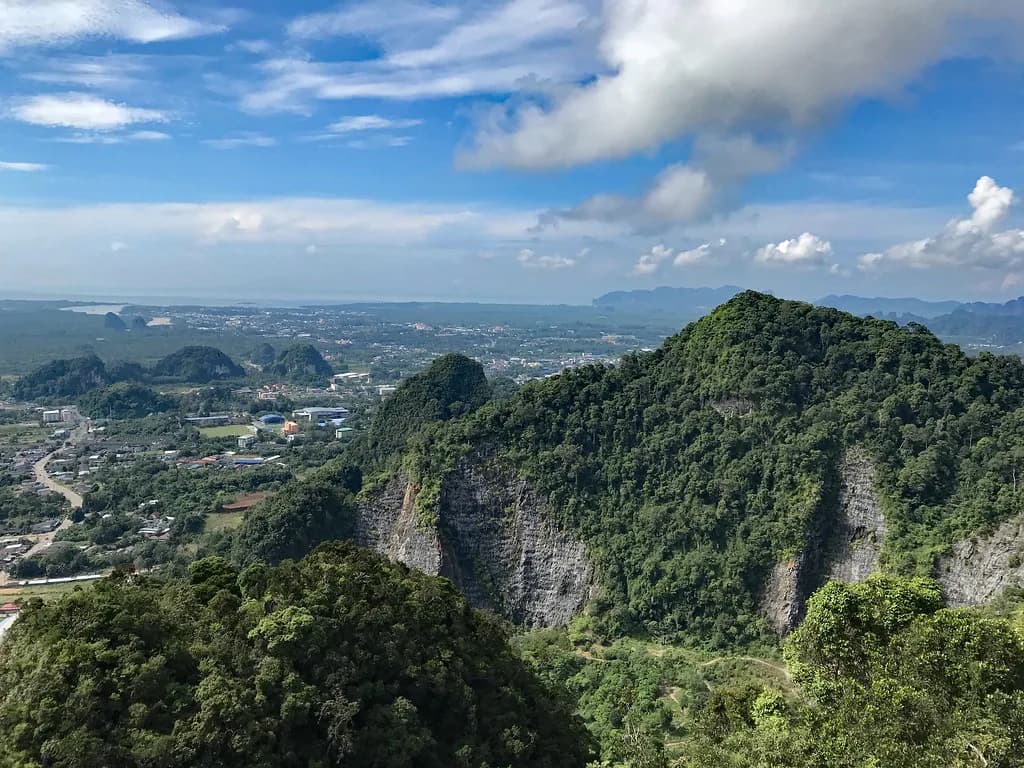
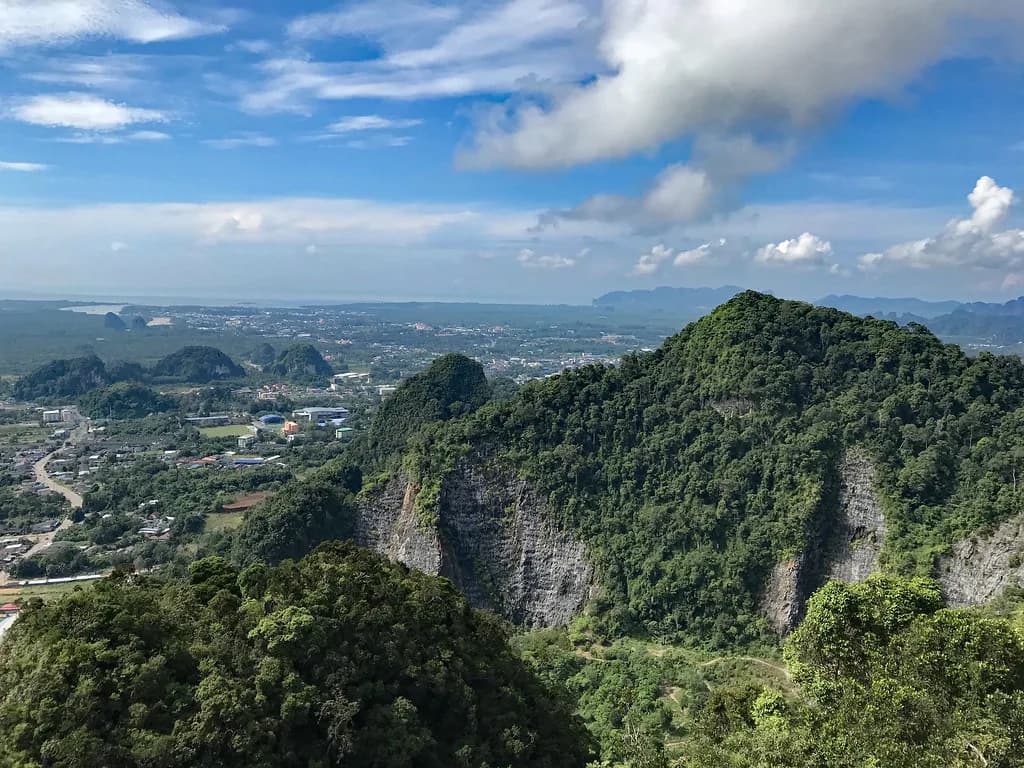
For climbing approaches and viewpoint hikes such as the trail to Khao Ngon Nak, closed shoes with good grip are a sensible general choice. The terrain is often humid, rocky, or muddy, and open sandals offer little protection or traction. There is no need for a specialized climbing shoe for approach paths.
Rock climbing in Krabi is a major draw around Railay and Tonsai, and outfitters typically provide the technical climbing shoes needed for actual routes. That means your own footwear only needs to handle the walk to the base. Confirm what your operator supplies before you pack anything climbing-specific.
If your trip includes a serious hike or approach walk, a lightweight closed shoe with a grippy sole may serve better than the slip-on pair. This is where the three-pair baseline flexes: swap the town shoe for a grippier walker rather than adding a fourth pair.
Materials, Drying, and Odor
Quick-dry uppers and thin, synthetic straps dry overnight, while absorbent materials like thick leather, heavy canvas, or padded liners stay damp. In Krabi's humidity, a shoe that stays wet can go smelly fast, as forum commenters noted when they abandoned water shoes for that reason.
Rotate between pairs where you can, and give wet shoes air rather than stuffing them into a bag. A simple drying habit keeps odor under control and extends how long a pair stays wearable. Charcoal deodorizers or washable liners can help if you are prone to damp feet.
Rinse sand and salt off after beach or boat days, since grit in the footbed causes blisters. Let shoes dry fully before packing them, and keep wet items separate from dry clothing. These small routines make a difference over a week-long trip.
Rainy-Season Footwear Adjustments
Historically, the monsoon months bring more frequent and heavier rain, which changes footwear priorities. Grip on slick surfaces, quick drying, and protection from puddles become more valuable than breathability alone. This is a seasonal tendency, not a forecast for your specific dates.
In wet conditions, a closed shoe with a grippy sole may beat sandals for town walking, while sandals remain easier to clean and dry. Many travelers carry both and choose based on the day. Avoid absorbent shoes that will stay damp for the rest of the trip.
Check the current forecast before your travel dates and adjust the rotation rather than packing for averages alone. If rain is likely, prioritize quick-dry materials and a second pair so one can dry while you wear the other. The dry-season packing guide explains how the rotation shifts when conditions are drier.
A Compact Three- to Five-Day Packing Example
For a three- to five-day trip, wear the closed slip-on pair in transit since it takes up the most space and works for the airport and town. Pack the sandals or flip-flops flat in your bag. Add quick-dry water shoes only if your itinerary includes boat landings on rocky shores or snorkeling stops.
In your daypack for boat days, carry the sandals, a small towel, and a dry bag for anything that must stay dry. If you bring water shoes, keep them accessible rather than buried in a suitcase. This setup covers beach, boat, temple, and town without overpacking.
A two-pair version works fine for a short beach-focused trip with little town walking. The third pair is a conditional add-on, not a requirement. Decide based on your actual activities rather than packing for every possible scenario.
What to Leave Behind
Leave high heels and spiked footwear at home. Krabi's uneven ground, potholes, and stairs make them impractical and risky. If you want a dressier option, a low wedge or a nicer sandal handles the same occasions more safely.
Lace-up boots are usually overkill for a short tropical trip, taking up space and staying hot. Unless your itinerary includes serious hiking or you need ankle support, a lighter closed shoe covers the same ground. Extra pairs that never leave the suitcase are the most common packing regret.
Avoid single-purpose shoes you will wear once, and skip anything with many straps or buckles that slows you down at temple and shop entrances. Simplicity in the on-and-off process matters more than most first-time visitors expect.
Before-Departure Weather Check
A few days before departure, check a reliable forecast for your specific travel window rather than relying on seasonal averages. Seasonal tendencies tell you what is likely, not what will happen during your trip. Adjust your footwear rotation based on what the forecast actually shows.
If rain is forecast, lean toward quick-dry shoes and one grippy closed pair. If conditions look dry and hot, prioritize breathable sandals and a light closed shoe for town. Either way, keep the rotation small and functional.
Confirm any activity-specific footwear needs with your boat operator, climbing outfitter, or temple visit in advance. Those requirements vary and are best verified directly. Packing decisions are easier once you know exactly what your itinerary involves.
Plan Your Visit
Krabi footwear comes down to a small, flexible rotation: slip-on sandals for beach and casual time, one closed slip-on pair for town and temples, and optional quick-dry water shoes for boat and island days. Match the rotation to your actual activities and the forecast, not to a generic checklist.
Prioritize materials that dry quickly, grip that handles wet surfaces, and designs you can slip on and off without fuss. Those three qualities solve most of what Krabi throws at your feet. Everything else is a matter of personal preference and itinerary specifics.
These are packing suggestions, not requirements. Verify any venue or activity-specific footwear expectations directly with the operator, and check the full Krabi packing list to build out the rest of your bag.
Frequently Asked Questions
What footwear should I take to Krabi?
Most travelers do well with a packable slip-on sandal or flip-flop, one closed slip-on pair for town and temples, and optional quick-dry water shoes for boat or island days. The right combination depends on your activities; a beach-focused trip may need only two pairs.
Do I need water shoes for Krabi boat trips?
Not necessarily. Many travelers manage boat trips without them, but water shoes help when landing on rocky beaches or broken coral. Treat them as a conditional choice based on your specific landing points and how much you mind stepping on uneven surfaces.
What shoes should I wear to temples in Krabi?
Slip-on shoes are the practical choice because you will remove them before entering. There is no universal rule requiring closed-toe shoes, and expectations can vary by site, so check with the specific temple if you are unsure.
Are flip-flops enough for Krabi?
For beach and casual time, yes. For long stretches of hot pavement, temple visits, or trail walking, a closed slip-on pair is more comfortable and protective. A small rotation handles both situations better than one pair alone.
What shoes are best for Krabi's hot pavement and night markets?
A closed slip-on shoe with a cushioned sole and breathable upper handles hot pavement and uneven market ground better than thin flip-flops. It also comes off quickly when you need to remove shoes at a shop or temple.
How many pairs of shoes should I pack for Krabi?
Two pairs cover most short trips: sandals plus a closed slip-on. Add a third pair of quick-dry water shoes only if your itinerary includes rocky boat landings, snorkeling, or similar water activities.
What shoes should I leave behind when packing for Krabi?
Leave high heels, spiked footwear, and heavy lace-up boots at home. They are impractical on uneven ground, take up space, and are rarely worth carrying for a tropical trip with frequent shoe removal.
What shoes are suitable for Krabi climbing approaches?
Closed shoes with good grip are the general recommendation for approach paths and humid trails. Outfitters typically supply technical climbing shoes for actual routes, so confirm with your operator what you need to bring yourself.
Sources
Free: The Ultimate Packing Cheat Sheet
A carry-on capsule wardrobe, the complete packing checklist, layering made simple, and what to wear by season — one printable page you'll use on every trip.
You might also like


Continue reading
More guides you'll find useful