Krabi Packing List: What to Wear for Beach, Island and Temple Days
A Krabi packing list for humid heat, monsoon rain, boat days and temple visits, with outfit combinations, footwear trade-offs and a short-trip bag example.
On this page
Krabi weather month by month
Typical conditions from 30 years of daily weather data — use it to see how much to pack for the month you are travelling.
| Month | High / low | Days with rain | Afternoon humidity | Daylight |
|---|---|---|---|---|
| January | 30° / 24°C (86° / 74°F) | 3 in 10 days | 61% | 11.6 h |
| February | 32° / 24°C (89° / 75°F) | 2 in 10 days | 55% | 11.7 h |
| March | 32° / 25°C (90° / 76°F) | 4 in 10 days | 58% | 11.9 h |
| April | 31° / 25°C (88° / 77°F) | 8 in 10 days | 66% | 12.2 h |
| May | 30° / 25°C (86° / 78°F) | 9 in 10 days | 74% | 12.4 h |
| June | 29° / 25°C (85° / 78°F) | 8 in 10 days | 76% | 12.5 h |
| July | 29° / 25°C (84° / 77°F) | 8 in 10 days | 76% | 12.4 h |
| August | 29° / 25°C (84° / 77°F) | 8 in 10 days | 76% | 12.3 h |
| September | 28° / 24°C (83° / 76°F) | 9 in 10 days | 77% | 12 h |
| October | 29° / 24°C (83° / 75°F) | 9 in 10 days | 76% | 11.8 h |
| November | 29° / 24°C (84° / 75°F) | 8 in 10 days | 73% | 11.6 h |
| December | 29° / 24°C (84° / 74°F) | 5 in 10 days | 69% | 11.5 h |
Travelling on specific dates? Use our What to Wear Planner for the weather, outfits and a packing list for your exact days in Krabi.
Averages for 1991-2020, modelled from Copernicus ERA5-Land and ERA5 reanalysis via Open-Meteo open data (CC BY 4.0), adjusted to Krabi's elevation. Modelled afternoon highs can read 1–2°C below airport weather-station records.
A Krabi trip rarely stays in one setting. You might wade onto a sandbar in the morning, climb steps to a temple viewpoint after lunch and eat in Ao Nang that evening, often in the same outfit unless you plan layers. Packing light works best when each item earns its place across several contexts.
This guide separates decisions by context: beach, island boat day, temple, town and limestone trail. Treat every recommendation here as an editorial suggestion rather than a rule, and confirm anything operator- or site-specific directly before you rely on it.
Nothing here forecasts your particular dates. Krabi has historical seasonal tendencies, but your conditions depend on when you travel, so plan a final check in the days before departure.
Why a Krabi Packing List Differs From a Generic Thailand List
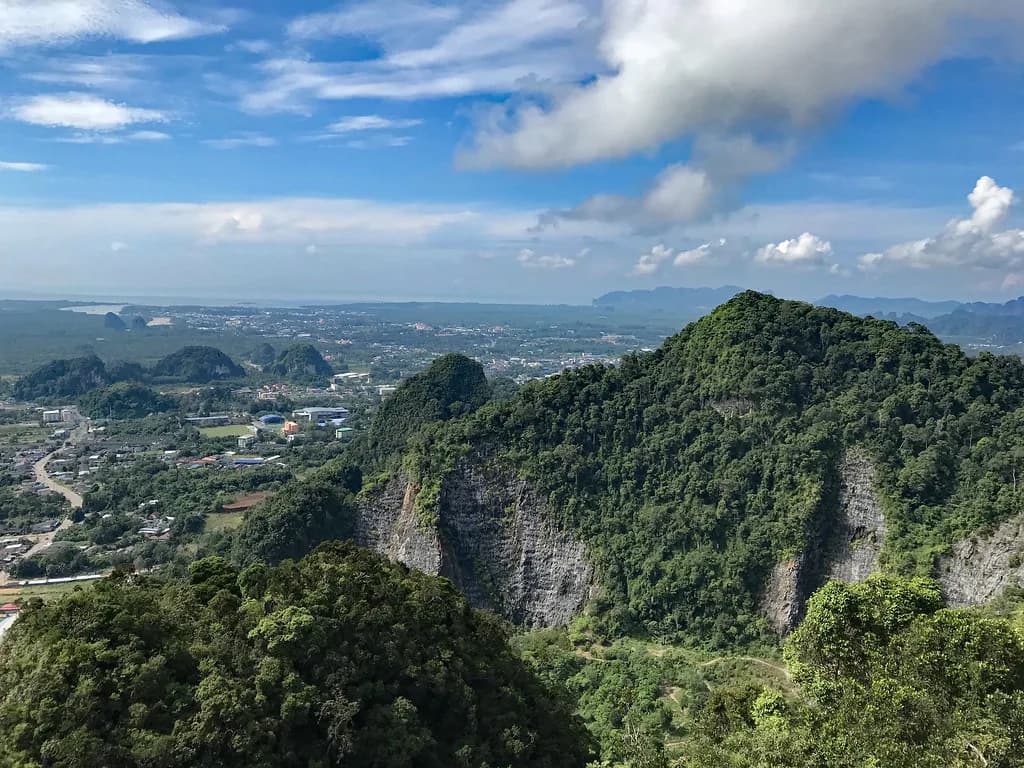
Krabi combines Andaman Sea boat time with limestone cliffs, humid town streets and temple visits, and a single day can touch three of those. Your bag needs to handle saltwater, sweat, sudden rain and a modesty layer without doubling in weight. The goal is a kit that swaps between contexts rather than a separate outfit for each.
The main tension is between breathability and coverage. Lightweight, loose clothing keeps you cooler in humid heat, while temples generally call for shoulders and knees covered, so a cover-up layer does double duty. Choose pieces that dry fast so a wet morning does not dictate the rest of your day.
Island tours and limestone walks add practical constraints too: you will get wet, you may walk on rocky or shell-strewn ground, and you carry everything yourself. A dry bag, grippy footwear and a small day pack solve most of these problems before you leave the hotel.
Krabi's Seasonal Tendencies and How They Change Your Bag
Thailand is generally described as having three broad seasonal tendencies: a hot and dry stretch roughly from March to May, a wet season from around May to October and a cooler, drier period from November to February. These are historical patterns rather than a forecast for your dates, so use them to decide which layer to prioritise and confirm conditions closer to departure.
In the hotter, drier months, sun and heat management dominate. Prioritise breathable fabrics, a brimmed hat, sunglasses and high-protection sunscreen, and expect to change clothes once during a long day. In the wetter months, quick-dry clothing, a packable rain layer and a dry bag become the core of the kit.
The cooler, drier stretch still feels tropical for most visitors, but mornings and evenings can feel fresher, so a light long-sleeve layer helps. If your trip sits squarely in one season, the Krabi packing list dry season and Krabi packing list rainy season guides go deeper on those trade-offs.
Core Clothing Strategy: Fabrics, Quantity and Laundry
Build the core around lightweight, breathable, quick-drying fabrics. Synthetics and thin blends dry overnight in humid air, while heavy cotton stays damp and takes up space. Linen breathes well but wrinkles, so a blend often works better for travel days.
For quantity, think in mix-and-match outfits rather than one outfit per day. Two or three bottoms and four or five tops can cover a week if you plan one wash. Laundry is widely available in Krabi's tourist areas, which is the easiest way to cut your bag size.
Pack underwear and socks assuming you will sweat through a set on active days. A small mesh laundry bag keeps damp items separate from dry clothing and makes a hotel or drop-off laundry service simpler to manage.
Temple and Town Days: Modest Cover-Ups
A light scarf, sarong or long-sleeve shirt covers shoulders and knees when you visit a temple, and a sarong doubles as a beach cover-up or towel. Individual sites may have their own expectations, so check signage or ask staff on arrival rather than assuming one rule fits everywhere.
For town days in Ao Nang or Krabi Town, comfortable sandals or light trainers and a breathable outfit are usually enough. A crossbody bag keeps your phone, cash and a cover-up layer within reach, which helps if you decide to step into a temple or shop along the way.
If your trip includes a lot of city time before or after Krabi, the Bangkok packing list covers heat, rain and temple layering in a more urban context.
Beach and Island Days: Swimwear, Cover-Ups and Quick-Dry Layers
Wear your swimwear under your clothes on boat days, because changing facilities at piers and on boats are limited or absent. A quick-dry towel and a light cover-up handle the walk from water to lunch without soaking your day bag. Pack a spare swimsuit if you can, since sitting in a wet one between swims is uncomfortable.
A light rash guard or UV-protective shirt reduces how often you need to reapply sunscreen and stays effective in the water. It also dries quickly and works as a layer on breezy boat crossings. For more context-specific combinations, see what to wear in Krabi for island hopping.
Boat Transfers and Limestone Terrain: Dry Bags, Footwear and Motion Comfort
A roll-top dry bag is the single most useful item for boat days. It keeps your phone, cash and a copy of your documents bone dry when spray comes over the bow or you wade ashore, and a waterproof phone pouch keeps the device accessible without exposing it.
On footwear, water shoes or reef shoes beat flip-flops on rocky shores, shell-strewn sandbars and coral edges, because they protect your feet and stay on in the water. Sandals work for beach stops and town, but remove them before snorkelling since they create drag. If you plan to climb, dedicated rock shoes and a chalk bag matter more than general walking shoes, and what to wear in Krabi for rock climbing covers that gear separately.
For motion comfort, decide with a clinician whether to bring anything and take it well before boarding rather than after symptoms start. Sitting mid-boat, facing the horizon and avoiding a heavy meal beforehand are simple, non-medical habits that many travellers find helpful.
Sun and Insect Protection: What to Carry and What to Check
Sun exposure on open water is intense because UV reflects off the sea and sand, so a brimmed hat, UV-rated sunglasses and high-protection sunscreen belong in every day bag. A rash guard reduces how much sunscreen you need to reapply. Thailand restricts certain sunscreen ingredients in national marine parks, so check labels for Oxybenzone, Octinoxate, 4-methylbenzylidene camphor and Butylparaben and buy a mineral-based alternative if needed.
Insect repellent is worth carrying for evenings and any time near vegetation or water. Many travellers prefer non-aerosol formats, which are easier to pack and less wasteful. Keep it in your day bag rather than checked luggage so it is at hand when you need it.
Reusable water bottles, hand sanitiser and tissues are small items that make humid days easier. Many hotels and tour vendors provide drinking water, and a refillable bottle cuts plastic waste without adding much weight.
Rain and Humidity Management
A packable rain layer earns its space if your trip falls in the wetter months, but it is less essential in the drier stretch. The trade-off is simple: a light shell keeps you comfortable during a passing shower and packs down small, while a heavier jacket adds weight you may never use. Choose based on your dates, not a single forecast.
Humidity means nothing dries quickly indoors, so plan wet-item storage. A separate dry bag or plastic sleeve for damp clothing stops the rest of your bag from smelling. Hanging items overnight in air-conditioned rooms helps, but expect thicker fabrics to need longer.
Use laundry as a packing-lightener rather than packing for every day. If you plan one wash mid-trip, you can cut clothing volume significantly and free room for a rain layer, dry bag or extra footwear. A dedicated Krabi packing list rainy season guide covers this in more detail.
A Compact Packing Example for a Short Krabi Trip
For a four- to five-day trip, start with three tops, two bottoms, one swimsuit, one cover-up and one light layer. Add a quick-dry towel, a dry bag, a hat, sunglasses, sunscreen, repellent and a reusable bottle. This mix covers beach, boat, temple and town contexts without a separate outfit for each.
Footwear is where most people overpack. One pair of sandals and one pair of trainers or water shoes is usually enough; the trainers handle limestone paths and town walking, while sandals work for beach and boat. If you are travelling in the drier stretch, the What to Pack for Krabi in the Dry Season guide refines this list for sun-heavy days.
Keep one small pouch for documents, cash in Thai baht and a copy of your accommodation address. A day pack that carries water, a cover-up, your dry bag and sunscreen is more useful than a large bag you leave behind at the hotel.
What to Leave Behind
Leave heavy denim, thick jackets and bulky gear at home. They are slow to dry, heavy to carry and rarely needed in Krabi's tropical climate. If you are unsure, remember that laundry is widely available, so you can wash and rewear instead of packing extra.
Also skip duplicates of items you can buy locally, such as basic toiletries, hats or a sarong, unless you rely on a specific product. Valuables you cannot afford to lose are better left in a hotel safe than carried on a boat. Travel light enough that you can carry your own bag up a flight of stairs or along an uneven dock.
Before You Go: A Pre-Departure Weather Check
A few days before departure, check a reliable forecast for Krabi and adjust your layers accordingly. If rain is likely, keep your rain shell and dry bag accessible rather than buried. If sun dominates, prioritise hats, sunglasses and reef-safe sunscreen.
Confirm any requirements that vary by operator or site, such as sunscreen rules on marine park tours, current national park entry procedures or whether your boat trip provides snorkelling gear, drinking water or lunch. Check with the operator directly and carry small cash for any on-site fees, without assuming a specific amount.
Plan Your Visit
A Krabi packing list works best when it is built around contexts rather than a flat checklist. Cover beach, boat, temple and town needs with breathable, quick-drying pieces, and let laundry do the heavy lifting on longer trips. Add sun and rain protection according to the season you booked.
Pack a dry bag, sensible footwear and a small day pack, then verify operator-specific rules before you go. Keep the bag light enough to carry yourself, and you will spend less time managing luggage and more time enjoying the limestone, sand and sea.
More packing guides for Thailand
- Krabi Footwear Guide: Shoes for Beaches, Boats, and Temples
- Krabi Rainy Season Packing List: What to Pack
- Krabi Temple Dress Code and What to Wear
- Krabi Rainy Season Boat Trip: Monoosa, Wind and Spray
- Krabi Beach and Jungle Day Pack: What to Carry
- Krabi Packing List: What to Wear in the Dry Season
- What to Pack for Krabi With a Carry-On Only
- What to Wear in Krabi for Island Hopping
- What to Wear in Krabi in April: Hot-Season Packing Guide
- What to Wear in Krabi in December and January
- What to Wear in Krabi in February and March
- What to Wear in Krabi in May and June: Monsoon Packing Guide
- What to Wear in Krabi in September and October
- Climbing in Krabi: What to Wear at Railay and Tonsai
- Chiang Mai Packing List: What to Wear for Heat, Temples and Mountains
- Phuket Packing List: What to Wear for Beaches, Boats and Temples
- What to Wear in Krabi in November
Frequently Asked Questions
What should I pack for a Krabi trip?
Start with lightweight, breathable, quick-drying clothing, a swimsuit, a cover-up for shoulders and knees, sandals plus trainers or water shoes, a dry bag, a hat, sunglasses, sunscreen, insect repellent and a reusable water bottle. Add a packable rain layer if your dates fall in the wetter months. Laundry availability means you can pack fewer outfits and wash mid-trip.
What do you wear in Krabi?
Loose, light clothing suits the humid heat, and quick-dry fabrics are more comfortable than heavy cotton or denim. For temples, an editorial suggestion is to cover shoulders and knees, though individual sites may differ, so check on arrival. Beach and boat days call for swimwear under your clothes plus a cover-up and a dry bag.
Are sandals or trainers better for Krabi?
Both have a role. Sandals suit beach, boat and town days, while trainers or water shoes handle limestone paths, rocky shores and shell-strewn sandbars. Water shoes protect your feet better than flip-flops in the water. If you plan to climb, bring or rent climbing-specific footwear rather than relying on general trainers.
Do I need a rain jacket for Krabi?
It depends on your dates. A packable rain layer is worth bringing in the wetter months because it handles passing showers without adding much weight. In the drier stretch it is often unnecessary. Check a forecast before you go and decide based on your itinerary, especially if you have boat days planned.
What should women pack for Krabi?
The same core kit applies: breathable tops, quick-dry bottoms, a swimsuit, a sarong or light scarf for shoulder and knee coverage, sandals and one pair of closed shoes. A crossbody bag and a dry bag are useful for boat days. Treat temple coverage as a respectful suggestion and check individual site expectations.
How do I pack light for Krabi with laundry available?
Pack for three to four days and plan one wash mid-trip. Choose mix-and-match pieces in similar colours so fewer items create more outfits. Quick-dry fabrics wash and dry overnight in humid air, and a mesh laundry bag keeps damp items separate. This frees space for a dry bag, rain layer or extra footwear.
What should I not bring to Krabi?
Leave heavy denim, thick jackets and bulky gear at home since they are slow to dry and rarely needed. Skip duplicates of items you can buy locally, such as basic toiletries or a sarong, unless you rely on a specific product. Leave valuables you cannot afford to lose in a hotel safe rather than carrying them on a boat.
What do you need for a Krabi island boat tour?
Bring a dry bag for phone, cash and documents, swimwear worn under your clothes, a quick-dry towel, a hat, sunglasses, reef-safe sunscreen, water shoes and any personal motion-sickness preparation decided with a clinician. Confirm with your operator what the tour already provides, such as snorkelling gear, lunch or drinking water, and check current marine park sunscreen rules.
Sources
Free: The Ultimate Packing Cheat Sheet
A carry-on capsule wardrobe, the complete packing checklist, layering made simple, and what to wear by season — one printable page you'll use on every trip.
You might also like


Continue reading
More guides you'll find useful