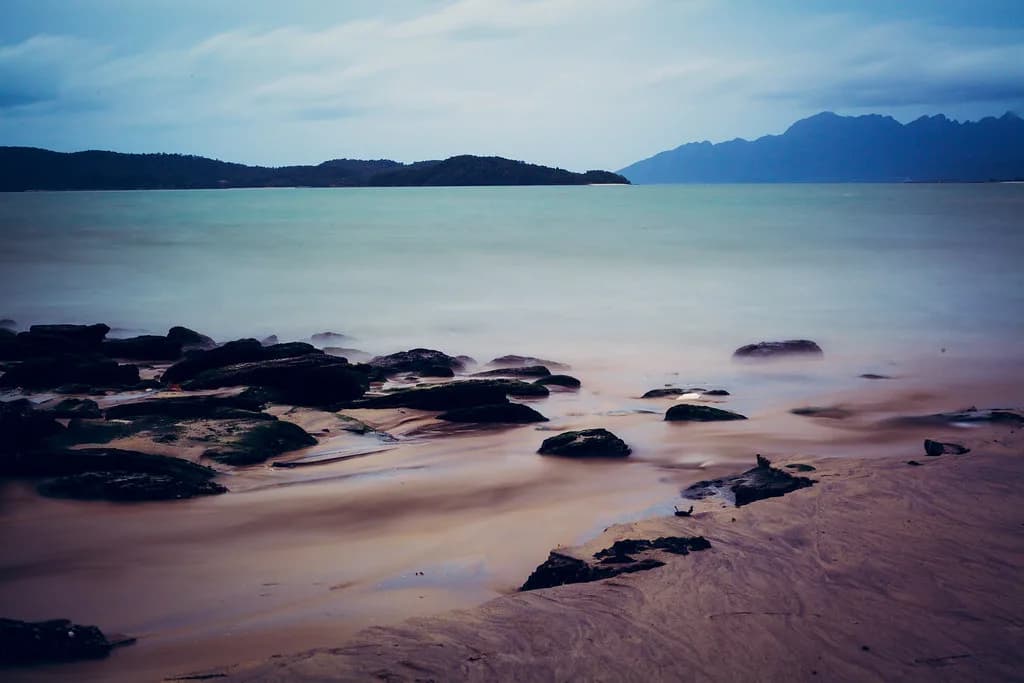
Langkawi Island Hopping and Boat Trip Packing Guide
Pack smarter for Langkawi island hopping with dry bags, quick-dry swimwear, and secure footwear for wet landings, plus what to leave behind.
On this page
A Langkawi island-hopping tour usually means a small boat run to spots like Pulau Dayang Bunting, Pulau Beras Basah, and Pulau Singa Besar, with swimming and eagle watching along the way. The conditions differ from a lounger-and-cocktail day at Pantai Cenang because you step on and off wet boats and move between sand, rock, and lake paths.
Packing for that kind of day is mostly about managing water and sun: what gets splashed, what stays dry, and what dries fast on the return leg. Layering a few purpose-built items over your normal beach kit keeps the day lighter than packing for both scenarios separately.
Why Boat-Trip Packing Is Not a Normal Beach Day
On an island-hopping boat you have no wardrobe to change in, no dry surface to put a bag on, and spray that reaches the middle of the boat. Boats used for these tours are typically open or partly covered, so a light shower or a rougher ride on the crossing back can soak a canvas tote or a fabric daypack within minutes.
The gap between resort comfort and island conditions is what most people underestimate. Resort-side you can walk back to a room to change; on Pulau Beras Basah or at the Lake of the Pregnant Maiden you make do with what you carried, so the bag you bring is the wardrobe.
That is why the boat-trip kit is a smaller, wetter, more functional version of a general beach bag. Treat the specialized items below as the core, and build the rest of your outfit around them rather than the reverse.
Climate Context: Seasonal Tendencies, Not Forecasts
Langkawi has a tropical climate influenced by the Andaman Sea, with warm temperatures typically between 25°C (77°F) and 32°C (90°F) and high humidity throughout the year. The island is generally described as having a dry season from around December to August, when rainfall is less frequent and conditions suit beach activities, island hopping, and snorkelling, and a wetter stretch from about September to November with short, heavy showers often in the late afternoon or evening.
Treat that as a seasonal tendency rather than a guarantee: Langkawi is hot, humid and rainy year-round, and heavy but brief showers and the occasional storm can occur even in the drier months. Building your bag for a possible soaking is more useful than assuming clear skies.
Higher humidity also means nothing dries quickly once wet, so packing one lightweight long-sleeve layer for boat wind and rain is a smarter move than packing multiple heavy changes of clothes. A compact rain shell that folds into its own pocket takes almost no space and handles the short downpour scenario.
Dry Bags and Waterproofing: The Core Boat-Trip Category
Start with a roll-top dry bag rather than a zipped daypack. For a half-day tour, a 10- to 15-litre roll-top bag holds a phone, a small wallet, a dry shirt, a microfiber towel and sunscreen without becoming a burden on a small boat; for a full-day trip, go up to around 20 litres and keep the heavier items at the bottom so the bag sits upright on the deck.
Split your kit into two layers of protection: valuables and electronics inside a small dry bag nested inside the main one, and dry clothes in a separate lightweight stuff sack. That way, if spray does get past the outer roll, you are only dealing with one wet layer and not a soaked passport or phone.
Your phone should live in a waterproof phone case with a lanyard you can wear around your neck or clip to your swimwear, not in a pocket. A floating case is worth the small extra bulk on a boat where dropping something over the side means losing it, and a lanyard keeps both hands free for stepping on and off.
If you are combining a boat day with time around Kilim Geoforest Park or the island's mangroves, the same dry-bag logic applies; for that specific terrain, see what to wear for Langkawi mangrove kayaking before settling your kit.
Quick-Dry Swimwear and Cover-Ups
Cotton t-shirts and denim shorts are the wrong base layer for boat day because they hold water and stay damp in high humidity, which makes the return crossing feel cold even in warm air. Quick-dry fabrics, nylon, and polyester blends shed water and are wearable again within a short time in the sun.
A practical combination is quick-dry swimwear under a long-sleeve rash guard and quick-dry shorts. The rash guard covers shoulders and arms during snorkelling, reduces wind chill on the ride back when you are wet, and dries far faster than a cotton shirt left in a bag.
Pack one light cover-up or sarong that can double as a towel-like layer on the beach and a modest wrap for walking to and from the boat. Two swimwear sets are usually enough for a full day out, since one can dry while you wear the other.
Footwear for Wet Landings and Snorkelling
Flip-flops are fine for the resort path but unreliable on a wet boat ramp, a slippery jetty, or the rocky stretches around some landing points, where they can slide off your foot or offer no grip. Secure footwear with a heel strap and a grippy sole is the better call for the landings themselves.
Strappy sandals that stay on your feet work well for walking ashore and on the uneven paths around Pulau Dayang Bunting, while aqua shoes or a snug-fitting water shoe are more comfortable for snorkelling and for wading over coral rubble and stones. If you snorkel, pair them with a mask that fits so you are not fighting a leaky rental on the boat.
Leave the closed leather shoes or heavy trainers at the hotel. They stay wet for hours after a splash and take up space you would rather spend on a second dry bag or a light towel. Bring one pair of secure sandals as your boat-day default and one pair of water shoes if snorkelling is on the plan.
Sun and Skin Protection on Open Water
Sun exposure on an open boat is stronger than on a shaded beach because there is no shade and reflection off the water adds to the direct sun. A wide-brim hat with a chin cord, sunglasses with a retention strap, and a light long-sleeve layer do more for a full day on the water than any single item.
Reef-safe sunscreen is a reasonable editorial choice for anyone swimming or snorkelling near reefs, and it is also the practical option if you want a formula that sits well under a rash guard. There is no blanket rule requiring reef-safe sunscreen in Langkawi, so treat it as a preference and check whether your chosen product matches what you want from it before you buy.
Pack sunscreen you will actually reapply, plus a small stick or cream for face and ears that survives splashing. Water-resistant formulas help, but on a boat you still need to reapply after swimming, so a small tube in the dry bag beats a large bottle left at the hotel.
Trip-Length Packing Example: 3 Days and 7 Days
For a 3-day trip with one boat day, pack one dry bag, one waterproof phone case, two swimwear sets, one rash guard, one pair of quick-dry shorts, one cover-up, one secure pair of sandals, one wide-brim hat, and one light long-sleeve layer. On the boat day, wear the rash guard and quick-dry shorts over your swimwear, carry the dry bag with your towel and sunscreen inside, and keep the phone in its case on a lanyard.
For a 7-day trip, keep the same core and add a second swimwear set, a second lightweight shirt, and one extra pair of socks if you plan on land activities in the evenings. If you are visiting outside the drier stretch, add a compact rain shell instead of a third outfit; if your dates fall in a shoulder period, what to wear in Langkawi in November and what to wear in Langkawi in January cover similar warm, humid decisions for different months.
On a snorkelling day, add the mask and water shoes to the dry bag and wear the rash guard for sun and abrasion cover. On a beach-only day, the same bag works without the mask; the point is to pack the core once and add trip-specific extras rather than building a different kit each day.
What to Leave Behind
Leave the bulky bath towel at the hotel and bring one quick-dry travel towel instead, since a thick towel stays damp for the rest of the day and takes up most of a small bag. Do the same with heavy camera bags: a large DSLR kit is awkward on a moving boat and at risk from spray, while a small waterproof pouch or a phone in a case handles most of what you will actually shoot.
Skip the non-waterproof daypack, the leather bag, and anything you would be upset to see soaked. Leave unnecessary valuables and large amounts of cash in the hotel safe rather than carrying them to the islands, and leave behind shoes you do not want wet.
Extra clothing is another common overpack: two outfits for a boat day plus what you are wearing is plenty, and dressing for the humidity means choosing lighter fabrics rather than more of them.
Before Departure: Check the Official Forecast
Dry-season timing is a planning input, not a weather guarantee, so check the Malaysia Meteorological Department (METMalaysia) forecast for Langkawi in the days before your trip for rain, wind and sea conditions. METMalaysia publishes short-term forecasts, rain radar, and ocean condition information that is more current than any seasonal summary.
Pair that with the operator's own go/no-go guidance, since small-boat trips are the first to be adjusted when seas are choppy. If the forecast turns wet, adjust your bag rather than overpacking for worst case: add the rain shell, keep the dry bag closed, and accept that a short shower is part of the day.
A last-minute check of what to wear in Langkawi in March is useful only if you are travelling in that month; the fixed items, dry bag, phone case, swimwear, and secure footwear, do not change with the forecast.
Pack Once, Adjust for the Day
Build the boat-day core first, dry bag, waterproof phone case, quick-dry swimwear and rash guard, secure footwear, hat, and sunscreen, then add a layer or a rain shell based on the forecast. That approach covers both a half-day island-hopping tour and a longer day on the water without doubling your luggage.
Keep the beach-day and boat-day kits separate in your mind, so you are not carrying resort items to an island. Check the official forecast and your operator's advice before departure, and let those two sources decide the final adjustment rather than a fixed month-by-month rule.
Frequently Asked Questions
What should I pack for a Langkawi island-hopping tour?
Focus on a compact boat-day core: a roll-top dry bag, a waterproof phone case with a lanyard, quick-dry swimwear, a rash guard, quick-dry shorts, a light cover-up, secure sandals or water shoes, a wide-brim hat, and water-resistant sunscreen. Add a light long-sleeve layer for wind and a compact rain shell if showers are likely.
Do I need a dry bag for Langkawi boat trips?
A dry bag is the most useful single item for a boat day because spray reaches the middle of the boat and there is no dry place to set a normal bag. A roll-top dry bag keeps electronics and a dry shirt protected; a waterproof phone case with a lanyard adds a second layer for the item you handle most.
Is reef-safe sunscreen required in Langkawi?
No blanket rule requires reef-safe sunscreen in Langkawi, so treat it as an editorial choice for anyone swimming or snorkelling near reefs. What matters practically is a water-resistant formula you will reapply after swimming, kept in the dry bag rather than left at the hotel.
What footwear is best for wet landings on Langkawi islands?
Secure sandals with a heel strap and a grippy sole handle wet ramps, jetties, and uneven paths, while aqua shoes or snug water shoes are more comfortable for snorkelling and wading over stones. Flip-flops are convenient at the resort but easy to lose on a slippery landing.
Are flip-flops enough for Langkawi island hopping?
They work for the resort path but are unreliable for the landings themselves, where a wet ramp or rocky shore can make them slide off. Bring secure sandals as your boat-day default, and add water shoes if snorkelling is on the plan.
What should I leave behind when packing for Langkawi island hopping?
Leave the bulky bath towel, heavy camera bag, non-waterproof daypack, leather bag, and unnecessary valuables at the hotel. Swap the thick towel for a quick-dry travel towel and carry only the clothes you will actually wear on the water.
How much should I pack for a 3-day vs a 7-day boat trip in Langkawi?
For three days with one boat day, one dry bag, two swimwear sets, one rash guard, one pair of quick-dry shorts, one cover-up, secure sandals, a hat, and a light layer are enough. For seven days, keep the same core and add a second swimwear set, an extra lightweight shirt, and a rain shell if showers are likely.
Sources
Free: The Ultimate Packing Cheat Sheet
A carry-on capsule wardrobe, the complete packing checklist, layering made simple, and what to wear by season — one printable page you'll use on every trip.
You might also like


Continue reading
More guides you'll find useful