What to Wear in Labuan Bajo Villages and Religious Sites
Plan a flexible outfit for Labuan Bajo town, Flores villages and religious sites, with coverage layers, footwear trade-offs and a compact packing example.
On this page
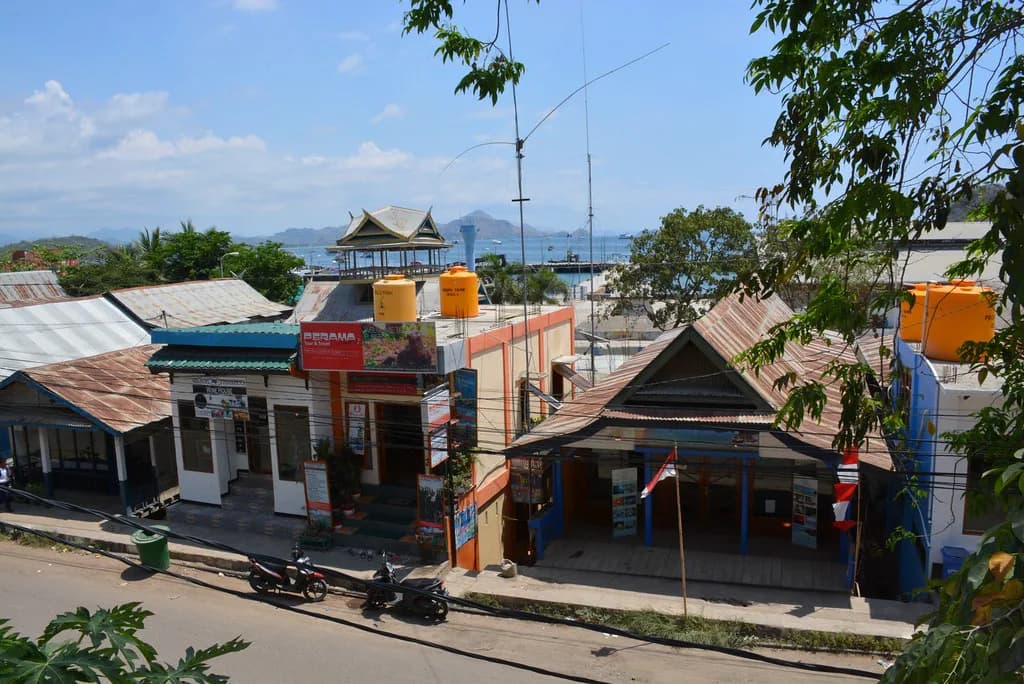
Labuan Bajo sits at the western tip of Flores and serves as the main gateway for Komodo National Park trips, but the town itself has its own dress context around the harbor, the seafood night market, and the streets where visitors and residents mix. Many travelers pack for that waterfront version first, which is fine for town days, then find themselves on a village visit or at a local religious site in clothes that feel out of step with the setting. The fix is not a second wardrobe, but a small set of additions that lets one outfit work across both.
This guide stays on what to wear and what to pack. It separates town dress from Flores village and religious site dress, treats coverage as an adjustable layer rather than a fixed uniform, and suggests a carry-along kit for unplanned stops. It also covers fabric and footwear trade-offs for the hot, humid climate, a compact packing example for a one-week trip split between boat days and village visits, and what to leave behind.
Why Dress Matters: Gateway Town Versus Community Visits
Labuan Bajo has grown from a fishing village into a busy hub with hotels, dive shops, and restaurants, and its day-to-day dress around the waterfront is casual and used to visitors. A short walk into the evening food scene or along the harbor rarely raises an eyebrow, and beachwear is normal on boats and at resort pools. The shift happens when you leave the town center and enter a community on Flores, where a beach or gym outfit reads as a mismatch rather than a neutral choice.
A cultural guide to Flores and Labuan Bajo asks visitors to dress modestly when walking around town or visiting villages, which gives the town-to-village contrast a clear direction. Treat that as a courtesy level to layer over your day, not a rulebook. The practical outcome is that Labuan Bajo town lets you dress for heat first, while village visits push cooling second and coverage first.
Coverage as a courtesy also affects how you are read in photographs and conversations, especially in smaller communities where visitors are noticeable. None of this is about a required uniform or a single correct outfit. Think of it as adjusting the clothes you already packed so they fit the setting, and check on-site signage or ask your guide when a site has its own expectations.
What to Wear in Labuan Bajo Town: Between the Harbor and the Night Market
For town days, build around lightweight, breathable clothing that handles heat and humidity without clinging. A loose short- or mid-sleeve top with wide-leg or straight trousers, or a skirt that falls to the knee or below, gives you an outfit that works at a cafe, in a shop, and along the waterfront without a change. If you prefer shorts in town, a knee-length or longer cut reads more relaxed in mixed company than very short styles, but this is an editorial suggestion rather than a local rule.
The travel guidance for Labuan Bajo recommends lightweight, breathable fabrics and modest dress when you are out in town or visiting villages, which supports treating a light scarf as a default town accessory. A scarf doubles as a shoulder cover when you step into a shop or a shaded courtyard, and it takes almost no space in a day bag. That single item often does more for town-to-village flexibility than a second outfit.
At places like the Kampung Ujung night market, dress is casual and the setting is outdoor and communal, so comfort matters more than formality. Closed-toe sandals or light sneakers are easier on uneven ground and around grill smoke than delicate flats. A light layer also helps if you linger after dark or the breeze picks up by the water.
Village Visits on Flores: Shoulders, Torso, and Knees as a Courtesy
Village visits on Flores are community settings, not staged attractions, so treating coverage as a courtesy helps you move through the visit with less friction. A top that covers the shoulders and upper chest, paired with trousers or a skirt that reaches the knee or below, is a practical baseline for a community setting. There is no single required village dress code, and what residents wear varies; follow the cues around you and any guidance from your guide or host.
The trade-off is heat. Full-length coverage in humid weather can feel heavy, which is why fabric choice matters more than garment count: one breathable long-sleeve top often feels cooler than two layers of thick cotton. A button-up shirt or a loose tunic in a light weave gives you shoulder and arm coverage without trapping heat. If you run warm, consider a light long-sleeve top with a relaxed fit over a sleeveless base layer so you can adjust.
Long trousers or a midi skirt are easier to manage than a short skirt on uneven paths and in homes where you may sit on low seating. If you wear shorts for the drive or the boat ride, carry a longer layer or a sarong in your day bag so you can change before entering the village. That single swap keeps you comfortable in transit and appropriate on arrival.
Village stops often come with walking on dirt paths, steps, or packed earth, so footwear that stays on your feet matters. The travel guidance for Labuan Bajo specifically recommends sturdy trekking shoes or comfortable sneakers for the rugged terrain around Padar and Rinca, and those same shoes work on village paths where sandals can slide. If your itinerary includes island hiking, the footwear decisions overlap and are worth planning together, which is why it helps to think through what to wear hiking Padar Island before you finalize your shoes.
Religious Sites and Ceremonies: Reading the Situation Before You Enter
Religious sites on Flores and around Labuan Bajo range from small churches to shrines and ceremonial spaces, and the expectations can differ from place to place. Some sites ask visitors to cover shoulders and knees, remove shoes, or avoid entering during active worship, while others are open to respectful observation from outside only. Nothing here should be treated as a fixed national dress code; look for signage at the entrance, watch what attendees do, and ask your guide or a staff member when you are unsure.
A practical approach is to treat every site as a place where covering up is the safer default until you see otherwise. A scarf that can wrap over the shoulders, sleeves that reach the elbow, and trousers or a skirt below the knee give you a workable baseline for most situations. If a site requires something specific, such as a sarong or a sash, it is usually available at the entrance or explained by staff; avoid buying special equipment before confirming.
During ceremonies or community gatherings, the most respectful choice is often to observe from a distance rather than step into the middle of the activity, especially with a camera. Dress that blends into the setting, with muted or plain colors and no beachwear, makes that choice easier and less conspicuous. If you are invited to participate, follow the direction you are given rather than improvising.
An Outfit Formula That Works for Town and Village Stops
The most useful formula is a base outfit that is already town-appropriate, plus two adjustable pieces that push it toward village-appropriate. Start with a breathable top that covers the shoulders and a bottom that reaches the knee, then add a scarf or sarong for extra torso or shoulder coverage and a light button-up layer for arms. This combination works on a boat, in town, and in a village without a full change.
Test the formula against your actual day: if you are leaving the harbor early, you may want the long-sleeve layer on for sun protection, then remove it in town and put it back on for a village stop. If you are spending the day on the water, keep the base layer light and quick-drying, and pack the coverage pieces in a dry bag so they are clean and available when you step ashore. The formula only works if the extra pieces are actually with you.
For a boat-focused day, the coverage pieces need to survive spray and sun, so treat that loadout separately from town clothing. If your trip includes both, plan the layers so they do not conflict with what you wear on the water, and read what to wear on a Komodo Island boat trip alongside this guide so you are not packing two competing sets of clothes.
Fabrics and Footwear: Breathable Layers Versus Quick-Dry Activewear
For hot, humid conditions, natural fibers like cotton and linen breathe well and feel cooler against the skin, but they crease and dry slowly after rain or spray. Quick-dry synthetics handle moisture and dry fast, which is useful on boat days, but some weaves look more athletic than you might want in a village or at a religious site. The best compromise is often a light natural-fiber top for town and village use, and one quick-dry set reserved for the water.
Color and pattern matter less than coverage, but light colors show sweat and dirt more than mid-tones, and dark colors absorb heat. A mid-tone or muted print hides travel dust and feels less conspicuous in a community setting. If you are packing for a specific month, the seasonal tendency matters for fabric weight, and the guidance for what to wear in Labuan Bajo in November reflects the heavier rain tendency of the late-year wet season.
Footwear is where most packing lists go wrong. One pair of closed shoes covers village paths, steps, and island hikes, while secure sandals are easier for town and boat decks. Bring one pair of each and leave the heavy boots at home unless your itinerary demands them.
What to Carry for a Spontaneous Stop
The most common gap is the unplanned stop: a village your driver suggests, a ceremony you pass, or a site you decide to enter on the way back from the harbor. A small day bag solves this if it holds four things: a scarf or sarong, a light long-sleeve layer, a pair of secure sandals, and a dry bag for wet swimwear. With those items, you can adjust from beach or boat clothing to village-appropriate clothing in a few minutes.
A sarong is the most versatile single item because it can cover shoulders, wrap over the waist, or act as a light layer over the legs, and it packs flat. A scarf does similar work but with less coverage, so if you carry only one, choose the larger piece. Neither is a substitute for respectful behavior, but both make the clothing side of a spontaneous stop much easier.
If your day involves both sun exposure and saltwater, the carry kit overlaps with sun and saltwater packing needs, so plan them together rather than duplicating items. That means one dry bag, one quick-dry layer, and one coverage piece, not three versions of each. Keeping the kit compact means you are more likely to actually carry it.
A Compact Packing Example for a One-Week Trip
For a week split between boat days and village stops, aim for a small capsule that mixes and matches rather than separate outfits for each day. A reasonable starting point is three breathable tops that cover the shoulders, two bottoms that reach the knee or below, one light long-sleeve layer, one sarong or large scarf, one quick-dry set for the water, and one set of sleepwear. That gives you enough variety without overpacking, and every piece works in more than one context.
Footwear can stay minimal: one pair of secure sandals for town, boats, and wet landings, and one pair of closed shoes for village paths and island hikes. Add a light rain shell or compact umbrella if you are traveling in a wetter period, and a hat for sun. Laundry is widely available in Labuan Bajo, so a mid-week wash can cut the clothing count further.
If you are still assembling the broader kit, cross-check your list against a Labuan Bajo packing list so you do not miss essentials like sun protection, a refillable bottle, or a basic first-aid kit. The clothing plan here is only one part of the bag. Keep the total volume small enough that you can carry it on a boat without rearranging everything.
What to Leave Behind
Beach-only clothing, such as very short shorts, halter tops, and swimwear worn as streetwear, is the first category to leave out of your town and village rotation. That does not mean leaving swimwear at home; it means keeping it for the boat, the pool, and the beach, and changing before you head into town or a community. A light cover-up that doubles as a tunic makes that transition easy.
Heavy shoes and thick jeans are another easy cut. Denim is slow to dry, hot in humidity, and bulky in a bag, which makes it a poor fit for boat days and wet-season travel. If you want trousers, choose a lighter weave that dries faster and packs smaller. Leave the formal outfits at home unless you have a specific event that calls for them.
Also skip clothing that is hard to adjust, such as tight dresses, restrictive skirts, or tops that cannot be layered over. The whole point of the layer system is flexibility, so pieces that only work in one setting add weight without adding options. If you are unsure about an item, ask whether it can go from harbor to village without a change; if the answer is no, it is a candidate to leave behind.
Check the Conditions Before You Go
Labuan Bajo has a tropical climate with a dry season and a wet season, and the historical tendency is for drier conditions in the middle of the year and more frequent rain later in the year into early the next. Those are seasonal patterns, not a forecast for your travel dates, so check a current forecast in the days before departure and adjust your layers accordingly. A wet-season trip needs a light rain shell and faster-drying fabrics; a dry-season trip can lean more on sun protection.
Weather also changes what you carry for a village stop: rain can turn paths muddy, which makes closed shoes more useful, and a wet scarf or sarong is less comfortable against the skin. Pack a small dry bag for the coverage pieces so they stay usable if you get caught in a shower. If you are traveling in a wetter month, plan for one extra quick-dry layer rather than a heavier one.
For boat-heavy itineraries, the forecast affects what you wear on the water more than what you wear in town, so read what to wear on a Komodo Island boat trip and then layer the village coverage pieces on top of that plan. The goal is a single bag that handles both, not a separate packing list for each day.
Plan Your Visit
The simplest way to handle dress in Labuan Bajo is to build one flexible outfit and add coverage when the setting asks for it. Start with breathable, shoulder-covering tops and knee-length bottoms, add a scarf or sarong and a light long-sleeve layer, and keep secure sandals plus closed shoes in the bag. That combination moves from the harbor to a night market to a village stop without a full change.
Before you leave, check the forecast for your travel dates and adjust fabric weight and rain gear accordingly, since seasonal tendencies are not a guarantee. Treat coverage as a courtesy and follow on-site guidance at religious sites rather than assuming a fixed rule. If you want a broader checklist for the trip, use a Labuan Bajo packing list to fill in the non-clothing essentials.
Frequently Asked Questions
Are jeans a good choice for a village or religious site in Flores?
Jeans cover the legs, which is usually helpful, but denim is hot, slow to dry, and bulky to pack in a humid climate. If you want trousers for a religious site, a lighter weave that dries faster will be more comfortable and easier to carry. Check the entrance signage or ask staff at the specific site, since expectations can vary.
What should tourists wear in Labuan Bajo and Flores villages?
Lightweight, breathable clothing is the practical baseline given the hot, humid conditions. For town and village visits, covering the shoulders and keeping bottoms at or below the knee is a reasonable courtesy, and a scarf or sarong adds flexibility. Treat this as an editorial starting point rather than a fixed regulation, and follow local cues and on-site guidance.
Is it okay to wear shorts in Labuan Bajo?
Shorts are common in resort areas and on boats, and they are easier to wear in town than in a village or religious setting. If you plan to visit a community, carry a longer layer or sarong so you can cover up before you arrive. There is no single rule for the whole region, so watch the setting and adjust.
Do you need a sarong for Flores villages?
A sarong is not a formal requirement, but it is one of the most useful items you can carry because it covers shoulders, waist, or legs and packs flat. It makes a spontaneous village or religious site stop much easier when you are already in lighter clothing. Choose the largest scarf or sarong you can carry comfortably.
Can you wear swimwear in Labuan Bajo town?
Swimwear belongs on boats, at pools, and on the beach rather than as street clothing in town or in a village. A quick cover-up or tunic that doubles as a light layer makes the transition easy and keeps you ready for an unplanned stop. Keep the swimwear for the water and change or cover up before you head into shared spaces.
What should women pack for Labuan Bajo village and religious site visits?
A breathable top that covers the shoulders, a bottom that reaches the knee or below, a scarf or sarong, and a light long-sleeve layer cover most situations. Secure sandals and one pair of closed shoes handle both town and uneven village paths. These are suggestions, not a uniform, so adjust based on the specific site and follow any guidance you are given.
Sources
Free: The Ultimate Packing Cheat Sheet
A carry-on capsule wardrobe, the complete packing checklist, layering made simple, and what to wear by season — one printable page you'll use on every trip.
You might also like


Continue reading
More guides you'll find useful