Nuremberg Packing List: Layers, Rain Gear and Walking Shoes
Pack for Nuremberg with layers for cold winters and warm summers, rain-ready outerwear, and sturdy walking shoes for the old town and castle hill.
On this page
Nuremberg weather month by month
Typical conditions from 30 years of daily weather data — use it to see how much to pack for the month you are travelling.
| Month | High / low | Days with rain | Days with snow | Afternoon humidity | Daylight |
|---|---|---|---|---|---|
| January | 3° / -2°C (38° / 28°F) | 4 in 10 days | 2 in 10 days | 68% | 8.4 h |
| February | 5° / -2°C (41° / 28°F) | 4 in 10 days | 2 in 10 days | 61% | 9.9 h |
| March | 9° / 1°C (49° / 34°F) | 4 in 10 days | 1 in 10 days | 55% | 11.6 h |
| April | 15° / 5°C (58° / 40°F) | 4 in 10 days | Rare | 50% | 13.5 h |
| May | 19° / 9°C (65° / 48°F) | 4 in 10 days | Rare | 51% | 15.1 h |
| June | 22° / 12°C (71° / 54°F) | 4 in 10 days | Rare | 52% | 16 h |
| July | 24° / 14°C (75° / 58°F) | 4 in 10 days | Rare | 51% | 15.7 h |
| August | 24° / 14°C (75° / 58°F) | 4 in 10 days | Rare | 51% | 14.2 h |
| September | 19° / 11°C (66° / 51°F) | 3 in 10 days | Rare | 56% | 12.3 h |
| October | 14° / 7°C (57° / 44°F) | 4 in 10 days | Rare | 62% | 10.5 h |
| November | 8° / 2°C (46° / 36°F) | 4 in 10 days | 1 in 10 days | 70% | 8.8 h |
| December | 4° / -1°C (39° / 31°F) | 4 in 10 days | 2 in 10 days | 72% | 8 h |
Travelling on specific dates? Use our What to Wear Planner for the weather, outfits and a packing list for your exact days in Nuremberg.
Averages for 1991-2020, modelled from Copernicus ERA5-Land and ERA5 reanalysis via Open-Meteo open data (CC BY 4.0), adjusted to Nuremberg's elevation. Modelled afternoon highs can read 1–2°C below airport weather-station records.
Nuremberg sits in a continental climate zone, which means the packing challenge is range rather than a single condition. Historically, winters tend to be cold enough for proper insulation, summers can be warm to hot, and rain is possible across the year. A bag that only prepares for one of those scenarios will leave you either shivering or overburdened.
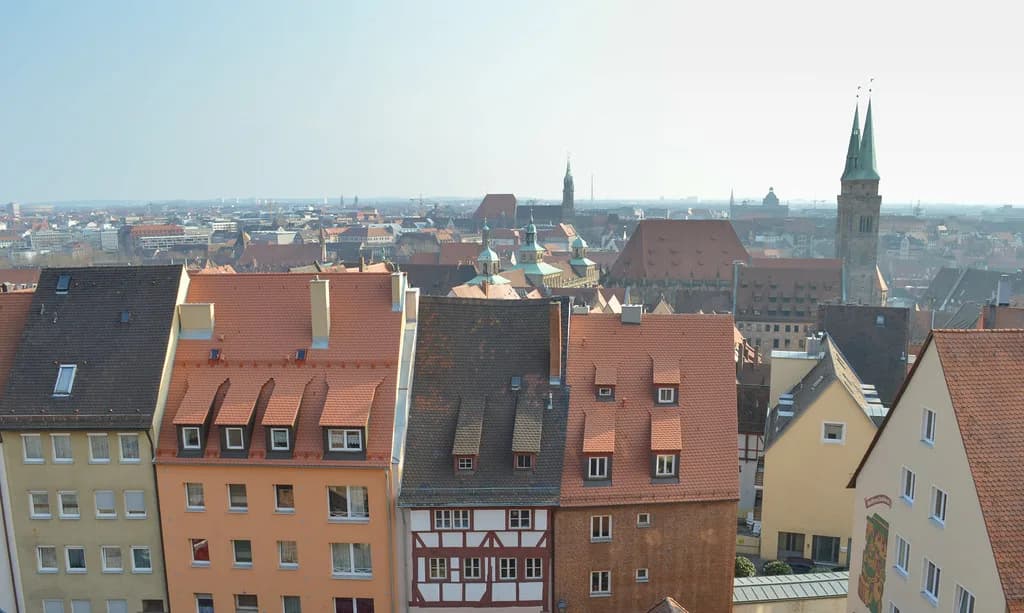
The city's walking surfaces matter as much as the thermometer. The old town is largely cobbled, and the route up to the castle involves gradients and uneven stone, so footwear becomes a genuine packing decision rather than an afterthought. This guide covers broad seasonal clothing categories, layering, and footwear strategy for the old town and castle hill, leaving month-by-month planning to dedicated guides.
How to Read Nuremberg's Seasons Before You Pack
Nuremberg's climate is best understood as a set of historical tendencies rather than a promise. Germany as a whole is characterised by cold winters and warm-to-hot summers, with rain possible throughout the year, which is a useful starting frame for a Nuremberg bag. Treat any seasonal summary as a planning input rather than a forecast, and check current conditions close to departure.
The practical consequence of that range is that your packing list should be modular, not specialised. A single shell layer plus a removable mid layer covers far more of the year than a dedicated heavy coat or a summer-only wardrobe. If you are travelling in the colder half of the year, the specific layering decisions shift, and a focused guide such as what to wear in Nuremberg in November can help you calibrate the mid and outer layers.
A useful habit is to separate the clothing you would wear on a mild day from the clothing that only makes sense in genuinely cold conditions. Rain-ready outerwear and a compact umbrella earn their place in almost any month, while thermal base layers only justify their weight if conditions call for them. That distinction keeps the bag lean without leaving you exposed.
The Layering System: Base, Mid and Shell
A three-part layering system handles Nuremberg's temperature swings more efficiently than any single garment. The base layer manages moisture next to the skin, the mid layer provides insulation, and the shell blocks wind and rain. Because each piece can be removed independently, the same set of clothes works across a surprisingly wide range of days.
For base layers, thin merino wool or a synthetic blend is worth the space because it regulates temperature and resists odour over repeated wears. Cotton t-shirts are fine for warm days but dry slowly and hold chill when damp, so they are less useful as a true base. Pack two or three base layers you can rotate and hand-wash rather than one for every day of the trip.
The mid layer is where you adjust for the season. A fleece or light down or synthetic vest adds warmth without much bulk and can be worn alone on mild days, which makes it one of the most versatile items in the bag. A heavier sweater earns its place in cold months but becomes dead weight in summer, so choose the mid layer based on when you are travelling.
The shell is the piece that keeps the whole system working. A packable rain jacket or a 3-in-1 style jacket with a removable liner gives you a waterproof outer layer and, in the 3-in-1 case, an insulation option you can detach. This is the layer to prioritise if you only have room for one serious outer garment.
Cologne packing list guidance for Germany travellers also leans on the same layer-for-cold-winters, prepare-for-warm-summers principle, which is a reasonable sanity check on your own list. Germany-focused packing advice consistently recommends layering rather than committing to a single heavy item in every season.
Footwear for Cobblestones and Castle Hill
Nuremberg's old town is a walking environment, and the castle hill route adds both elevation and uneven stone. That combination punishes thin soles and rewards shoes with real grip and a stable base. If you only get one footwear decision right, make it this one.
Look for a walking shoe or trainer with a cushioned midsole, a modest tread pattern, and a fit that holds your heel without needing to be laced uncomfortably tight. Breathable uppers are comfortable in warm months, while a water-resistant treatment or membrane helps in wet conditions. Break the shoes in before you travel, because cobblestones expose any hotspot quickly.
Smooth-soled fashion trainers, brand-new shoes, and thin ballet flats are the common mistakes on this terrain. Heels are workable for a short evening if you are not walking far, but they are a poor choice for a day that includes the castle hill. If you want a second pair, a lightweight shoe you can wear indoors or on easy evenings is more useful than a second heavy walking shoe.
Socks deserve a mention because they affect both comfort and warmth. Wool or wool-blend socks cushion the foot and manage moisture better than thin cotton, and they can be rotated and hand-washed. In colder months, a warmer sock does more for your comfort than an extra pair of trousers.
Outfit Combinations That Work Across Seasons
Rather than packing for specific temperatures, build a small set of combinations you can reassemble. A base layer plus a mid layer plus the shell covers cold and wet days. The same base with only the shell works for a mild, damp afternoon. The mid layer alone, or a long-sleeve shirt, handles the days in between.
For warm-weather travel, a light long-sleeve shirt is often more useful than a t-shirt because it protects against sun and can be worn under the shell if an evening turns cool. A pair of trousers that dry quickly and a pair of shorts or a skirt give you options, and a light scarf adds warmth without bulk. The point is versatility, not volume.
For cold-weather travel, a wool or fleece mid layer over a thermal base, a warm jacket, gloves, a hat, and a scarf handle the coldest days, and each piece can be shed as conditions change. Visitors often build German winter bags around thin sweaters, a warm jacket or vest, gloves, a hat, and rain-ready outerwear. For a colder-month packing breakdown that builds on this framework, what to wear in Nuremberg in December covers the specifics.
If your trip includes a summer visit, what to wear in Nuremberg in July covers the warm-weather side of the same layering system, including how to keep the shell and the light layers working without overheating.
A Compact Trip-Length Packing Example
A realistic carry-on for a week in Nuremberg starts with the layer stack rather than with outfits. Pack two or three base layers, one mid layer, and one shell that can handle rain. Add one pair of walking shoes on your feet and, if space allows, one light second pair for indoors or easy evenings.
Add a modest number of bottoms and tops that can mix together, a warm hat and gloves if you are travelling in the colder half of the year, and a compact umbrella. A scarf is small but adds meaningful warmth and can double as a layer on a cool evening. Toiletries should be travel-sized and decanted, and any medication you rely on should travel in your hand luggage rather than in a checked bag.
The carry-on approach is viable for a two-week Germany trip as well, because the limiting factor is rotation rather than quantity. Traveller packing lists for two-week Germany trips keep the same core: thin sweaters, a warm jacket or vest, gloves, a hat, and a travel blanket for flights. That structure scales from a weekend to a fortnight with minor adjustment.
If you are travelling beyond the city, the region's outdoor options change what you carry, and what to pack for rock climbing in the Frankenjura covers that separate case. For a comparable German city packing perspective, the Berlin packing list frames the same seasonal layering decisions from a different starting point.
What to Leave Behind
Heavy formal wear is one of the most common items to regret packing. Unless you have a specific occasion that requires it, a blazer or suit rarely earns the space it takes up, and it is difficult to keep presentable in a suitcase. If you expect a single formal event, plan a compact outfit rather than a full wardrobe of options.
Bulky bedding and large linens are unnecessary for a hotel stay and are easy to buy if a longer stay requires them. Kitchenware, food staples, and cleaning supplies are also poor use of luggage space for a normal trip. Germany-focused packing advice for longer stays highlights items such as power banks, adaptors, and a small amount of laundry detergent as more useful than a heavy household kit, though these are aimed at longer stays rather than a city break.
Resist the urge to pack a separate outfit for every day. A small capsule of mix-and-match pieces outperforms a large bag of single-purpose clothes, especially when you can hand-wash base layers and socks. If you are unsure whether an item will be worn, the honest answer is usually that it will not.
Before You Go: Check the Forecast and Finalise Your Bag
Forecasts change quickly, so the final packing step is a check of current conditions rather than a reliance on seasonal averages. Look at the forecast for your travel dates a few days before departure and adjust the mid layer and the shell accordingly. This is the step that prevents you from packing for a season that does not match the week you are actually there.
Check the weather for each part of your trip if you plan to travel beyond Nuremberg, because conditions vary across the region. Confirm any venue-specific or airline-specific requirements directly with the operator, since rules change and are not inferred here. Then weigh your bag one last time and remove anything you have not justified with a clear use.
A final sanity check is whether every item can be worn with at least two other items in the bag. If not, it is a candidate for removal. The goal is a bag that handles cold, heat, and rain without becoming a burden on the cobblestones.
Plan Your Visit
A Nuremberg packing list comes down to three decisions: layer rather than commit to one heavy garment, choose footwear for cobblestones and the castle hill, and prepare for rain in any season. Everything else is detail that follows from those choices.
Build a small capsule around a base layer, a mid layer, and a shell, add a broken-in walking shoe, and check the forecast before you close the bag. That approach keeps the weight down and the options open, whether you are in the city for a weekend or a fortnight.
More packing guides for Germany
- What to Pack for Rock Climbing in the Frankenjura
- What to Wear for Walking in Nuremberg's Old Town
- What to Wear in Nuremberg in April: Layering for Spring
- What to Wear in Nuremberg in December: A Packing Guide
- What to Wear in Nuremberg in July: Summer Packing Guide
- What to Wear in Nuremberg in November: Layer for Cold, Damp Days
- Freiburg Packing List: What to Wear in Every Season
- Hamburg Packing List: Dress for Wind, Rain, and Harbor Days
Frequently Asked Questions
What should I pack for a trip to Nuremberg?
Build the bag around layers: two or three base layers, a removable mid layer such as a fleece, and a packable rain shell. Add a broken-in walking shoe, a compact umbrella, and a small capsule of tops and bottoms that mix together. Adjust the mid layer and shell based on the forecast for your travel dates.
What shoes should I wear in Nuremberg?
Choose a walking shoe or trainer with a cushioned midsole, real tread, and a secure fit. The old town is cobbled and the castle hill involves gradients and uneven stone, which punishes thin soles and smooth fashion trainers. Break the shoes in before you travel and consider a water-resistant treatment for wet days.
How do I layer for Nuremberg's changing seasons?
Use three parts: a moisture-managing base layer, an insulating mid layer, and a wind-and-rain shell. The mid layer can be worn alone on mild days and removed on warm ones, so the same system covers a broad range. A fleece or light vest plus a packable rain jacket is a versatile combination.
What should I leave behind when packing for Nuremberg?
Leave behind heavy formal wear unless a specific occasion requires it, bulky bedding and linens, and kitchenware or food staples. A separate outfit for every day is also unnecessary. A small mix-and-match capsule plus the ability to hand-wash base layers and socks covers far more than a large single-purpose wardrobe.
Do I need rain gear for Nuremberg?
Rain is possible across the year, so a packable rain shell and a compact umbrella are worth including in almost any season. The shell also blocks wind and can be worn over a mid layer in cooler conditions. Check the forecast before departure to decide whether to prioritise the shell or a lighter outer layer.
How many outfits should I pack for a week in Nuremberg?
Aim for a small capsule rather than one outfit per day: two or three base layers, a mid layer, a shell, and a few tops and bottoms that mix together. Rotation and hand-washing matter more than quantity. This structure works for a weekend as well as a longer trip with minor adjustment.
Sources
Free: The Ultimate Packing Cheat Sheet
A carry-on capsule wardrobe, the complete packing checklist, layering made simple, and what to wear by season — one printable page you'll use on every trip.
You might also like


Continue reading
More guides you'll find useful