
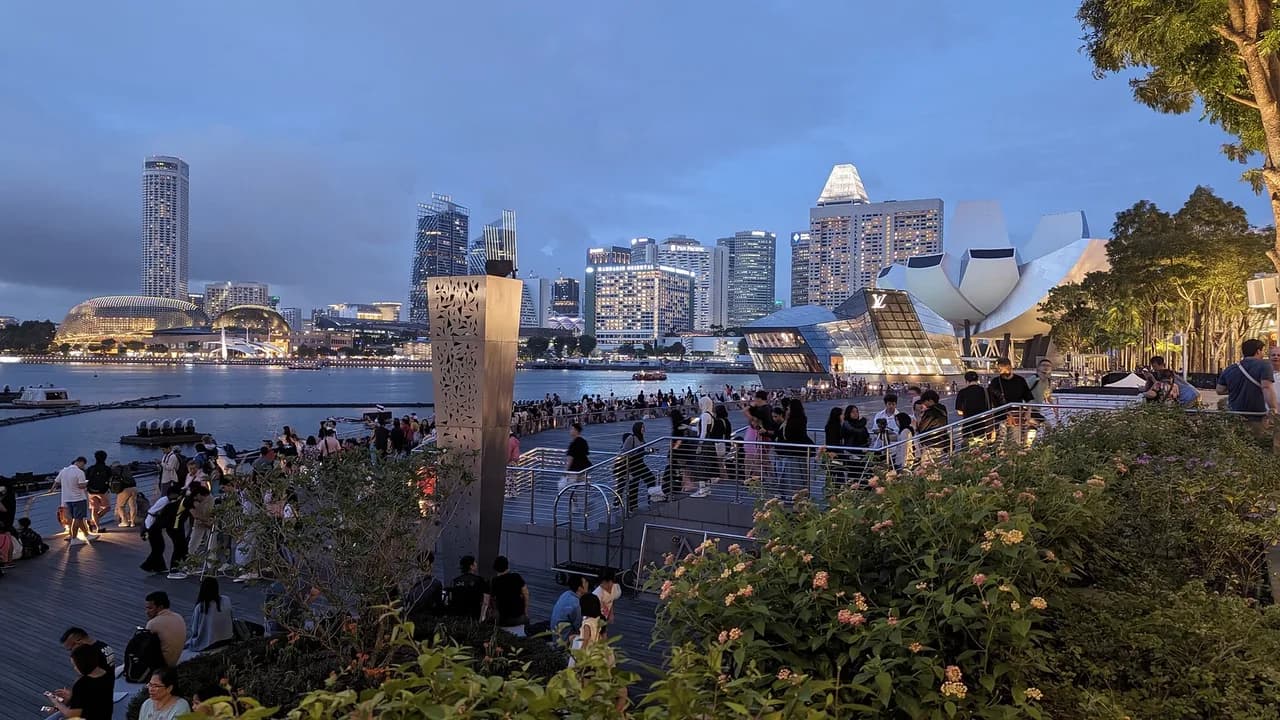
Singapore Packing List: What to Wear in Heat, Humidity and Rain
A practical Singapore packing list: breathable fabrics, rain-ready layers, one reliable walking shoe, a week-long capsule example, and what to leave behind.
On this page
Singapore weather month by month
Typical conditions from 30 years of daily weather data — use it to see how much to pack for the month you are travelling.
| Month | High / low | Days with rain | Afternoon humidity | Daylight |
|---|---|---|---|---|
| January | 28° / 25°C (82° / 76°F) | 7 in 10 days | 75% | 11.9 h |
| February | 28° / 25°C (83° / 77°F) | 6 in 10 days | 73% | 12 h |
| March | 29° / 25°C (84° / 78°F) | 8 in 10 days | 74% | 12 h |
| April | 29° / 26°C (84° / 78°F) | 9 in 10 days | 76% | 12 h |
| May | 29° / 26°C (84° / 79°F) | 9 in 10 days | 77% | 12.1 h |
| June | 29° / 26°C (84° / 79°F) | 8 in 10 days | 76% | 12.1 h |
| July | 28° / 26°C (83° / 79°F) | 8 in 10 days | 76% | 12.1 h |
| August | 28° / 26°C (83° / 78°F) | 8 in 10 days | 76% | 12 h |
| September | 28° / 26°C (83° / 78°F) | 8 in 10 days | 76% | 12 h |
| October | 28° / 25°C (83° / 78°F) | 9 in 10 days | 76% | 12 h |
| November | 28° / 25°C (82° / 77°F) | 9 in 10 days | 77% | 11.9 h |
| December | 28° / 25°C (82° / 77°F) | 9 in 10 days | 77% | 11.9 h |
Travelling on specific dates? Use our What to Wear Planner for the weather, outfits and a packing list for your exact days in Singapore.
Averages for 1991-2020, modelled from Copernicus ERA5-Land and ERA5 reanalysis via Open-Meteo open data (CC BY 4.0), adjusted to Singapore's elevation. Modelled afternoon highs can read 1–2°C below airport weather-station records.
Packing for Singapore is mostly a question of material rather than quantity. The island sits close to the equator, so visitors should plan for warm, humid conditions and short, heavy downpours instead of distinct seasons. Light, breathable, fast-drying clothing that you can rinse and rewear is the practical answer, and it keeps a small bag workable even on a longer trip.
This guide focuses on what to wear rather than where to go. It covers fabric choices and a compact capsule, outfit combinations for walking days and evenings, footwear and walking surfaces, rain and sun gear, what to leave behind, and a trip-length example you can adjust. Where a requirement genuinely belongs to an authority, that authority is named rather than assumed.
One habit matters more than any single item: check the forecast shortly before departure. Climate tendencies describe the general pattern, not the weather on your dates, so use them as a starting point and adjust layers, rain gear, and shoes during the week you travel.
Why Packing for Singapore Is Different
Three conditions shape almost every packing decision here. First, sustained heat and humidity make heavy or tight fabrics uncomfortable within minutes of stepping outside. Second, rain can arrive suddenly and clear just as quickly, which favours rain gear that is small and always with you.
Third, and most often forgotten, is interior air-conditioning. Malls, museums, cinemas, and the metro are cooled firmly enough that some travellers want a thin layer after an hour indoors. A single light long-sleeved shirt or a large scarf solves this without adding bulk, and it doubles as shoulder coverage if you plan to visit a temple or mosque.
Packing guides for Singapore consistently emphasise lightweight, breathable, quick-drying clothing and note that rain showers are typically short, which is why a compact umbrella or an ultra-light rain jacket beats heavy waterproofs. Comfortable, broken-in walking shoes matter too, since a typical day involves paved, well-maintained paths rather than rough trails.
Fabric First: What to Choose and What to Avoid
Fabric choice does more for comfort than the number of garments you bring. Look for thin cotton, linen blends, and technical synthetics that wick and dry quickly overnight. These can be rinsed in a sink and worn again the next day, which is how a small bag stays workable for a long trip. Colour matters less than weave, but light tones feel cooler in direct sun.
Denim is the classic mistake. Heavy cotton jeans trap heat and moisture, take a long time to dry if you are caught in a shower, and are awkward to hand-wash in a hotel room. If you want long trousers for evening coverage or insect protection, choose a light linen or synthetic-blend pair instead, and treat shorts in the same lightweight category.
Plan on one thin long-sleeved layer and one long skirt or long trousers rather than several. These cover the two jobs that light clothing cannot: warmth in air-conditioned interiors and coverage for religious sites or mosquito-prone evenings. Fold a scarf into the same logic, since it works as shoulder coverage, a sun shield, and a light extra layer.
Building a Small Capsule for a Week
A workable week-long capsule is roughly five to seven tops, two to three bottoms, one thin long-sleeved layer, one long skirt or light trousers, swimwear if your hotel has a pool or you plan a beach day, and enough underwear for about a week with a mid-trip wash. Three to five tops can be enough if you commit to rinsing them, which many travellers do because the fabrics dry so quickly.
Keep colours in one family so everything mixes. Two pairs of shorts in neutral tones, three to five tops that all work with both, and one smarter top take you from a hawker centre lunch to a rooftop bar without a separate evening wardrobe. A single dress or a skirt-and-top combination can serve the same purpose.
Laundry is the enabler. A sink wash with a small amount of detergent, a travel clothesline, and a quick-dry towel keep the capsule rotating, and accommodation with a laundrette or laundry service removes the job entirely on longer stays. Bring a couple of large zip bags for damp items so wet swimwear and rinsed shirts do not soak everything else.
Outfit Combinations for a Typical Day
For a walking day, start with a breathable top, lightweight shorts or a skirt, and your most comfortable shoes, then add a cap or hat, sunglasses, and a compact umbrella in a small daypack. If the plan includes a temple or mosque, carry the scarf and a longer bottom so you can cover up at the entrance rather than turning back; check the individual site's posted expectations rather than assuming a uniform rule.
For air-conditioned indoor attractions, the same outfit works with the thin long-sleeved layer pulled on and the umbrella left in the bag. The layer earns its place in cinemas, museums, and long metro rides, and it costs almost no space when rolled. Footwear stays the same, because most indoor floors and campus-style paths are smooth.
For a smart-casual evening, swap the shorts for the long skirt or light trousers and the walking shoes for a pair you can still walk in. Locals dress casually day to day, but nicer bars and restaurants reward a slightly sharper top, so one dressy option is enough. The scarf doubles as a light wrap if the venue is heavily air-conditioned.
Footwear and Walking Surfaces
Choose one supportive, well-broken-in pair of shoes with decent grip and breathable uppers, and consider a second lighter pair only if you know you will want them. Pavement, covered walkways, and park paths mean you rarely need hiking boots, and one versatile shoe that works with both shorts and a smarter outfit saves the most space of any decision you will make.
Flip-flops or sandals are genuinely optional. They are useful for a beach day, a hostel shower, or as a backup if your main shoes get soaked, but they are uncomfortable for long city days. If you bring them, keep them thin and light rather than a second full pair of shoes, and accept that they may not suit every evening venue.
Wet footwear is the real risk, not distance. If your shoes get soaked in a downpour, stuff them with newspaper or a dry towel overnight rather than putting them near direct heat, and have socks you can change into. Rotating between two pairs of shoes is nicer if you have room, but on a short trip the smarter trade is a single dependable pair plus footwear that dries fast.
Rain Gear That Fits in a Day Bag
A compact umbrella or an ultra-light hooded rain jacket is the core decision, and the two suit different travellers. Umbrellas handle warm, short showers well and can be bought locally if you forget one, while a light jacket keeps both hands free. Whichever you choose, keep it in your day bag rather than your suitcase so a sudden shower does not catch you out. If your trip falls in a wetter stretch, a dedicated guide to packing for Singapore's rainy season can help you fine-tune the rain kit.
Sunglasses and a hat are worth packing even though you may see few locals wearing them. Visitors typically spend far more of the day outdoors in direct sun than residents do, so the protection is for your itinerary rather than a cultural norm, and both items are small. Sunscreen matters for the same reason, and reapplying during a long outdoor day is the practical habit.
Treat rain as a scheduling issue rather than a clothing problem. Showers are usually brief, so ducking into a mall, cafe, or museum for twenty minutes often solves it, which means your rain gear only needs to cover short walks between shelter. That is why a small umbrella and a light layer beat a heavy waterproof jacket you will resent carrying.
Sun, Water, and Keeping Cool
A refillable water bottle is one of the highest-value items in the bag. Tap water in Singapore is safe to drink, so filling up from a hotel tap or a water station means you are not buying bottles all day, and a collapsible bottle takes up little space when empty. Dehydration creeps up on humid days because sweat evaporates less noticeably than in dry heat.
A small handheld fan or a folding fan is a lightweight comfort upgrade for outdoor queues and covered walkways, and a quick-dry towel earns its place if you plan beach time or heavy sweating. Pack a small first-aid kit with blister plasters, antiseptic, and sunburn gel rather than relying on finding a pharmacy at the moment you need one.
Health items, including any prescription medication you travel with, belong in a different category from clothing decisions. The CDC publishes a Singapore healthy travel packing list covering health supplies to discuss with your doctor, and it is the right reference point if you are unsure what applies to your circumstances. Check requirements for anything regulated well before departure rather than on the way to the airport.
Coverage for Religious Sites and Mosquito Evenings
There is no single dress code that applies across Singapore's varied religious sites, and the reliable approach is general rather than precise. Carrying a large scarf that can cover your shoulders and a long skirt or trousers for your legs lets you meet most posted expectations at the entrance. Individual mosques and temples publish their own guidance, and some lend wraps, so check the site you plan to visit.
For evenings, mosquitoes are the argument for one long, light layer rather than a heavy one. Long trousers in a breathable fabric or a long skirt reduce exposed skin after dark, and the same piece works if you eat outdoors near greenery or water. Treat any repellent decision as a personal one and read the label rather than assuming a product suits you.
What to Leave Behind
Leave heavy denim, thick sweatshirts, and anything that needs ironing or dry cleaning. They take space, dry slowly after rain or a sink wash, and you will not wear them in steady heat. The same logic applies to a second jacket: one light layer covers both air-conditioning and the coolest evening you are likely to meet.
Cut duplicate shoes, duplicate toiletries, and anything you can easily replace. Singapore is a modern, well-supplied city with pharmacies and clothing shops across the centre, so a forgotten toothbrush, extra T-shirt, or umbrella is a minor errand rather than a crisis. That means the useful question is not what might I need but what would be genuinely hard to buy here.
Leave beach-only and formal-only items at home unless the plan specifically calls for them. A single smart-casual outfit covers the nicest venues most travellers will visit, and dedicated swimwear is only worth its space if a pool or Sentosa beach day is actually on the schedule. Fewer, more flexible pieces consistently outperform a long list of single-purpose ones.
A Packing Example for One Week
For a seven-day trip, the capsule might look like five tops, two pairs of shorts, one long skirt or light trousers for evenings and coverage, one thin long-sleeved layer, one scarf, swimwear if relevant, one week of underwear and socks, one pair of walking shoes, optional thin sandals, an umbrella or light rain jacket, a hat, sunglasses, sunscreen, a refillable bottle, a small personal first-aid kit, and a compact daypack. That fits a carry-on with room to spare. Check the finished load with the carry-on size and weight tool, which distinguishes individual-side limits from a published total-size cap.
The routine that makes it work is simple. Rinse your most-worn tops in the evening, roll them in a dry towel to squeeze out water, and hang them overnight; rotate so you never depend on one garment drying in time. Do a full wash at the midpoint if you have access to a machine, which resets the whole capsule for the second half of the trip.
Adjust quantities by trip type rather than by habit. Add a second swimwear set for a beach-focused stay, subtract the smart-casual top if you are travelling purely for outdoor activity, and drop the long trousers if your itinerary is entirely casual. The goal is a bag you can carry comfortably on public transport and repack in ten minutes.
Before You Go: The Weather Check That Matters
Check the forecast for your actual travel dates in the last few days before departure, and treat any seasonal description as a tendency rather than a prediction. Singapore's rainfall is uneven across the year, so a trip in a wetter stretch justifies a slightly more robust rain plan, while a drier window leans toward sun protection. The forecast is the only guide that reflects your specific week.
Use that check to make three final calls. If rain is likely, confirm your umbrella or light jacket is packed and that your shoes can handle getting wet. If long outdoor days dominate, add the hat and check your sunscreen level. If most of your time is indoors and in transit, keep the rain kit minimal and make sure the thin long-sleeved layer is in the bag.
Then, and only then, finalise footwear. A forecast of heavy rain might push you toward a second fast-drying pair, while a dry week confirms that one comfortable walking shoe is enough. For outfit-level detail on specific areas of the city, read what to wear in Singapore and adapt the capsule rather than rebuilding it from scratch.
Plan Your Singapore Packing
Singapore is one of the easier destinations to pack for once you accept the premise: light, breathable, fast-drying clothing, one dependable pair of walking shoes, and small rain and sun gear you keep with you. The capsule approach works here because laundry is straightforward and replacements are easy to find, so there is little reason to overpack.
Build the bag around a single colour family, a thin long-sleeved layer for air-conditioning, and a scarf that covers shoulders when a site asks for it. Leave the denim, the duplicate shoes, and the formal-only outfit at home, and keep the scarf rather than a second jacket.
Confirm the forecast for your own dates before you close the suitcase, and check official guidance for any health or medication items rather than relying on a general list. Adjust quantities for your trip style, pack a day bag you can carry all day, and the rest is simply enjoying the city.
More packing guides for Singapore
- What to Pack for Singapore's Rainy Season
- What to Wear in Singapore: Heat, Rain, and AC Outfits
- What to Wear in Singapore for a Business Trip
- What to Wear in Singapore for a Layover: Packing Guide
- What to Wear in Singapore for Night Walks: Packing Guide
- What to Wear in Singapore for Sentosa Beaches: Packing Guide
- What to Wear to Singapore Mosques and Temples
- What to Wear to the Singapore F1 Night Race
- What to Wear in Singapore in November
Frequently Asked Questions
What should I pack for a trip to Singapore?
Start with lightweight, breathable, quick-drying clothing, one comfortable pair of broken-in walking shoes, and small rain gear such as a compact umbrella or a light rain jacket. Add a thin long-sleeved layer for air-conditioned interiors, a scarf for shoulder coverage at religious sites, sun protection, and a refillable water bottle. Keep quantities low and plan to rinse and rewear.
What should I wear in Singapore for heat and humidity?
Choose thin cotton, linen blends, or technical fabrics that dry quickly, and avoid heavy denim and thick sweatshirts. Loose shorts, skirts, and airy tops keep you cooler, while one long light layer handles cool interiors and evening mosquitoes. Light colours and a hat help on long outdoor days.
Do I need a rain jacket or an umbrella for Singapore?
Either works, and the better choice depends on how you travel. An umbrella handles warm, short showers and is easy to replace locally, while an ultra-light hooded jacket keeps your hands free. Many travellers carry both only if they expect frequent outdoor time; for most trips, one is enough, kept in the day bag.
What shoes should I pack for walking in Singapore?
One supportive, well-broken-in pair with good grip covers most itineraries, since paths and walkways are generally paved and well maintained. Thin sandals or flip-flops are optional and mainly useful for beaches, showers, or as a backup if your main shoes get soaked. Avoid brand-new shoes to reduce blister risk.
How many outfits should I pack for a week in Singapore?
A common approach is five to seven tops, two to three bottoms, one thin long-sleeved layer, and one long skirt or light trousers, with enough underwear for about a week. Rinsing tops in the evening and doing one fuller wash midway keeps the capsule working. Laundry access at your accommodation lets you cut quantities further.
What should I wear to religious sites in Singapore?
There is no single rule covering every site, so plan for general modesty rather than a specific code. Carrying a large scarf to cover your shoulders and a longer skirt or trousers for your legs lets you meet most posted expectations, and some sites lend wraps at the entrance. Check the guidance published by the individual site you intend to visit.
What can I leave behind when packing for Singapore?
Leave heavy denim, thick jumpers, duplicate shoes, and formal-only outfits unless your plans specifically require them. Toiletries and everyday clothing are easy to buy in the city if you forget something, so avoid packing backups for everything. One light layer and one smart-casual option cover the situations most travellers actually encounter.
Sources
Free: The Ultimate Packing Cheat Sheet
A carry-on capsule wardrobe, the complete packing checklist, layering made simple, and what to wear by season — one printable page you'll use on every trip.
You might also like


Continue reading
More guides you'll find useful


