

What to Wear in Singapore in November: Packing Guide
Pack for Singapore in November with quick-drying fabrics, a light layer for air-conditioned interiors, a compact umbrella, grippy footwear, and temple coverage.
On this page
Singapore in November: the weather in numbers
Typical November conditions from 30 years of daily weather data, split into early, mid and late month so you can match them to your travel dates.
| Dates | Early Nov (1–10) | Mid Nov (11–20) | Late Nov (21–30) |
|---|---|---|---|
| Afternoon high | 28°C (82°F) | 28°C (82°F) | 28°C (82°F) |
| Night-time low | 25°C (77°F) | 25°C (77°F) | 25°C (77°F) |
| Feels like (afternoon) | 32°C (90°F) | 32°C (90°F) | 32°C (90°F) |
| Range of afternoon highs | 27–29°C | 27–29°C | 27–29°C |
| Days with rain | 9 in 10 days | 10 in 10 days | 10 in 10 days |
| Afternoon humidity | 77% | 78% | 77% |
| Average wind | 7 km/h | 7 km/h | 8 km/h |
| Daylight | 11.9 h | 11.9 h | 11.9 h |
What this means for your suitcase
- Hot afternoons: loose, breathable fabrics like linen or cotton, short sleeves and a sun hat.
- Heavy downpours are common — quick-dry clothes and shoes or sandals that cope with puddles.
- Muggy air — moisture-wicking fabrics beat denim and heavy cotton.
Travelling on specific dates? Use our What to Wear Planner for the weather, outfits and a packing list for your exact days in Singapore.
Averages for 1991-2020, modelled from Copernicus ERA5-Land and ERA5 reanalysis via Open-Meteo open data (CC BY 4.0), adjusted to Singapore's elevation. Modelled afternoon highs can read 1–2°C below airport weather-station records.
Singapore sits close to the equator, so November brings no cold season and no need for a winter wardrobe. What shifts in November is the rain: the northeast monsoon begins to build, and showers tend to become more consistent as the month runs toward the year-end wetter stretch, arriving as intense bursts rather than settling in for the day. If you want the decision framework that sits behind the choices in this guide, our overall packing list for Singapore covers the whole year of heat, humidity and rain.
That makes November a packing problem of balance rather than extremes. You want light, breathable clothing for hot and humid outdoor hours, one small layer for aggressively air-conditioned interiors, and rain gear sized to short, intense bursts instead of all-day drizzle. The rest of this guide works through those decisions in order, from fabrics to footwear to what you can leave at home.
Singapore in November: The Turning Point of the Year
Singapore is hot and humid almost all year round, with temperatures ranging from 26 to 35 degrees Celsius (about 79 to 95 degrees Fahrenheit) and humidity that can reach as high as 90 percent. Rain is possible at any time, and the northeast monsoon brings the most consistent rain from November through January. November tends to sit at the start of that stretch: you can still get bright, dry hours, but the chances of a heavy soaking rise as the month progresses.
Compared with October, November usually means you should treat rain gear as something you carry every day rather than something you leave in the hotel room. Compared with December, it is a softer version of the same pattern, which matters for sizing: a compact umbrella and one packable layer cover this window, and you do not need to build an outfit around being wet all day, as the fuller what to pack for Singapore rainy season breakdown explains.
Treat any seasonal pattern as a tendency, not a promise for your dates, and confirm conditions shortly before you fly. One reliable pattern to plan around is rain that arrives as intense, brief afternoon downpours rather than sustained all-day rain, which means your rain gear needs to handle short soaking rather than an all-day drizzle.
Humidity, Warmth, and the Brief Heavy Downpours
Singapore's tropical climate means your main discomfort is your own sweat, not the temperature. Moisture in the air slows how quickly fabric dries, so a shirt that dries in an hour at home can stay damp for much of a day here, and damp clothing in air-conditioned interiors turns clammy and cold.
Rain in this window tends to arrive as intense, brief afternoon downpours rather than sustained all-day rain, which changes what you carry. A heavy rain jacket you would wear all day in a temperate city is overkill here; a small umbrella and one quick-drying layer handle the same weather with less weight and less trapped heat.
Because showers can pass in minutes, the goal is to be dry again quickly, not to stay perfectly dry. Choose pieces you can wring, shake or hang and that will be wearable again in the evening, and keep electronics and documents in a small dry bag or a zippered pouch inside your day bag.
Fabric Choices: Quick-Drying Cotton, Linen, Silk, and Merino
Cotton, linen and silk are comfortable and light on the skin, which is why they work better here than clingy synthetic blends. Polyester and similar fabrics tend to stick when you sweat and can hold odour, so if you do bring technical pieces, look for ones labelled quick-drying rather than dense and smooth.
Loose cuts beat tight ones. A relaxed linen shirt or a floaty dress moves air across your skin, while a fitted top in a heavy material traps heat before you have even left the hotel. Light colours also help, partly for reflected heat and partly because they hide the salt marks that show up fast on dark cotton in humid weather.
Plan on one wear between washes for tops if you sweat heavily, but two wears for bottoms is realistic. Quick-drying fabrics let you hand-wash a shirt in the evening and have it ready by morning, which is the single easiest way to keep a small bag small on a humid trip.
Compact Umbrella Versus Rain Shell
An umbrella that can double as rain protection and a parasol is the most practical single rain tool for November, and it dries quickly once you are indoors. It keeps your head and shoulders dry without adding heat, and it is the lighter of the two options to carry through a day of hawker meals and mall stops.
A packable rain shell keeps both hands free and works when wind turns rain sideways, but it traps heat and humidity against your body and can leave you as damp inside as out. For November, the honest trade-off is comfort: the umbrella wins on airflow, the shell wins on walking speed and hands-free convenience.
If you bring only one, take the umbrella and choose a small one that fits a day bag; in Singapore an umbrella that doubles as rain protection and a parasol is the most versatile single item you can carry. If you bring both, keep the shell folded at the bottom of the bag and reach for it only on days when the forecast suggests longer spells of rain or when your itinerary keeps you outside, such as a full morning at a nature reserve.
Footwear for Wet, Slick Pavements and Long Walking Days
Singapore is an urban walking city with excellent pavements, and much of your day will be spent on the MRT and around hawker centres, so comfortable flat shoes are the priority. Look for a sole with real grip, because smooth, hard soles slide on wet tile and polished stone, which are common around malls and station entrances.
Drying time matters as much as grip. Leather and heavily padded trainers can stay soggy for a day or more after a soaking, while sandals or light mesh shoes recover faster. If you plan on a nicer dinner, one dressier pair is enough; two pairs total covers most November trips.
Bring socks that manage moisture, and consider a second pair of insoles or a spare pair of walking shoes only if your trip is long. Blisters come from wet feet rubbing, not from distance alone, so keeping feet dry matters more than owning specialised footwear.
One Light Layer for Air-Conditioned Interiors
The biggest temperature swing you will feel in Singapore is not between seasons but between outside and inside. Buildings and public transport are over air-conditioned, and the contrast between a hot street and a cold mall, museum or train carriage is enough to make a light layer genuinely useful.
This should be a carried layer, not a worn one. A lightly woven linen jacket or shirt, a thin cardigan or a scarf you keep in your day bag does the job, and it comes out when you sit down for a long meal or spend an hour in a museum. A bulky fleece is unnecessary weight for most people, though a thin one works if you run cold.
Choose a layer that matches your outfits and can double for something else, whether that is shoulder coverage at a temple or a wrap on a breezy waterfront at dusk. One versatile piece beats three single-purpose ones in a humid climate where you already need spare room for damp clothing.
Coverage for Temples and Religious Sites
A scarf or sarong is the most efficient answer for religious sites because it takes almost no space and can double as a sarong to cover bare legs or shoulders when you enter religious spaces such as Indian temples. It also works as your air-conditioning layer, tied or draped as needed rather than worn all day. Singapore's religious sites are active places of worship rather than attractions, so treating coverage as a courtesy is the practical approach.
If you would rather not think about it during the day, wear bottoms that reach the knee and carry a light layer for your shoulders. Rules vary between sites and can change, so check the specific site's own signage or website for anything mandatory rather than relying on general advice.
Typical November Days: Hawker Meals, Malls, Museums, Waterfront Walks
A typical November day in Singapore mixes outdoor eating with indoor cooling, often without much warning. Hawker centres are largely open-air or under cover, so lightweight clothing and a seat away from the edge work better than anything you would wear to a restaurant; malls and museums are aggressively air-conditioned, so the light layer you carried comes out as soon as you step inside.
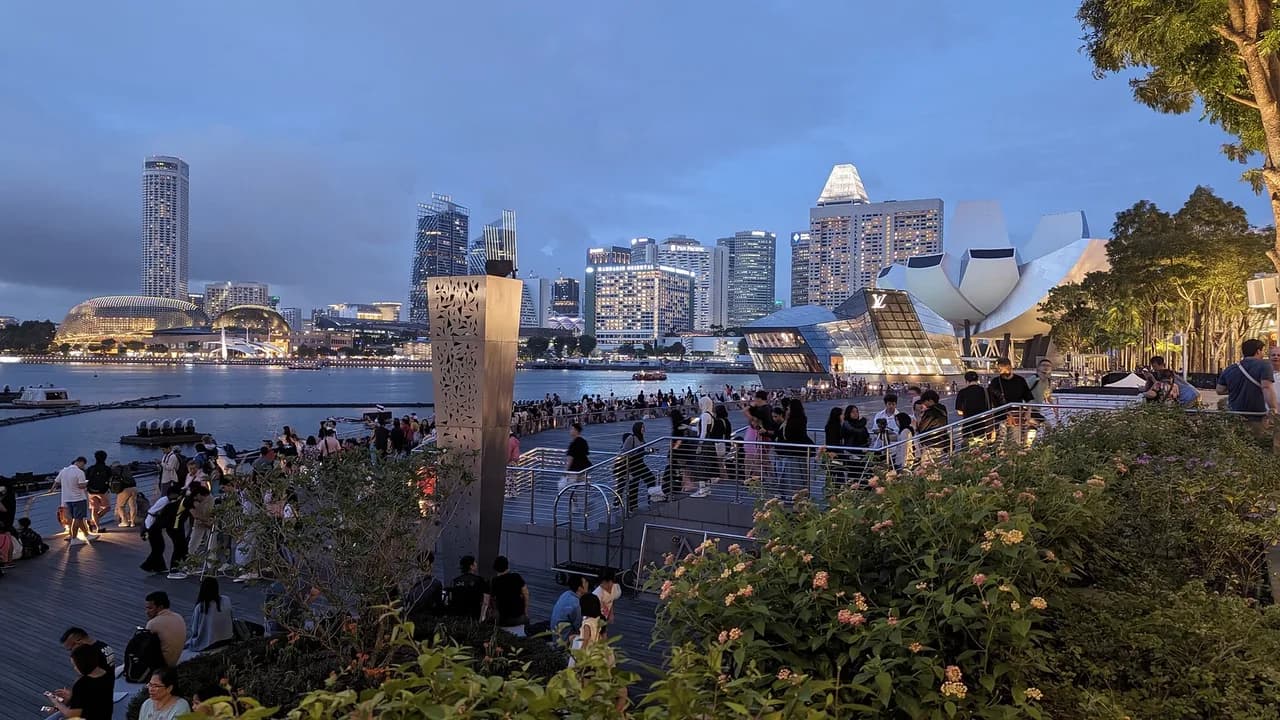
Waterfront walks around Marina Bay are pleasant once the sun eases, and they are exactly the kind of plan where a compact umbrella earns its place in your bag. Religious sites, markets and neighbourhood streets in Chinatown and Little India reward the coverage accessory and shoes you can walk in for several hours.
Build your day bag around that rhythm: water bottle, umbrella, light layer, and a small towel or cloth if you sweat heavily. Bringing a refillable water bottle you can top up at the city's many water fountains matters more than any clothing choice on a humid afternoon. If your trip is built around work instead, the packing choices shift and are worth planning separately for a Singapore business trip.
A Compact Packing List for a Four- to Five-Day Trip
For four to five days, pack three or four lightweight tops in cotton, linen or merino, rotating them so you always have a dry one available. Add two bottoms, one casual and one slightly smarter, plus the light layer for interiors and a scarf or sarong that handles both air-conditioning and religious-site coverage.
For footwear, bring one comfortable walking pair with grip and one dressier pair, plus enough socks to always have a dry set. Add a compact umbrella, a refillable water bottle, sun protection in the form of a hat and sunscreen, and a small dry pouch for your phone and documents. That set covers hawker meals, malls, museums, waterfront walks and temple visits without a second checked bag.
Laundry is the trick that keeps this list small. Rinse tops in the evening, hang them where air moves, and you can realistically stretch four days of clothing through a longer stay in this climate.
What to Leave Behind: Heavy Denim, Thick Jackets, and Bulky Extras
Leave heavy denim at home. Jeans are slow to dry, uncomfortable once damp, and too warm for humid daytime walking, so they are the classic item people regret packing for Singapore. Thick jackets, wool coats and anything designed for a cold season are pure weight here, even allowing for strong air conditioning.
Also skip multiple pairs of shoes, formal eveningwear unless you have a specific booking that requires it, and bulky camera or beach gear you are unlikely to use, and leave heavy-duty sun hats you cannot pack flat at home.
One caveat: what you leave behind depends on your plans. If you have a business meeting or a formal dinner, that outfit has its own requirements and should be planned separately rather than squeezed into a tropical holiday bag.
Before You Fly: Check the Forecast, Not the Averages
Seasonal patterns describe what November has tended to do, not what your week will do. A few days before departure, check a reliable forecast for Singapore and let it adjust the balance: a wetter outlook argues for the rain shell and an extra pair of quick-drying bottoms, while a drier stretch means the umbrella alone is plenty.
Check two things specifically: whether rain is forecast for the hours you plan to be outdoors, and how humid the days look, since humidity is what determines how often you change clothes. If you are only transiting briefly, a much smaller kit will do, and a short layover kit is a different packing problem.
Pack to the forecast you actually see, then trust the layer-and-umbrella system for whatever the day delivers. Because showers here are short, even a washout morning rarely ruins a whole day.
Plan Your November Packing
November in Singapore is warm, humid and shower-prone, with the northeast monsoon building toward the year-end wetter stretch. Pack light quick-drying fabrics, one carried layer for air-conditioned interiors, comfortable shoes with grip, and a compact umbrella that doubles as sun cover, and add a scarf or sarong for temple visits. The general what to wear in Singapore guidance covers how these choices work across the year if you are extending your trip.
Keep the bag small by relying on laundry rather than volume, and leave the denim and heavy jackets at home. Check the forecast in the days before you fly and let it decide whether you also need a packable rain shell.
Related packing guides
- Singapore Packing List: What to Wear in Heat, Humidity and Rain
- What to Pack for Singapore's Rainy Season
- What to Wear in Singapore: Heat, Rain, and AC Outfits
- What to Wear in Manila in November: Packing Guide
- What to Wear in Colombo in November: Packing Guide
- What to Pack for Phuket in November: Beach Packing Guide
- What to Wear in Bangkok in November: Cool Season Packing Tips
- What to Wear in Busan in November: Packing Guide for Chilly Coastal Days
Frequently Asked Questions
What should I wear in Singapore in November?
Choose lightweight, breathable clothing in cotton, linen or silk, and avoid clingy polyester that holds sweat. Carry a light layer for air-conditioned malls, museums and the MRT, plus a small umbrella for the short, heavy showers that become more frequent as the month goes on.
Do I need a rain jacket or just an umbrella in Singapore in November?
For most trips, a compact umbrella is enough, and it doubles as a parasol in strong sun. A packable rain shell is worth adding if you plan long outdoor stretches with little shelter, such as nature trails or extended waterfront walks, since it keeps your hands free.
How should I dress for religious sites in Singapore?
Cover your shoulders and knees, and carry a scarf or sarong that can be draped over bare shoulders or legs. Rules differ between sites and can change, so check the individual site's own guidance before you visit rather than assuming one standard applies everywhere.
What shoes work best for Singapore's wet pavements in November?
Comfortable flat shoes with a grippy sole are the safest bet, because wet tile and polished stone around malls and stations get slippery. Quick-drying sandals or light mesh shoes help if you get caught in a downpour, and moisture-managing socks reduce rubbing on long walking days.
How many outfits should I pack for a week in Singapore in November?
Three or four lightweight tops and two bottoms are enough for four to five days if you rinse items in the evening, since fabrics dry quickly in this climate. Add one light layer, one coverage scarf, one walking pair of shoes with grip, and one dressier pair if you have a nicer meal planned.
Sources
Free: The Ultimate Packing Cheat Sheet
A carry-on capsule wardrobe, the complete packing checklist, layering made simple, and what to wear by season — one printable page you'll use on every trip.
You might also like


Continue reading
More guides you'll find useful


