

Tampere Packing List: Layers, Footwear, and Gear for Any Season
Build a Tampere packing list around layers, waterproof footwear, and sauna-ready items, using seasonal tendencies and a final-week weather check.
On this page
Tampere weather month by month
Typical conditions from 30 years of daily weather data — use it to see how much to pack for the month you are travelling.
| Month | High / low | Days with rain | Days with snow | Afternoon humidity | Daylight |
|---|---|---|---|---|---|
| January | -4° / -7°C (26° / 19°F) | 3 in 10 days | 3 in 10 days | 77% | 5.9 h |
| February | -4° / -8°C (25° / 17°F) | 3 in 10 days | 3 in 10 days | 75% | 8.6 h |
| March | 0° / -5°C (32° / 22°F) | 3 in 10 days | 2 in 10 days | 68% | 11.3 h |
| April | 6° / -1°C (43° / 31°F) | 3 in 10 days | 1 in 10 days | 59% | 14.4 h |
| May | 13° / 5°C (56° / 41°F) | 3 in 10 days | Rare | 52% | 17.2 h |
| June | 18° / 11°C (64° / 51°F) | 4 in 10 days | Rare | 55% | 19 h |
| July | 21° / 14°C (69° / 57°F) | 4 in 10 days | Rare | 59% | 18.2 h |
| August | 19° / 13°C (66° / 56°F) | 4 in 10 days | Rare | 63% | 15.6 h |
| September | 14° / 9°C (56° / 48°F) | 3 in 10 days | Rare | 70% | 12.5 h |
| October | 7° / 3°C (44° / 38°F) | 4 in 10 days | Rare | 79% | 9.6 h |
| November | 2° / -1°C (35° / 31°F) | 4 in 10 days | 2 in 10 days | 83% | 6.7 h |
| December | -1° / -5°C (29° / 24°F) | 4 in 10 days | 3 in 10 days | 81% | 5 h |
Travelling on specific dates? Use our What to Wear Planner for the weather, outfits and a packing list for your exact days in Tampere.
Averages for 1991-2020, modelled from Copernicus ERA5-Land and ERA5 reanalysis via Open-Meteo open data (CC BY 4.0), adjusted to Tampere's elevation. Modelled afternoon highs can read 1–2°C below airport weather-station records.
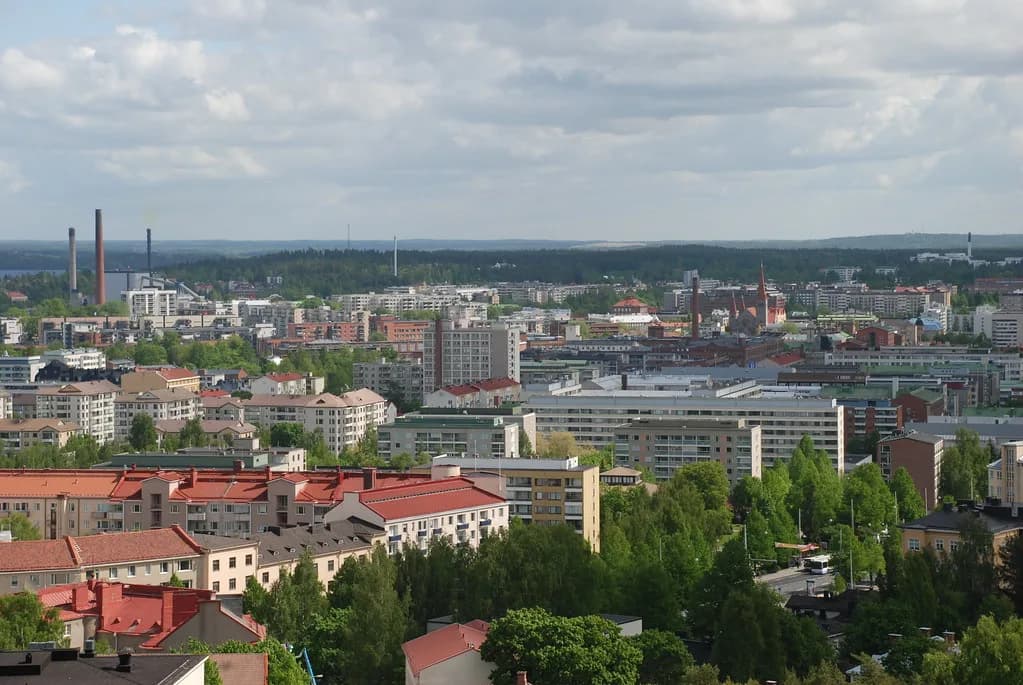
A Tampere packing list is less a fixed kit than a set of swappable layers, because a single day can move from a heated cafe to a wind-exposed lakeshore and back again. The city centre sits on a narrow isthmus between two lakes, so water is never far from your route and damp air is part of the equation.
Start by mapping your trip shape: how many days, how much time on foot in the centre, and whether you plan to spend evenings in a sauna or on trails outside town. Those three answers decide whether your heaviest item is an insulated parka, a rain shell, or a quick-dry towel, and they keep you from packing three separate wardrobes.
Treat every seasonal pattern in this guide as a historical tendency, not a forecast. Conditions vary, so check a current forecast in the final week and let that reading, not this page, make your last calls.
Why Tampere Packing Differs From a Generic Finland List
Tampere is inland rather than coastal, and its centre is compact enough to walk, which means you will likely cross wet cobbles, slush, or slick stone more often than you would on a bus-based city break. That makes sole grip and water resistance more important than raw warmth alone, especially in the freeze-thaw weeks when streets alternate between ice and puddles.
The bigger local factor is transition. You step from cold, wind-exposed streets into warm shops, museums, and saunas within minutes, so a single heavy layer that cannot be opened or removed quickly becomes uncomfortable fast. Design your kit so each piece can be shed and carried, and consider a daypack or tote that holds a mid-layer while you are indoors.
Because the lakes bracket the centre, wind off the water can make a mild afternoon feel distinctly colder on exposed walkways. A wind-resistant shell over your mid-layer does more for comfort in that situation than adding a second sweater.
The Layering System in Practice
Build around three working layers: a thin base layer against the skin, an insulating mid-layer, and a weather shell. The point is not to own many of each but to have one reliable piece per role, so every outfit on the trip is a variation on the same three-part formula.
For the base layer, wool and merino are popular because they keep insulating when damp, while synthetics dry faster and usually cost less. Cotton is the weakest choice next to the skin in cold, wet conditions because it holds moisture, so save cotton t-shirts for warm, dry days.
Your mid-layer is the piece you will add and remove most often: a wool sweater, fleece, or lightweight down jacket all work, and the trade-off is warmth versus packability. If you want to compare how this plays out in the shoulder season, what to wear in Tampere in November shows the same layering logic applied to a darker, wetter month.
The shell should block wind and shed rain, with a hood you can deploy without stopping to dig out an umbrella. A shell that packs small earns its place in every season, including summer, when it doubles as your evening layer.
Cold-Season Clothing for Tampere
In the cold months, one insulated outer layer, a parka or down jacket, replaces the shell-and-mid combination for everyday walking. Look for wind resistance, a hood, and enough room to fit a sweater underneath, since a coat that fits tightly over your mid-layer traps less warm air. Winter packing guides consistently rank the coat as the highest-value item to get right before a Finland trip.
Underneath, budget two thermal base layer sets and two wool or fleece mid-layers so one can air out or dry while you wear the other. Thermal leggings or woollen tights under trousers matter more than a second pair of trousers, because legs feel the cold on long walks.
Accessories do disproportionate work. A wool beanie, mittens rather than thin gloves, and a neck warmer or buff cover the areas that lose heat fastest, and mittens keep fingers warmer than separated gloves. Add sunglasses for low winter sun and glare off snow or ice.
If your trip leans toward skating, skiing, or other outdoor activity, layer expectations shift again, and what to wear for Tampere winter activities goes deeper on that specific case. For a general city visit, though, the coat, base layers, and accessories above cover the core decisions.
Footwear Decisions for Wet, Icy, and Mild Streets
Footwear is where Tampere trips are won or lost. Waterproof boots with a grippy sole handle slush, meltwater, and refrozen pavements in the cold months, and the grip matters as much as the insulation on days when surfaces alternate between wet and icy.
For mild spring, summer, and early autumn, a comfortable walking shoe or trail shoe covers most days, with the trail version earning its keep if you plan forest paths. Bring one pair you have already broken in rather than a stiff new pair, and accept that suede and light mesh will not love wet cobbles.
Socks are a packing variable, not an afterthought. Wool socks cushion and stay warm when damp, so pack a few pairs and carry one spare in your daypack; changing socks mid-day rescues more walks than changing shoes.
As the thaw takes hold in spring, footwear decisions shift toward managing standing water rather than deep cold. What to wear in Tampere in March shows how that transition changes the boots, socks, and outer-layer choices you would carry.
Shoulder-Season and Summer Packing
Summer in Finland can swing between genuinely warm days and cold, rainy ones within the same visit, so a realistic list mixes t-shirts and shorts with a thin sweatshirt, a thicker layer, and a rain jacket you carry daily. A Finland summer packing list describes this mixed pattern as the norm and advises carrying a jacket everywhere rather than betting on a settled week.
Green spaces and lakeshore trails around Tampere bring insects into the picture, so add repellent and something for bites, and follow the product directions on the label. Ticks are present in Finnish vegetation, so light long trousers for walks and a tick check after time outdoors are sensible general precautions.
Nature time also rewards a few small items: a quick-dry microfibre towel, a daypack, and a breathable shirt that handles sweat. Pack a sleep mask for the bright northern nights if you are sensitive to light, since summer daylight runs extremely long.
Shoulder months, roughly late spring and early autumn, are the hardest to pack for because you genuinely need both a warm layer and a rain shell. Take the cold-season outer layer but leave the heaviest thermal leggings at home, and rely on the base-mid-shell system to absorb the swing.
Sauna and Lake Access Preparation
If a sauna is part of your plans, pack swimwear and a quick-dry towel, since both are commonly useful for the visit and for drying afterwards. Practices, facilities, and what a venue expects vary widely, from public saunas to hotel and private ones, so check with the specific place you plan to visit rather than relying on a general rule.
Some guides also suggest a bag for wet items and footwear that is easy to slip on and off, which is practical preparation rather than a dress code. Treat these as optional conveniences, not requirements.
Lake swimming depends on the season, water conditions, and whether a venue maintains a swimming area, so do not assume ice swimming or open-water access is available on your dates. If cold-water dipping is the goal, confirm arrangements with the facility and pack accordingly rather than planning around a guaranteed experience.
A Compact Three-Day Packing Example
For a cold-season city trip of about three days, think in combinations rather than counts. One pair of waterproof boots, one insulated coat, one shell, two wool base layer sets, two mid-layers, one warm hat, one pair of mittens, one neck warmer, and three or four pairs of wool socks will cover every day if you rotate and air out the base layers.
That kit builds several outfits by swapping the mid-layer and reusing the same outer pieces, which is why duplicating bulky items adds weight without adding options. In summer, the same logic works with one rain shell, two mid-weight tops, shorts and trousers, one broken-in walking shoe, swimwear, and the towel.
For a longer stay, the only real change is laundry: plan a mid-trip wash and you can keep the same compact set instead of scaling up quantities. This is an illustration of combinations, not a rule about how many items anyone needs.
What to Leave Behind
Leave the second heavy coat at home. One insulated outer layer plus a packable shell covers both deep cold and wet, mild days, and two bulky coats are the fastest way to overload a bag you will carry between the centre and the lakeshore.
Skip brand-new footwear, high heels, and any shoe you would not happily walk several kilometres in, because cobbles and wet pavement punish stiff soles. Also skip cotton-heavy layers for cold trips and delicate fabrics you would worry about in rain.
Finally, do not pack around the assumption that you will buy essentials on arrival. Selection and opening hours vary, and spending your first day shopping for boots or thermals is a poor trade; bring the pieces that make or break your comfort, and buy only optional extras locally.
Before-Departure Check
In the week before you fly, check a current forecast and read it against your itinerary rather than against this page. Note the daytime high, the overnight low, and the wind, because wind changes how a given temperature feels on the lakeshore.
Then make three adjustments: swap the mid-layer weight if the forecast is milder or colder than you expected, decide whether waterproof boots or lighter shoes are the better primary pair, and confirm your rain shell is packed where you can reach it on day one.
This routine matters more than any fixed checklist, because Tampere conditions vary enough between months that the same bag should not look identical in January and July.
Plan Your Visit
The Tampere packing list that works is small and modular: a base-mid-shell system you can rearrange, footwear matched to the season and surfaces, warm accessories in the cold months, and a few nature and sauna items for lake-adjacent days. Pack for transitions, not for a single weather scenario.
Decide your layers from a current forecast in the final week, keep one broken-in pair of shoes as your foundation, and leave the duplicate bulky items behind. That approach holds whether you are walking the centre in slush or heading out along the water on a bright summer evening.
More packing guides for Finland
- Tampere Sauna Packing List: What to Bring and Wear
- Winter Activity Clothing for Tampere: Layering Guide
- What to Wear in Tampere in March: Late-Winter Layering
- What to Wear in Tampere in November: Layers, Boots, Low-Light Gear
- What to Wear on a Tampere Lakeside Walk
- Helsinki Packing List: Layering for the Baltic Capital
- Rovaniemi Packing List: Winter Layers, Boots, and Gear
Frequently Asked Questions
What should I pack for a trip to Tampere?
Pack a three-part layering system: a thin wool or synthetic base layer, an insulating mid-layer such as a fleece or wool sweater, and a wind- and water-resistant shell. Add footwear suited to the season, warm accessories if you are travelling in the cold months, and a daypack that can hold the layer you shed indoors. For summer, add insect repellent, a quick-dry towel, and a rain jacket you carry daily.
What should I wear in Tampere in winter?
Build around one insulated coat that fits over your mid-layer, thermal base layers, and a wool or fleece mid-layer, then add a beanie, mittens, and a neck warmer. Waterproof boots with good grip handle slush and refrozen pavements, and wool socks keep feet comfortable. Check a current forecast before departure, since conditions vary considerably week to week.
What shoes should I bring for Tampere?
Bring one pair of waterproof boots with a grippy sole for the cold months, when slush, meltwater, and ice are common on pavements. For mild seasons, a broken-in walking shoe or trail shoe covers most city days, with the trail version better for forest paths. Whichever you choose, make sure you have worn it in before the trip and that it suits wet cobbles.
Do I need waterproof boots for Tampere?
Water-resistant footwear helps whenever you might meet wet cobbles, rain, slush, or melting snow, which is most of the year outside the driest summer spells. In deep winter, boots with grip and insulation are the stronger choice; in mild weather, a water-resistant walking shoe may be enough.
What should I pack for summer in Tampere?
Take a mix rather than a warm-weather-only wardrobe: t-shirts and shorts, a thin sweatshirt, a warmer layer, and a rain jacket you carry daily. Add insect repellent and bite relief for green areas, a quick-dry towel, a daypack, and a sleep mask if bright nights bother you. Evenings and rainy days can feel cool, so the extra layer earns its space.
Do I need to bring swimwear for a sauna in Tampere?
Swimwear is a practical item to bring if sauna or lake swimming is part of your plans, along with a quick-dry towel. Expectations vary between public, hotel, and private saunas, so confirm with the specific venue you intend to visit instead of relying on a general assumption. Access to swimming areas also depends on the season and the facility.
What can I leave behind when packing for Tampere?
Leave duplicate bulky layers behind, since one insulated coat plus a packable shell covers both cold and wet days. Skip brand-new or uncomfortable shoes, cotton-heavy base layers for cold trips, and delicate fabrics you would worry about in rain. Avoid counting on buying essentials after arrival, because selection and opening hours vary.
How do I check the weather before packing for Tampere?
Check a current forecast in the final week, and read the daytime high, overnight low, and wind together rather than the temperature alone. Wind off the lakes can make an otherwise mild day feel cold. Then adjust mid-layer weight, choose your primary footwear, and keep your rain shell accessible from day one.
Sources
Free: The Ultimate Packing Cheat Sheet
A carry-on capsule wardrobe, the complete packing checklist, layering made simple, and what to wear by season — one printable page you'll use on every trip.
You might also like


Continue reading
More guides you'll find useful


