What to Wear in Chamonix in November
November in Chamonix brings colder air and possible snow at altitude. Plan warmer layers than October, waterproof footwear, and a flexible valley-to-height kit.
On this page
November in Chamonix is a transition month: the valley's autumn colour is fading, the air is colder than in October, and snow may start settling at altitude while the town itself stays merely cold and often damp. Packing for this in-between stretch means warmer layers than an October trip, more weatherproof footwear, and the flexibility to dress for two different elevations in a single day.
Unlike December, when festive crowds and the start of the winter season give the resort a clearer identity, November is quiet. Lifts, trails and mountain facilities run reduced schedules or close for maintenance, so you cannot count on huts, restaurants or transport being available. That low-season reality shapes what you carry: self-sufficient layers, spare gloves, and a headlamp for the shorter days. For a season-by-season baseline, see the Chamonix packing list.
This guide focuses on November alone, picking up where October leaves off and stopping short of December's ski-season assumptions. Climate is described as historical seasonal tendency rather than forecast, and all outfit suggestions are editorial recommendations rather than rules, dress codes or expectations about what everyone in town wears.
What Makes November Different From October and December
October in Chamonix is usually mild enough for valley walks and autumn colour, with rain more likely than snow. November is colder, and snow may begin falling higher up, though the town does not reliably hold snow. December brings the winter season and a festive atmosphere, so November is the awkward middle: colder than October but without December's dependable snow cover.
The Chamonix All Year weather guide describes November as the end of autumn, with the mercury dropping further, snow starting at altitude, and only occasional late-November weekend openings of the higher slopes at Les Grands Montets, which more often happens in early December. Pack for pre-winter variability, not full ski-season certainty.
The practical difference is layering. You need warmer pieces than October without committing to the bulk of deep-winter kit, and you need the option to add insulation quickly when you gain height or when a cold front moves through.
Valley Floor and Altitude: Two Climates in One Day
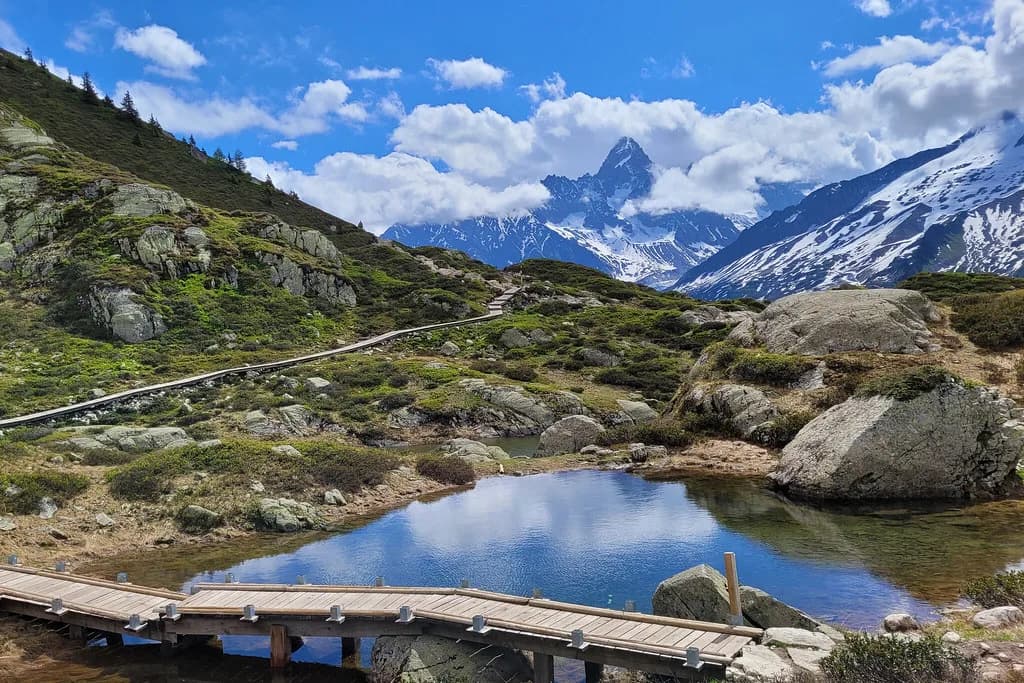
Chamonix town sits at around 1,035 metres, while surrounding peaks rise more than 3,000 metres higher. South-facing slopes can feel noticeably warmer when the sun is out and the wind is calm, while cold air sinks to the valley floor. In November that contrast widens: damp and cool in town, genuinely wintry higher up.
Cold fronts can bring dramatic temperature drops and difficult conditions in the mountains at any time of year. The Tour du Mont Blanc temperature guidance notes that outside the main June-to-September window, passes are usually laden with snow and impassable without skis or snowshoes, and that a cold front calls for warm clothes, gloves, a woolly hat and gaiters. Treat that as a reminder of how fast conditions change above the valley.
For packing, this means planning for both elevations in the same trip. A single fixed outfit will not work if you start in town and then take a lift, drive to a higher trailhead or walk onto an exposed balcony path. Build in the ability to add insulation and a shell without returning to your accommodation.
The November Layering System
A three-layer system covers most November days in Chamonix. Begin with a moisture-wicking base layer, add a fleece or lightweight down mid layer for warmth, and finish with a waterproof and windproof shell. You can then adjust insulation as you move between sheltered streets and exposed higher ground.
Merino wool works well for base layers because it regulates temperature and resists odour, which matters if you wear the same pieces across several days. Synthetic base layers dry faster but can feel cooler when damp. Either is fine, but bring two so you always have a dry set.
Choose a mid layer you can add or remove without stopping for long. A zip-neck fleece or a packable down jacket suits this role. Down gives more warmth for its weight but loses insulating power when wet, so keep it inside your shell in damp conditions.
The shell is the piece that matters most. It should be genuinely waterproof rather than water-resistant, because cold rain is a real possibility in the valley. Look for taped seams and a hood that fits over a hat. A shell that soaks through undermines every layer beneath it.
Colder Than October: Small Additions That Matter
Compared with an October trip, November rewards a handful of extra items. A warm hat, gloves and a scarf or neck gaiter protect the extremities where cold is felt first, and merino or fleece-lined gloves are more comfortable for general wear than bulky ski gloves.
Thermal leggings or merino base-layer bottoms are worth packing even for valley plans. They add warmth under trousers without bulk and can be removed if the afternoon turns milder. The Tour du Mont Blanc guidance names warm clothes, gloves, a woolly hat and gaiters as cold-front essentials at altitude, and the lower half of your body benefits from the same logic.
A lightweight insulated jacket makes a useful extra mid layer for higher elevations or evening walks. It packs small and can be worn under a shell if needed. In town, a warmer everyday coat over a sweater is often enough, so keep the technical pieces for mountain time rather than wearing them around the resort all day.
Footwear for Wet Paths and Snow-Dusted Trails
November footwear should prioritise waterproofing and grip. Waterproof leather or synthetic boots with a deep tread handle wet valley paths and possible snow at altitude. Trail shoes can work for lower, firmer walks but offer less insulation and protection if conditions turn wintry.
If you plan to walk on trails that may be icy or snow-dusted, traction devices that fit over your boots add security on packed paths. They are not a substitute for mountaineering equipment. Walking poles also help with balance on slippery ground, which the Tour du Mont Blanc guidance recommends for snow-covered passes.
Bring a second pair of footwear for town if you can. Dry shoes for the evening make a real difference when your boots are wet and muddy, and lightweight trainers pack easily. Socks matter as much as boots: wool or synthetic blends wick moisture better than cotton, which stays damp and cold, so bring several pairs.
Short Days and How They Shape Your Kit
November daylight in Chamonix is noticeably shorter than in summer, and the sun sits low even on clear days. That compresses the window for outdoor activity, so you may start and finish in low light. Plan around the available daylight rather than trying to fit in a full itinerary.
A headlamp earns its place in a November daypack even if you do not expect to be out after dark. It weighs little and covers you if a walk takes longer than planned or if you are driving on unlit roads. Reflective details on your outer layer also help when walking along roads at dusk.
Shorter days mean more time in town or indoors, so pack comfortable indoor clothing and a warm evening layer. A book or a small game fills the longer dark hours more cheaply than restaurant time.
Low Season: Fewer Lifts, Trails and Facilities
November is low season in Chamonix. Many lifts and mountain facilities run reduced schedules or close for maintenance before winter, and some trails can be closed or impassable because of snow or ice higher up. You cannot rely on mountain huts, restaurants or lifts being open, so pack as though you need to be self-sufficient for the day.
Carry water, snacks and a means of communication. A paper map or an offline map on your phone is useful because mobile signal can be unreliable in the valley. If you head out alone, tell someone your plan and expected return.
Check the status of lifts, trails and roads before you set out, and use local webcams to confirm whether snow is lying at different elevations. The Chamonix tourist office publishes forecasts prepared by Météo France together with live observations, road information and webcams.
A Compact Three-Day November Packing Example
For a three-day November trip, a carry-on is realistic if you choose layers carefully. Bring two merino base layers, one fleece or down mid layer, and one waterproof shell. Add one pair of trousers for town and one pair of warmer trousers or thermal leggings for outdoor days.
Footwear: one pair of waterproof boots for trails and one pair of comfortable shoes for town. Socks: three pairs of wool or synthetic blends. Accessories: warm hat, gloves, neck gaiter, and a small backpack. Add a headlamp, a water bottle and any personal medication.
This list assumes a mix of valley walks and, if conditions allow, one higher excursion. For town-only days you can drop the thermal leggings and traction devices. For more serious walking, add gaiters, walking poles and an extra insulating layer rather than a heavier single jacket.
What to Leave Behind
Leave cotton jeans at home for outdoor days; they stay wet and cold once damp. Skip a heavy ski jacket unless you are actually skiing, as it is bulky and overkill for valley use. Limit gadgets and chargers too, since one adapter and a power bank usually cover a short trip.
Do not pack formal clothing unless you have a specific event. Chamonix is casual, and even nicer restaurants rarely call for more than smart-casual dress. Leave bulky towels and toiletries behind if your accommodation provides them, and check before you fly.
When unsure about an item, leave it out. Essentials can be bought in town, though selection is thinner in low season, so the space is better used for a dry spare layer.
Checking Conditions Before You Travel
Mountain weather changes quickly, and November is one of the less predictable months. Check the forecast before leaving home, then check it again daily during your stay. The Chamonix tourist office forecast is updated by a Météo France forecaster and is a sensible starting point.
Look at different elevations if you plan to go higher, because a valley forecast may not reflect conditions at 2,000 metres or above. Webcams give a real-time view of snow cover and visibility before you commit to a plan. Build some flexibility into your itinerary so a weather change becomes a valley day rather than a wasted one.
Plan Your November Trip
Packing for Chamonix in November is about covering cold, changeable conditions without overpacking for full winter. Focus on a versatile layering system, waterproof footwear, and the accessories that keep extremities warm, then check conditions before and during your stay so you can adjust plans as needed.
For a full alpine baseline that applies across the year, use the Chamonix packing list. If you are comparing months, the what to wear Chamonix October and what to wear Chamonix December guides show how November sits between them.
Related packing guides
- What to Pack for Chamonix: The Essential Alpine Packing List
- What to Wear in Chamonix in October: Layers for the Quiet Season
- What to Wear in Chamonix in December: Packing for Early Ski Season
- What to Wear in Cannes in November: A Rain-Ready Capsule
- What to Wear in Colmar in November: A Practical Packing Guide
- What to Wear in Annecy in November
- What to Wear in Avignon in November: A Packing Guide
- What to Wear in Bordeaux in November: A Packing Guide
Frequently Asked Questions
What should I wear in Chamonix in November?
Plan a three-layer system: a moisture-wicking base layer, a fleece or down mid layer, and a waterproof shell. Add a warm hat, gloves and a neck gaiter, and choose waterproof boots with good tread for wet or snow-dusted paths. This is warmer than an October kit but not full ski-season gear.
Is November colder than October in Chamonix?
November is generally colder than October, with the mercury dropping further and snow possible at altitude. Valley days are cooler than in October and cold rain becomes more likely, so pack warmer layers and more weatherproof footwear than you would for an October trip.
Do I need snow boots in Chamonix in November?
Waterproof boots with good grip are more practical than dedicated snow boots unless you are heading into deep snow higher up. The valley is more likely to be wet than snow-covered, while higher trails can be icy or snow-dusted. Traction devices that fit over boots add security on packed snow or ice.
Can I hike in Chamonix in November?
Some lower valley trails may be walkable, but higher routes can be snow-covered, icy or closed. Check local trail and lift status before setting out, carry a headlamp, water and snacks, and be realistic about the shorter daylight. Walking poles help with balance on slippery ground.
How many layers do I need for a November trip to Chamonix?
Three upper-body layers are a good baseline: base layer, insulating mid layer and waterproof shell. Add a lightweight down jacket if you plan to go higher or feel the cold easily. Bring at least two base layers so you always have a dry one.
Does it snow in Chamonix in November?
Snow can fall at altitude in November, and the snowline tends to descend through the month, though the town does not reliably hold snow. Snow conditions vary year to year, so check the forecast and webcams before you travel.
Sources
Free: The Ultimate Packing Cheat Sheet
A carry-on capsule wardrobe, the complete packing checklist, layering made simple, and what to wear by season — one printable page you'll use on every trip.
You might also like


Continue reading
More guides you'll find useful