
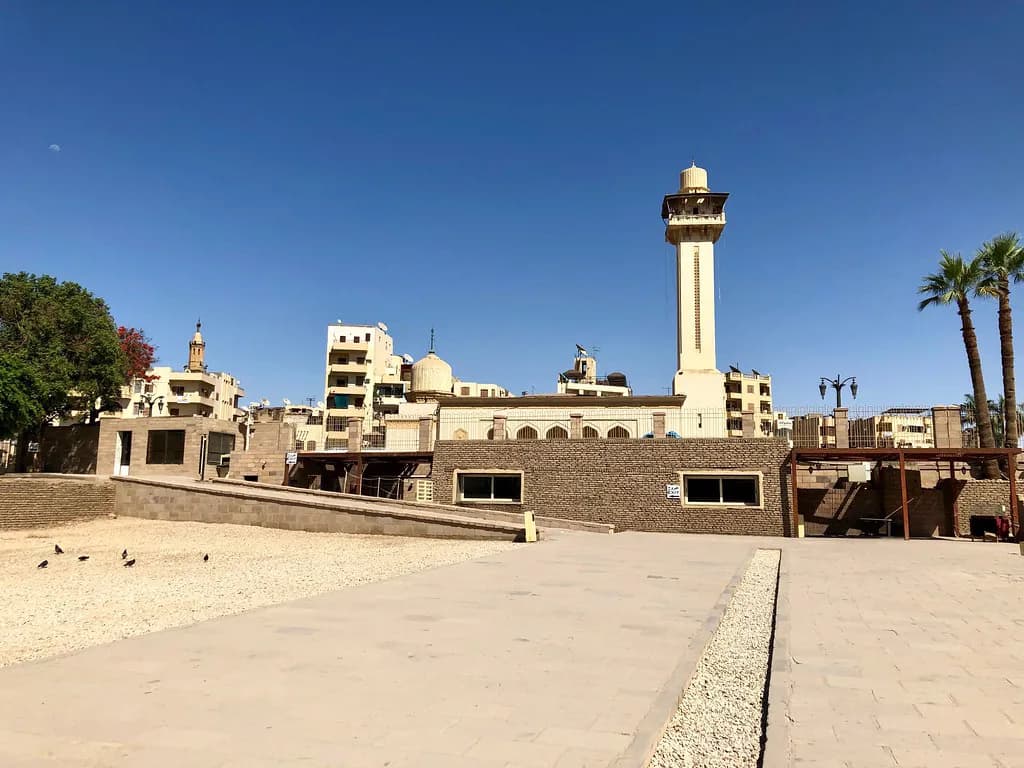
What to Wear in Luxor in June: Packing for Desert Heat
Pack loose full-coverage layers for Luxor in June. Learn fabrics, footwear, sun gear, hydration tips, and a short-trip packing example for extreme dry heat.
On this page
Luxor in June: the weather in numbers
Typical June conditions from 30 years of daily weather data, split into early, mid and late month so you can match them to your travel dates.
| Dates | Early Jun (1–10) | Mid Jun (11–20) | Late Jun (21–30) |
|---|---|---|---|
| Afternoon high | 40°C (104°F) | 40°C (105°F) | 41°C (105°F) |
| Night-time low | 23°C (73°F) | 23°C (74°F) | 24°C (75°F) |
| Feels like (afternoon) | 36°C (97°F) | 37°C (98°F) | 37°C (98°F) |
| Range of afternoon highs | 37–44°C | 37–44°C | 38–43°C |
| Days with rain | Rare | Rare | Rare |
| Afternoon humidity | 11% | 11% | 12% |
| Average wind | 12 km/h | 12 km/h | 13 km/h |
| Daylight | 13.5 h | 13.6 h | 13.6 h |
What this means for your suitcase
- Hot afternoons: loose, breathable fabrics like linen or cotton, short sleeves and a sun hat.
- Evenings run about 17°C (31°F) cooler than afternoons — carry a layer for after sunset.
Travelling on specific dates? Use our What to Wear Planner for the weather, outfits and a packing list for your exact days in Luxor.
Averages for 1991-2020, modelled from Copernicus ERA5-Land and ERA5 reanalysis via Open-Meteo open data (CC BY 4.0), adjusted to Luxor's elevation. Modelled afternoon highs can read 1–2°C below airport weather-station records.
June in Luxor is a packing challenge built around one clear problem: extreme dry heat and strong sun. The practical solution is loose, breathable, full-coverage clothing that keeps the sun off your skin while letting air move. This guide focuses on what to pack and wear, not on itinerary planning.
You will also need to plan around the shape of the day. Sightseeing is most comfortable at dawn and dusk, while midday calls for shade, indoor tombs, or a recovery break. Before you finalize your bag, check the forecast for your actual travel dates and treat seasonal averages as tendencies rather than a promise.
What June Conditions Mean for Your Packing
The biggest packing shift in June is that dry heat changes how you lose fluids and how clothing feels against your skin. Because the air is dry, sweat evaporates quickly, so you may not notice how much you are losing. Your clothing needs to manage sun exposure and airflow at the same time, which is why loose full coverage usually works better than tight or minimal layers.
Inland Luxor is hotter than Egypt's coastal resorts. Thomas Cook notes that inland places like Cairo and Luxor are hotter than coastal spots such as Sharm El Sheikh and Hurghada because coastal areas benefit from cooling breezes. Build your list for inland desert conditions, not for a Red Sea resort.
Timing shapes your packing too. According to Explore Luxor's climate guide, June sightseeing is only comfortable at dawn and dusk, with midday best reserved for shade and recovery. That means you are really packing for two phases of the day: an active early-morning outdoor phase and a slower indoor or shaded midday phase.
Fabrics and Fit: Loose, Light, Full Coverage
The core trade-off in June is coverage versus airflow. Bare arms and shoulders expose more skin to direct sun, while very tight clothing traps heat against the body. The practical middle ground is loose-fitting garments in a light weave that cover shoulders, upper arms, and legs while allowing air to move underneath.
Linen and lightweight cotton are the fabrics most people find workable in this climate. Linen moves air well and dries quickly, though it wrinkles; cotton feels softer against the skin but holds moisture longer. A blend of the two is a reasonable compromise for shirts and trousers, and lighter colors reflect more sun than dark ones.
Full-length, wide-cut trousers in a breathable fabric typically outperform shorts at exposed desert sites. They keep the sun off your legs, reduce dust contact, and give you flexibility if you enter a site where more modest coverage is expected. If you prefer shorts for part of the day, save them for shaded or indoor segments rather than the hottest outdoor stretches.
Because June days split sharply between pre-dawn cool and midday heat, a light long-sleeve layer earns its place in the bag. Mornings at the Valley of the Kings can start noticeably cooler than the afternoon, and a thin overshirt also doubles as sun cover once the day warms up. For a cooler-month comparison, see what to wear in Luxor in November.
Outfit Combinations for a Dawn Site Start
A dawn start at a West Bank site in June usually means leaving before sunrise and being outdoors while temperatures are still relatively forgiving. A lightweight long-sleeve shirt, loose full-length trousers, and a wide-brimmed hat cover the essentials for that window. Add a thin scarf or shawl that you can drape over your neck and shoulders as the sun climbs.
Pockets matter more than you might expect on a dawn outing. A shirt or trouser with usable pockets lets you carry a small electrolyte sachet and a folded sun hat without reaching for a day bag every few minutes. A light crossbody bag or small daypack still helps for water and a camera, but keep it minimal so it does not become a heat trap against your back.
For the West Bank specifically, dust and uneven ground are part of the experience. If your plans include the Valley of the Kings, a close-fitting hat, closed shoes, and a dust-tolerant outfit work better than loose sandals and flowing fabrics that catch on rocks. If you are comparing a cooler shoulder-season trip, the same principles apply with an added layer.
Midday Kit: Shade, Indoor Tombs, and Recovery
Midday in June is the part that most changes your packing. Instead of another outdoor outfit, you need a small shade-and-recovery kit: a broad-brimmed hat you can collapse, a scarf for extra cover, and a light layer if you plan to sit in an air-conditioned space. Explore Luxor's climate guide notes that June sightseeing is only comfortable at dawn and dusk, with midday suited to shade and indoor breaks.
Indoor tomb environments feel different from outdoor sites. Tombs are enclosed and can be warm in their own way, so a light layer that you can remove before entering is more practical than a heavy one. Keep your day bag small enough to carry comfortably through narrow spaces, and avoid bulky items that you would have to set down.
A midday recovery break is also when you restock your hydration supplies. An insulated water bottle keeps liquid cooler than an uninsulated one, and a small supply of electrolyte tablets lets you replace what you lose through sweating during the morning. If your trip falls in a cooler month, what to wear in Luxor in March follows a very different midday rhythm.
Footwear for Hot, Uneven Ground
Footwear is one of the most consequential June decisions because the ground at Luxor's sites is hot, uneven, and often dusty. An enclosed walking shoe with a grippy sole protects your feet from heat and rubble better than open sandals. Explore Luxor's packing notes recommend comfortable walking shoes with grip.
Breathable mesh or light leather uppers help with heat management, and a pair of thin moisture-wicking socks reduces friction on long walking days. Avoid heavy hiking boots, which trap heat, and avoid brand-new shoes that have not been broken in. If you have room, a second lightweight pair gives you a dry option after a dusty morning.
Pair your shoe choice with your own packing list rather than copying someone else's. The Luxor packing list covers footwear alongside broader gear categories, so you can match shoe type to the specific sites you plan to visit. A temple-heavy itinerary with paved paths has different demands from a rocky West Bank circuit.
Sun Protection You Will Actually Wear
Sun protection in June Luxor is not optional if you plan to be outdoors even briefly. A wide-brimmed hat shades your face and neck better than a cap, and a light scarf can cover the back of your neck without adding much weight. Explore Luxor's summer packing guidance recommends a wide-brimmed hat and SPF 50+ sunscreen.
Sunglasses and lip protection with sun-blocking ingredients round out the kit, and a small tube of sunscreen should travel in your day bag for reapplication. Thomas Cook's Egypt June page highlights high UV levels as a reason to wear sun cream. Choose protection you will actually put on repeatedly rather than a single heavy application at the start of the day.
Clothing itself is part of your sun strategy. A long-sleeve light shirt and full-length trousers cover more skin than a tank top and shorts, which reduces how much sunscreen you need to reapply. This is an editorial suggestion for comfort and coverage, not a rule imposed by any site.
Hydration and Electrolyte Gear to Carry
Fluid loss in dry June heat is easy to underestimate because you may not feel as sweaty as you would in humid conditions. An insulated water bottle keeps water cooler for longer and is recommended in Explore Luxor's summer packing notes. Plan to carry more water than you think you need, and refill whenever you have a safe opportunity.
Electrolyte tablets are a lightweight addition that helps replace salts lost through sweating, and Explore Luxor's summer list includes them among suggested gear. They add almost nothing to your bag weight, which matters when you are already carrying a water bottle. For medical guidance on how much or how often to use them, consult a healthcare professional rather than a packing guide.
A collapsible cup or a wide-mouth bottle makes it easier to mix a tablet when you stop for a break. Keep tablets in a small zippered pouch so they stay dry and do not get crushed against your water bottle. Reassess your supply each evening and restock before your next early start.
A Scarf or Shawl and Coverage Choices
A scarf or shawl is one of the most useful items in a June Luxor bag because it serves several purposes. It covers your neck and shoulders against sun, doubles as a light layer in air-conditioned spaces, and gives you a modest option if a site expects covered shoulders. Explore Luxor lists a scarf or shawl among its year-round suggestions for Luxor.
Modest-coverage choices are a practical response to sun and dust as much as a cultural one. Loose long sleeves and full-length trousers or a long skirt keep the sun off, and they reduce the amount of exposed skin you need to protect. Choose a scarf in a light neutral color so it works with the rest of your outfit.
If you plan a temple visit, treat coverage recommendations as practical suggestions rather than fixed rules, and check with the specific site if you have a concern. Requirements can differ between monuments and can change, so verify locally if it matters to your plans.
What to Leave Behind
June is the wrong season for heavy layers, so leave the fleece, the thick jacket, and the wool socks at home. Even a light sweater is usually unnecessary in June except perhaps for a strongly air-conditioned indoor space. If you run cold, one thin long-sleeve layer is enough.
Dark, heavy, or tight clothing is a poor fit for dry desert heat because it absorbs more sun and restricts airflow. Leave behind denim jeans, thick synthetic athletic wear, and anything that clings to the skin. Save that gear for a cooler-month visit such as what to wear in Luxor in December, when evenings call for more substantial layers.
Also skip bulky camera bags, multiple pairs of heavy shoes, and an overpacked toiletry kit. Every extra kilogram adds heat and effort when you are moving between sites in the sun. For a contrast with a mild coastal destination, see what to wear in Tenerife in June.
A Compact Packing Example for a Short Trip
For a three-day June trip with two dawn site visits, one temple visit, and one evening out, a workable clothing core is two lightweight long-sleeve shirts, one short-sleeve shirt, two pairs of loose full-length trousers, one long skirt or a third pair of trousers, and two scarves. Add two thin moisture-wicking socks per walking day and one pair of broken-in closed walking shoes.
Layer on sun and hydration gear: a wide-brimmed hat, sunglasses, SPF 50+ sunscreen, an insulated water bottle, electrolyte tablets, and a small day bag. Pack one thin outer layer for air-conditioned spaces or an unexpectedly mild morning, and one smart-casual outfit for an evening meal. If your plans are temple-focused, the wider packing list is the place to refine this core.
For a longer trip, add a third shirt and a second pair of trousers rather than doubling every category. Laundry at a hotel or guesthouse is usually easier than carrying a heavy bag in the heat. Keep the total to one carry-on-sized bag if you can, since you will move between the East Bank and West Bank more comfortably with less.
Before You Go: Check the Forecast
Seasonal averages give you a packing baseline, but the final forecast for your travel week is what confirms your choices. Check a trusted weather source a few days before departure and again on arrival. Look specifically at the daily high, the overnight low, and whether any unusual heat or wind is expected during your visit.
If the forecast shows a heat spike, you can add an extra scarf and increase your sunscreen and electrolyte supply rather than buying unfamiliar items locally. If it shows a slightly milder start, one light long-sleeve layer is enough for early mornings. This check is the last step before you finalize your bag.
Packing Around the June Heat
Packing for Luxor in June is really about matching your wardrobe to two very different parts of the day. Loose, light, full-coverage clothing in breathable fabrics handles sun and dust, while a hat, scarf, water bottle, and electrolyte tablets handle the conditions. Keep outdoor walking to early morning and late afternoon.
Start with the broader Luxor packing list to build your base kit, then adjust quantities for your trip length and check the forecast before you fly. If your dates shift to a cooler month, what to wear in Luxor in November will steer you toward a different balance of layers and coverage.
More packing guides for Luxor
Frequently Asked Questions
What should I wear in Luxor in June?
Loose, light-colored, full-coverage clothing in breathable fabrics such as linen or lightweight cotton is the most practical choice. Pair long-sleeve shirts and full-length trousers with a wide-brimmed hat, sunglasses, and a scarf for extra sun protection. Plan for a warm day and a mild evening by carrying one thin layer.
Is it too hot to sightsee in Luxor in June?
June is very hot, and outdoor sightseeing is most comfortable at dawn and dusk, with midday better suited to shade, indoor tombs, or air-conditioned breaks. Check your actual forecast before you travel. If you can tolerate early starts, June sightseeing is possible.
Do I need to cover my shoulders and knees at Luxor temples?
Coverage expectations can vary by site and can change, so check with the specific monument if it matters to your plans. As a practical matter, loose full coverage also protects your skin from intense sun. Treat coverage as a comfort and sun-protection choice rather than a fixed rule.
What shoes are best for Luxor in June?
Broken-in closed walking shoes with grippy soles are the most versatile choice for hot, uneven, and dusty ground. Choose breathable materials rather than heavy boots, and add thin moisture-wicking socks to reduce friction. A second lightweight pair gives you a dry option after a dusty morning.
How much water should I carry in Luxor in June?
Carry more than you think you need, and refill whenever you have a safe opportunity. An insulated bottle keeps water cooler, and electrolyte tablets help replace salts lost through sweating. For medical advice on hydration and electrolytes, speak with a healthcare professional.
Should I wear long sleeves in Luxor in June?
A light long-sleeve shirt is often more comfortable than bare arms because it keeps direct sun off your skin while still allowing airflow. Choose a loose fit and a breathable fabric, and save short sleeves for shaded or indoor parts of the day. Coverage and airflow together are what make a June outfit work.
Sources
Free: The Ultimate Packing Cheat Sheet
A carry-on capsule wardrobe, the complete packing checklist, layering made simple, and what to wear by season — one printable page you'll use on every trip.
You might also like


Continue reading
More guides you'll find useful


