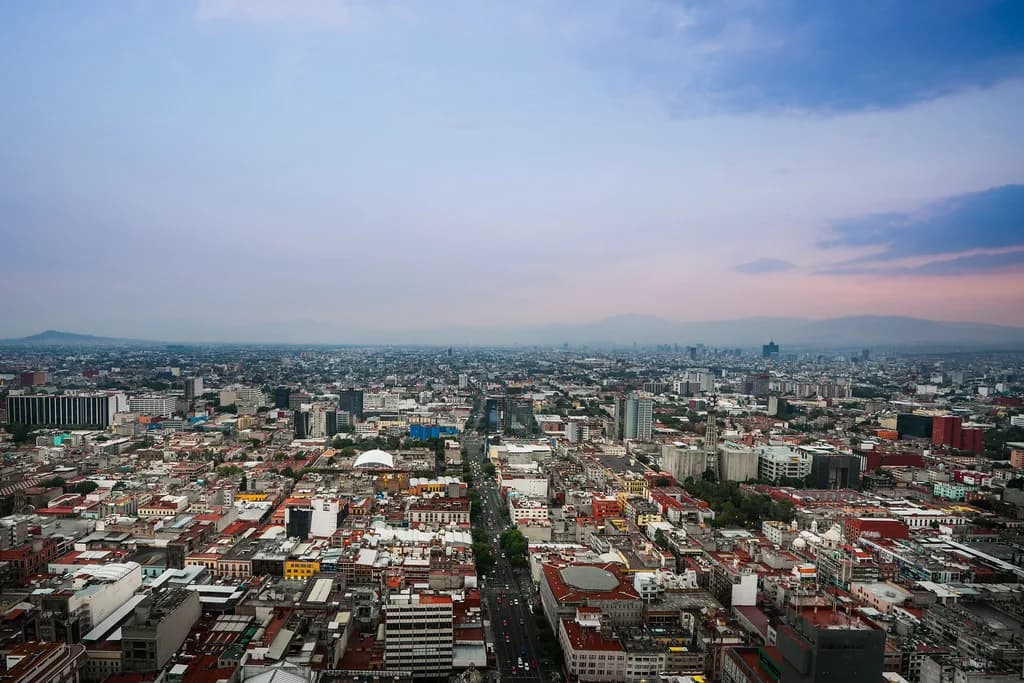
What to Wear in Mexico City in February: Dry-Season Layers
February in Mexico City means cold mornings, warm sunny afternoons and chilly unheated rooms. Pack breathable layers, closed shoes and sun protection.
On this page
Mexico City in February: the weather in numbers
Typical February conditions from 30 years of daily weather data, split into early, mid and late month so you can match them to your travel dates.
| Dates | Early Feb (1–10) | Mid Feb (11–20) | Late Feb (21–28) |
|---|---|---|---|
| Afternoon high | 21°C (69°F) | 22°C (72°F) | 23°C (74°F) |
| Night-time low | 7°C (45°F) | 8°C (46°F) | 9°C (47°F) |
| Feels like (afternoon) | 18°C (65°F) | 20°C (67°F) | 20°C (69°F) |
| Range of afternoon highs | 17–24°C | 19–25°C | 20–26°C |
| Days with rain | 1 in 10 days | 1 in 10 days | 1 in 10 days |
| Afternoon humidity | 35% | 32% | 30% |
| Average wind | 7 km/h | 7 km/h | 8 km/h |
| Daylight | 11.2 h | 11.4 h | 11.5 h |
What this means for your suitcase
- Mild days: long sleeves with a light sweater or jacket you can take off at midday.
- Evenings run about 14°C (25°F) cooler than afternoons — carry a layer for after sunset.
Travelling on specific dates? Use our What to Wear Planner for the weather, outfits and a packing list for your exact days in Mexico City.
Averages for 1991-2020, modelled from Copernicus ERA5-Land and ERA5 reanalysis via Open-Meteo open data (CC BY 4.0), adjusted to Mexico City's elevation. Modelled afternoon highs can read 1–2°C below airport weather-station records.
February falls in the heart of Mexico City's dry season, the stretch that runs from roughly October into spring, when rain is scarce and humidity stays low. What catches visitors off guard is not heat or rain but range: mornings and evenings feel cold, while the middle of the day can be warm and bright. The practical goal is therefore a flexible set of light layers rather than one heavy coat you wear all day.
The city sits in a high basin ringed by mountains, which shapes both the thin, dry air and the wide swing between shade and sun. Because most buildings have neither heating nor air conditioning, when it is cold outside it stays chilly indoors too, even more so once the sun goes down. Packing for interiors matters as much as packing for the street.
Treat everything below as a planning framework, not a weather report. Seasonal patterns describe what February has historically tended to feel like; conditions vary year to year, so check a current forecast in the days before you fly and adjust the mix. Every recommendation here is an editorial suggestion about comfort and practicality, not a rule about what anyone must wear.
February Conditions and What They Mean for Packing
February is described as a transitional month that starts to warm up but can still be tricky, so the safe assumption is variability rather than a single condition. Days are often mild and sunny, while early mornings and evenings stay cold. Socks, closed-toe shoes, sweaters and a light jacket cover the cold end of that range without weighing down your bag.
The unheated-building factor is the detail that most changes packing decisions. Because interiors lack central heating, an evening restaurant or an early-morning lobby can feel as cold as the street, so your warm layer needs to work indoors too. A cardigan or mid-weight sweater you can keep on through dinner is more useful than a bulky coat you peel off and carry.
Dry-season air is another packing signal. With little rain and low humidity, static, chapped lips and dry skin show up faster than sweat, so a lip balm and a small moisturiser earn their place in your day bag. They weigh almost nothing and address the condition you are most likely to actually notice.
The Layering Formula for a February Day
Build each day from three layers: a breathable base against the skin, a warm mid layer for the cold hours, and a light outer layer you remove at midday. In practice that might be a long-sleeved cotton tee, a sweater or a matching sweater set, and a light jacket or blazer worn open over both. The mid layer does the work in the morning, and the outer layer handles wind and shade later on.
Walk one outfit through the day. Breakfast at 8 a.m. outdoors: base, sweater and jacket, plus socks and closed shoes. Lunch at 2 p.m. in the sun: base layer alone, jacket folded into your bag, sunglasses on. Dinner at 9 p.m. in an unheated room: sweater back on and the light jacket over it. This is why each piece needs to look presentable on its own rather than functioning only as underwear.
A lightweight scarf or bandana is the cheapest upgrade to this system. It adds warmth at the neck in the cold hours, packs flat and doubles as sun cover at midday. If you run cold, add a pair of thin gloves rather than upgrading to a heavier coat, since the coat becomes dead weight by noon.
Fabrics and Materials: Breathable by Day, Warm by Morning
Loose cotton and fine linen earn their place for daytime because they breathe under strong midday sun and feel light in dry air. They suit museum visits, brunches and long walks between markets and plazas. Linen wrinkles, though, so if you want a neater look for dinner, a blend or a cotton-linen mix is the easier trade.
Wool and fleece cover the other half of the day. A thin merino sweater, a compact fleece or a sweater set gives warmth for cold mornings without bulk, and it insulates even when the air is dry rather than damp. The trade-off is packability versus warmth: fleece is bulkier but more forgiving, knitwear is lighter but needs a little care.
Skip heavy waterproof shells and thick insulated coats. February is a dry-season month, so rain protection is a low priority, and a bulky coat is hard to carry once the afternoon warms up. A light, unlined jacket or blazer handles the actual conditions better and layers easily over everything else you brought.
Footwear for Cobblestones and Long Walking Days
Mexico City rewards walking, and the surfaces punish thin soles: historic centers and older neighborhoods mix uneven paving, cobblestones and long stretches of pavement. Closed-toe shoes with grip and cushioning are the practical choice, and socks are part of the kit rather than an afterthought. Break shoes in before the trip rather than testing them on a ten-kilometre day.
One versatile pair of supportive sneakers or walking shoes plus one slightly dressier closed option covers almost every February plan. Ankle boots sit between the two: they handle cold mornings, look appropriate for dinner and work on uneven ground. If you add a third pair, make it another walking shoe, not a heel you cannot wear on pavement.
Sandals and flip-flops are the items to leave out for city days. They offer no protection on rough streets, no warmth in the cold hours, and read as beachwear rather than city dress. A broken-in pair of closed shoes is the single highest-value packing decision for a February trip.
Sun Protection When the Air Feels Cool
Sun protection is a dry-season packing item precisely because the air is cool. Mild temperatures make sun exposure easy to underestimate, so sunscreen, sunglasses and a hat belong in the day bag alongside the extra layer. Bright, clear skies at this elevation are the combination worth preparing for, not heat.
A hat is the item with the clearest trade-off. A packable wide-brim hat gives real shade but marks you as a visitor if the rest of your outfit is beachy, while a cap is compact and blends in more easily. Sunglasses are the non-negotiable piece, and a stylish pair works as an accessory rather than pure kit: midday glare is the most consistent sun issue in a dry February.
For a day trip outside the center, treat sun protection as more important, not less. The canals in the south of the city and the pyramids tend to be a few degrees hotter with more intense sun than the middle of the city, so wear sunscreen and bring a hat and water. Check the specific site's own guidance for opening times and any rules before you go.
If you continue travelling into late spring, the sun story changes with the season. By June the rainy season has replaced the dry months and afternoon storms become the packing problem instead, which shifts the priority from sunscreen to a compact umbrella.
What to Leave Behind
Beachwear is the first category to cut. Shorts, sundresses, sandals and anything else aimed at a beach holiday are rarely useful for city days in February, and many people in Mexico City do not wear shorts even in the hottest months. Dressing more covered is also more practical for cold mornings and long walks.
Leave the heavy winter coat at home too. It occupies a large share of a carry-on, is uncomfortable once temperatures rise at midday and cannot be layered down. Two medium-weight pieces keep you warmer overall because you can wear them together or separately, and they fit into a day bag when you stop needing them.
Finally, cut duplicates. Two thin sweaters beat four, because each one has to match the same three base layers and the same two bottoms. Fewer, better-chosen pieces make the morning decision faster and leave room for whatever the trip actually requires, which is usually more walking clothes than going-out clothes.
A Compact Mix-and-Match Packing Example for About a Week
For roughly a week, start with three tops in breathable cotton or linen, two sweaters or a sweater and a fleece, and one light jacket or blazer. Add two bottoms, such as jeans and a pair of wide-leg cotton trousers, that both work with all three tops. That combination yields well over a week of distinct outfits because every piece pairs with every other piece.
Then add one dress or jumpsuit if you want an easy single-piece option, socks for each day, one versatile pair of walking shoes, and a second, slightly dressier pair if you plan evening meals. Pack a scarf, sunglasses, lip balm and sunscreen in the day bag rather than the suitcase. This keeps the total near a carry-on while covering cold mornings, sunny afternoons and unheated restaurants.
A capsule like this also absorbs the variable weather that makes February hard to plan for. If the forecast turns colder than the seasonal pattern suggests, you simply wear the sweater and jacket together; if it runs warm, the base layer and bottoms still work alone. That flexibility is the whole point of packing layers instead of a single weather-specific wardrobe.
Before You Go: Reset the Assumptions
Check a current forecast a few days before departure and again the night before you pack. Historical seasonal patterns describe tendency, not the specific week you will be there, and February is a variable month within the dry season. The forecast is the only reliable signal for whether to swap the light jacket for something warmer.
Plan for one outfit that is warmer and more polished than the rest of your days. If your trip includes a splurge dinner or a fancy bar, something chic and stylish earns its place, since dressy venues in the city lean more New York than beach town. One extra refined layer is easier to pack than a second pair of shoes you will not wear.
If you are continuing your trip into a later season or heading elsewhere in the region, the packing logic changes with the months. Staying on toward spring means more heat and more sun, while a later trip moves into wetter weeks and shifts the priority to rain gear.
Pack Layers, Not a Wardrobe
The February packing problem is narrow once you name it: a cold start, a warm and bright middle and a cold finish, all in very dry air and unheated buildings. Three light layers plus closed shoes solve almost every hour of the day, and sun protection covers the part of the day when the temperature is least informative.
Pack a compact capsule with fabrics that breathe in the sun and insulate in the shade, leave the beach items and the heavy coat behind, and confirm conditions with a forecast rather than a seasonal average. Building the wardrobe from layers is what keeps a roughly week-long trip in a single carry-on without leaving you cold at dinner.
Frequently Asked Questions
Is it cold in Mexico City in February?
Historically, February sits in the dry season and is a transitional month that starts to warm up, so days are often mild and sunny while early mornings and evenings stay cold. Because buildings generally lack central heating, indoor spaces can feel cold after dark even when the afternoon was warm. The most useful preparation is a light jacket or sweater and socks rather than a single heavy coat, and you should confirm the specific week with a current forecast.
What should I wear in Mexico City in February during the day and at night?
For daytime, a breathable long-sleeved top in cotton or linen with a light outer layer you can remove at midday works well. For evenings, add a sweater or fleece and keep the light jacket over it, because unheated rooms and streets cool down once the sun is gone. Think in three layers, a base, a mid layer and a light outer layer, so the same pieces cover both halves of the day.
Does Mexico City feel cold indoors in February?
Yes, it often can. Most buildings in Mexico City have neither heating nor air conditioning, so when it is cold outside it tends to be chilly inside as well, especially after the sun goes down. That is why a warm mid layer you can keep on at dinner matters more than a bulky coat used only outdoors.
What not to wear in Mexico City?
Leave beach-oriented clothing at home for city days: shorts, sandals, sundresses and flip-flops are rarely practical on cobblestones and make you stand out as a visitor. Closed-toe shoes with grip and socks are the better choice for walking. This is a comfort and blending-in suggestion, not a rule that will get you turned away anywhere.
How many layers do I need for Mexico City in February?
Three is usually enough: a breathable base layer, a warm mid layer such as a sweater or fleece, and a light outer layer like a jacket or blazer. The mid layer handles cold mornings and evenings, while the outer layer is easy to remove when midday warms up. If you run cold, add a scarf or thin gloves before you consider a heavier coat.
Do I need sunscreen in Mexico City in February?
Yes, it is worth packing. February is a dry-season month with frequently clear, sunny days, and a mild temperature makes sun exposure easy to underestimate, especially for day-trip outings such as the canals or the pyramids. Sunscreen, sunglasses and a hat are light items that address the most consistent weather feature of the month.
Sources
Free: The Ultimate Packing Cheat Sheet
A carry-on capsule wardrobe, the complete packing checklist, layering made simple, and what to wear by season — one printable page you'll use on every trip.
You might also like


Continue reading
More guides you'll find useful