
What to Wear in Perugia in July: Packing for Heat and Hills
Packing for Perugia in July means breathable fabrics, real sun protection, and shoes that handle cobblestones and stairs. Here is what to wear and what to skip.
On this page
Perugia in July: the weather in numbers
Typical July conditions from 30 years of daily weather data, split into early, mid and late month so you can match them to your travel dates.
| Dates | Early Jul (1–10) | Mid Jul (11–20) | Late Jul (21–31) |
|---|---|---|---|
| Afternoon high | 28°C (82°F) | 28°C (82°F) | 29°C (84°F) |
| Night-time low | 16°C (61°F) | 16°C (61°F) | 17°C (62°F) |
| Feels like (afternoon) | 28°C (82°F) | 27°C (81°F) | 29°C (84°F) |
| Range of afternoon highs | 24–32°C | 23–32°C | 24–33°C |
| Days with rain | 2 in 10 days | 1 in 10 days | 2 in 10 days |
| Afternoon humidity | 43% | 41% | 42% |
| Average wind | 8 km/h | 7 km/h | 7 km/h |
| Daylight | 15.1 h | 14.9 h | 14.6 h |
What this means for your suitcase
- Warm days: T-shirts and light trousers or skirts, plus one light layer.
- Evenings run about 12°C (21°F) cooler than afternoons — carry a layer for after sunset.
- Day-to-day swings: afternoon highs range from about 24°C to 32°C, so pack for both.
Travelling on specific dates? Use our What to Wear Planner for the weather, outfits and a packing list for your exact days in Perugia.
Averages for 1991-2020, modelled from Copernicus ERA5-Land and ERA5 reanalysis via Open-Meteo open data (CC BY 4.0), adjusted to Perugia's elevation. Modelled afternoon highs can read 1–2°C below airport weather-station records.
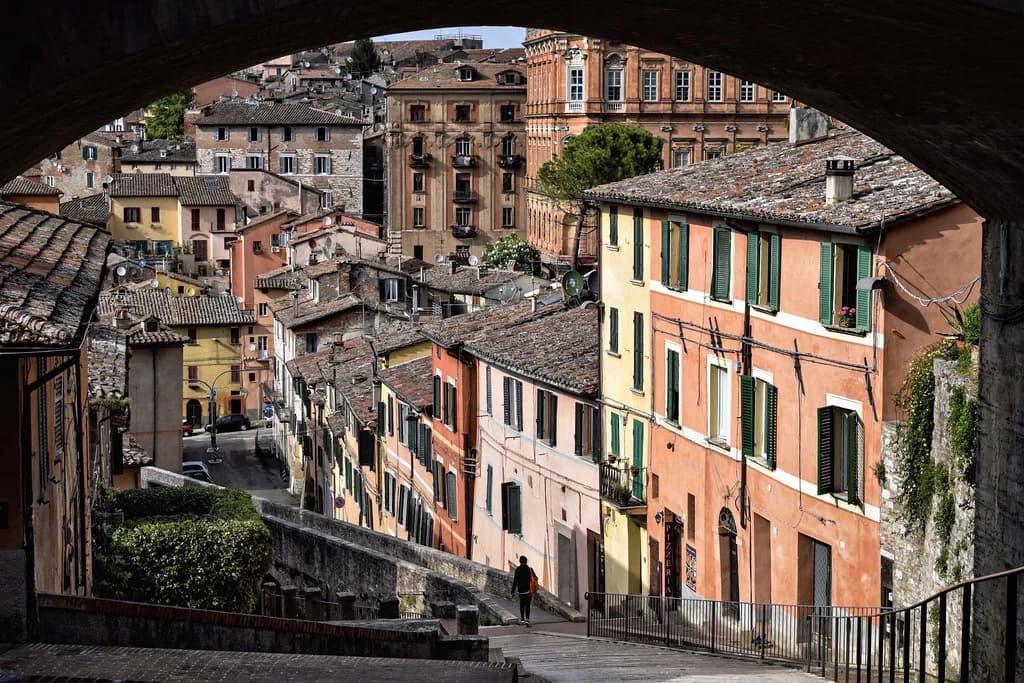
Perugia sits on a hill, and July turns that hill into a heat-and-footwear problem before it becomes a style question. You will walk more than you expect, often over cobblestones and up short flights of stairs between piazzas, so the shoes and fabrics you choose shape the whole trip. This guide sticks to packing decisions: what to wear, what to leave behind, and how to adjust when the day cools.
How Perugia's Hilltop Layout Shapes What You Wear
Perugia is built on a hill, and everyday movement involves cobblestone lanes, steep inclines, and staircases connecting lower streets to the historic centre. That terrain punishes thin soles and unstable footwear far more than a flat city would, and it also means you generate heat on the way up. Plan for short climbs between piazzas rather than one long walk.
The practical consequence is that your outfit needs to work while you are moving and while you are standing still. Breathable, comfortable fabrics keep you cool on hot days and warm evenings, and sturdy, supportive shoes that handle uneven surfaces are the single most useful thing you can pack. Break footwear in before you arrive, because blisters show up fast on stone.
July Conditions to Dress For
Summer in Italy is hot, and July is the middle of it, so lightweight, breathable clothing is the sensible base. Expect strong midday sun on exposed streets and open squares, with the heat easing later in the day. Historical seasonal patterns are tendencies rather than a forecast, so check the actual outlook before you fly.
Evenings can feel noticeably cooler than the afternoon, especially once you are walking rather than sitting in sun. The standard fix is a light layer you can carry without weight, such as a thin cardigan or a shawl. That same layer covers cooler stone interiors.
Breathable Fabrics That Work in Perugia
Linen and lightweight cotton are the fabrics to build around, because they move air and dry quickly when you sweat on a climb. Loose, flowy cuts work better than close-fitting ones, and midi skirts, light dresses, and relaxed shorts all suit the city. Read the clothing label and skip anything with a heavy synthetic content.
Denim is the common mistake in July. Heavy jeans and thick denim jackets hold heat and stay damp, which makes long stone walks uncomfortable. If you want trousers, choose a loose, lightweight pair rather than a heavy denim cut, and save the tailored chinos for cooler evenings if you want a more polished look.
Two or three breathable tops, one or two loose bottoms, and a dress or skirt give you more combinations than a larger pile of heavy pieces. Natural fibres also pack smaller, which matters if you are moving between hotels or taking a day trip.
Daytime Outfit Combinations for Walking
A workable daytime formula is a light top, loose bottoms, a wide-brim hat, and a crossbody bag. The crossbody keeps your hands free on stairs and keeps a bag from swinging while you climb, which matters more than it sounds on uneven stone. Add sunglasses and you have a full outfit that handles both sun and movement.
If you prefer dresses, a loose midi or maxi in cotton or linen covers the same ground with less decision-making. Pair it with walking shoes rather than dressier sandals, and keep the bag small. The goal is a combination you can repeat in different colours rather than a new outfit each day.
Shorts are fine during the day, particularly when the sun is high. In the evening, a slightly longer hem or a light trouser tends to look more at home, though this is a style preference rather than a rule anyone enforces.
Footwear Trade-Offs for Cobblestones and Stairs
Perugia's cobblestones and stairs make footwear the central July decision. Broken-in, supportive walking shoes or casual sneakers are the safest choice for long days, because cushioning and grip matter on uneven surfaces. A pair with a slightly thicker sole handles stone better than a minimal flat.
Sandals work if they are secure and comfortable for city walking, with a proper sole and a heel strap rather than a loose slide. Flip-flops are a beach item, not a city item, so keep them for pool or lake days instead of the historic centre. Let heels stay home: cobblestones and heels combine badly, and the staircases make it worse.
If you want two pairs, bring one supportive walking shoe for daytime and one slightly smarter option for evenings. That covers long walking days without asking a single pair to do everything.
Sun Protection That Pairs With Your Outfit
Sun exposure on Perugia's hilltop streets is a real packing consideration, not a generic summer add-on. A wide-brim hat and sunglasses are the visible part of the kit, and they also reduce glare off pale stone. Choose a hat you can fold or clip to a bag so you actually carry it.
Sunscreen belongs in the bag you carry during the day, since midday walking gives you little shade. Rather than chase a specific number, pack the formula you already use comfortably and reapply as you would at home. A light shoulder cover, such as a scarf or a long-sleeve linen shirt, adds protection on exposed stretches without much weight.
Sun protection in Italy is not only about the beach, and the exposed streets around the historic centre make that obvious. If you are sensitive to sun, plan your longest walks for earlier or later and keep the middle of the day lighter.
Evening in Perugia: The Passeggiata and Cooler Air
The evening passeggiata is a walk, not a performance, and no dress code governs it. Perugia's main promenade fills with people strolling after the heat fades, so comfortable shoes matter as much at night as during the day. There is no required outfit, and locals and visitors dress across a wide range.
The practical change is temperature. One light layer turns a daytime outfit into an evening one, and a scarf or cardigan is easy to carry while you walk. If you want a more polished look, swap the daytime bag for something smaller, but keep the footwear practical.
Because the strolling happens on the same stone as the daytime walking, there is no reason to change into less supportive shoes. Keep the hat only if the sun is still up; otherwise sunglasses and a layer are enough.
A Light Layer for Churches and Indoor Spaces
A thin cardigan or shawl is worth carrying for indoor spaces, where stone buildings can feel cool after the heat outside. Treat this as a comfort choice rather than a fixed rule. If you plan to visit churches, having covered shoulders available makes the decision easy without carrying a full change of clothes.
The layer should fold small enough to live in your bag all day. A large scarf or pashmina does this better than a bulky jacket, and it doubles as sun cover on exposed streets. On warm evenings it is often all you need.
Umbria Jazz Period: Packing for Crowded Evenings
Umbria Jazz brings crowds and long standing stretches to the city during its July run. Performers, venues, schedules, and any dress expectations are published by the organisers, so check their official information rather than assuming a standard. For packing, the useful adjustments are practical: supportive shoes for standing, water, and a light layer for late evenings.
If you plan to attend events, keep a small crossbody bag rather than a large tote, and pack the same breathable daytime clothing you would otherwise wear. There is no evidence-based reason to bring a separate formal outfit. Comfort over long standing hours matters more than any assumed dress code.
Evenings after events can end late, and the walk back is still on stone and slopes. Keep footwear consistent with the rest of the trip rather than switching to something dressy but unstable.
Day Trips From Perugia: Lakes, Towns, and What Stays Behind
Day trips toward lakes or nearby Umbrian towns mostly add water and sun exposure rather than a whole second wardrobe. A swimsuit, a quick-dry towel, and beach-only flip-flops cover a lake day, and those items stay at the hotel when you are not using them. Keep the same breathable clothes and walking shoes.
Leave the heavy and bulky items behind in this scenario: thick jackets, extra trousers, and anything you would only wear in the city. A small day bag with sun protection, water, and your light layer is enough. If you are taking public transport, check the operator's timetable for your specific day rather than relying on memory.
Nearby towns often have their own hills and stairs, so do not downgrade your footwear for a day trip. The same supportive pair that works in Perugia works almost everywhere else in the region.
A Compact Five-Day July Packing Example
For a five-day trip, a workable editorial example is three breathable tops, two loose bottoms, one dress or skirt, one light layer, one wide-brim hat, sunglasses, and sunscreen. Shoes are the place to spend your allowance: one supportive walking pair, plus one slightly smarter option if you want an evening change. These counts are a suggestion for planning, not a required rule.
The logic is mixing rather than matching. Three tops and two bottoms give six daytime combinations, and the light layer covers evenings and indoor spaces without another outfit. Carry the hat and sunscreen in your day bag so they are always with you.
If you prefer to travel lighter, drop to two tops and one bottom and plan to rinse lightweight fabric in the evening. Linen and cotton dry quickly, which makes a smaller bag realistic.
What to Leave Behind
Leave the heels at home; cobblestones and stairs make them a poor fit for this city. Heavy denim, thick jackets, and any bulky layer you would only wear in winter take up space you will want for lighter pieces. Beach-only flip-flops should stay out of your city rotation and appear only on a lake or pool day.
Gym-only clothing is another item to reconsider for town wear if you prefer to look put-together in the historic centre. This is a style suggestion rather than a local prohibition, and plenty of people dress casually. The point is to avoid packing pieces that serve only one narrow purpose.
Waterproof boots are not a July essential, and a portable charger is a convenience rather than a requirement. If you are unsure about a specific item, decide based on weight and how many outfits it supports.
Before You Go: Checking the Forecast
Historical July conditions describe a tendency, not a prediction for your dates. Check a reliable forecast close to departure and adjust two things: how light your layer needs to be, and whether a compact umbrella or light rain shell earns a place in the bag. Showing up with a plan for heat and one for a shower covers most outcomes.
Do the same check for the range of temperatures rather than a single number. If the outlook suggests milder evenings than you expected, keep the light layer in the bag anyway, because stone buildings and late walks stay cool.
Packing decisions are easier when you know what the week looks like. A five-minute forecast check before you close the suitcase prevents both overpacking and the one item you actually needed.
Plan Your Visit
July packing for Perugia comes down to two decisions: breathable fabrics and footwear that handles stone. Build around linen and lightweight cotton, add a wide-brim hat, sunglasses, and sunscreen for exposed hilltop streets, and keep one light layer for evenings and indoor spaces. Supportive walking shoes or secure sneakers do more for your trip than any other single item. For winter conditions, see what to wear in Perugia in December, which takes the opposite approach to layering.
More packing guides for Perugia
Frequently Asked Questions
What should I wear in Perugia in July?
Build daytime outfits from linen or lightweight cotton: a breathable top, loose bottoms or a midi dress, a wide-brim hat, sunglasses, and sunscreen. Add one light layer for evenings and indoor spaces. Choose supportive walking shoes or secure sneakers rather than heels, because the historic centre is cobbled and stair-heavy.
Are sandals a good idea for walking in Perugia?
Sandals can work if they are secure and comfortable for city walking, with a proper sole and a heel strap. Loose slides and beach flip-flops are a poor fit for cobblestones and stairs. If you only bring one pair, make it a supportive walking shoe or sneaker.
What shoes work best on Perugia's cobblestones?
Broken-in, supportive walking shoes or casual sneakers with grip and cushioning handle uneven stone and stairs best. A slightly thicker sole is more comfortable than a minimal flat over a full day. Break the shoes in before you travel to avoid blisters.
Do I need a light layer for evenings in Perugia in July?
A thin cardigan, shawl, or large scarf is useful because evenings are cooler than the afternoon and stone interiors feel cool. It folds small enough to carry all day and doubles as shoulder cover on exposed streets. Treat it as a comfort item rather than a required rule.
What should I wear to Umbria Jazz events in Perugia?
Dress expectations, schedules, and venues are published by the festival organisers, so check their official information before you plan outfits. For packing, focus on practicalities: supportive shoes for standing, a small crossbody bag, water, and a light layer for late evenings. Breathable daytime clothing works well here too.
What should I leave behind when packing for Perugia in July?
Leave heels, heavy denim, thick jackets, and bulky winter layers at home. Keep beach-only flip-flops for lake or pool days rather than the city centre. Waterproof boots are not a July essential, and single-purpose gym pieces are worth reconsidering for town wear.
How many outfits do I need for five days in Perugia in July?
A practical editorial example is three breathable tops, two loose bottoms, one dress or skirt, and one light layer, which covers daytime and evening. Add one supportive walking pair of shoes and, if you want, a smarter second pair. Counts are a planning suggestion, not a requirement.
Should I bring a rain jacket to Perugia in July?
Check the forecast close to departure rather than assuming from seasonal patterns. If showers are possible, a compact umbrella or a very light rain shell is easier to carry than a heavy jacket. Either way, keep your light layer in the bag for cool evenings.
Sources
Free: The Ultimate Packing Cheat Sheet
A carry-on capsule wardrobe, the complete packing checklist, layering made simple, and what to wear by season — one printable page you'll use on every trip.
You might also like


Continue reading
More guides you'll find useful


