Ubud Temple Dress Code Packing: Sarong, Sash & What to Carry
Pack for Ubud temples: sarong, sash, covered shoulders and removable shoes, plus ceremony outfits, outfit swaps and a compact trip-length packing example.
On this page
Ubud temple packing is a distinct kit from the rest of your Ubud wardrobe, because what works on a cafe terrace or a rice terrace walk often fails at a temple gate. The baseline most guidance agrees on is a sarong covering the legs, a sash at the waist, shoulders and back covered, and footwear you can remove without a struggle. If you build those four decisions into your bag first, the rest of your Ubud clothes can stay casual.
The key distinction is between a short respectful visit and attending an actual prayer ceremony. For a walk-through, a sarong, sash and modest top are usually enough; for a ceremony, women may be expected to wear a fuller set including stagen and kebaya or an equivalent, and married visitors often choose more subdued colours. Packing for the stricter case makes the lighter case effortless, so plan around the ceremony if there is any chance you will attend one.
Treat everything below as an editorial packing suggestion rather than a rulebook, because temple practices vary by site and by ceremony. Confirming expectations with the specific temple, or with the driver arranging your visit, removes the guesswork. A useful starting point is the broader Ubud packing list, which covers the non-temple side of the same trip.
What the Ubud Temple Dress Code Asks You to Cover
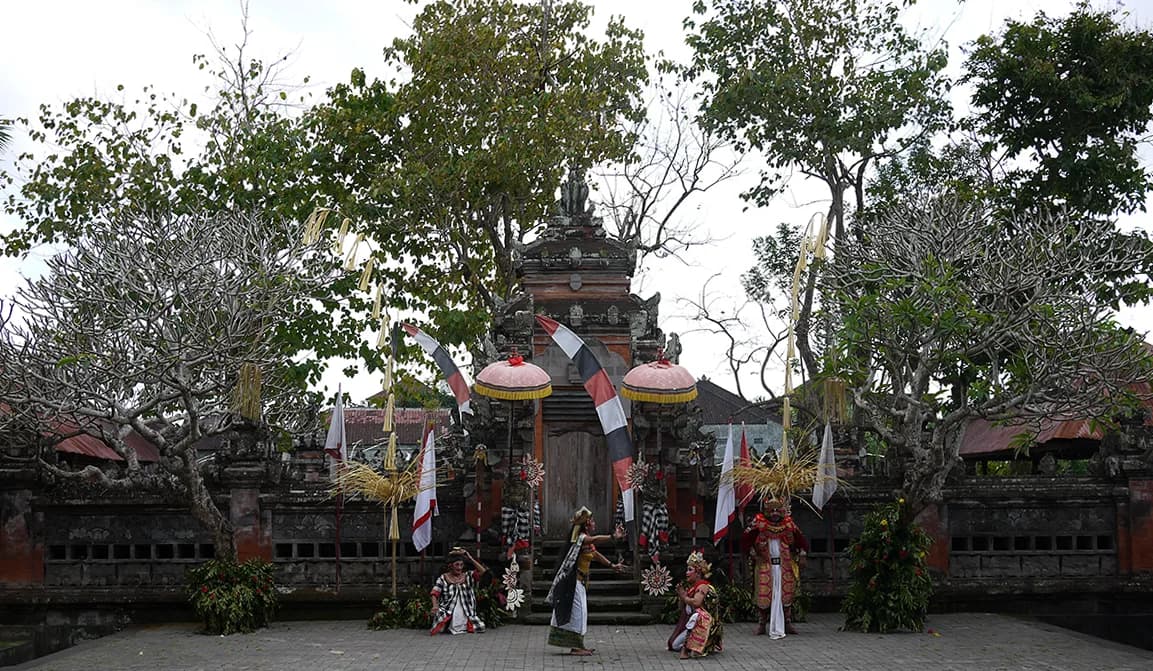
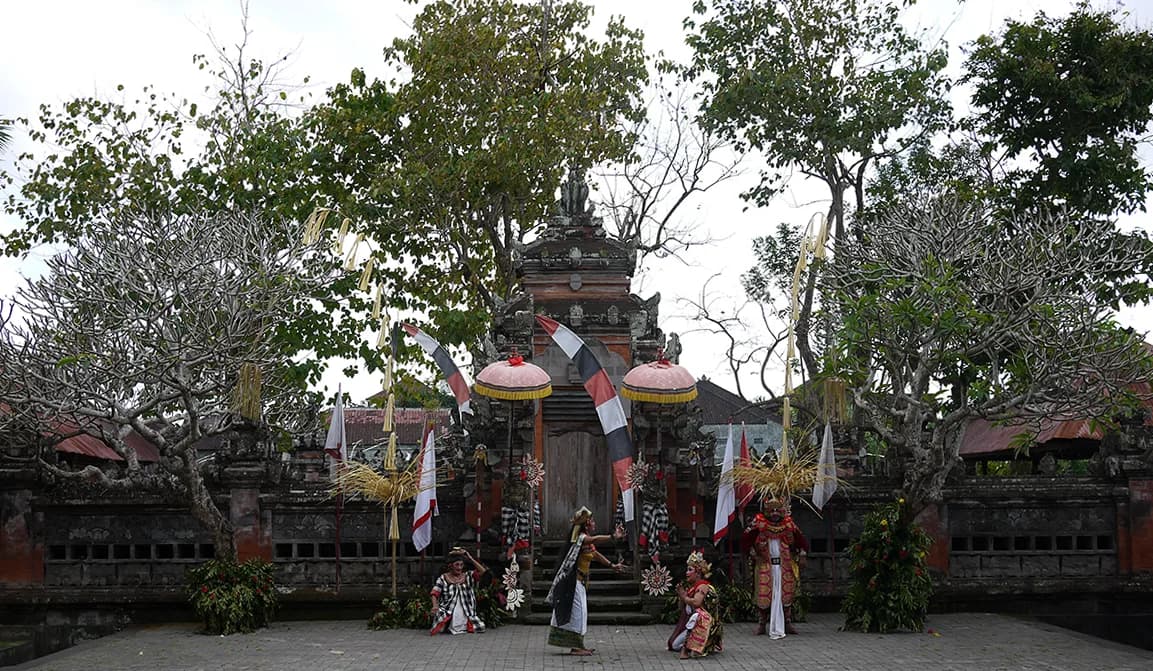
The core requirements reported across Bali temple guidance are consistent: a sarong wrapped from the waist down, a sash tied around it, and shoulders and back kept covered. Singlets, tank tops and crop tops are the usual examples of what to avoid wearing with a sarong. Guidance on Bali temple etiquette describes sarongs as covering the legs below the knee and treats shoulder and back coverage as essential, so build your day's outfit around those two coverage points.
Coverage is about the whole silhouette, not one item, which is why long trousers alone are not automatically a substitute for a sarong. Travellers on the Ubud forum ask exactly this, and the practical answer in that thread is that a sarong and sash can simply go over your trousers. Planning to add them over whatever you are already wearing is simpler than trying to dress your way out of them.
Keep that framing in mind: the dress code is a layering problem, not a reason to buy a whole new wardrobe. Wearing a sarong and sash over your existing clothes, with one light top providing shoulder coverage, solves most of it.
The Four-Piece Temple Kit: Sarong, Sash, Modest Top, Removable Shoes
Build the kit as four decisions in order: sarong first, sash second, top third, shoes last. A sarong that falls below the knee or to the ankles covers the leg requirement, and a sash holds it in place while marking the waist. The sash is not decorative filler; Bali temple dress guidance describes it as marking the boundary between the upper and lower body, which is why it is expected alongside the sarong rather than instead of it.
For the top, choose a shirt or blouse that covers both shoulders and back without needing constant adjustment. A short-sleeved linen or cotton button-up works for men and women alike, and a plain tee with sleeves is a low-effort alternative. Avoid strappy or backless styles for temple days, because you would be adding a cover-up anyway and the layering gets fussy in the heat.
Shoes are the fourth decision, and it is a comfort-and-ground trade-off rather than a strict prohibition. Temple entries often involve steps, sandy stone and crowded thresholds, so sandals or slip-on shoes let you handle the transition quickly while still coping with Ubud's uneven lanes. If you prefer closed shoes for the walk there, choose a pair you can take off and put back on without sitting down.
Sarong and Sash: Rent, Borrow, or Buy Before You Go
The rent-or-buy question changes what goes in your bag, so decide it before you pack rather than at the gate. Guidance for Bali temples notes that a sarong is typically included in the ticket price at most temples popular with travellers, while travellers report that drivers on organised visits often supply sarongs and sashes and show you how to wrap them. If you are relying on either, confirm in advance rather than assuming it will be available at a quieter site.
Buying your own removes that uncertainty and gives you a piece you can reuse as a beach cover-up, a shawl for air-conditioned cafes, or a light blanket on a bus. Local markets and souvenir shops in the Ubud area sell sarongs in a range of patterns, and the Ubud forum thread notes a sarong comes in one size but is easy to shape to fit. Exact rental and purchase prices vary by vendor and change over time, so check current costs locally instead of budgeting from an old figure.
If you buy before you travel, pick a lightweight cotton or rayon that folds flat and dries quickly, and skip heavy batik intended as a wall hanging or blanket. A sarong that packs to the size of a paperback earns its place even on a short trip. For a fuller view of how it fits alongside the rest of your Ubud clothes, the Ubud packing list breaks the same trip down item by item.
Sash and Wrapping: Why Fit Matters More Than Fabric
A sarong is a single rectangle, so fit comes from how you wrap it rather than from the size you bought. Travellers report that one size is generally shapeable to most bodies, which means the skill is in the fold and the knot. If you are unsure, ask a driver or temple attendant to show you the correct wrap instead of improvising something that slips on the steps.
Pack for that conversation by allowing a few extra minutes at the first temple, and wear a top you can tuck or adjust without exposing your shoulders. The sash is tied over the sarong, so a slightly longer top is easier to manage than a cropped one. This is also where a second, thinner scarf helps: it can serve as a spare sash or as shoulder coverage if the day turns hot.
Wrapping technique is the one part of temple dressing you cannot fully prepare at home, because the standard varies between sites and ceremonies. Asking on arrival is normal rather than awkward, and guidance on Bali temple dress notes that a Balinese companion or temple attendant can help you wear the elements properly. If you will attend a ceremony rather than a quick visit, ask your host or driver in advance about the full set, which is easier to arrange than to solve at the gate.
Tops, Cover-Ups, and Hot-Weather Layering
Ubud sits in the Balinese highlands, where conditions tend to be warm and humid most of the year, with a wetter stretch through the later months and a drier stretch earlier. Treat that as a historical seasonal tendency rather than a forecast and check current conditions before you fly. For temple days, the practical response is a breathable base layer plus a light cover-up, not a heavy outer layer.
A thin button-up shirt, a light scarf, or a second sarong worn over the shoulders gives you coverage that can come off once you leave the temple grounds. Guidance for hot temple days suggests exactly this: a light shirt or another sarong you wear inside and remove afterwards. Linen, cotton and other quick-drying fabrics handle both humidity and a sudden shower better than denser weaves. Long hair is worth tying back as well; travellers report being asked to do so at some temples, so keep a hair tie in your day bag.
If your trip falls in the wetter months, plan for humidity and rain at the same time as temple coverage, since a soaked cotton top stops being a comfortable option. The guide to what to wear in Ubud in the wet season covers that trade-off in detail.
Ceremony Versus Quick Visit: How the Kit Changes
A walk-through visit and an actual prayer ceremony are different packing problems, and confusing them leads to either overpacking or underdressing. For a quick visit, a sarong, sash and a top that covers shoulders and back is the practical standard. For a ceremony, guidance for Bali temples indicates women should wear the full set properly, typically sarong, stagen, sash and kebaya or similar equivalents.
If you are attending a ceremony, borrow or buy the correct attire rather than improvising from a beach wardrobe. Travellers describe the difference bluntly: turning up to a ceremony in a casual temple wrap feels like wearing a T-shirt to a formal wedding. Married visitors often choose more subdued colours and smaller patterns, though this is described as a preference rather than a hard requirement.
Men attending a ceremony can keep it simple: sarong, sash, and a collared or otherwise modest shirt, all easy to adjust. Ask whoever invited you, or the temple contact, about anything specific to that ceremony, since expectations can differ between a family temple and a large public one. This is the one area where a single question before you go saves a lot of discomfort.
Footwear for Temple Steps and Ubud's Uneven Ground
Footwear is a two-part decision: what handles Ubud's streets and paths, and what you can get on and off comfortably at a temple threshold. Sandals with a secure strap manage both, while flip-flops can struggle on wet stone steps and loose gravel. If you prefer trainers, choose a pair with a simple lacing system or elastic closure so removal is quick.
Temple entries frequently involve a change of level and a wait on stone that may be warm or wet, so build in a few minutes of standing. A small drawstring bag or a tote you can carry on your shoulder keeps your shoes with you rather than left in a pile, which is more comfortable when a site is busy. Socks are optional but can help on hot stone if you dislike going barefoot.
If your Ubud days mix temple visits with longer walks, the footwear you choose for the walks should still be easy to remove at a gate. The guide to what to pack for Ubud rice terrace walks covers the grip and ankle-support side of that choice, so you can pick one pair that does both jobs.
What to Leave in Your Room
Leave beach-only sarongs behind if you have a proper one for temples, since a thin pareo bought for the pool reads differently at a place of worship. When a traveller in the Ubud forum asked whether a beach pareo would do, the reply was that a beach sarong is not preferred at a temple. If you only own a beach wrap, buy or borrow a temple-appropriate one and keep the beach version for the pool.
Skip singlets, tank tops, crop tops and backless styles for temple days, along with shorts that leave the knee uncovered and anything you would not wear in a place of worship at home. Leave the bulky outer layer too, because the coverage you need is light, not warm. Anything that needs constant adjusting, such as a strapless top or a loose wrap skirt, is more trouble than it is worth on temple steps.
Do not pack around assumptions about photography, drone use, or access to inner areas, because restrictions vary by site and change over time. Check the specific temple's current guidance, and follow signage and instructions from staff on the day. Packing light is easier when you accept that some details are site-specific rather than universal.
A Compact Trip-Length Packing Example
For a three-to-five-day Ubud trip with two or three temple visits, start with one sarong and one sash, then add two light tops you can wear to a temple and to dinner. One short-sleeved button-up and one plain sleeved tee cover both jobs, and a thin scarf doubles as shoulder coverage or a spare sash. That is the entire temple kit, and it fits in a corner of a carry-on.
Add one pair of removable sandals, one pair of walking shoes if you plan longer paths, a hair tie, and a small shoulder bag for shoes and a water bottle. If a prayer ceremony is on the plan, add or arrange the fuller women's set, which is worth sourcing locally rather than guessing at from home. Everything else is ordinary Ubud clothing, which is why this kit does not need to duplicate your everyday wardrobe.
If your trip also includes yoga or a retreat schedule, those days have their own requirements, and the Ubud yoga retreat packing list covers that separate set. Keeping the temple kit and the retreat kit distinct prevents packing the same neutral layers twice.
Before-Departure Check: Confirm Guidance for Your Specific Temple
Before you fly, confirm two things: the current entry guidance for the temples you plan to visit, and whether any ceremony will be taking place during your dates. Ask the temple directly or through your accommodation or driver, since practices differ between sites and between a quiet morning visit and a festival day. This is also the moment to ask whether sarongs and sashes are provided or whether you should bring your own.
Check the weather outlook for your travel dates rather than relying on general seasonal patterns, because a historical tendency is not a forecast. That check decides whether your cover-up needs to handle rain as well as sun, and whether you pack a second pair of footwear. Both answers are more useful the week before departure than the night before.
Finally, confirm with your driver or tour operator whether temple clothing is included, since this is reported as common on organised visits and it directly affects how much you pack. Written confirmation in your booking thread is easy to check later. If it is not included, buying a sarong in Ubud before your first temple day is the low-risk option.
Plan Your Visit
The packing decision order is simple: sarong, sash, modest top, removable shoes, then check whether a ceremony changes the list. Get those four items right and you can wear almost anything else you would normally bring to Ubud. If there is any chance you will attend a prayer ceremony, arrange the fuller set in advance rather than at the gate.
Keep the kit light and reusable, verify site-specific guidance before departure, and treat seasonal climate patterns as a tendency rather than a promise. For everything outside the temple gate, the wider Ubud packing list fills in the gaps.
Frequently Asked Questions
Do you still need a sarong if you are already wearing long pants?
Travellers ask this often, and the practical answer is that the sarong and sash can simply be worn over long trousers. Wearing them over what you already have is simpler and more reliable than trying to substitute clothing for them. If you are unsure at a specific site, ask staff at the entrance.
Can you wear a sleeveless top or tank top inside an Ubud temple?
Guidance for Bali temples is consistent that shoulders and back should be covered, and singlets and tank tops are the usual examples of what to avoid. A sleeved shirt or a light cover-up worn over your top solves this without much bulk. If you only have sleeveless options, pack a thin scarf or second sarong for shoulder coverage.
Can you wear jeans or shorts to a Bali temple?
Shorts that leave the knee uncovered are the clearest mismatch with temple coverage expectations. Jeans can work as a base layer because they cover the legs, and a sarong and sash worn over them keeps the temple look consistent. Lightweight trousers are more comfortable than denim in Ubud's humidity.
Do children need sarongs and covered shoulders too?
Temple coverage expectations are generally understood to apply to children as well, and sarongs are shapeable enough to wrap to fit a child. Bringing a light sleeved top for a child who normally wears singlets avoids a struggle at the gate. Confirm with the specific temple if your child will attend a ceremony.
Are certain colours, like red, a problem at temples?
There is no reliable evidence that a specific colour such as red is prohibited. Guidance suggests married visitors often choose more subdued colours and smaller traditional patterns, but this is a preference rather than a rule. If you are attending a ceremony, ask your host whether any colour or pattern is expected.
Do men need a sarong and sash as well?
Yes. Sarongs and sashes apply to men and women, and staff or a driver can help men with the wrapping technique. A collared or otherwise modest shirt covers the upper body requirement and keeps the outfit simple. For a ceremony, a slightly tidier shirt is worth packing alongside the everyday one.
What do women wear to an actual prayer ceremony rather than a quick visit?
Guidance for Bali temples indicates the full set is worn properly for prayer: sarong, stagen, sash and kebaya or similar equivalents. Borrowing or buying the correct attire is better than improvising from a beach wardrobe. Ask whoever invited you, or the temple contact, about anything specific to that ceremony.
What should you do with your shoes at temple entries?
Shoes come off in many temple contexts, so plan footwear you can remove and put back on quickly without sitting down. A small shoulder bag keeps your shoes with you rather than in a shared pile at a busy entrance. Sandals with a secure strap handle both Ubud's uneven ground and a quick transition.
Sources
Free: The Ultimate Packing Cheat Sheet
A carry-on capsule wardrobe, the complete packing checklist, layering made simple, and what to wear by season — one printable page you'll use on every trip.
You might also like

Continue reading
More guides you'll find useful