What to Wear in Ubud in the Dry Season: A Packing Guide
Packing guide for Ubud's drier months: light fabrics for humid heat, footwear for terraces, temple-ready coverage, a week-long capsule, and what to leave behind.
On this page
Ubud sits inland among rice fields, so the clothing that keeps you comfortable is light, quick to dry, and flexible enough for both a terrace walk and a temple stop. Your packing choices matter more for fabric and footwear than for warmth: breathable materials handle the humidity, and your trousers need coverage without clinging. Check a current forecast before you finalise anything.
Across Bali the drier window generally runs from roughly May to September, and throughout the year the island tends to be warm and humid, so clothing guidance for the coast usually holds inland in Ubud too. Treat that as a seasonal tendency rather than a forecast for precise dates.
How the Drier Months Feel in Ubud
Bali's dry season is generally from May to September, when conditions are often sunny, humid, and breezy. Ubud's inland position means the heat can feel sticky rather than crisp, so the practical gear to reach for is breathable and loose. Because yearly patterns vary, treat these as historical tendencies and check a current forecast for your dates.
Even during a drier stretch, rain can fall, so it is useful to know how to adjust your day-to-day outfit if the weather turns wetter. If a short local downpour changes your plans, your everyday daytime wardrobe will need to shift toward wet-season choices. For guidance on the wetter pattern, see what to wear in Ubud in the wet season, and then match your layers to whatever the forecast actually shows.
Packing for humidity means accepting that you may change a top between a morning walk and an afternoon outing. The goal is to keep everything light enough to dry quickly and easy to pair, so you can adjust without digging through the whole bag. Prioritise airy fabrics and footwear you can clean, then add temple coverage as a removable layer rather than a separate set of clothes.
Daytime Outfits for Rice-Field Walks and Town
The standard daytime dress in Bali is generally casual, with light materials like cotton, linen, or rayon recommended for the warm, humid climate. A loose dress or a light tee with shorts is a reasonable default, and a sleeveless top with wide-leg trousers gives more airflow. Avoid white; it is not sweat-friendly. A wide-brim hat and sunglasses are worth carrying if you will be in the open between stops.
For a longer walk in the terraces, moisture-wicking fabric and running shoes are often more comfortable than ordinary cotton separates, because the fabric handles perspiration better and the shoes protect your feet on uneven ground. If your day mixes a walk with town errands, a breathable long-sleeve shirt or an overshirt you can remove indoors keeps the sun off without trapping heat.
Loose pants are also a good option for the warmer part of the day, particularly if you want less exposure to sun and insects. They are easier for a scooter ride or a temple visit than a skirt or shorts, and they pack down small in a light cloth. That said, any suggestion here is just a starting point, not a rule about what all visitors or residents wear.
Temple Coverage That Works in the Heat
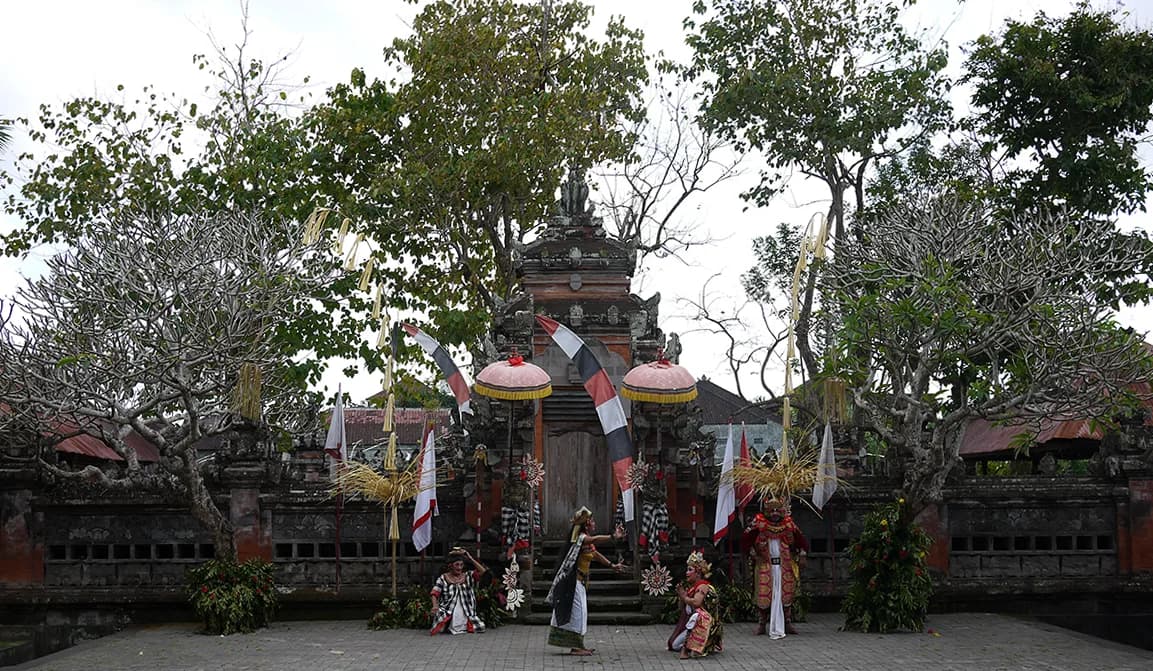
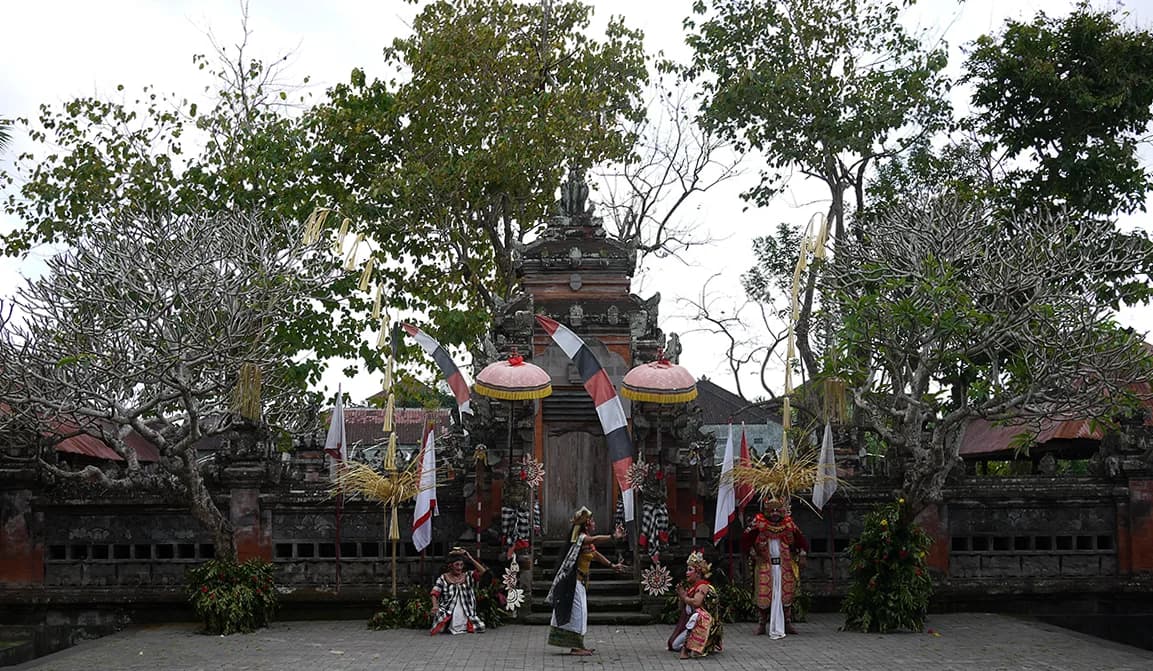
Visitors to Balinese temples are generally expected to cover shoulders and knees, and a sarong wrapped around the waist or below the knee is the usual way to do that. Some temples include a sarong with the ticket, but bringing a lightweight one of your own means the coverage depends on your schedule rather than a rental desk. If you plan temple stops as part of a walking day, keep the sarong in your bag.
The easiest way to be modest without baking is to wear a top with sleeves and pair it with a sarong over shorts or leggings, then remove the extra layer once you leave. Loose trousers and a breathable long-sleeve shirt achieve the same result without a wrap. The important part is that the coverage is easy to put on and take off without overheating.
If a temple visit is on your itinerary, plan it for the start or end of the day when it is cooler, and pack the covering at the top of your bag. If you are unsure exactly what a specific site expects, check directly with the temple or the organisation running your visit before you go. Keeping one dedicated temple layer also helps you avoid repeating the whole temple checklist when you pack for the rest of the week.
Footwear for Terraces, Town, and the Ride Home
A closed shoe with tread is the most practical choice for rice-terrace walks, because the paths can be uneven and slick, and a running shoe is a sensible option for more strenuous days. Sandals are fine for town, cafes, and temple courtyards, and they are easier to slip off where footwear removal is required. Bring one pair of each and the day's plan decides which you wear.
Flip-flops are the weakest option for anything beyond flat pavement: they give no grip on muddy terrace edges and leave your feet exposed when the path narrows. If you are riding a scooter after dark, a closed shoe is more comfortable and safer than an open sandal. Check the tread before you pack, because a worn sole is no better than no sole on a wet path.
If your stay is built around a retreat schedule, the footwear you will want changes, with indoor classes and pool areas calling for something you can slip on and off. A retreat packing list can help you work out which shoes to bring alongside the rest of your gear. Town-based stays usually need less specialised footwear, so decide your base before you commit luggage space.
Evening and Town Dressing in Ubud
Bali's dress code at night is generally casual to smart casual, and it stays warm and humid after dark, so a light shirt or a simple dress with sandals is usually enough. High heels, dress shoes, and formalwear are not usually required on the island, which means one smarter top in your capsule covers most dinner plans. When a restaurant or bar has its own expectations, check with the venue directly rather than guessing.
Because Ubud evenings tend to be relaxed, the shift from daytime is more about changing footwear than adding layers. If you want a small upgrade for dinner, a linen shirt or a simple dress with sandals works, and closed shoes feel better if you are riding a scooter home. Keep one thin cover for air-conditioned rooms, but leave the cold-weather layers out of the bag.
A Compact Packing Example for a Week
Many visitors to Bali get by with a light capsule of casual summer clothing in cotton, linen, or rayon, and the same approach works in Ubud. For a week, a workable shape is five or so light tops, two or three bottoms that all pair with the tops, one smarter shirt or dress, one temple covering, one swimming layer if your accommodation has a pool, and one light overshirt for sun or air-conditioned interiors. While some travellers bring five lightweight dresses and five or more tees, that volume is only useful if you are happy to carry it; a smaller, mix-and-match set is easier to manage in humid heat.
Choose pieces that dry overnight, since a rinse in the bathroom sink extends how long you can go between laundry days. Fast-drying sportswear suits Ubud's sweaty afternoons better than heavy cotton, and it is easier to re-wear the next morning. If you would rather use laundry services, plan on a mid-week wash and keep the capsule small enough to fit in one load.
If your trip combines an Ubud base with a coastal stop, you can add a swimsuit and light cover-up for the beach portion and still keep the same core wardrobe for the inland part. Beach-oriented and town-oriented wardrobes overlap more than they differ in Bali, so one well-chosen capsule usually covers both. If you are planning a coastal extension in a drier stretch, compare packing notes for a dry-season beach stay before you decide what to add.
What to Leave Behind
Leave heavy denim, thick sweaters, and anything you would wear in cold weather at home. Multiple pairs of shoes are rarely necessary when one walking shoe and one sandal cover almost every walk and evening, and formalwear or high heels take up space that light clothing uses better. Keep the bag small enough that you can repack it quickly on a moving day.
Trim duplicate items: two near-identical black tees do less for you than a tee and a shirt, and a second sarong usually stays in the bag. Also check the equipment you might add for everyday sightseeing, such as a daypack; if you mostly plan on short town stops, a compact bag is enough and a larger one just adds weight that you carry every day. If your itinerary is more active, review the Ubud packing list for the specific items that suit it, rather than packing for every possible activity.
One Check Before You Go
Look at a current forecast a day or two before you leave, because the drier months are a pattern, not a guarantee for a specific week. A rain probability reading helps you decide whether to pack an extra light layer or a second pair of shoes you can wear while the first dries. Keep the core of the bag light and let the forecast make only small adjustments.
Once you have the weather picture, confirm any site-specific requirements for the temples or attractions you plan to visit, and treat this guide as an editorial starting point for your own packing decisions rather than a fixed set of rules. If you are unsure about a garment, bring a light cover you can add or remove. Finalise the list only after both the forecast and your itinerary are clear.
Plan Your Ubud Dry-Season Wardrobe
If you remember one thing, make it fabric weight: light, breathable materials and a shoe with grip solve more hot, humid days than any extra garment will. Build a small capsule that mixes and matches, pack a temple covering you can remove, and leave the heavy, formal, and duplicate items at home.
Before you leave, check a current forecast and the moderation requirements for the temples on your route. That single habit keeps your bag light and your outfits appropriate for the days you actually have planned.
Frequently Asked Questions
What should I wear for rice-field walks near Ubud?
Choose lightweight, breathable clothing with some coverage and closed shoes with tread, since terrace paths can be uneven, muddy, or slick. A wide-brim hat, sunglasses, and a light overshirt help on open stretches where shade is limited.
Do I need long pants for temples in Ubud?
Visitors to Balinese temples are generally expected to cover shoulders and knees, and a sarong wrapped around the waist or below the knee is the usual way to do it. Loose trousers with a sleeved top achieve the same coverage. Confirm with the specific temple you plan to visit, as expectations can differ.
What shoes work best for Ubud's uneven paths?
A closed shoe with real tread is the safer option for terrace walks and any path that may be wet or muddy. Comfortable sandals are fine for town, cafes, and temple courtyards. One closed pair plus one light sandal covers most trips.
How many outfits do I need for a week in Ubud?
Plan around laundry rather than a fixed number. A small capsule of light tops, two or three bottoms that mix and match, one temple layer, and one smarter top is enough for most weeks if you choose fabrics that dry quickly.
What should I leave out of my Ubud packing list?
Leave out heavy denim, cold-weather layers, multiple pairs of heavy shoes, formalwear, and duplicates of the same item. These take space that light, breathable clothing uses better in Ubud's humid heat.
When is Ubud's drier season?
The drier window across Bali generally runs from roughly May to September, and the island tends to stay warm and humid year-round. Treat this as a historical pattern rather than a forecast, and check current weather before you travel.
Sources
Free: The Ultimate Packing Cheat Sheet
A carry-on capsule wardrobe, the complete packing checklist, layering made simple, and what to wear by season — one printable page you'll use on every trip.
You might also like

Continue reading
More guides you'll find useful