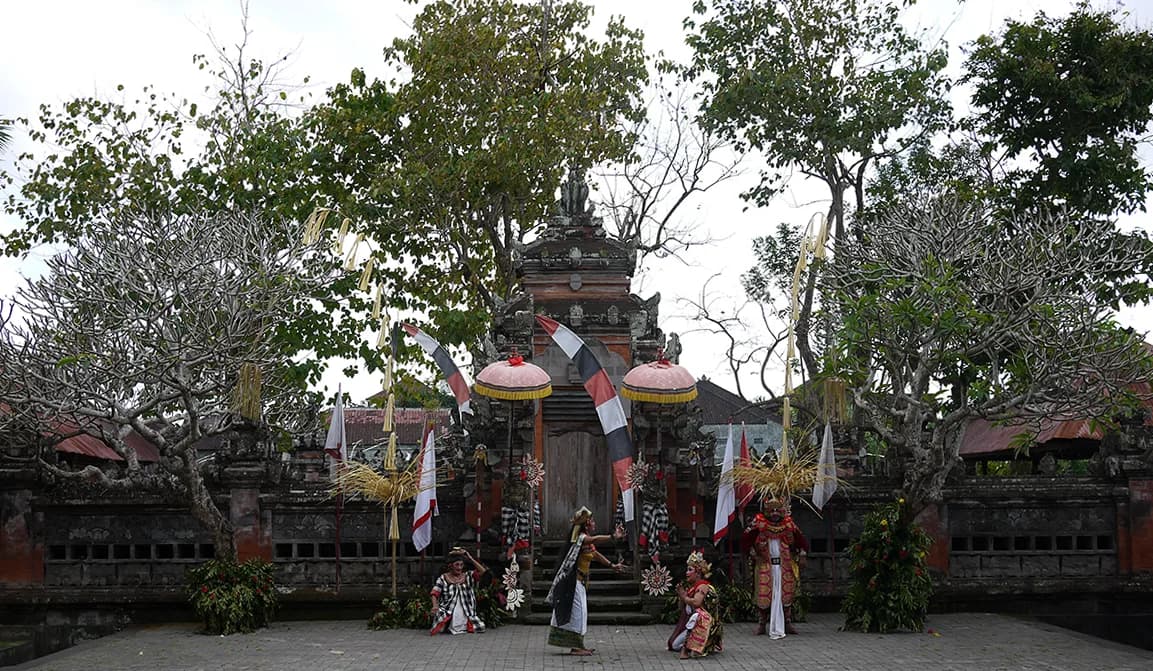
Ubud Packing List: What to Wear in a Humid Hill Town
Ubud packing list for humid hill-town days, sudden showers, temple visits and rice-field walks: fabric picks, footwear trade-offs and what to leave home.
On this page
Ubud weather month by month
Typical conditions from 30 years of daily weather data — use it to see how much to pack for the month you are travelling.
| Month | High / low | Days with rain | Afternoon humidity | Daylight |
|---|---|---|---|---|
| January | 28° / 24°C (82° / 74°F) | 9 in 10 days | 79% | 12.4 h |
| February | 28° / 24°C (82° / 74°F) | 10 in 10 days | 78% | 12.3 h |
| March | 28° / 24°C (83° / 74°F) | 9 in 10 days | 77% | 12.1 h |
| April | 28° / 24°C (83° / 74°F) | 8 in 10 days | 77% | 11.8 h |
| May | 28° / 23°C (82° / 74°F) | 5 in 10 days | 75% | 11.6 h |
| June | 27° / 23°C (81° / 73°F) | 4 in 10 days | 74% | 11.5 h |
| July | 27° / 22°C (80° / 71°F) | 4 in 10 days | 73% | 11.5 h |
| August | 27° / 21°C (80° / 71°F) | 3 in 10 days | 70% | 11.7 h |
| September | 28° / 22°C (82° / 71°F) | 4 in 10 days | 68% | 12 h |
| October | 29° / 22°C (83° / 72°F) | 5 in 10 days | 69% | 12.2 h |
| November | 29° / 23°C (83° / 74°F) | 8 in 10 days | 74% | 12.4 h |
| December | 28° / 24°C (82° / 74°F) | 9 in 10 days | 78% | 12.5 h |
Travelling on specific dates? Use our What to Wear Planner for the weather, outfits and a packing list for your exact days in Ubud.
Averages for 1991-2020, modelled from Copernicus ERA5-Land and ERA5 reanalysis via Open-Meteo open data (CC BY 4.0), adjusted to Ubud's elevation. Modelled afternoon highs can read 1–2°C below airport weather-station records.
Most Bali packing advice is written for beach towns, but Ubud sits inland among rice fields and jungle, and much of a typical day happens on foot rather than on sand. That changes your fabric choices, your footwear and how much rain protection is worth carrying. Treat the recommendations here as editorial suggestions for a humid hill-town trip, not rules about what everyone wears.
The practical approach is to build an outfit system around breathable layers and quick-drying pieces, then confirm requirements for any specific site or activity before you rely on them. Temple etiquette and activity-specific gear are the two areas where local guidance beats any general packing list.
How Ubud's Conditions Shape Your Packing
Ubud is warm and humid year-round, with a wetter stretch and a drier stretch rather than four distinct seasons. Travel sources describe Bali as tropical with frequent, sometimes intense showers and note that areas such as Ubud are walkable, which means you will often be exposed to weather between stops rather than moving car to car. Plan for damp air, intermittent rain and highland evenings that can feel cooler than the coast.
Because the town is inland and hilly, your bag should handle three situations in one day: humid walking, sudden rain and a cooler evening or heavily air-conditioned room. Instead of packing for one climate, pack a small range of layers that combine. If you want month-by-month guidance rather than a general strategy, see what to wear in Ubud in the dry season.
A live forecast is more useful than any seasonal summary, because shower timing shifts from week to week. Check a reliable weather service for Ubud in the days before departure, and again the night before you fly, so you can adjust quantities rather than rethink your entire bag.
Fabric Strategy: Cotton, Linen and Quick-Dry Synthetics
Loose cotton and linen are comfortable in humid heat because air moves through the weave, and they look at home in a casual town where dress is relaxed. The trade-off is drying time: heavy cotton holds moisture and can still be damp the next morning after a downpour or a hand wash. Choose lighter weaves over thick, structured cottons if you plan to rinse clothes in a sink.
Quick-dry synthetics earn their space in specific roles: a walking shirt for sweaty rice-field paths, swimwear that moves from a waterfall dip to an afternoon without dripping, and a light layer you can rinse and wear again. They are less pleasant against the skin in still, humid air, so most travellers do best with a mix rather than an all-synthetic wardrobe.
One practical test when packing is to ask whether each top works with at least two bottoms and survives a hand wash overnight. If it only matches one outfit and takes a day to dry, it costs more space than it returns on a humid trip. Merino is a niche option for cool highland evenings, but it is not necessary for a short Ubud stay.
Tops and Bottoms That Mix Into Several Outfits
A workable core is a set of loose short-sleeve or sleeveless tops, one or two long-sleeve light shirts for sun and air-conditioned spaces, and bottoms that cover your knees for temple visits. Linen or light cotton trousers, a midi skirt or loose shorts all work in town; the trousers and skirt double as temple-appropriate bottoms. Light colours are a reasonable editorial pick because they show less sweat in humidity, though locals wear every colour.
Build outfits by pairing rather than packing complete looks. Two bottoms and four tops can produce eight combinations, which is usually enough for a short trip once you account for laundry. If your trip includes walking the terraces near Tegallalang, add a breathable long-sleeve option for sun exposure on open paths; the dry-season guide to rice-terrace and hill-town dressing covers that warm-weather balance in more detail.
Evening temperatures in Ubud are mild, but a light sweater or overshirt is useful for air-conditioned restaurants and early starts. Denim is heavy and slow to dry, so it is a poor choice as your only bottom; if you bring jeans, treat them as an evening item, not a walking staple.
Rain Protection: Jacket, Poncho or Umbrella
A packable rain jacket is the most versatile option because it keeps your hands free and works over a daypack, which matters when you are walking between shops, cafes and guesthouses. A poncho is lighter and covers more of you and your bag, but it can flap in wind and feel clammy in humid heat. A compact umbrella is excellent for town errands and hot afternoons, yet awkward on narrow, uneven paths and useless if you want both hands for a phone or camera. Travel guidance highlights a rain jacket or poncho as especially helpful when a downpour strikes and you are on foot, which is the situation Ubud's walkable centre creates.
The strongest setup for Ubud is a light jacket plus a small umbrella, with a poncho only if you expect long walks in open country. Whichever you choose, check that your daypack has some water resistance or pack a simple dry bag for electronics. Rain in the tropics often arrives suddenly, so keep your chosen layer at the top of your bag rather than buried.
Do not treat rain gear as a substitute for quick-drying clothes. Getting caught without a jacket is survivable if your clothes dry fast; the combination is what keeps a wet afternoon from ruining the next day's plans. If you are travelling during the wetter stretch, the wet-season guide explains how to keep a heavier waterproof layer organised alongside everyday town clothing.
Footwear: Sandals for Town, Enclosed Shoes for Paths
Ubud's walkable centre and casual dress code make comfortable sandals the default for markets, cafes and galleries, and travel guidance notes that breathable footwear tends to be more comfortable and that sandals are acceptable in most restaurants. Choose sandals with a secure strap rather than loose flip-flops if you plan to walk on uneven pavement or wet stone. Flip-flops are fine for pools and short errands but poor for long distances.
Enclosed shoes are worth the space for rice-field paths, jungle trails, waterfall stairs and any rainy day when grip matters. Travel guidance specifically recommends closed-in footwear for activities like hiking and notes that enclosed footwear is easier to walk in when it is raining, because covered feet stay drier and rockier footpaths demand more grip. A lightweight pair of trainers or trail shoes covers most cases without much weight.
The trade-off is packing volume: two pairs take more room than one. A common compromise is one secure sandal for most days and one compact enclosed shoe for active outings, with socks limited to the enclosed pair. If your trip is mostly town-based, the sandals do the work and the second pair is optional. Families sharing luggage for rice-field and waterfall outings may find the walk-focused list useful.
Temple and Sacred-Site Attire
Balinese temples are active places of worship, and general guidance is to cover shoulders and knees, often with a sarong and sash. Travel guidance notes that sarongs are typically provided for a small fee at entrances to sacred sites, so you do not necessarily need to buy them before you travel. Treat this as modesty guidance rather than a fixed uniform, and confirm the specifics where you are going.
For packing purposes, the reliable move is to include at least one outfit that covers shoulders and knees plus a light scarf you can drape as needed. A sarong doubles as a picnic blanket, a beach cover-up or a layer on a cool evening, which makes it easy to justify. For a more detailed walkthrough of what to wear and what sites typically provide, see the Ubud temple dress code packing guide.
Avoid treating temple dress as a performance: the aim is respectful coverage, not specific brands or styles. If a site publishes its own requirements, for example on an official temple or tourism authority page, follow that over any general packing advice. Rules can differ between temples and events, so a quick check before you go is the safest habit.
Sun, Insects and Water
Sun exposure is easy to underestimate in a humid hill town, especially on open rice-field walks and at waterfalls. Travel guidance recommends a wide-brimmed hat and notes that sunscreen is particularly expensive in Bali, so bringing enough for your trip is a sensible space trade-off. Reapply on long outdoor days rather than assuming cloud cover is protection.
Mosquito repellent is widely recommended for Bali, and it matters most around rice fields, gardens and damp evening areas. Pack a repellent you are willing to use consistently, plus after-bite relief if you react badly; if you have specific medical concerns, ask a clinician rather than relying on a packing guide. A reusable water bottle is useful for hydration and reduces single-use plastic, and many cafes offer refills.
A light daypack ties these together: it carries water, a rain layer, sunscreen and a scarf during the day without weighing you down. Keep it small enough to sit comfortably while walking and to store under a cafe chair. Anything you would not carry for a four-hour outing probably does not belong in the day bag.
A Five-Day Ubud Packing Example
For five days based in Ubud, start with four tops and two bottoms rather than a full week of separate outfits. Add one long-sleeve light shirt, one dress or tunic that covers knees for temples, one sarong or large scarf, one light sweater and two swimwear pieces if waterfalls or pools are on your plan. That core scales in either direction: for a longer trip, add one more set of tops and bottoms and plan laundry.
Footwear for the same five days is one secure sandal plus one enclosed shoe, with two or three pairs of socks for the enclosed pair. Rain gear is a packable jacket and a compact umbrella, and the rest of the bag covers a hat, sunscreen, repellent, toiletries, chargers and a reusable bottle. If you want to see how the same category method adapts to a different climate, the Lyon packing list is a useful comparison.
To scale to two weeks, do not double the clothing; double the underwear and socks and commit to a mid-trip wash. Laundry services are common in Ubud and travelling light is easier when you accept that clothes will be rinsed. The Verona packing list shows how the same method shifts for a very different seasonal range.
What to Leave Behind
Heavy jackets, thick jeans and winter boots take up space you will not recover in a warm, humid town, and travel guidance explicitly lists warm jumpers, jeans and winter coats among items not to pack for Bali. One light layer is enough for cool evenings and air conditioning. If you are visiting a highland area, a single warm mid-layer is more useful than a bulky coat.
Beach towels are bulky and typically supplied by hotels, resorts and villas, so they are usually unnecessary unless you know your accommodation does not provide one, and travel guidance advises leaving room by not packing one. Expensive jewellery and watches add risk without adding anything to a casual trip. If you carry valuables, keep the set small and review your own travel insurance rather than relying on packing advice.
Too many electronics is a common overpack: a phone with a good camera usually covers casual photography, and a single compact camera or action camera is plenty for most trips. Leaving space also means you can bring home textiles, woodwork or coffee without paying for extra luggage. Check your airline's published baggage allowance directly, since limits vary by carrier and fare.
Before-Departure Weather Check
In the final week before you fly, check a reputable forecast for Ubud rather than relying on seasonal generalities. Look at rain probability, daytime and evening temperatures, and whether a wetter or drier pattern is settling in, then adjust quantities: extra quick-dry tops in a wet stretch, one more warm layer in a cooler one.
Bali's weather is tropical but can be unpredictable, with frequent short-lived showers, so a final forecast check before departure helps you decide how much rain protection and how many quick-dry pieces to carry. Seasonal timing is useful for planning, but it cannot tell you what a specific week will do.
While you are checking, confirm anything that is a requirement rather than a recommendation: your airline's baggage allowance, any site-specific rules for temples or activities you have booked, and your own entry documentation. Those are the areas where guessing is expensive. Seasonal advice, by contrast, should only shape how much you pack, not whether you are allowed in.
Pack the rain layer and one warm layer at the top of your bag, because both are the items you are most likely to want on arrival day. Everything else can be arranged once you know how the weather is behaving.
Plan Your Visit
A Ubud packing list succeeds when it matches an inland, walkable, humid hill town rather than a beach holiday. Prioritise breathable, quick-drying clothes, secure sandals plus one enclosed pair, rain protection that suits walking, and modest layers for temples. Confirm site-specific and airline requirements at the source, and let the forecast in the final days set your quantities.
More packing guides for Indonesia
- Ubud Temple Dress Code Packing: Sarong, Sash & What to Carry
- Ubud Yoga Retreat Packing List
- What to Pack for an Ubud Jungle and Waterfall Day Trip
- What to Pack for Ubud Rice Terrace Walks
- What to Wear in Ubud for Dinner and Evening
- What to Wear in Ubud in the Dry Season: A Packing Guide
- What to Wear in Ubud in the Wet Season: Packing Guide
- What to Pack for Sanur, Bali: A Practical Packing Guide
- Jakarta Packing List: What to Wear for Heat, Rain & Modest Visits
- What to Wear in Ubud in November
Frequently Asked Questions
What should I pack for Ubud?
Pack light, loose clothing in breathable fabrics, one long-sleeve light shirt, bottoms that cover your knees for temples, a sarong or scarf, secure sandals, one pair of enclosed shoes for paths and rainy days, a packable rain layer, a compact umbrella, a sunhat, sunscreen, mosquito repellent, swimwear and a reusable water bottle in a small daypack. Keep the mix small and rely on laundry for longer stays.
What shoes should I wear in Ubud?
Comfortable sandals with a secure strap suit Ubud's walkable centre and casual dress, while enclosed shoes are more practical for rice-field paths, jungle trails, waterfall stairs and wet days when grip and dry feet matter. Many travellers bring one of each; if your trip is mostly town-based, sandals may be enough.
Do I need a rain jacket in Ubud?
A light rain jacket is the most flexible option because it leaves your hands free and layers over a daypack while walking. A poncho covers more but can be clammy and awkward in wind, and a compact umbrella is great for town but less useful on narrow paths. A jacket plus a small umbrella covers most situations.
What do I wear to temples in Ubud?
General guidance is to cover your shoulders and knees, often with a sarong and sash, and those items are frequently available at temple entrances. Treat this as modesty guidance rather than a fixed uniform, and confirm the specifics with the site or an official tourism source before you visit, since expectations can vary.
What should I not pack for Ubud, Bali?
Leave heavy jackets, thick denim and winter boots at home, since they take space you will not need in a warm, humid town. Beach towels are usually supplied by accommodation, expensive jewellery adds unnecessary risk, and too many electronics is a common overpack. Check your airline's baggage allowance directly rather than assuming a limit.
How do I check conditions before I fly?
Look at a reputable forecast for Ubud in the final week, focusing on rain probability and daytime and evening temperatures, then adjust quantities rather than your whole list. Seasonal descriptions explain general patterns but not a specific week, so use them for planning and the forecast for final decisions.
Sources
Free: The Ultimate Packing Cheat Sheet
A carry-on capsule wardrobe, the complete packing checklist, layering made simple, and what to wear by season — one printable page you'll use on every trip.
You might also like
Continue reading
More guides you'll find useful