What to Pack for Walking Essaouira's Medina: Footwear and Outfits
Pack for Essaouira medina walks with grip-focused footwear, breathable layered outfits and a compact three-day list, plus what to leave behind.
On this page
Essaouira's medina is a compact grid of stone lanes inside the ramparts, and walking it is a different packing problem from sitting on the beach. The surfaces are uneven, thresholds and raised objects sit at ankle height, and rampart stairs add short, steep climbs between stretches of flat walking. Packing for that reality means thinking about grip and toe protection first, then building clothes and layers around the walking you actually plan to do.
This guide sticks to packing and outfit decisions: which shoes handle which surfaces, how coverage choices work as an editorial courtesy rather than a rule, what fabrics survive coastal humidity, and how to carry a day kit through the souks. Each month of the year behaves differently, so seasonal layer detail belongs on the dedicated month pages rather than crammed in here.
Why Medina Walking Changes Your Packing
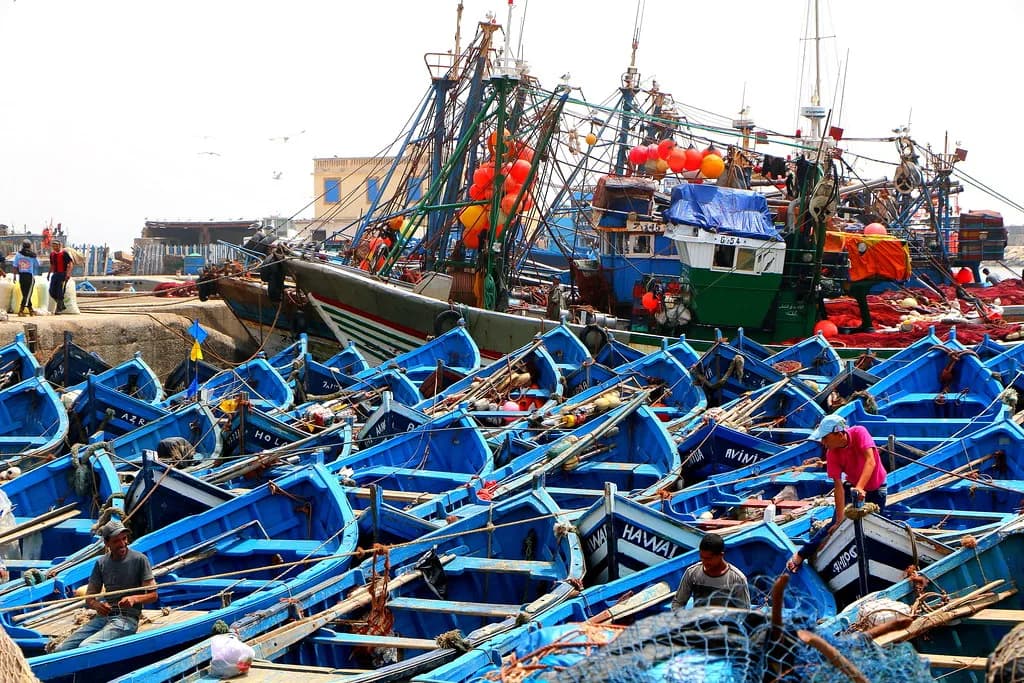
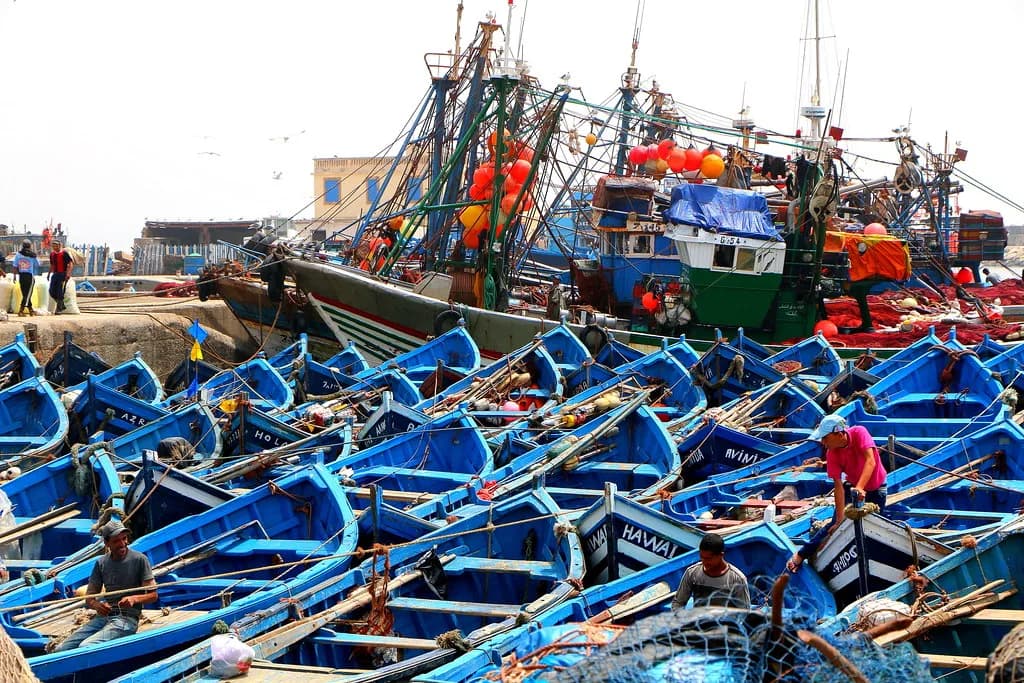
Three surfaces drive the footwear decision in Essaouira. The medina lanes are uneven stone with raised objects to stub a toe on, the ramparts add stairs and exposed walkways, and the port stretch brings you close to wet ground and whatever the fishing boats leave behind. Guidance on what to wear in Essaouira singles out longer medina and port walks as the point where flip-flops stop being enough, noting uneven paths and raised objects around the medina. If your trip is mostly a slow corniche stroll with short medina hops, the calculation changes; if you want to walk the whole walled town plus the port, grip and covered toes move to the top of your list.
A second constraint is the wind. Essaouira sits on the Atlantic, so exposed ramparts and the seafront can feel breezy even when the town itself feels still, which affects loose hats, light layers you might otherwise shed, and how securely you carry everything. None of this requires specialist gear, but it does reward a kit that stays put and dries quickly rather than one built purely for sunbathing.
Footwear Decision: Hiking Sandals, Trainers or Flip-Flops
Hiking sandals with a secure strap system and a toe bumper are the strongest all-round choice for long medina and port walks, because they combine airflow with protection against the raised objects and uneven surfaces. Rather than naming brands, look for a sandal that adjusts across the foot, has a grippy outsole and covers the front of the toes. The trade-off is weight and drying time compared with a simple pair of flip-flops, which is why a second lighter pair still earns its place.
Trainers make more sense in the cooler half of the year, when mornings and evenings are chilly enough that open-toed shoes feel uncomfortable on a long walk. General Morocco footwear guidance points the same way, recommending comfortable closed shoes or gripping sandals for medina cobbles, with trainers or hiking shoes helpful on rougher paths. A pair of trainers also doubles as your travel-day and travel-home shoe, which keeps the total count down.
Flip-flops are fine for the corniche and for short hops to a nearby cafe, and they pack almost flat. Treat them as a backup and beach pair rather than your main walking shoe, and accept that loose-soled flats give you nothing against a raised stone. The Essaouira packing list is a useful cross-check once you have settled on your two pairs, so you can see how the rest of the kit fits around them.
Socks, Blisters and Break-In Before You Fly
The cheapest way to protect a walking trip is to break in your shoes at home, on paving and stairs, for at least a few days before departure. New hiking sandals with stiff straps can rub the same spot for hours, and a blister on day one of a short trip is hard to recover from. If you buy shoes specifically for this trip, wear them for a couple of errands before you pack them.
Bring thin, quick-drying socks for trainers and consider a liner sock under them if you are prone to rubbing. For sandals, a light sock works on cool mornings in the same way a light layer works on your arms. Pack a couple of fabric plasters or a small roll of tape; they weigh almost nothing and save a walking day. This is a simple kit fix rather than medical advice, so speak to a healthcare professional about any existing foot problem before you travel.
Clothing for Walking: Loose Trousers, Long Skirts and Coverage
Essaouira is a tourist town and among the more relaxed destinations in Morocco, but the medina is not the beach, and covering shoulders and knees away from the sand is a considerate default. Essaouira-specific advice suggests covering shoulders and knees in the medina and around mosques and avoiding low-cut tops, while noting that children in T-shirts and shorts are entirely fine. Treat that as an editorial courtesy choice rather than an enforced rule: you may see visitors in shorts and sleeveless tops, and nobody is likely to confront you about it.
For walking, loose trousers or a long skirt are the practical middle ground. They give you coverage, they move with you over steps, and they keep fabric off hot stone in the middle of the day. Broader Morocco guidance for cities makes the same suggestion, pairing loose trousers, long skirts or midi dresses with sleeved tops and a light layer for medina walks. A sleeved top in a light colour plus a scarf you can drape over your shoulders covers most situations with one small item.
Fabric and Layer Logic for Summer and Winter
Essaouira's climate is seasonal rather than uniform, and thinking in terms of historical tendencies is more useful than chasing exact figures. In the warmer months, light breathable fabrics are the comfortable choice, with a light jumper or cardigan for sunset walks and evening strolls when the air cools. In the cooler months, warm sunny days can still appear, but mornings and evenings are noticeably colder, so layers and a light waterproof jacket for occasional rain are the sensible base. What to wear in Essaouira in March is a useful reference point if your trip falls in the cooler shoulder season, when both mid-day warmth and cold evenings are plausible.
Build around three pieces rather than a long list: a breathable base layer, a mid-layer you can shed mid-walk, and a wind-resistant outer layer. That combination handles a cool morning, a warm afternoon on the ramparts and a breezy evening without repacking. A light waterproof jacket earns its space in the cooler months because it doubles as a windbreaker on exposed walkways.
Wind, Sun and Shade on the Ramparts and Seafront
The ramparts and seafront are the windiest parts of a medina walk, and headwear is where that shows first. A wide-brimmed hat with a chin strap stays put; an unsecured floppy hat tends to end up in your hand within minutes, and a cap is a reasonable alternative for shade. Sunglasses help against glare and against wind-blown sand along the seafront, so a spare pair is worth the small space if you routinely lose them. If your trip lands in the hottest stretch of the year, what to wear in Essaouira in July covers heat-specific choices in more detail.
A light scarf is the single most flexible item for these walks. Wear it around your neck on a cool morning, drape it over your shoulders for coverage in the medina, and use it as a loose face covering when wind lifts dust on the ramparts. Pick a fabric that dries fast and folds small so it lives in your day bag without adding weight.
Carrying Your Day Kit Through the Souks and Lanes
A crossbody bag is easier to manage than a shoulder bag in narrow souk lanes, because it stays flat against your body and leaves both hands free on stairs. A small backpack also works, but check that it does not swing wide when you turn in a crowded passage. Whichever you choose, keep the essentials in one zipped compartment and avoid keeping valuables in an outer pocket.
Your day kit for a medina walk is short: water, the layer you shed once the sun is up, your scarf, sunglasses and a little space for purchases. A refillable bottle is lighter than buying bottled water repeatedly and fits the walking pattern of stopping at a cafe mid-route. During Ramadan, opening hours and the rhythm of the medina can shift, so Essaouira Ramadan packing and what to wear is worth a look if your dates overlap with it.
A Compact Three-Day Packing Example
For three days of medina-focused walking, pack two walking-appropriate bottoms, such as loose trousers and a long skirt or a second pair of trousers, and three sleeved tops. Add one mid-layer, one light waterproof outer layer for the cooler months, one scarf and one hat with a strap. That gives you a wash-and-wear rotation: wear one outfit, air one, and wash the third in the evening, checking first that your accommodation has somewhere for clothes to dry.
Shoes are the exception to the compact rule, because one pair cannot cover every surface. Bring your main walking shoe plus one lighter pair, whether that is flip-flops for the corniche or trainers for cool mornings. Your exact quantities should shift with trip length and laundry access rather than with a fixed rule, since a longer stay makes a mid-trip wash more worthwhile than carrying extra outfits.
What to Leave Behind
Leave topless-sunbathing wear at home; swimwear belongs on the beach. Heeled shoes and smooth-soled fashion flats are a poor match for rampart stairs and stone lanes, so they are the first thing to cut. Heavy denim is awkward in coastal humidity because it takes a long time to dry, which matters more than usual if you are washing clothes mid-trip.
Skip equipment and product categories that add weight without solving a medina-walking problem, and skip anything you would only use in the Atlas or the Sahara, since those are separate trips with different kits. Also leave behind the assumption that medina walking needs specialist gear: grip, covered toes, breathable fabric and one light layer cover most of it. A consolidated Essaouira packing list brings the categories together in one place if you want a cross-check.
Before You Leave: Check Your Own Forecast
Seasonal patterns are not a forecast for your specific dates, so check a current forecast for Essaouira in the days before you fly and adjust accordingly. Two questions matter most: how cold the mornings and evenings will be, and whether rain is likely during your stay. Cold mornings push you toward trainers and a warmer mid-layer; likely rain pushes you toward the waterproof jacket and a shoe that tolerates damp ground.
Use the forecast to choose between your two shoe options rather than to pack both as equal choices, and to decide whether the mid-layer or the outer layer is the one you carry daily. Wind is the variable most often underestimated in coastal towns, so check it alongside temperature. If the forecast shifts after you have packed, a scarf and a light layer give you enough flexibility to adapt on arrival.
Plan Your Visit
Walking the Essaouira medina is mostly about matching your kit to the surface underfoot. Prioritise a shoe with grip and toe protection for long medina and port walks, add one lighter pair for short strolls or cool mornings, and keep clothing loose, breathable and quick to dry. A scarf, a hat with a strap and a light layer that packs small handle wind, sun and changing temperatures between morning and evening.
Covering shoulders and knees in the medina is a considerate choice rather than an enforced requirement, and the beach is a separate packing question entirely. Pack for three days as a baseline and scale quantities to your trip length and laundry access. Then check the actual forecast before departure and let it make the final call on shoes and layers.
Frequently Asked Questions
What shoes should I wear to walk the Essaouira medina?
Hiking sandals with a secure strap and a toe bumper are the strongest choice for longer medina and port walks, because the lanes are uneven and raised objects sit at ankle height. Trainers work well in cooler weather when open-toed shoes feel cold in the morning and evening. Flip-flops are best kept for the corniche and short hops rather than full walking days.
Are flip-flops okay in the Essaouira medina?
They are fine for short walks and the corniche, and they pack flat as a backup pair. They give you no protection against uneven stone, raised objects or wet ground near the port, so they are a poor choice for a long walk that covers the whole medina and the port stretch. Bring them as a second pair, not your main walking shoe.
Do I need to cover my shoulders and knees in Essaouira?
Covering shoulders and knees in the medina is a considerate choice rather than an enforced rule, and Essaouira is among the more relaxed destinations in Morocco. You may see visitors in shorts and sleeveless tops. Since you are free to decide, treat coverage as a courtesy default away from the beach, and note that children in T-shirts and shorts are entirely fine.
What should I wear on the Essaouira ramparts when it is windy?
Choose a hat with a chin strap or a cap, because the ramparts and seafront catch the Atlantic breeze and an unsecured wide-brimmed hat will not stay on. Bring a light layer you can add or remove as you move between exposed walkways and sheltered lanes, and keep sunglasses handy for wind-blown sand. A scarf worn around the neck handles both cool air and dust.
Can I wear jeans to walk around Essaouira?
Jeans are wearable but not ideal for medina walking in coastal humidity, because heavy denim dries slowly if it gets damp and takes up space in your bag. Loose trousers in a lighter, quicker-drying fabric give you the same coverage with more comfort on stairs and uneven stone. If you do pack jeans, treat them as an evening item rather than your walking outfit.
How many outfits do I need for a few days of medina walking?
For three days, two walking-appropriate bottoms and three sleeved tops give you a workable rotation, plus one mid-layer, one light outer layer for the cooler months, a scarf and a hat. Wear one outfit, air another and wash the third in the evening if your accommodation has space to dry clothes. Scale the quantities to your trip length and laundry access rather than to a fixed rule.
Is a crossbody bag or a backpack better for the medina?
A crossbody bag is usually easier in narrow souk lanes because it sits flat against you and keeps both hands free on stairs. A small backpack also works, but check that it does not swing wide when you turn in a crowded passage. Whichever you pick, carry water, your shed layer, a scarf and sunglasses, and keep valuables in a zipped compartment.
Sources
Free: The Ultimate Packing Cheat Sheet
A carry-on capsule wardrobe, the complete packing checklist, layering made simple, and what to wear by season — one printable page you'll use on every trip.
You might also like


Continue reading
More guides you'll find useful