What to Wear in El Nido in April: Packing Guide
What to wear in El Nido in April: light breathable fabrics, swimwear rotation, sun and boat-day footwear for humid heat and long island-hopping days.
On this page
El Nido in April: the weather in numbers
Typical April conditions from 30 years of daily weather data, split into early, mid and late month so you can match them to your travel dates.
| Dates | Early Apr (1–10) | Mid Apr (11–20) | Late Apr (21–30) |
|---|---|---|---|
| Afternoon high | 30°C (86°F) | 31°C (87°F) | 31°C (87°F) |
| Night-time low | 26°C (79°F) | 26°C (79°F) | 27°C (80°F) |
| Feels like (afternoon) | 33°C (91°F) | 34°C (93°F) | 34°C (93°F) |
| Range of afternoon highs | 29–31°C | 29–32°C | 29–32°C |
| Days with rain | 3 in 10 days | 4 in 10 days | 5 in 10 days |
| Afternoon humidity | 65% | 66% | 67% |
| Average wind | 14 km/h | 11 km/h | 12 km/h |
| Daylight | 12.1 h | 12.3 h | 12.3 h |
What this means for your suitcase
- Hot afternoons: loose, breathable fabrics like linen or cotton, short sleeves and a sun hat.
- Rain on about 4 in 10 days — a waterproof jacket and water-resistant shoes.
- Muggy air — moisture-wicking fabrics beat denim and heavy cotton.
Travelling on specific dates? Use our What to Wear Planner for the weather, outfits and a packing list for your exact days in El Nido.
Averages for 1991-2020, modelled from Copernicus ERA5-Land and ERA5 reanalysis via Open-Meteo open data (CC BY 4.0), adjusted to El Nido's elevation. Modelled afternoon highs can read 1–2°C below airport weather-station records.
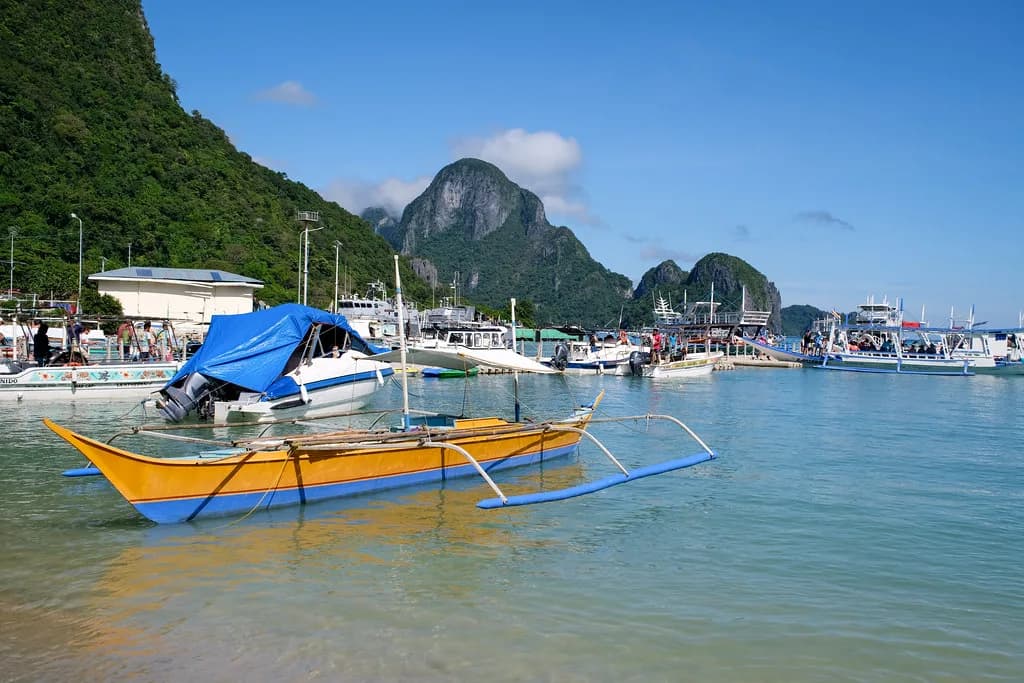
April tends to sit in El Nido's hot, sunny and humid stretch, with sharp midday sun and days that revolve around bangka boats and lagoons. That combination should shape every packing decision: what you wear has to breathe, dry quickly and cope with being wet and sweaty far more often than on a normal beach trip.
The mistake to avoid is packing for a mild beach holiday. Denim, structured luggage and heavy evening wear all work against you here, while a modest swimwear rotation, loose natural fabrics and one pair of gripped sandals do most of the hard work. Where a rule is genuinely set by an operator or authority, verify it directly; everything else here is an editorial suggestion you can adjust.
April Conditions at a Glance
April falls within the Philippines' short dry season, which generally runs from March to May, making it one of the more reliably sunny periods to visit Palawan. Travel accounts from that window describe daytime temperatures from about 30 to 36 degrees Celsius, roughly 86 to 97 degrees Fahrenheit, with evenings still warm and humid. Treat these as historical tendencies rather than a forecast for your dates, and check a short-range forecast for El Nido shortly before you fly.
El Nido sits close to the equator, so UV exposure on open water is intense even when cloud cover appears, and boat decks offer little shade through the middle of the day. Humidity is the other factor: it slows drying, keeps fabric damp against your skin and makes tight or heavy clothing feel noticeably worse. Pack with drying speed and how often you will get wet in mind.
Fabrics That Work in Humid Heat
Linen, cotton and quick-dry synthetic blends are the most practical choices because they move air, release sweat and dry fast after a soaking. The humidity in El Nido is high enough that even swimwear may not dry completely overnight, so breathable, fast-drying fabrics are worth prioritising over anything that holds water. Denim and heavy knits do the opposite: they hold moisture, feel clingy in humidity and take far too long to dry overnight. For the wider destination list, the El Nido packing list covers choices beyond April specifics.
Slightly loose cuts beat fitted ones for the same reason, and light colours stay more comfortable in direct sun. Plan to change out of wet clothes once you are back on land rather than sitting in damp swimwear, which is both more comfortable and kinder to your skin.
Tops and Bottoms for Boat Days and Town Evenings
For boat days, two or three light short-sleeve shirts plus two pairs of quick-dry shorts will cover a week without constant washing, and a long-sleeve linen or cotton shirt doubles as sun cover and a light layer for air-conditioned vans. For evenings in town, a casual sundress or loose trousers and a simple top are entirely sufficient; El Nido's restaurants and bars are relaxed, so save space for practical items rather than structured outfits.
A light long-sleeved layer earns its place for two reasons: mosquito-prone evenings and the occasional cool blast of air conditioning on transfers. Something thin and packable works better than a jacket you will only wear once. Bring one or two such layers rather than several, since April days rarely call for more.
Swimwear and Rash Guard Rotation
Because humidity keeps wet swimwear damp overnight, packing three sets gives you a dry option for each island-hopping day without hand-washing every evening. That number also covers the reality that boat days often stack up back to back, and a damp suit left in a bag all day is unpleasant to put back on. Add one or two long-sleeve rash guards, which provide more reliable sun coverage than sunscreen alone and stay comfortable while snorkelling.
Rinse swimwear in fresh water after saltwater days and dry it in the shade to protect the fabric, then rotate through your sets so nothing stays damp in the bag. If you are travelling light, two sets plus a rash guard is workable, but expect to wash something most evenings.
Sun Protection for Long Days on the Water
A wide-brim hat with a chin strap and polarised sunglasses are the two pieces of sun kit most people underrate, because a cap leaves ears and neck exposed and glare off the water is genuinely tiring. Combine them with high-SPF, reef-safe sunscreen and reapply through the day, especially after swimming or sweating heavily. The Philippines has designated many marine areas as reef-protected zones, so reef-safe formulas are the sensible default.
Sunscreen is often more expensive and harder to find in the right formula once you are in El Nido, so bring what you need rather than counting on buying it locally. If you want footwear sorted before you think about sun kit, the El Nido footwear guide covers grip, drainage and boat decks.
Footwear for Bangka Boats and Town
The most useful single pair is a water sandal with a secure strap and real grip, because you will use it to board and leave bangka boats, walk over wet rocks and wade ashore. Flip-flops are fine for town, restaurants and short walks, but they are a poor choice for gangways and slippery shorelines. Light trainers only make sense if you specifically plan to hike somewhere like Taraw Cliff or Nacpan; check current access and safety conditions locally rather than assuming a route is open.
Two pairs total is usually enough: gripped sandals for water and a pair of flip-flops for everything else. El Nido's roads and paths are often unpaved or uneven, so flat, stable shoes make far more sense than anything with a heel.
Waterproofing the Small Things
A roll-top dry bag is the single most valuable inexpensive item for April, because spray, waves and the occasional squall will soak anything sitting loose on a boat; it is widely recommended for island hopping because everything on a boat tends to get wet. Inside it, keep your phone in a waterproof pouch, and add a compact power bank since tours run for hours with no charging point on board. A basic first-aid pouch with plasters, antiseptic wipes and any personal medication fits in the same small bag.
Separate your wet items from the rest with a lightweight stuff sack or a dedicated wet bag, so damp swimwear does not soak through to dry clothes and electronics. Keep your passport, cards and any cash in the waterproof section whenever you are on the water. If your trip falls in a wetter month, the El Nido rainy season packing guide explains how waterproofing priorities shift.
A Compact 5-to-7-Day April Packing Example
For a week, aim for roughly three swimwear sets, one or two rash guards, three light shirts, two pairs of quick-dry shorts, one loose long-sleeve layer, one casual evening outfit and one sundress or loose trousers. Add one wide-brim hat, one pair of polarised sunglasses, gripped water sandals, flip-flops and a roll-top dry bag with a waterproof phone pouch. Round it out with a power bank, reef-safe sunscreen, a microfibre towel and a small first-aid kit.
This quantity assumes you will rinse and rotate rather than wash everything daily, and it fits comfortably in a soft backpack or duffel. If you are travelling in a different month, the what to wear El Nido in November guidance shows how the balance shifts when the season is wetter and breezier.
What to Leave Behind
Leave out jeans and heavy trousers: they are too hot and too slow to dry here, and you will end up resenting the space they take. Skip structured or wheeled luggage, which is awkward on unpaved roads, narrow guesthouse stairs and boat transfers; a soft backpack or duffel is far easier to manage. Heavy evening wear, heels and anything you would only wear to a formal occasion can stay home too.
Also reconsider spare electronics and valuables you would worry about on the water. A phone, a power bank and a small camera cover almost everything a leisure trip needs.
Before You Fly: Check the Actual Forecast
Seasonal patterns describe tendencies, not your specific dates, so check a short-range forecast for El Nido in the days before departure and adjust quantities accordingly. If rain appears in the outlook, add one compact waterproof layer and prioritise quick-dry fabrics even more heavily. Confirm practical details such as tour inclusions, baggage limits and any site-specific requirements with the operator or authority concerned rather than relying on general advice.
Plan Your April Packing
April in El Nido rewards a wardrobe built around breathability, quick drying and repeat water exposure. Prioritise loose natural or quick-dry fabrics, three swimwear sets, a rash guard, a wide-brim hat, gripped water sandals and a small dry bag, and leave denim, structured luggage and formal clothing at home. For a full destination list, the El Nido packing list covers the categories beyond April. Adjust quantities to your trip length, check the forecast before you fly, and treat every item here as a suggestion to adapt rather than a rule.
More packing guides for El Nido
Frequently Asked Questions
What should I wear in El Nido in April?
Loose, breathable clothing in linen, cotton or quick-dry blends works best, paired with shorts, a light long-sleeve layer for sun and air conditioning, and casual evening wear. Bring three swimwear sets and a rash guard so you always have something dry. Gripped water sandals plus flip-flops cover almost every situation.
How many swimsuits should I pack for El Nido?
Three sets is a practical number because humidity slows drying and island-hopping days often run back to back. Two sets plus a rash guard can work if you are willing to rinse and wash frequently. Rinsing in fresh water and drying in the shade helps each set last longer.
Do I need jeans or long trousers in El Nido?
Jeans are a poor choice for April because they are hot, heavy and slow to dry in humid conditions. Loose linen or quick-dry trousers are far more comfortable if you want leg coverage for evenings or mosquito-prone areas. Save the space for an extra swimwear set or a light layer instead.
What shoes are best for island hopping in El Nido?
Water sandals with a secure strap and real grip are the most versatile option for boarding bangka boats, walking over wet rocks and wading ashore. Flip-flops are fine for town and restaurants but risky on gangways and slippery shorelines. Light trainers are only worth packing if you plan a specific hike.
What should I keep in my dry bag for boat days?
A roll-top dry bag is the right place for your phone in a waterproof pouch, your passport, cards and cash, plus a compact power bank for long tour days. Keep wet swimwear in a separate stuff sack so damp items do not soak through to dry clothes and electronics. A small first-aid pouch with plasters and personal medication fits alongside.
How do I stay comfortable in El Nido's April heat and humidity?
Choose loose, light-coloured fabrics that release sweat and dry quickly, change out of wet swimwear once you are back on land, and plan your heaviest outdoor activity around the strongest midday sun. Bring more drinking water than you think you need and take shade breaks on boat days. A wide-brim hat and polarised sunglasses make a surprising difference to how tiring the day feels.
Sources
Free: The Ultimate Packing Cheat Sheet
A carry-on capsule wardrobe, the complete packing checklist, layering made simple, and what to wear by season — one printable page you'll use on every trip.
You might also like


Continue reading
More guides you'll find useful