8 Essential Tips for What to Wear in Granada in February
Master the onion layering method for what to wear in Granada in February. Our guide covers Sierra Nevada climate tips, the best shoes, and a full packing checklist.
On this page
Granada in February: the weather in numbers
Typical February conditions from 30 years of daily weather data, split into early, mid and late month so you can match them to your travel dates.
| Dates | Early Feb (1–10) | Mid Feb (11–20) | Late Feb (21–28) |
|---|---|---|---|
| Afternoon high | 13°C (55°F) | 14°C (56°F) | 14°C (58°F) |
| Night-time low | 2°C (36°F) | 3°C (37°F) | 3°C (38°F) |
| Feels like (afternoon) | 10°C (49°F) | 11°C (52°F) | 11°C (52°F) |
| Range of afternoon highs | 8–17°C | 8–19°C | 9–19°C |
| Days with rain | 2 in 10 days | 3 in 10 days | 3 in 10 days |
| Afternoon humidity | 49% | 48% | 46% |
| Average wind | 6 km/h | 6 km/h | 7 km/h |
| Daylight | 10.3 h | 10.6 h | 11 h |
What this means for your suitcase
- Cool days: a warm sweater and a proper jacket — think wool or a light insulated coat.
- Evenings run about 11°C (19°F) cooler than afternoons — carry a layer for after sunset.
- Cold nights can dip below freezing — pack a hat and gloves.
- Showers on roughly 2 in 10 days — a packable rain jacket or compact umbrella.
- Day-to-day swings: afternoon highs range from about 8°C to 19°C, so pack for both.
Travelling on specific dates? Use our What to Wear Planner for the weather, outfits and a packing list for your exact days in Granada.
Averages for 1991-2020, modelled from Copernicus ERA5-Land and ERA5 reanalysis via Open-Meteo open data (CC BY 4.0), adjusted to Granada's elevation. Modelled afternoon highs can read 1–2°C below airport weather-station records.
Granada in February is a city of beautiful contradictions where you can freeze in the morning and sweat by noon. The shadow of the snow-capped Sierra Nevada mountains dictates the rhythm of your wardrobe choice every single day.
To enjoy the city comfortably, you must adopt a strict pack light strategy focused on versatility. Every item in your suitcase should serve at least two purposes to save space and weight. A lightweight cardigan works for a chilly morning coffee and as a layer under a coat at night. This guide will help you master the 'onion' layering method essential for the southern Spanish winter.
Understanding Granada's Unique February Climate
The climate in Granada during February is heavily influenced by the nearby Sierra Nevada mountain range. While coastal cities in Andalusia stay mild, Granada often experiences crisp, biting mountain air after sunset. Daytime temperatures can reach a pleasant 18°C in the direct sun, making it feel like spring. However, the temperature drops rapidly to near freezing once the sun disappears behind the hills.
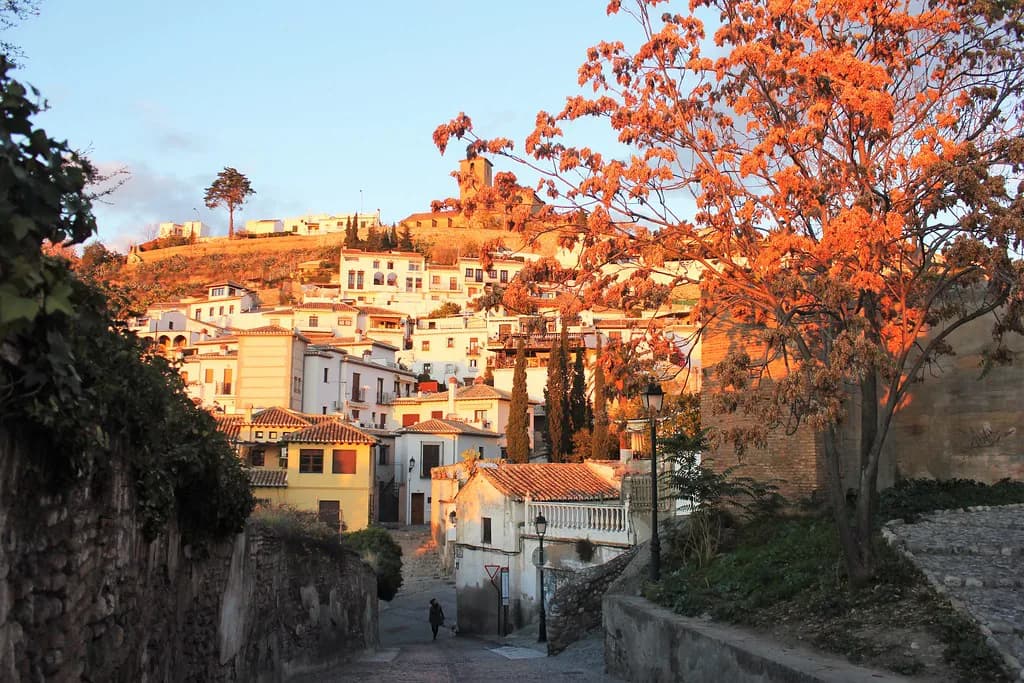
You will notice a massive difference between walking in the sun and standing in the narrow, shaded streets. The Albayzín district stays significantly cooler because its ancient stone walls block the warming sunlight. Always prepare for a 15-degree shift between your afternoon tapas and your evening walk back.
Wind chill is another factor that many travelers overlook when planning their daily outfits. The breeze coming off the snow can make a sunny day feel much colder than the forecast suggests. Wearing a windproof outer layer is often more important than carrying a heavy, insulated parka. This mountain microclimate requires constant adjustment as you move between the city's various elevations.
Here are the concrete February numbers to plan your suitcase around. The average daytime high sits around 13°C (55°F), but in direct midday sun it can climb to 17–18°C. Overnight and early-morning lows drop to roughly 2–3°C (36–37°F), and frost is common before sunrise. Expect about 7 rainy days across the month with roughly 40–45 mm of total rainfall, so a packable rain shell earns its place. Daylight runs from around 8:00 a.m. to 6:30 p.m. — about 10.5 hours — which means your sunset layer-up should start by late afternoon.
Before You Go Checklist
Planning your luggage requires focusing on the five core categories of travel essentials. Start with your most important travel documents before moving on to specific clothing items. Remember that what to wear in Granada depends on your planned activities.
Your clothing selection should prioritize natural fibers like merino wool for temperature regulation. Synthetic fabrics often trap sweat during the warm afternoons and then feel cold at night. Spanish homes are built to stay cool in summer, meaning they are often quite chilly in February.
Do not forget to include a universal travel power adapter in your electronics kit. Spain uses Type C and F plugs, which may differ from your home country's standard. Keeping your phone charged is vital for navigating the winding streets of the old town. A portable power bank is a lifesaver when taking hundreds of photos at the Alhambra.
- Passport and printed Alhambra tickets
- Universal travel power adapter and cables
- Merino wool base layers for warmth
- Lightweight down jacket or puffer vest
- Personal medications and basic first aid
- Small umbrella or light rain shell
- Refillable water bottle for mountain water
- High SPF sunscreen for mountain sun
Use this quick reference to match your layers to the time of day. February in Granada really does ask for a different outfit at breakfast, lunch, and dinner.
| Time / condition | Temp | What to wear |
|---|---|---|
| Early morning | 2–5°C | Merino base layer, fleece or sweater, packable down jacket, scarf, gloves |
| Midday in sun | 13–18°C | Base layer + long-sleeve top; carry the jacket — sunglasses and SPF on |
| Afternoon in shade / Albayzín | 8–11°C (feels colder) | Add the sweater back; keep a windproof shell within reach |
| Evening / tapas | 3–7°C | Full layers, scarf, light coat; locals stay smart-casual, not technical gear |
| Rainy day (~7 days/month) | 5–12°C | Waterproof shell over layers, grippy shoes, compact umbrella |
| Clear sunny day | up to 18°C in sun | Peel to a single layer in sun, but never leave without the evening jacket |

On the Day Checklist
When you head out for the day, your bag should be prepared for all four seasons. Storing your discarded layers in a lightweight daypack keeps your hands free for exploring. Check the Granada in January packing guide if you are arriving early in the month.
The walk up to the Alhambra is steep and will likely make you quite warm. However, the palace interiors and gardens can be drafty and cool even in the afternoon. Having a scarf handy allows you to adjust your temperature without changing your entire outfit. Locals usually wear stylish scarves that add a touch of flair to their practical winter gear.
If you are a solo traveler, keep your most valuable items in a secure inner pocket. Granada is generally safe, but crowded tourist spots always require a bit of extra caution. Ensure your daypack has a sturdy zipper that is not easily opened by others. Carry just enough cash for tapas and keep your main cards tucked away.
- Comfortable walking shoes with good grip
- Polarized sunglasses for bright afternoon glare
- Lightweight scarf for neck and face
- Small daypack for carrying extra layers
- Lip balm with sun protection factor
- Tissues for cold mountain air sniffles
- Fully charged portable phone battery bank
- Offline map of the Albayzín district
Best Footwear for Granada’s Hilly Terrain
Choosing the right shoes is the most critical decision for any trip to Granada. The city is famous for its 'empedrado' cobblestones, which are beautiful but incredibly slippery. Avoid any footwear with a heel, as the gaps between stones can easily twist an ankle.
Sneakers with excellent arch support are the gold standard for visiting the Alhambra. You will likely walk over 10,000 steps just exploring the palace grounds and the Generalife. If you prefer a more polished look, choose leather Chelsea boots with a rubber lug sole. These provide the necessary traction while still looking appropriate for a nice dinner.
Ensure your shoes are broken in well before you arrive in southern Spain. New shoes can cause blisters quickly on the steep inclines of the Sacromonte district.
Common Mistakes Checklist
Many travelers pack a heavy winter parka and find it useless during the sunny afternoons. A bulky coat is difficult to carry around when the temperature hits 18 degrees. It is much better to wear multiple thinner layers that you can easily pack away. This 'onion' strategy is the secret to staying comfortable in the Andalusian winter.
Another frequent error is forgetting to pack warm loungewear for the evenings indoors. Most apartments in Granada have tiled floors which stay very cold during the winter months. You will appreciate these after a long day of walking on cold outdoor stones.
Don't pack high heels or formal dress shoes that lack practical walking utility. Granada is a casual city where even nice restaurants welcome people in smart sneakers. Skip the heavy jewelry and expensive items that might draw unwanted attention in crowds. Focus on practical, high-quality basics that make you feel confident and comfortable.
- Skip the heavy full-length winter parka
- Leave the high heels at home
- Avoid packing only thin summer t-shirts
- Do not forget warm indoor socks
- Avoid carrying a heavy leather handbag
- Skip the flimsy flip-flop style sandals
- Leave behind any non-breathable plastic raincoats
- Do not bring bulky jewelry sets
Frequently Asked Questions
Is Granada cold in February?
Yes, Granada is quite cold in the early mornings and late nights, often reaching 0°C. However, sunny afternoons can feel warm at 18°C. You must pack layers to handle these extreme daily shifts.
What kind of shoes are best for visiting the Alhambra?
Comfortable sneakers or sturdy walking boots with rubber soles are essential. The terrain includes gravel paths and ancient cobblestones that are very uneven. Avoid heels or thin-soled shoes to prevent foot pain.
Do I need to dress modestly in Granada?
While Granada is modern, modesty is respected when entering the Cathedral or Royal Chapel. Covering your shoulders and knees is a good rule of thumb. Most other tourist sites have no strict dress code.
Mastering your wardrobe for Granada in February is all about flexibility and smart layering. By following the 'onion' strategy, you can transition seamlessly from cold mornings to warm afternoons. Focus on comfortable footwear and versatile pieces that work for both sightseeing and tapas. Your trip will be much more enjoyable when you aren't shivering in the shade.
Granada is one of the most magical cities in Spain during the winter months. The clear blue skies and snow-capped mountains provide a stunning backdrop for your adventures. Pack light, stay warm, and enjoy the incredible history of this Andalusian gem. Don't forget to grab a hot chocolate and churros if the mountain air gets too chilly.
Editorial correction — September 19, 2026: Removed unsupported personal-experience claims attributed to the former fictional byline. This edit does not constitute a full factual review of the guide.
Free: The Ultimate Packing Cheat Sheet
A carry-on capsule wardrobe, the complete packing checklist, layering made simple, and what to wear by season — one printable page you'll use on every trip.
You might also like


Continue reading
More guides you'll find useful