
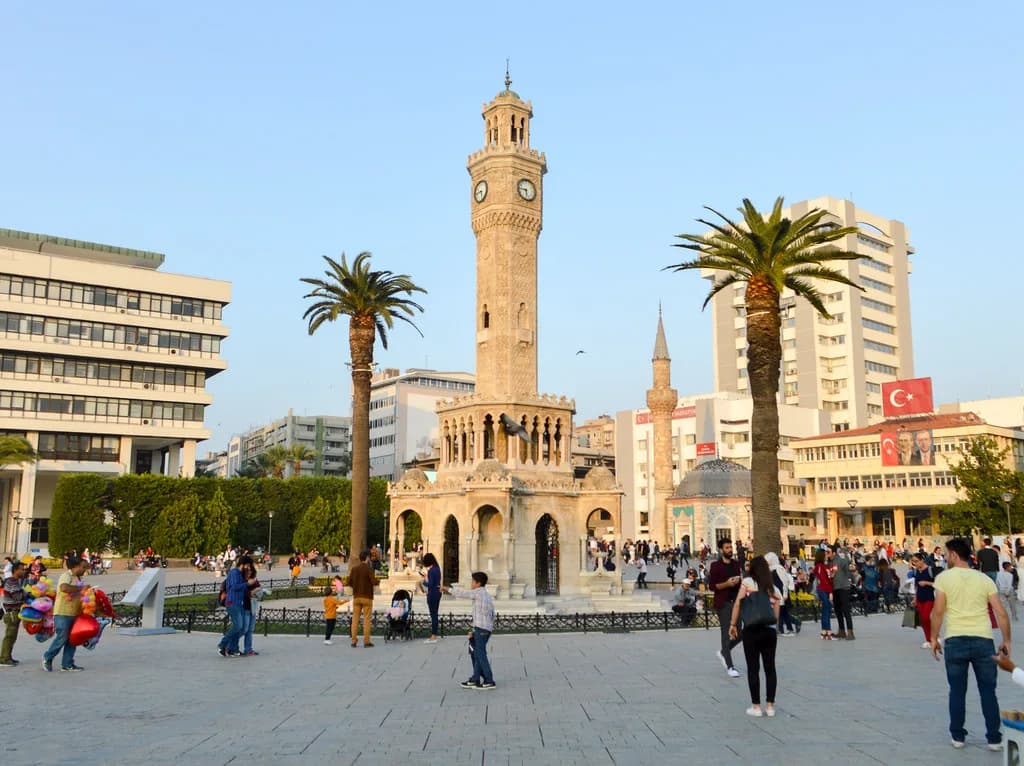
What to Wear in Izmir in August: Packing for Aegean Heat
Pack for Izmir in August with loose, light clothing for peak heat and strong sun, plus footwear for hot pavement, beach days, and breezy waterfront evenings.
On this page
Izmir in August: the weather in numbers
Typical August conditions from 30 years of daily weather data, split into early, mid and late month so you can match them to your travel dates.
| Dates | Early Aug (1–10) | Mid Aug (11–20) | Late Aug (21–31) |
|---|---|---|---|
| Afternoon high | 36°C (96°F) | 35°C (96°F) | 35°C (94°F) |
| Night-time low | 22°C (72°F) | 22°C (71°F) | 21°C (69°F) |
| Feels like (afternoon) | 35°C (95°F) | 35°C (94°F) | 34°C (93°F) |
| Range of afternoon highs | 33–39°C | 32–39°C | 31–38°C |
| Days with rain | Rare | Rare | Rare |
| Afternoon humidity | 30% | 29% | 30% |
| Average wind | 12 km/h | 12 km/h | 11 km/h |
| Daylight | 13.8 h | 13.5 h | 13.1 h |
What this means for your suitcase
- Hot afternoons: loose, breathable fabrics like linen or cotton, short sleeves and a sun hat.
- Evenings run about 14°C (25°F) cooler than afternoons — carry a layer for after sunset.
Travelling on specific dates? Use our What to Wear Planner for the weather, outfits and a packing list for your exact days in Izmir.
Averages for 1991-2020, modelled from Copernicus ERA5-Land and ERA5 reanalysis via Open-Meteo open data (CC BY 4.0), adjusted to Izmir's elevation. Modelled afternoon highs can read 1–2°C below airport weather-station records.
August in Izmir sits at the hottest, sunniest point of the Aegean year, so what you pack matters far more than how much. The practical aim is simple: clothing that lets air move, coverage that handles strong sun, and a small set of pieces that shift easily between the city, the coast, and an evening by the water. Izmir also throws three different days at you in one trip, from exposed promenades to beach clubs to waterfront restaurants, and your bag has to cover all three without doubling in size.
This is a packing guide rather than a sightseeing plan, built around decisions you make before you zip the case. Each section pairs a condition with a concrete choice, so you can cut the slow-drying, heat-trapping items that cause the most regret and keep what genuinely earns its space. If you want the broader seasonal version of these decisions, the Izmir packing list covers the year-round baseline.
What August Weather in Izmir Means for Your Suitcase
Izmir has a Mediterranean climate, and August is typically warm to hot, with strong, nearly constant sunshine through the month. Climate averages for 1991 to 2020 put the August mean at about 27.3 °C (roughly 81 °F), with average lows near 20.8 °C and average highs around 33.8 °C (about 69 °F to 93 °F). On the warmest days of the month, the temperature usually reaches around 38.5 °C, so treat these as historical tendencies and a planning baseline rather than a forecast for your specific dates.
Two features shape packing more than the headline heat. August rainfall is minimal, so a bulky rain shell is dead weight, and the sea stays warm enough for most people to swim comfortably. A lightweight, packable rain layer is reasonable insurance for the shoulder of the trip, but it should never be the heaviest thing in your bag.
Because the month is reliably hot, your suitcase should be built around a small number of breathable pieces you can rewear, not a large number of options. Anything you would not wear in strong sun on a hot day probably belongs at home. A quick look at what to wear in Izmir in November shows how sharply the packing logic flips once the season turns, which is a useful reminder of how summer-specific this kit should be.
Fabric and Fit Decisions That Change How You Feel
The single biggest comfort lever in Izmir in August is how air moves across your skin. Loose cuts in light colours keep sun off your shoulders and let breeze circulate, while clingy or heavy weaves trap heat and show sweat quickly. Look for tops and trousers with a bit of room at the shoulder and thigh rather than anything fitted through the torso. If you notice a favourite garment stays damp for hours after a wash, it will do the same against your skin in the heat, so leave it out of the case. Turnaround laundry on a hot trip matters, and anything that dries slowly will sit wet in your bag and smell by day three.
Daytime City Packing for the Promenade and Bazaar Lanes
A city day in Izmir usually mixes long, exposed waterfront walking with crowded, partly shaded bazaar lanes, so plan for both in the same outfit. Breathable trousers or a skirt plus a loose top handle the promenade and the covered passages equally well, and a light shirt layer adds shoulder coverage when you are out on open squares at midday. In August, the average day brings about 11.5 hours of sunshine, which means exposed stretches feel intense for a large part of the day.
The practical trick is to treat your outer layer as shade you carry rather than warmth you wear. A loose, light overshirt or long-sleeve tunic that folds flat is more useful in uncovered bazaar stretches than a sweater you will never wear before sunset. The trade-off is one extra item in your day bag for meaningful sun relief in the middle of the afternoon. The bazaar lanes are uneven and often crowded, so your outfit should also let you step over curbs and through tight passages without adjusting anything. Comfortable walking shoes matter more in those lanes than anywhere else on the trip.
Sun Protection as a Packing Category
With August sunshine filling most of the daylight hours, sun protection deserves its own line in the packing list rather than being an afterthought. A broad-brimmed hat and sunglasses are the two items that pull their weight every single day in Izmir, and a light, tightly woven layer beats sunscreen alone for long exposed walks. Choose sun protection you will actually keep wearing, because a hat that blows off in the wind or sunglasses that pinch will get left in the hotel room.
The right balance is coverage without a second wardrobe. A scarf or sarong earns its place by doubling for shoulders, neck, or ground seating, and it folds to almost nothing in your bag. A north wind, the Meltemi, can blow across the region in summer, so pack a hat with a snug fit or a chin cord rather than one with a wide, floppy brim that lifts every time you cross an open square.
Footwear Strategy for Hot Pavement, Historic Streets, and Sand
Izmir's surfaces demand more from your shoes than the temperature alone suggests. Midday pavement and the waterfront promenade radiate heat from below, historic lanes are uneven and occasionally slick, and beach or day-trip plans mean sand and wet ground. Cushioned soles with a bit of tread handle the first two well, while a pair of sandals or water shoes covers the third.
Keeping the count low is a genuine trade-off rather than a rule. Two pairs, one closed and one open, usually cover city walking and a beach day without your bag doubling in weight. If you have to choose, prioritise the closed pair you can walk in for hours, because blistered feet will end an Izmir day faster than heat will.
Beach and Coastal Day Trips: What Goes in the Day Bag
A coastal day trip such as Çeşme changes what you carry rather than what you wear, so build a small day bag around the beach itself. Swimwear worn under your clothes, a light cover-up, a hat, and a towel that packs small cover the essentials, with one light layer added for the return trip if you stay past sunset. Water shoes or sandals are a reasonable choice if you plan to walk on stony stretches, while a tote that keeps sand out of your clothing is worth more than an extra outfit.
Leave heavy items in the hotel: a second pair of street shoes, anything you would only wear in the city, and bulky layers you will not touch on the coast. Bring enough water and sun protection for the full day rather than assuming you can restock easily. That same logic of carrying less and replacing nothing applies across the Aegean coast in peak summer.
Evening by the Water: One Light Layer Is Enough
Evenings in Izmir stay warm, but waterfront dining and a breeze coming off the sea change what you want to carry. The shift is about comfort, not cold, so a light layer such as a linen shirt, thin cardigan, or a scarf over a summer dress is typically enough. The point is to have something to pull on when the breeze picks up at a table by the water, not to build a second outfit.
Because you are not changing the base outfit, your evening bag should be small and specific: the light layer, a little more coverage if you plan to walk the promenade afterwards, and nothing else. Choose one layer you can carry folded in a day bag rather than returning to the hotel to change. That way, the transition from a late-afternoon swim to waterfront dinner costs you nothing but a few seconds.
A Compact Five-Day Packing Example for August
For five days in Izmir in August, anchor quantities to laundry rather than to a fresh outfit every day. Three loose tops, two bottoms, one light overshirt or dress, one swimsuit, and a spare set of underwear cover the trip if you rinse and dry along the way. Add the hat, sunglasses, scarf, and a small day bag, and the count stays small enough to carry comfortably.
This is a starting point to adjust rather than a formula, since heat means you will likely change once a day. If your accommodation has no easy drying space, shift the balance toward one or two more tops and fewer bottoms. The useful test is whether everything in the case could plausibly be worn in a single hot day outdoors.
What to Leave Behind
Heavy denim, thick-soled boots, and multiple bulky layers are the clearest things to cut for August in Izmir. Denim traps heat and dries slowly, heavy boots are punishing on hot pavement, and extra layers will sit unused in the case. Anything that smells strongly of damp after washing will do the same on your body in the heat.
Also reconsider anything you are keeping only for a hypothetical cool evening. A single light layer is more flexible than two mid-weight ones because it packs flat and doubles as daytime sun coverage. If you are torn between two items, pack the one that works in more than one situation. Readers planning a different season can compare the trade-offs in what to wear in Izmir in April, where layers genuinely earn their space.
Before You Go: A Quick Weather Check Routine
Historical averages are not a forecast, so check the actual outlook in the days before departure and adjust the bag accordingly. If a heat spike is expected, add one extra light top you can rinse and rewear, and drop anything you were keeping only for a mild evening. If the forecast looks more moderate, you can safely leave the spare layer at home.
Finish the check by confirming your day bag can hold hat, sunglasses, water, and one light layer without becoming heavy. That combination is the core of an Izmir August day, and if it fits comfortably, your packing is done. Keep the rest of the case light so you have room for anything you genuinely need to pick up locally.
Plan Your Visit
Packing for Izmir in August comes down to a few repeatable decisions: loose, light clothing in pale colours, real sun coverage you will keep wearing, and footwear that handles hot pavement as well as sand. Add one light layer for the waterfront and a small day bag for coastal trips, and you have covered the whole range of an August day.
Before you fly, confirm the actual forecast for your dates and adjust quantities rather than adding whole categories of clothing. Verify anything you consider a firm requirement, such as airline baggage limits or venue rules, directly with the relevant operator. If you are travelling outside peak summer, use what to wear in Izmir in January as a cold-season contrast when deciding what to keep in the case.
More packing guides for Izmir
Frequently Asked Questions
What should I wear in Izmir in August during the day?
Light, loose clothing in pale colours works best for the heat and strong sun. Pair breathable trousers or a skirt with a loose top, add a wide-coverage hat and sunglasses, and carry a light overshirt for exposed walking. The goal is airflow with some coverage rather than tight or heavy fabrics.
Do I need a jacket for evenings in Izmir in August?
A full jacket is usually unnecessary, but a light layer is worth carrying for waterfront dining and promenade walks when the sea breeze picks up. Think linen shirt, thin cardigan, or a scarf rather than anything insulated. One light layer covers both the evening and daytime sun coverage.
What shoes should I pack for walking around Izmir in summer?
Cushioned, closed shoes you can walk in for hours handle hot pavement and the uneven historic lanes, while sandals cover beach days. Packing one closed pair and one open pair keeps the bag light. Prioritise the closed pair if you plan long city walks, because blistered feet end a hot day quickly.
How much sun protection do I need for Izmir in August?
August is very sunny, so treat sun protection as a packing category rather than an extra. A hat, sunglasses, and a light tightly woven layer handle the most exposed hours, and a scarf or sarong adds flexible coverage. Choose items you will actually keep wearing, including a hat that stays on in the wind.
What should I pack for a beach day trip from Izmir?
Swimwear worn under your clothes, a light cover-up, a hat, a small quick-drying towel, and sun protection cover most beach days. Add water shoes or sandals for stony stretches. Leave your street shoes and extra city clothing at the hotel rather than carrying them to the coast.
What should I leave out of my suitcase for Izmir in August?
Leave out heavy denim, thick-soled boots, and multiple bulky layers, since these trap heat or dry slowly. Also cut anything you are keeping only for a hypothetical cool evening. A single light layer is more useful and easier to pack than two mid-weight ones.
How many outfits do I need for a five-day trip to Izmir in August?
Three loose tops, two bottoms, one light layer, a swimsuit, and spare underwear are a reasonable starting point if you rinse items along the way. Adjust toward more tops and fewer bottoms if drying space is limited. The aim is a kit where every piece could plausibly be worn in one hot day outdoors.
Is it humid in Izmir in August and how does that affect clothing?
August humidity is typically moderate rather than extreme, and coastal breezes help, but warm days can still feel sticky. That makes loose, light, quick-drying clothing more comfortable than anything close-fitting. If you notice a garment stays damp for hours, it will do the same against your skin, so leave it out.
Sources
Free: The Ultimate Packing Cheat Sheet
A carry-on capsule wardrobe, the complete packing checklist, layering made simple, and what to wear by season — one printable page you'll use on every trip.
You might also like


Continue reading
More guides you'll find useful


