Izmir Packing List: What to Wear for the Aegean Coast
Plan an Izmir packing list around warm dry summers and mild, rainy winters. Fabric, footwear, and layer advice for city walks, ferries, and ruins.
On this page
Izmir weather month by month
Typical conditions from 30 years of daily weather data — use it to see how much to pack for the month you are travelling.
| Month | High / low | Days with rain | Afternoon humidity | Daylight |
|---|---|---|---|---|
| January | 11° / 3°C (52° / 37°F) | 3 in 10 days | 58% | 9.6 h |
| February | 13° / 3°C (55° / 38°F) | 4 in 10 days | 54% | 10.6 h |
| March | 16° / 5°C (60° / 42°F) | 3 in 10 days | 50% | 11.7 h |
| April | 20° / 9°C (68° / 48°F) | 3 in 10 days | 47% | 13 h |
| May | 26° / 14°C (78° / 57°F) | 2 in 10 days | 42% | 14.1 h |
| June | 31° / 19°C (89° / 65°F) | 1 in 10 days | 35% | 14.7 h |
| July | 35° / 21°C (95° / 70°F) | Rare | 28% | 14.4 h |
| August | 35° / 22°C (96° / 71°F) | Rare | 30% | 13.5 h |
| September | 30° / 18°C (86° / 64°F) | 1 in 10 days | 37% | 12.2 h |
| October | 24° / 13°C (75° / 56°F) | 2 in 10 days | 47% | 11 h |
| November | 17° / 8°C (63° / 47°F) | 3 in 10 days | 55% | 9.9 h |
| December | 12° / 5°C (54° / 40°F) | 4 in 10 days | 60% | 9.3 h |
Travelling on specific dates? Use our What to Wear Planner for the weather, outfits and a packing list for your exact days in Izmir.
Averages for 1991-2020, modelled from Copernicus ERA5-Land and ERA5 reanalysis via Open-Meteo open data (CC BY 4.0), adjusted to Izmir's elevation. Modelled afternoon highs can read 1–2°C below airport weather-station records.
Izmir sits on the Aegean coast of Turkey, where the climate is Mediterranean: summers are hot and sunny, winters are mild but rainy, and spring and autumn are the most comfortable seasons for walking. Because the city is large and you will likely mix sightseeing with ferries, bazaars, and day trips, one fixed checklist rarely fits every trip. The better approach is to build a small core wardrobe and adjust layers, footwear, and accessories by season.
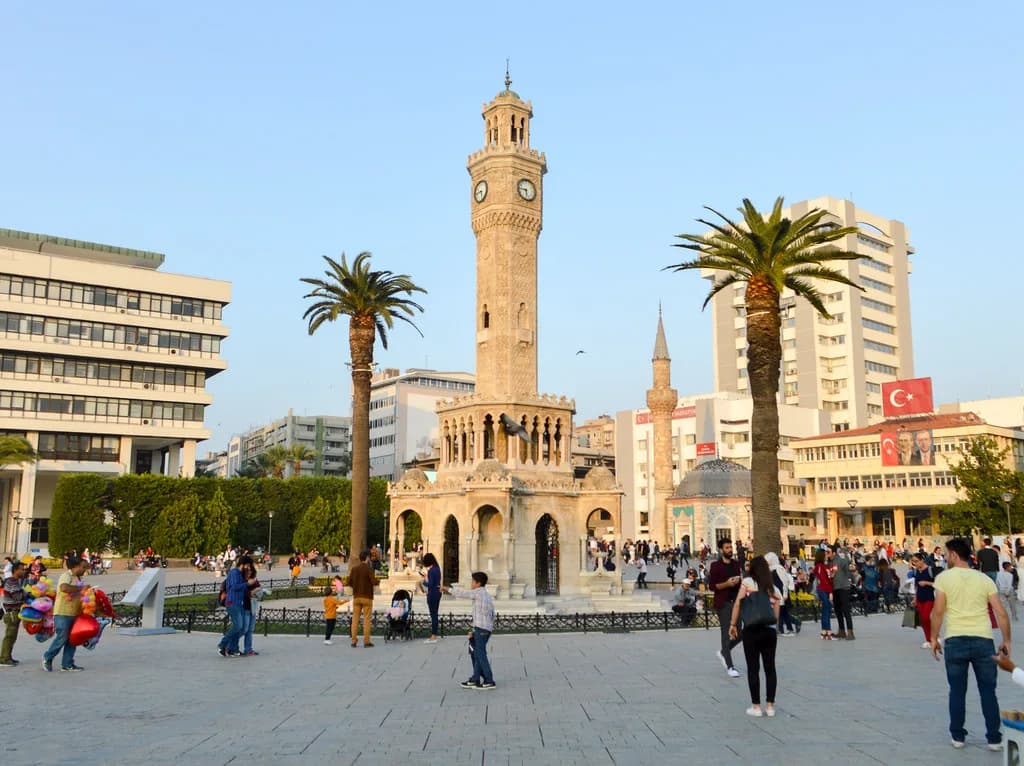
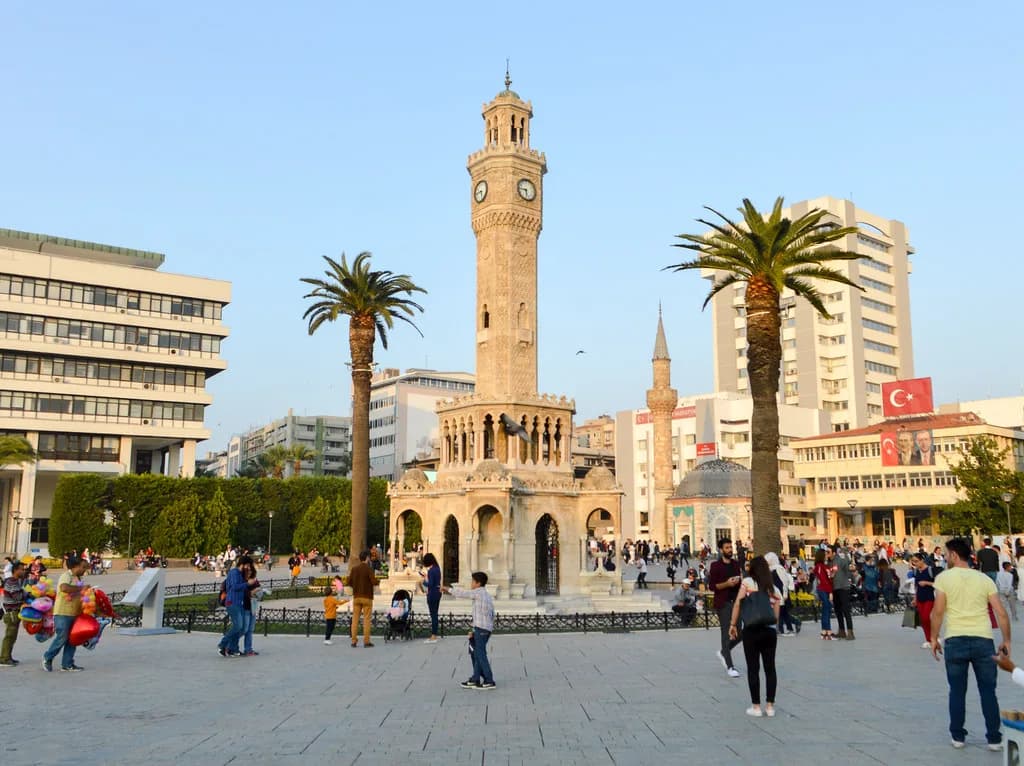
Izmir's waterfront Kordon, the Kemeraltı bazaar, Konak Square, and the Agora open-air museum all involve different surfaces and levels of sun exposure, so your packing choices should reflect how you plan to spend each day. A single pair of comfortable walking shoes and a light layer that handles sea breeze will carry you through more situations than a heavy, specialized kit. Save room for a rain shell in the wetter months and a hat in summer.
Why Izmir packing is a seasonal layering problem
The biggest mistake with an Izmir packing list is treating it as one static set of clothes. Historical climate data for Izmir shows a clear split between hot, dry summers and mild, rainier winters, so the same wardrobe will not serve both. Build around a base layer, a mid-layer, and an outer shell, then swap weights as the season changes.
Spring and autumn are the sweet spots for exploring on foot, with milder temperatures and a mix of sun and occasional showers. Summer afternoons can be intense enough that you will want shade, water, and breathable fabric rather than heavy coverage. Winter days are often mild but wet, so a compact rain layer does more work than a bulky coat.
How Izmir's Mediterranean Aegean climate shapes what you pack
Izmir has a Mediterranean climate with hot, sunny summers and relatively mild, rainy winters. Average July temperatures historically sit around 27°C (about 81°F), with highs commonly reaching the low-to-mid 30s Celsius (low 90s Fahrenheit), while January averages around 8°C (about 46°F). These are long-term tendencies, not a forecast, so treat them as a starting point and check current conditions before you fly.
Rain in Izmir concentrates in the cooler months, with November and December historically the wettest. That means a packable rain jacket or umbrella earns its place from late autumn through early spring, while summer travelers can usually leave heavy rain gear at home. A light windproof layer is still useful year-round because sea breezes and the north wind can make waterfront evenings feel cooler than the daytime high suggests.
Sea temperatures stay cool enough that swimming is mainly a mid-summer activity, so swimwear is optional unless your trip includes a beach day in Çeşme or a coastal stop. If you do plan to swim, pack a quick-dry towel and a light cover-up rather than bulky beach gear. Otherwise, prioritize walking comfort and sun protection.
Summer packing: breathable fabrics and sun protection for June to mid-September
Summer in Izmir is hot and dry, with bright days and little rain. Pack lightweight, loose clothing in cotton, linen, or technical quick-dry fabrics that let air move and dry fast after a sweaty walk. Light colors reflect heat better than dark ones, and a breathable long-sleeve shirt can be more comfortable than a tank top when the sun is strong.
Sun protection is the single most important summer accessory: a wide-brimmed hat, sunglasses, and high-SPF sunscreen you can reapply during long walks along the Kordon or through open archaeological sites. A lightweight scarf or sarong doubles as shoulder cover and shade. If you plan to visit the Agora open-air museum in the middle of the day, a hat, water bottle, and breathable shoes matter more than any fashion choice.
For a summer day, a typical outfit might be a linen shirt or breathable tee, light trousers or a skirt, and comfortable sandals or walking shoes. Keep a thin cardigan or overshirt in your bag for air-conditioned ferries, buses, and cafes. Pack two or three tops per week and plan to rinse and dry them overnight.
Winter packing: rain layers and warmth for December to mid-March
Winter in Izmir is mild compared with inland Turkey, but it is also the rainiest stretch of the year. Historical data shows January averaging around 8°C (about 46°F), with rain on a meaningful number of days, so a waterproof outer layer and shoes that handle wet pavement are worth the space. Cold snaps can still bring chilly nights, so pack a warm mid-layer rather than relying on a single heavy coat.
A practical winter kit includes a water-resistant jacket with a hood, a compact umbrella, sweaters or fleece, long trousers, and closed shoes with grip for slick surfaces. A scarf and light gloves help on windy waterfront evenings without adding much weight. Because interiors may be cooler than you expect, layering works better than one thick garment.
Spring packing: unstable March weather giving way to mild, sunnier days
Spring in Izmir starts a little unsettled in March, then gradually becomes sunnier and drier through April and May. Layers are essential because mornings and evenings can be cool while afternoons warm up quickly. A light jacket or cardigan plus a compact rain shell covers most spring days without taking much space.
For April travel, pack breathable long-sleeve tops, light trousers or jeans, and comfortable walking shoes that handle both pavement and uneven ground at sites like the Agora. A scarf is useful for breezy ferry crossings and variable indoor temperatures. Keep a small daypack so you can shed layers as the day warms.
Autumn packing: warm early weeks shifting into wetter conditions
Autumn in Izmir is often warm and sunny at the start, then turns wetter and cooler as November approaches. Early autumn still calls for summer-weight clothing and sun protection, but you should add a light rain layer and a warmer top for evenings. By November, the balance shifts toward long sleeves, a waterproof jacket, and closed shoes.
A versatile autumn outfit pairs a breathable tee with a light sweater and a packable rain jacket, plus trousers that dry quickly. This combination handles warm afternoons, cooler evenings, and sudden showers without a separate wardrobe. If your trip spans late October into November, plan for both sunscreen and an umbrella.
Footwear for mixed terrain: city pavement, bazaar alleys, waterfront promenade, and archaeological ruins
Izmir rewards walkers, but the surfaces vary more than many travelers expect. The Kordon promenade and Alsancak are smooth and flat, while Kemeraltı bazaar alleys are uneven, crowded, and sometimes slick, and archaeological sites such as the Agora or day-trip ruins like Ephesus involve stone, gravel, and steps. One pair of supportive walking shoes or sturdy trainers covers most of this; leave the smooth-soled sandals for short, flat errands.
If you travel in summer, bring breathable walking shoes plus a pair of sandals for the waterfront and cafes. In wetter months, choose shoes with grip and water resistance over canvas, which stays damp. Consider adding blister plasters and moisture-wicking socks, since foot comfort matters more than shoe style when you are logging long walking days.
What to wear for a day in Kemeraltı bazaar and Konak Square
Kemeraltı bazaar is a sprawling, busy market with narrow alleys, and Konak Square nearby is open and exposed. Dress for walking and temperature shifts: breathable clothing, secure shoes, and a crossbody bag you can keep in front of you in crowds. A light scarf is handy for dust, sun, and cooler interiors.
This is an editorial suggestion, not a dress code; Izmir is a modern, secular city and you will see a wide range of clothing. If you plan to enter a mosque or a religious site, carrying a scarf and wearing trousers or a longer skirt is a practical courtesy. Otherwise, prioritize comfort and easy movement.
What to wear for the Kordon waterfront and an evening in Alsancak or Karşıyaka
The Kordon promenade is breezy, especially in the evening, and Alsancak and Karşıyaka have a relaxed cafe culture. A light layer over your daytime outfit handles the sea breeze without weighing you down. Smart-casual is a safe default for dinner: clean, comfortable clothing rather than anything formal.
Bring a compact bag for a phone, a light jacket, and a scarf, and choose shoes you can walk in if you plan to stroll the waterfront before or after dinner. If you are visiting in summer, the breeze can make evenings surprisingly pleasant, so a thin overshirt is more useful than a heavy coat. In winter, add a windproof layer and closed shoes.
Ferry and public transport days: what to keep accessible
Izmir's ferries and public transport are part of everyday city life, and you will want a small bag with your essentials within reach. Keep a transit card or payment method, a water bottle, sunscreen, and a light layer accessible rather than buried in a large backpack. A crossbody or small daypack is easier to manage in crowds and on crowded vehicles.
For ferry crossings, a windproof layer is useful because deck areas can be breezy even on warm days. Pack valuables in a zipped inner pocket and avoid dangling bags or open totes. If you carry a larger camera or electronics, a lightly padded insert or case protects them during busy boarding.
Day trips to archaeological sites: what to add to your bag
Day trips from Izmir to sites such as Ephesus or Pergamum often mean more sun exposure, uneven ground, and limited shade than a city day. Add a hat, high-SPF sunscreen, a refillable water bottle, and shoes with grip. A small daypack with these items plus a light rain shell covers most conditions.
If your day trip involves a long bus or minibus ride, pack a lightweight scarf or wrap for temperature changes and a snack for the journey. Bring a portable charger if you rely on your phone for maps or tickets. Check the specific site's visitor information for any current rules rather than assuming a dress code.
A compact packing example for a short trip and for a longer stay
For a short trip of three to four days in mild weather, pack two pairs of trousers or jeans, three tops, one mid-layer, one light rain shell, one pair of walking shoes, one pair of sandals, and sleepwear plus underwear for the duration. Add a hat, sunglasses, sunscreen, and a small daypack. This fits in a carry-on and leaves room for purchases from the bazaar.
For a longer stay of one to two weeks, aim for roughly a week's worth of clothing and plan to do laundry. Pack two pairs of shoes for rotation, a slightly wider range of layers, and a dedicated rain layer in wetter months. In summer, add an extra breathable top and a swimsuit if you plan beach time; in winter, add a warm sweater and water-resistant footwear.
What to leave behind
Izmir is a large city with plenty of shops, so you can buy many everyday items locally if you forget something. Leave behind heavy formal wear, multiple pairs of specialized shoes, and bulky beach gear unless your trip is centered on a resort. Also skip thick denim in midsummer, which is heavy and slow to dry.
Avoid overpacking electronics and chargers; a single universal charging setup is usually enough. If you are unsure about an item, ask whether it serves more than one purpose. A scarf, for example, works as sun cover, a light layer, and a bit of warmth on a ferry deck.
Before you go: checking the forecast and adjusting the list
Historical averages are a planning tool, not a guarantee. A few days before departure, check a reliable weather forecast for Izmir and adjust your layers, rain gear, and footwear accordingly. If a cool spell or early rain is predicted, add a warmer mid-layer and water-resistant shoes; if a heat wave is forecast, prioritize breathable fabrics and extra sun protection.
Check whether your trip includes specific activities, such as a ferry crossing, a hiking day, or a formal dinner, and pack one item for each. Confirm any site-specific requirements through the official source rather than relying on general advice. This keeps your bag light while covering the conditions you are actually likely to meet.
Global travel essentials that work year-round in Izmir
Some items earn their place in every season: a refillable water bottle, a small daypack, a basic first-aid kit with blister care, and a universal travel adapter for your own devices. A compact umbrella or packable rain shell is worth carrying from autumn through spring, and a hat and sunscreen are worth carrying from late spring through early autumn.
If you are comparing Turkish destinations, the same layering principles apply elsewhere. For a warmer, more beach-focused trip, the Antalya packing list leans toward swimwear and lighter layers, while the Göreme packing list for Cappadocia emphasizes warmer layers and sturdy shoes for cave terrain and cooler nights.
Plan Your Visit
An Izmir packing list should flex with the season rather than lock you into one set of clothes. Build a breathable core, add layers for wind and rain, and choose footwear that handles both smooth promenades and uneven ruins. If you are visiting in a specific month, check that month's guidance and adjust before you go.
Before departure, review the forecast, confirm any site-specific rules through official sources, and pack only what supports your actual plans. A light, versatile bag leaves room for the things you discover along the way, from bazaar finds to extra layers for a breezy ferry ride. With the right layers and shoes, Izmir is comfortable to explore in almost any season.
More packing guides for Turkey
- What Shoes to Wear in Izmir: A Season-by-Season Guide
- What to Pack for a Day Trip to Ephesus from Izmir
- What to Pack for Izmir Thermal Spas and Hamams
- What to Wear in Izmir in April: Spring Layers and Rain Gear
- What to Wear in Izmir in August: Packing for Aegean Heat
- What to Wear in Izmir in January: Rain-Ready Packing Guide
- What to Wear in Izmir in November: Layering & Rain Tips
- Bodrum Packing List: Clothes for Heat, Wind, and Boat Days
Frequently Asked Questions
What should I pack for Izmir?
Pack a breathable core wardrobe, a light mid-layer, and a rain shell if you are travelling in the cooler months. Add comfortable walking shoes, a hat, sunglasses, and sunscreen for sunny days. Adjust quantities by trip length and plan to do laundry on longer stays.
What is the weather like in Izmir by season?
Izmir has a Mediterranean climate with hot, dry summers and mild, rainy winters. Spring and autumn are generally the most comfortable seasons for walking and sightseeing. Check a current forecast before departure, because day-to-day conditions can differ from long-term averages.
What shoes should I wear in Izmir?
Supportive walking shoes or sturdy trainers are best for mixed surfaces such as bazaar alleys, promenades, and archaeological sites. Bring sandals for warm weather and waterfront evenings, and choose water-resistant shoes with grip in the wetter months. Comfort and traction matter more than style.
What should I wear in Izmir in summer?
Choose lightweight, loose clothing in cotton, linen, or quick-dry fabrics, and add a hat and sunscreen for long days outdoors. Keep a thin layer for air-conditioned spaces and breezy evenings. Light colours and breathable fabrics help with the heat.
What should I pack for Izmir in winter?
Pack a water-resistant jacket, warm mid-layers, long trousers, and closed shoes that handle wet pavement. A scarf and light gloves are useful on windy waterfront evenings. Layering works better than one heavy coat because winter days can be mild.
Do I need rain gear for Izmir?
A compact rain shell or umbrella is worth packing from autumn through spring, when rain is more frequent. Summer is generally dry, so heavy rain gear is usually unnecessary then. Check the forecast before you travel and adjust accordingly.
What should I wear to the Kemeraltı bazaar?
Wear breathable clothing and secure, comfortable shoes for the uneven, crowded alleys, and carry a crossbody bag you can keep in front of you. A light scarf is handy for sun and dust. Izmir is a modern city, so there is no mandatory dress code for the bazaar.
What should I pack for a day trip to Ephesus from Izmir?
Add a hat, sunscreen, a refillable water bottle, and shoes with grip for uneven ground. A small daypack with a light rain shell and a snack covers most conditions. Check the site's official visitor information for any current rules before you go.
Sources
Free: The Ultimate Packing Cheat Sheet
A carry-on capsule wardrobe, the complete packing checklist, layering made simple, and what to wear by season — one printable page you'll use on every trip.
You might also like


Continue reading
More guides you'll find useful