Göreme Packing List: What to Pack for Cappadocia
Pack for Göreme's high-plateau temperature swings with layers, grippy footwear for tuff gravel, dust and sun cover, a mosque scarf, and a cave-hotel kit.
On this page
Goreme weather month by month
Typical conditions from 30 years of daily weather data — use it to see how much to pack for the month you are travelling.
| Month | High / low | Days with rain | Days with snow | Afternoon humidity | Daylight |
|---|---|---|---|---|---|
| January | 5° / -5°C (40° / 22°F) | 3 in 10 days | 2 in 10 days | 51% | 9.6 h |
| February | 7° / -5°C (44° / 23°F) | 3 in 10 days | 2 in 10 days | 47% | 10.5 h |
| March | 12° / -1°C (53° / 30°F) | 3 in 10 days | 1 in 10 days | 42% | 11.7 h |
| April | 17° / 4°C (63° / 38°F) | 4 in 10 days | Rare | 38% | 13 h |
| May | 22° / 9°C (72° / 47°F) | 3 in 10 days | Rare | 37% | 14.1 h |
| June | 27° / 13°C (80° / 55°F) | 2 in 10 days | Rare | 32% | 14.7 h |
| July | 31° / 15°C (87° / 59°F) | Rare | Rare | 25% | 14.4 h |
| August | 31° / 15°C (87° / 60°F) | Rare | Rare | 25% | 13.5 h |
| September | 26° / 12°C (80° / 53°F) | 1 in 10 days | Rare | 27% | 12.2 h |
| October | 20° / 6°C (68° / 43°F) | 2 in 10 days | Rare | 35% | 11 h |
| November | 12° / 0°C (54° / 32°F) | 2 in 10 days | 1 in 10 days | 43% | 9.9 h |
| December | 7° / -4°C (44° / 26°F) | 3 in 10 days | 1 in 10 days | 51% | 9.3 h |
Travelling on specific dates? Use our What to Wear Planner for the weather, outfits and a packing list for your exact days in Goreme.
Averages for 1991-2020, modelled from Copernicus ERA5-Land and ERA5 reanalysis via Open-Meteo open data (CC BY 4.0), adjusted to Goreme's elevation. Modelled afternoon highs can read 1–2°C below airport weather-station records.
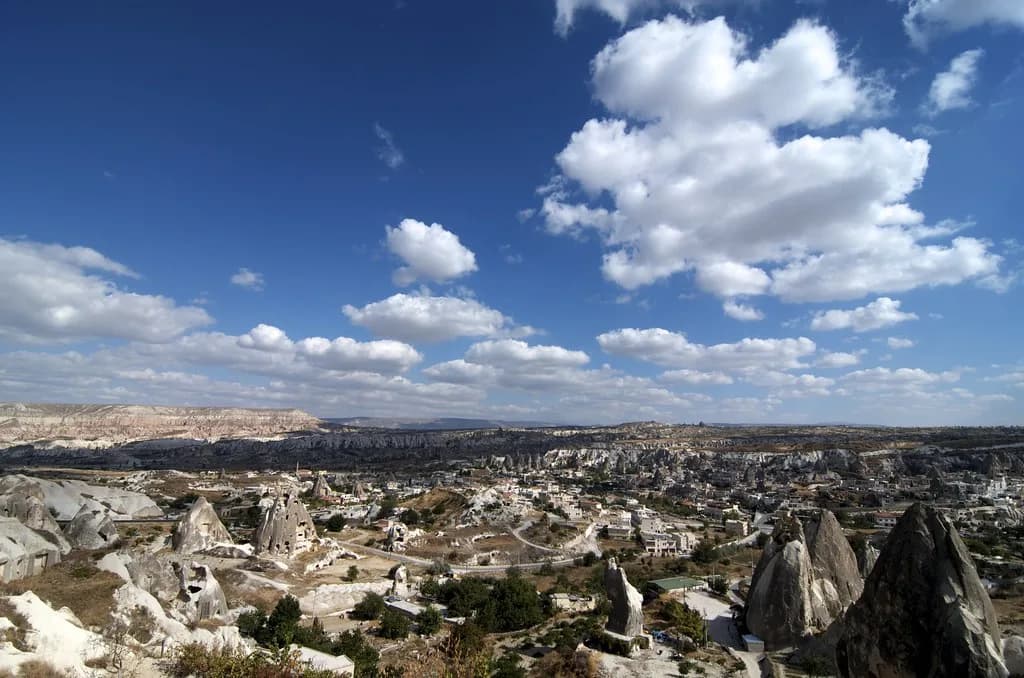
Göreme sits on the Anatolian plateau in central Turkey, and that elevation is the single most useful fact for packing. Days can feel warm and dry while pre-dawn hours on a balloon launch field feel genuinely cold, so a single heavy coat is usually the wrong answer and a stack of thin layers is usually right. Cappadocia's high plateau produces hot, dry summers and cold winters, with shoulder seasons that change quickly within a single day. For month-specific layer weights, see the spring packing list for Göreme.
The terrain adds its own requirements. Valley routes around Rose Valley, Love Valley, Pigeon Valley, and the wider Göreme National Park run over loose tuff gravel, sandy descents, smooth-worn rock, and cobblestones in town, so tread matters more than style or brand. The same dust that coats your shoes will settle on camera gear, dark bags, and any pale clothing you bring. If you are travelling in the height of summer, the summer packing list sets out how to handle hot valley days without carrying a heavy bag.
This guide treats packing as a set of decisions rather than a checklist: which layers earn space, which footwear handles both valleys and cobbles, what a cave hotel actually provides, and what you can safely leave at home. Recommendations here are editorial suggestions you can adjust to your own comfort, not rules about what everyone wears.
Why Göreme Packing Is Different
Three features of Göreme drive almost every packing decision. First, the high plateau produces large day-to-night temperature swings, so the warmest hour and the coldest hour of the same day may need completely different clothing. Second, the landscape is made of soft volcanic tuff that crumbles into fine dust and forms loose gravel on trails. Third, many visitors pair valley walking with a cave-hotel stay, where rooms can feel cool and damp compared with the dry air outside.
A typical busy day shows why layering wins. You might stand outside before sunrise waiting for a balloon launch, walk a valley mid-morning in full sun, rest during the hottest hours, then eat dinner outdoors after the temperature has fallen again. Packing for the coldest and warmest moments separately, rather than averaging them, prevents both shivering and overheating.
Cave hotels deserve their own mention because they change what you need overnight. Carved rooms can be cooler and more humid than above-ground hotel rooms, natural light is often limited, floors and stairs may be uneven, and drying space can be scarce. That combination favours quick-drying clothing, a small headlamp or phone light, and slippers or easily removable shoes for indoor use.
How to Read Cappadocia Climate Before You Pack
Treat every seasonal description here as a historical tendency, not a forecast. Cappadocia has a continental, high-plateau climate: hot dry summers, cold winters with snow possible, and shoulder seasons that can swing dramatically from one day to the next. Published seasonal packing guidance for the region describes exactly this pattern of hot, dry summers and cold, changeable shoulder seasons, which is why a layering system outperforms a single heavy garment.
The pre-dawn hours are consistently the coldest part of any day, and that matters most if you have booked a balloon flight, since launch windows fall in the dark before sunrise and flights can start as early as 4:30 in the morning. A summer afternoon forecast tells you almost nothing about how the launch field will feel, which is why travellers who packed only for the daytime high often end up layering every shirt they brought. Check a short-range forecast in the days before departure and again after arrival, rather than relying on memory of last season.
The same logic applies to wind and rain. Even in months that are historically dry, a passing front can bring wind and showers that make an exposed valley uncomfortable, so a light shell earns its place in every season. Because conditions shift, build the bag around adaptable pieces and confirm current weather through a reliable forecasting service shortly before you travel.
Core Layering System for the Plateau
Build the system in four parts and swap the weights by season. A thin base layer next to the skin manages sweat, an insulating mid layer such as a fleece or light down piece traps warmth, an outer shell blocks wind and light rain, and accessories handle the extremities. The point is that each piece works alone or in combination, so one bag covers a cold morning and a warm afternoon.
For most of the year a short-sleeve and a long-sleeve base layer, one fleece, and one packable insulated jacket cover the range, with the shell added for wind or rain. In the coldest months, add a thermal base layer and a warmer insulated jacket instead of a second fleece, because two thin mid layers take more space and dry more slowly than one warm one. Loose, breathable fabrics handle both dry heat and dry cold better than heavy cotton, which stays damp and takes longer to dry.
Accessories do more work here than in most destinations. A buff or light scarf doubles as dust protection on windy trails, a neck warmer on cold mornings, and shoulder coverage at a mosque. A warm hat and thin gloves weigh almost nothing and turn a merely adequate balloon morning into a comfortable one, even outside winter.
Footwear for Loose Gravel and Cobblestones
Footwear is the decision most likely to affect how much you enjoy Göreme. Valley trails mix loose gravel, sandy inclines, uneven rock, and occasional mud after rain, while town streets are cobbled and often sloped. What matters is a sole with real tread and a snug fit, not a particular brand or price bracket.
Trail running shoes or lightweight hiking shoes usually beat both extremes: they grip better than flat-soled fashion sneakers, weigh less than full leather boots, and still look acceptable in a restaurant. If you plan long valley routes or the stone steps and riverside trail at Ihlara, a sturdier shoe with more ankle support becomes worthwhile. Sandals work for evenings in town and around the hotel but are a poor choice for gravel descents.
Break in any new shoes at home before the trip, because a blister on day one limits the rest of the itinerary. In icy winter conditions, general traction advice applies: choose boots with a deep tread and consider removable traction aids for icy steps, checking the day's conditions before committing to a trail. Bring a spare pair of insoles or a second everyday shoe so a wet hiking pair can dry while you still have something to wear.
Dust, Sun, and Altitude Protection
The tuff that makes the valleys dramatic also crumbles into a fine dust that coats shoes, bags, and camera gear. A buff or light scarf over the nose and mouth helps on windy trails and dusty roads, and a sealable bag or simple cover keeps a camera or phone usable. Choose dark or mid-tone clothing for hiking days, since pale fabrics show the reddish dust quickly and are harder to rinse clean.
Sun exposure is higher than the temperature suggests because of the altitude and dry air, and it remains strong outside the summer months. Pack sunglasses with UV protection, a wide-brimmed hat, high-factor sunscreen, and an SPF lip balm, then reapply sunscreen during long outdoor days rather than relying on a single morning application. Dry air chaps lips and skin, so a small moisturiser earns its place in the toiletry bag.
Cave-Hotel Packing: What You Actually Need Overnight
Cave rooms are the reason a few small items matter more here than in a standard hotel. Rooms can feel cool and damp, natural light may be limited, and floors and stairways are often uneven stone. A compact headlamp or a phone with a charged battery makes moving around in dim spaces easier, and slippers or slip-on shoes are practical for indoor use after dusty days outdoors.
Space and drying are the real constraints. Many cave hotels have limited hanging room and no guaranteed drying facilities, so quick-drying fabrics beat heavy cotton and denim, which can stay damp for days. Rather than packing for the full length of the trip, plan a hand-wash and air-dry rotation, and treat any laundry service as something to confirm with your specific property rather than assume.
Anything the hotel provides varies by property, so verify directly before departure. Ask your hotel whether it supplies a hairdryer, a kettle, slippers, and towels, and whether rooms have effective heating or cooling, since these details differ between cave properties even in the same village. That one email can remove several items from your bag and free space for layers.
Modest Cover-Ups for Mosques and Conservative Areas
In Cappadocia, everyday clothing is generally relaxed and aimed at tourists, so this is not a destination with an enforced dress code in the streets. The practical reason to carry cover-ups is specific sites: at mosques and other religious sites, respectful practice is to cover shoulders, knees, and hair for women, and shoulders and knees for men, and everyone removes shoes before entering. Think of a light scarf and a long-sleeve layer as standard daypack items rather than special-occasion clothing.
Rules can differ between individual sites, and some larger mosques lend coverings at the entrance while smaller ones may not. Since policies vary and can change, check the requirements published for the specific mosque or site you plan to visit rather than relying on a general rule. Carrying your own scarf is simply more convenient than managing a borrowed one, especially in a group.
Outside the main tourist areas, including nearby conservative towns, a little more coverage tends to feel more comfortable. Loose trousers or a long skirt, a shirt that covers the shoulders, and a scarf in your bag cover most situations without requiring a separate wardrobe. This is an editorial suggestion about comfort and respect, not a claim about legal obligations.
Balloon-Morning Kit for Pre-Dawn Cold
Balloon flights launch before sunrise, so you will be standing outdoors in the coldest hours of the day, often in an open field with wind. The reliable approach is to dress for winter regardless of the month and then shed layers once the sun is up. Travellers who checked only the afternoon high have ended up shivering in summer, which is why the warm layer belongs in the bag even in the hottest season.
A practical balloon-morning set is a thermal or warm base layer, a fleece or insulated jacket, a windproof shell, a hat, thin gloves, warm socks, and closed shoes with grip for a possibly uneven launch field. Hand warmers are a small, light addition that many people appreciate at altitude. Fresh from a warm bed, it is easy to underdress; lay the kit out the night before so the decision is already made.
Flights depend on wind and visibility and can be cancelled, so treat the morning as weather-dependent rather than guaranteed and keep the warm layer packed even if your flight is postponed. Operators usually explain their own rebooking or refund practice, and your hotel or pilot is the right source for that. Do not assume a specific policy; confirm it with the company you booked.
Valley Hiking Daypack
A small daypack of roughly twenty to twenty-five litres covers a valley walk, a balloon morning, and a town day. Water capacity matters more than gadgetry: carry at least two litres for a summer hike, and remember that refill points in the valleys are limited, so start full. A reusable bottle also reduces waste, and many hotels and restaurants will refill it.
Add a simple blister kit with plasters and antiseptic wipes, a few high-energy snacks, a power bank for the phone, and sun protection. Download offline maps before you set out, because mobile signal is patchy in the valleys and reliable navigation reduces the temptation to take unmarked shortcuts. A light rain shell tucked in the pack handles the passing shower that a dry-season tendency does not rule out.
Keep the load small enough that you can walk three to four hours comfortably, and leave valuables at the hotel. Expensive jewellery and heavy camera kits are the two most common regrets on dusty trails. If you carry a larger camera, a padded insert and a lens cloth protect it from the fine tuff dust.
Optional Photography and Gear Items
A wide-angle lens is the most useful single addition for balloon-filled skies and sweeping valley views, with a mid-range zoom covering most other situations. A small travel tripod helps for sunrise and dusk shots, but it competes for space and weight, so bring one only if you genuinely plan low-light photography. Most travellers do fine with a phone plus one versatile lens.
Dust protection matters as much as optics here. A lens cloth, a blower brush, and a sealable bag keep fine tuff powder out of a camera body during valley walks or dusty road travel. If you plan to fly a drone, check the current rules for Göreme National Park and the specific valleys before you travel, since restrictions apply in protected areas and permissions vary; a tourism office or your operator is a better source than a forum post.
A Four-to-Five-Day Packing Rotation
For a four- to five-day trip, pack about three base layers, two mid layers of different weights, one shell, two pairs of trousers or one pair plus a skirt, and enough underwear and socks for the whole stay. That quantity covers the temperature range without filling a large suitcase, and it leaves room for anything you buy in Göreme. If you are staying longer, repeat the rotation with hand-washing rather than adding more clothing.
The rotation works because quick-drying fabrics can be rinsed in a sink and hung overnight; heavy cotton and denim usually cannot. Wash items in the evening and hang them where air moves, then use the daytime to dry them further. Packing a small amount of travel detergent and a couple of lightweight hangers makes this routine easier in a cave room with limited hooks.
Shoes are the exception to light packing: bring one walking pair and one lighter pair for evenings or indoor use, and wear the heavier pair in transit. Two pairs also lets a wet hiking shoe dry without forcing you into damp footwear the next day. Everything else, including towels and basic toiletries, is usually replaceable locally or available at the hotel.
Spring Packing Decisions
Spring on the plateau typically means mild days and genuinely cold mornings, with the widest gap between afternoon warmth and pre-dawn chill. Pack a fleece, a packable insulated layer, a light shell, a warm hat, and thin gloves for balloon mornings, and keep a short-sleeve base layer for midday. Wildflowers and pollen are part of the season, so anyone sensitive to pollen should pack whatever they normally use. For a fuller month-by-month breakdown of this shoulder season, the Göreme spring packing list walks through the same layering choices in more detail.
Spring also brings changeable weather, so a waterproof outer layer and quick-drying trousers are more useful than a single warm coat. Trails can be muddy after rain, which raises the value of grippy footwear. A buff handles both dust on windy days and the temperature drop after sunset.
Summer Packing Decisions
Summer is hot and dry during the day, but mornings still start cool enough that a light warm layer is worth carrying. Pack loose, breathable clothing in light colours for daytime, a wide-brimmed hat, UV sunglasses, high-factor sunscreen, and at least two litres of water capacity for hikes. Plan walks for early or late in the day, since exposed valleys offer little shade. The Göreme summer packing list sets out the same hot-day, cool-morning logic in month-by-month form.
Even in midsummer, balloon mornings and air-conditioned interiors can feel cold, so a light fleece or packable jacket stays in the bag. Loose long sleeves are a practical sun barrier as well as a modest option for mosques. Sandals are fine for town and hotel, but keep grippy closed shoes for trails.
Autumn Packing Decisions
Autumn typically offers warm days, cool evenings, and a gradual shift toward frost as the season advances. Start with spring-style layers: base layers, a fleece, a medium insulated jacket, and a wind-resistant shell, then add a warm scarf and light gloves for later in the season. Long trousers are more comfortable than shorts on cool mornings and rocky trails. If your trip falls later in the season, the Göreme autumn packing list covers the colder end of this transition.
Rain becomes more likely in the second half of the season, so a packable shell and a dry bag for electronics are sensible. The low autumn sun makes photography rewarding, which may justify a small tripod. Because the transition is gradual, check the forecast close to departure rather than packing for an average.
Winter Packing Decisions
Winter brings cold days, freezing nights, and possible snow, so insulation and traction become the priorities. Pack thermal base layers, a warm fleece or wool mid layer, an insulated windproof coat, thick socks, a hat, gloves, and a scarf or neck gaiter. Waterproof boots with a deep tread handle icy cobblestones and shaded trails, and removable traction aids are worth considering for steps and slopes.
Balloon mornings are at their coldest, and flights are more often affected by wind, so a flexible plan matters alongside warm clothing. Snow reflects light strongly, making sunglasses useful even on bright cold days, and dry indoor heating dries skin, so moisturiser and lip balm help. Pack a compact umbrella for wet snow and rain, and expect footwear to take longer to dry.
What to Leave Behind
High heels and stiff formal shoes are the clearest items to leave at home. Cobblestones, slopes, and uneven stone floors in cave hotels make them uncomfortable and risky. A smart-casual pair of flat shoes covers dinners without the packing cost.
Skip pale clothing reserved for valley days, since tuff dust marks it quickly and rinsing it out in a cave room is slow work. Bulky towels are unnecessary where hotels provide them, and microfibre is enough if you plan to camp. Extra gadgets, a full-size tripod you will not use, and a heavy coat you intend to wear every day all consume space that layers or a locally bought scarf could use better.
Also leave behind anything you are unsure you are allowed to bring. If you are considering a drone, a large tripod, or unusual equipment, check the current rules for the protected areas you plan to visit before departure, because restrictions can change and enforcement is site-specific.
Before-Departure Checks
A few checks in the final week prevent most packing mistakes. Walk for an hour in the shoes you plan to bring, layer and unlayer your system once at home to confirm each piece works together, and check a short-range forecast for Göreme so you can adjust quantities rather than carry unused clothing. Confirm with your hotel what it provides, especially for cave rooms and any laundry service.
Keep copies of your passport, insurance, and bookings in both digital and paper form, since a dead phone is inconvenient anywhere. If you take medication or have specific dietary needs, sort those out before travel with a qualified professional rather than relying on shopping locally. Finally, note the address of your hotel in Turkish for drivers who may not read the Latin transliteration the same way.
Plan Your Visit
Göreme rewards preparation more than most destinations because the day can swing from cold and dark to hot and bright without warning. Bring adaptable layers, grippy footwear for loose tuff and cobblestones, dust and sun protection, modest cover-ups for mosques, and a small kit for a cave room. If you carry only one principle from this guide, make it this: pack for the coldest hour and the warmest hour, not the average.
Check the short-range forecast and your hotel's provisions before departure, and confirm site rules for mosques or protected areas rather than assuming. Everything else is an editorial suggestion you can adjust to your own comfort and itinerary. With a compact rotation and a hand-wash plan, a light bag handles the whole trip.
More packing guides for Turkey
- Goreme Packing List for Autumn: Layers, Shoes, and Balloon Mornings
- Göreme Packing List for Summer: Heat, Rock and Cool Caves
- Göreme Winter Packing List: What to Wear in Snow and Cold
- Göreme Spring Packing List: Layers, Footwear, and Wind Gear
- What to Wear in Göreme in April: Layered Spring Packing
- What to Wear in Göreme in December: Winter Packing Guide
- What to Wear in Göreme in July: Hot Days, Cool Caves, Dawn Flights
- What to Wear in Göreme in October: A Layering Guide
- Istanbul Packing List: Layers for Mosques, Ferries & Hills
- Antalya Packing List: What to Pack and Wear by Season
- What to Wear in Göreme in November
Frequently Asked Questions
What is the most forgotten item when packing for Göreme?
Warm layers for pre-dawn balloon mornings and a scarf for mosque visits are two items people commonly leave behind, because daytime temperatures can make them seem unnecessary. Sunscreen, lip balm, and a hat are also easy to forget in spring and autumn, when heat feels less obvious. A short packing check against the coldest hour of your itinerary catches most of these gaps.
Can you drink the tap water in Göreme?
This guide does not make a health claim about local tap water, and advice varies. The practical approach is to carry a reusable bottle and follow the guidance of your hotel, a qualified health professional, or an official local source. Bottled water and refill options are widely available in Göreme and the surrounding villages.
What should I wear for a hot air balloon flight in Cappadocia?
Balloons launch before sunrise, so dress for the coldest hour and plan to shed layers later. A thermal or warm base layer, a fleece or insulated jacket, a windproof shell, a hat, thin gloves, and closed shoes with grip form a sensible kit. Many travellers also appreciate hand warmers at altitude, and operators publish their own advice and cancellation practice.
Do I need hiking boots for Cappadocia or are trainers fine?
The key factor is the sole, not the category. Trail running shoes or lightweight hiking shoes with a lugged tread handle loose gravel and uneven rock better than flat-soled fashion sneakers and weigh less than heavy boots. If you plan long trails or the steps at Ihlara, a sturdier shoe with more support may be worth the extra weight.
Is there a dress code for visiting mosques in Cappadocia?
General respectful practice is to cover shoulders and knees, with women covering their hair, and everyone removes shoes before entering. Larger sites may lend coverings while smaller ones may not, and requirements can differ between locations, so check the guidance published for the specific site you plan to visit. Carrying your own scarf is the simplest option.
How many days of clothing should I pack for Cappadocia?
Four to five days of clothing is a practical baseline for most trips, because quick-drying fabrics can be hand-washed and hung overnight. Cave hotels often have limited drying space and no guaranteed dryers, so a rotation beats a heavy suitcase. Pack more socks and underwear than outerwear, since those are the slowest items to wash and dry.
Can I buy things I forget to pack in Göreme?
Basic items such as scarves, sun hats, and toiletries are usually available in the towns, and larger centres offer more choice. Specialised sizes, specific technical gear, and prescription items are less reliably stocked, so bring those from home. Hotels can often advise where to find what you need locally.
Should I pack a tripod for photographing the balloons?
A small travel tripod helps for sunrise and dusk shots, but it competes for space and weight, so bring one only if you genuinely plan low-light photography. Most travellers do fine with a phone plus one versatile lens. If your hotel has a terrace, a light tripod can be worth it for dawn balloon views.
Sources
Free: The Ultimate Packing Cheat Sheet
A carry-on capsule wardrobe, the complete packing checklist, layering made simple, and what to wear by season — one printable page you'll use on every trip.
You might also like


Continue reading
More guides you'll find useful