Göreme Packing List for Summer: Heat, Rock and Cool Caves
Pack for Göreme in summer with breathable layers for exposed valley hikes, strong sun protection, and a warm layer for cool cave rooms and pre-dawn starts.
On this page
Summer packing for Göreme is not a single hot-weather list, because the day has at least two temperatures. The open valleys bake in full sun while cave hotels, cave restaurants and shaded churches stay noticeably cooler, so a bag built only for heat leaves you uncomfortable indoors and before sunrise. Treat clothing as layers you can add and remove rather than one outfit for the whole day.
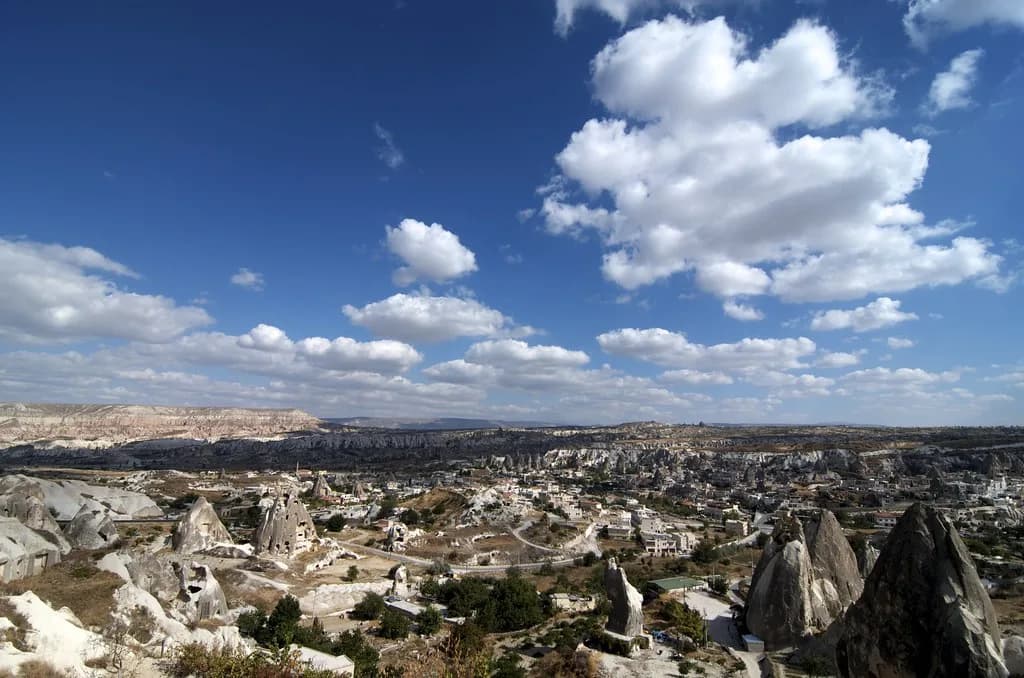
Göreme sits in high-altitude Central Anatolia, and the valleys around it, including Rose Valley, Love Valley, Pigeon Valley and Ihlara Valley, are walked on loose gravel, sandy descents and uneven volcanic rock. That terrain dictates your footwear far more than the temperature does, and it also means dust gets into everything you carry. The practical aim is a light bag that handles heat, sun, dust and a cool room without doubling up on items.
Why Göreme Needs Its Own Summer Packing Logic
The exposed valley floors and the shaded interiors in Göreme behave like two different climates on the same afternoon. Midday sun on pale tuff rock reflects heat back at you, while cave churches, underground rooms and cave restaurants hold a cool, still air that feels markedly different once you step inside. Packing one set of clothes for both means either overheating outside or shivering indoors.
Altitude adds a second swing: mornings before sunrise and evenings after sunset are cooler than the midday hours, and hot air balloon departures happen in that cool, dark window. Rather than packing a heavy coat, plan a thin mid-layer that folds small and lives at the top of your daypack. For the broader seasonal framework before narrowing down to summer, a full goreme packing list covers the year-round essentials.
Summer visitors also divide into two packing profiles: those hiking valley trails and those spending the day in town, at viewpoints and on tours. Hikers need grip, water capacity and sun cover; town-based visitors need little more than light clothing, a hat and a layer for cool interiors. Decide which profile fits most of your days, then pack for that one rather than hedging with both.
Historical Summer Tendencies and the Before-Departure Check
Published climate summaries for Cappadocia describe summer as hot, dry and sunny, with a wide gap between daytime highs and pre-dawn lows. One seasonal Cappadocia packing list notes that summer days can still produce chilly pre-dawn temperatures for early balloon flights, which is why a layer matters even in peak heat. Those figures are historical tendencies drawn from past records, not a forecast for your dates. Use them to choose fabric weights and layer counts, then check an actual forecast in the days before you fly.
Because published monthly figures vary between sources, the safest approach is to look at a current forecast for Göreme or Nevşehir shortly before departure and again on arrival. Pack for the pattern, adjust for the specific week. If the forecast shows an unusually cool spell, that thin mid-layer and long trousers earn their place; in a hot, clear week they stay folded.
Breathable Clothing for Hot Valley Days
Cotton and linen shirts, loose shorts and loose trousers make the core of a summer Göreme wardrobe, because air moves through them and they dry quickly after a hand wash. A Turkey packing guide makes the same point for summer travel across the country: linen, light cotton and quick-drying blends work far better than denim, which is heavy, slow to dry and punishing in high heat. A light long-sleeve shirt in the same breathable fabric gives you a sun-protection option for exposed midday walks without adding much weight.
One practical combination covers most days: a short-sleeve shirt for town and early hiking, shorts for the trail, and loose trousers for evenings, cave restaurants and any visit where covered knees feel more comfortable. If you are weighing how much of each to bring against what spring travel demands, the Göreme Spring Packing List shows how the same wardrobe shifts with cooler temperatures. Two or three tops and two bottoms that mix freely beat a different outfit for each day.
Sun Protection for Exposed Rock
Valley hikes around Göreme offer very little shade, and the pale rock and dry air make sun exposure easy to underestimate. A wide-brimmed hat that shadows your face and neck is the single most useful item, with sunglasses and SPF lip balm filling the gaps a hat cannot cover. Pack high-SPF sunscreen and reapply during the day rather than treating one morning application as enough. A Cappadocia packing guide notes that the dry air makes sunburn deceptive, which is exactly why reapplying on a schedule beats judging by how hot you feel.
A light long-sleeve shirt doubles as sun protection on exposed stretches, especially on longer walks in Rose Valley or Ihlara Valley where you may be out for several hours. Keep sunscreen and lip balm in your daypack, not your suitcase, so reapplying is easy at a viewpoint or rest stop. Loose, light-colored fabric generally feels cooler than dark, close-fitting clothing under direct sun.
Water Capacity and Hydration on the Trail
Carry a refillable water bottle with at least two litres of capacity for day hikes, because refill points inside the valleys are limited and you may be walking for hours between them. One seasonal Cappadocia packing list puts the same figure on day-hike water capacity and flags electrolyte tablets as a light addition for hot, low-humidity days. Refill at your hotel or in Göreme before you set out rather than assuming you will find water on the trail.
A reusable bottle also reduces waste and saves you buying small plastic bottles repeatedly. Fill it the night before an early start so you can leave before the heat builds without hunting for a shop. Hydration on a Göreme summer hike needs planning rather than improvisation, so treat the bottle as part of your daily kit rather than an optional extra.
The Scarf or Buff That Does Three Jobs
A light scarf or buff is one of the few items in a summer Göreme bag that earns its space three times over. It shields your face and neck from dust thrown up on windy valley paths and ATV tracks, adds a wind-blocking layer on exposed ridges, and can be draped over shoulders when you enter a mosque or a cave church. One thin, quick-drying piece replaces three single-purpose accessories.
Choose a light, neutral-colored fabric that packs to nothing and dries fast after washing. It also works as an evening layer over a t-shirt when the temperature drops after sunset, which saves you carrying a second scarf. Rules at religious sites can vary by location, so check current signage on site rather than assuming a fixed dress code. A Cappadocia packing list suggests a light scarf or buff for dust protection on ATV rides and for covering shoulders at mosques, which is the same three-way logic applied to a slimmer item.
Footwear: Hot Rock Versus Town Evenings
The most consequential packing decision for Göreme is footwear, because the valley trails combine loose gravel, sandy descents and uneven rock surfaces. Trail-running shoes or lightweight hiking shoes with a grippy, lugged sole handle those conditions without the weight of full hiking boots. A seasonal Cappadocia packing list reaches the same conclusion for the famous valleys, noting that flat-soled trainers and fashion sneakers slip on loose gravel and uneven rock. That slippage risk is why the sole pattern matters more than the shoe's price or brand.
Bring one pair of closed, grippy shoes for all hiking and one pair of comfortable sandals reserved for town evenings, cave hotel terraces and restaurant dinners. That split keeps your hiking shoes from being worn out on pavement and gives your feet air after a hot day. Break in any new shoes before the trip, since blisters on day one will shape the rest of your walking.
The Cool-Room Layer: Cardigan or Hoodie
Cave rooms in Göreme stay cool through summer, and cave restaurants and air-conditioned interiors feel the same, so a light cardigan or hoodie belongs in the bag even in the hottest months. A Cappadocia packing guide makes the same recommendation for June through August, pairing a light cardigan or hoodie with the hot-weather items for air-conditioned restaurants and occasional cool evenings. The region also swings sharply between day and night, so the same thin layer covers pre-dawn balloon mornings and post-sunset walks. Keep it in your daypack rather than your suitcase so it is available when the temperature changes.
How cold a cave room feels varies by property, so treat this as an editorial suggestion rather than a rule, and adjust once you have spent a night. A thin, packable layer is more useful than a bulky one because you will add and remove it several times a day. If you travel in cooler seasons the same logic applies with heavier layers, which the Göreme Winter Packing List sets out in detail.
Timing the Day Around the Heat
Planning hikes before 10 AM or after 4 PM changes what you carry, not just when you walk. A morning start means cool air, so you leave with the light layer on and shed it within an hour; a late-afternoon start means full sun early and a cooler finish, so the layer comes back out. A Cappadocia packing list frames the same timing as a safety measure in July and August, when open areas offer no shade, and advises carrying more water than you think you need. Either way you carry less water per hour than a midday push would demand, and you spend the harshest hours in shade or indoors.
Balloon flights launch before sunrise, which is worth noting when you pack: you will stand in pre-dawn cold before the day warms up quickly. Closed shoes and a layer for the launch, light clothing underneath, covers both ends of that morning. Build the rest of your day around indoor activities, cave visits or town time during the middle hours.
A Compact Packing Example for a Short Summer Trip
For a four-day summer trip, build repeatable outfits rather than one set per day. A workable base is three lightweight tops, two pairs of shorts or loose trousers, one long-sleeve shirt for sun and conservative settings, one light cardigan or hoodie, and one scarf or buff. Add a wide-brimmed hat, sunglasses, sunscreen, SPF lip balm, a two-litre refillable bottle, electrolyte tablets and a small daypack.
Two pairs of shoes complete the kit: grippy trail or lightweight hiking shoes for valleys and sandals for evenings. Three tops and two bottoms give you six combinations, and quick-drying fabrics mean you can hand wash one set and wear the other. If you travel mainly in town, drop the second pair of trousers and keep the sandals.
What to Leave Behind
Leave heavy denim, thick sweatshirts and bulky towels at home, since they take space, retain heat and dry slowly in rooms without dryers. Full hiking boots are unnecessary for most valley walks when a grippy trail shoe does the job, and formal shoes or heels are a poor match for cobblestones and uneven paths. White clothing for valley hikes is another item most travelers regret, because the dust from the rock stains. A Cappadocia packing list puts high heels, white sneakers and excess clothing on the same leave-behind list.
Do not pack multiple guidebooks, excessive jewelry or a separate outfit for every day; a single reusable layer and mix-and-match clothing will serve you better. If you need to compare how much clothing is reasonable before adding or cutting items, the Goreme Autumn Packing List is a useful reference for the same trip length at a different season. Check baggage allowances with your airline directly rather than relying on general advice.
Before-Departure Weather Check and Final Bag Walk-Through
A few days before departure, check a current forecast for Göreme or Nevşehir rather than relying on monthly averages, then adjust quantities of the same items rather than changing your whole approach. Historical summer records indicate hot, dry, sunny days, but any given week can run cooler or windier. If rain appears in the forecast, add a compact windproof layer and swap one pair of shorts for trousers.
Run a final walk-through against your day's plan: sun hat, sunglasses, sunscreen, lip balm, water bottle, electrolyte tablets, scarf, grippy shoes and the light layer all packed where you can reach them. Recharge power banks and download offline maps before you fly, since signal in the valleys can be patchy. Note that the cushioning and fit of clothing is a personal preference, so adjust the list to what you know you wear comfortably.
Plan Your Summer Göreme Bag
Summer packing for Göreme comes down to layers that move with the day: breathable cotton and linen for exposed valleys, serious sun protection, at least two litres of water capacity, grippy shoes for hot rock, and a thin layer for cool cave rooms and pre-dawn starts. Get those basics right and the rest is quantity, which you can fine-tune against a current forecast.
Check the forecast in the days before you fly, confirm baggage allowances with your airline, and verify any site-specific rules on arrival rather than assuming them. Pack light enough to hand wash and comfortable enough to walk for hours, and the two-temperature problem of a Göreme summer stops being a problem at all.
Frequently Asked Questions
What should I wear in Göreme in summer?
Lightweight, breathable cotton or linen clothing works best for the hot, exposed valley days, with a wide-brimmed hat and sunglasses for sun protection. Add a thin cardigan or hoodie for cool cave rooms, cave restaurants and pre-dawn starts, plus a light scarf or buff for dust and shoulder coverage. Treat these as suggestions and adjust for the forecast before you travel.
Do I need hiking shoes for the valleys around Göreme?
Grippy footwear helps on the loose gravel, sandy descents and uneven rock found in valleys such as Rose Valley and Ihlara Valley. Trail-running shoes or lightweight hiking shoes with lugged soles are a practical middle ground between fashion trainers and heavy boots. Keep a separate pair of sandals for town evenings so your hiking shoes last the trip.
Why do cave hotels feel cold in summer?
Cave rooms are cut into rock, which stays cooler than the air outside and holds that temperature through the day. The same effect applies in cave restaurants and shaded churches, so a light layer is useful even when the forecast looks hot. How cold a specific room feels varies by property, so adjust after your first night.
How much water should I carry on a summer valley hike?
Plan on at least two litres of capacity for a day hike, since refill points inside the valleys are limited and you may walk for hours between them. Fill your bottle before leaving Göreme and consider electrolyte tablets on hot, dry days. Carry more if your route is long or you are hiking in the middle of the day.
Should I pack a jacket for Göreme in summer?
A light cardigan, hoodie or thin mid-layer is worth packing rather than a heavy jacket. Cave rooms, air-conditioned interiors and pre-dawn balloon departures are all cooler than midday outdoors, and evening temperatures drop after sunset. A packable layer covers all three without adding weight.
What footwear works for hot rock surfaces?
Closed shoes with a grippy, lugged sole handle hot, uneven rock far better than flat-soled trainers or thin sandals. Trail-running or lightweight hiking shoes give grip and support without the weight of full boots. Reserve sandals for town evenings and terraces rather than valley trails.
What can I leave at home for a summer trip to Göreme?
Leave heavy denim, thick sweatshirts, bulky towels and formal or high-heeled shoes at home. White clothing is a poor choice for dusty valley hikes, and multiple guidebooks or excess jewelry add weight without helping. Check baggage allowances with your airline directly before you decide what to check.
Is a light scarf useful in summer in Cappadocia?
Yes, a light scarf or buff covers dust on windy paths and ATV tracks, blocks wind on exposed ridges, and gives you shoulder coverage at religious sites. It packs small, dries quickly and doubles as an evening layer over a t-shirt. Check current signage at any site rather than assuming a fixed dress rule.
Sources
Free: The Ultimate Packing Cheat Sheet
A carry-on capsule wardrobe, the complete packing checklist, layering made simple, and what to wear by season — one printable page you'll use on every trip.
You might also like


Continue reading
More guides you'll find useful