Goreme Packing List for Autumn: Layers, Shoes, and Balloon Mornings
Goreme autumn packing means flexible layers for warm days, cold nights, and pre-dawn balloon flights, plus grippy shoes for dusty tuff trails and a rain shell.
On this page
Goreme sits on the high Anatolian plateau of central Turkey, where the gap between a sunny afternoon and a pre-dawn departure is far wider than most coastal travellers expect. Packing for autumn here is not about one heavy coat but about a system you can peel down and build back up over the course of a single day. The area also has its own physical demands: soft volcanic tuff underfoot, dusty trails, and flights that launch before sunrise when the air is at its coldest.
This guide covers late September through November, explaining how each month changes what goes into your bag and why footwear is the single most important decision. It separates editorial suggestions from anything that might be a verified requirement. For the full year-round version, see our goreme packing list, which covers all four seasons in one place.
Why Autumn Packing in Goreme Is About Layers, Not One Coat
The first thing to understand is that Goreme is inland and elevated, roughly a thousand metres above sea level on a dry plateau. That combination produces a continental pattern: warm, bright days can be followed by a sharp drop after sunset, and the coldest point of the day is right before dawn. A single thick coat cannot handle that range, because you will be carrying it by noon and still shivering at six in the morning.
The practical answer is a three-part system you can adjust in seconds: a breathable base layer, a warm mid-layer such as fleece or a light down jacket, and a wind-resistant outer shell. A packable rain shell earns its place in autumn because showers become more likely in the later months, and it doubles as a windbreak on exposed valley rims. If you are crossing into a different season, our goreme packing list spring covers the equivalent layer strategy for the shoulder months on the other side of summer.
How September, October, and November Change Your Bag
September is the warmest of the three autumn months and the easiest to pack for: light trousers or hiking trousers, short-sleeve tops, one long-sleeve layer, and a light fleece for the evening are usually enough. The main adjustment is for the balloon morning, where you will still want a warm mid-layer even though the afternoon feels summery. Historically, September tends to be one of the drier autumn months, but treat that as a seasonal tendency rather than a forecast and check the actual conditions closer to departure.
October is the transition month, and this is where a medium-weight or packable down jacket starts to justify its space. Daytime temperatures remain pleasant, but evenings cool noticeably and rain becomes more of a possibility, so a packable rain shell moves from optional to sensible. According to the packing guidance from Tramate, autumn in Cappadocia calls for layers similar to spring with a medium-weight jacket for October and November evenings when temperatures can drop to around 1 to 6 degrees Celsius, which is roughly 34 to 43 degrees Fahrenheit.
November is the coldest autumn month and often catches travellers out because they booked on the strength of a warm September memory. Expect genuinely cold mornings, a real chance of frost, and a need for a warm scarf and light gloves on early starts or late evenings. This is the month to add a thermal base layer, wool socks, and your warmest mid-layer; a hat is worth packing even if you never wear it in town. For the same landscape under proper winter conditions, our goreme packing list winter explains how the kit changes once snow becomes likely.
The Layering System That Works From Warm Afternoon to Cold Night
A base layer that wicks rather than holds sweat makes the biggest difference, because you will move between sun and shade and between walking and sitting still. Merino wool or a synthetic technical fabric works better than cotton for this, and merino in particular resists odour across several wears, which matters if you are packing light. Two base tops are usually enough for a four-day trip if you rinse one in the evening.
Your mid-layer is the piece that does the real work in autumn. A fleece is versatile and forgiving, while a light or medium down jacket gives more warmth for its packed size and is the better choice for October and November evenings and balloon mornings. Roman Trail's Cappadocia packing guide frames the mid-layer as the item that makes the pre-dawn balloon flight comfortable rather than merely endurable, and notes that it compresses into a daypack during the warm middle of the day.
The outer shell should block wind first and rain second. A packable rain shell is the most useful version because it takes almost no room in a daypack and works as a windbreak on exposed viewpoints. If you want the lighter end of this system for hot months, our goreme packing list summer shows how the same three-part idea simplifies when evenings stay warm.
One more layer decision that travellers miss is the cave hotel itself. Stone and rock interiors stay cool even when the daytime weather is warm, and they can also feel cool after a hot afternoon, so having a long-sleeve layer or light fleece to hand indoors is genuinely useful. This is not about a dress code, just comfort.
Pre-Dawn Balloon Mornings: The Coldest Packing Decision of the Trip
If you are doing a balloon flight, treat the morning as the coldest part of your entire trip and pack for it separately from the rest of the day. Launches happen before sunrise, you will stand around in an open field while the balloon inflates, and you spend about an hour in a basket exposed to moving air. That is a different problem from a pleasant afternoon walk.
Dress in your warmest available combination: thermal base layer, fleece or down jacket, windproof outer shell, long trousers, warm socks, and closed shoes you can climb into a basket in. A scarf and a hat make an outsized difference at that hour, and light gloves are worth carrying even in September or early October. The common mistake, as Roman Trail notes, is turning up in what you wore to dinner the night before, which usually means far too little.
What to Wear for Dusty Valley Walks and Uneven Rock
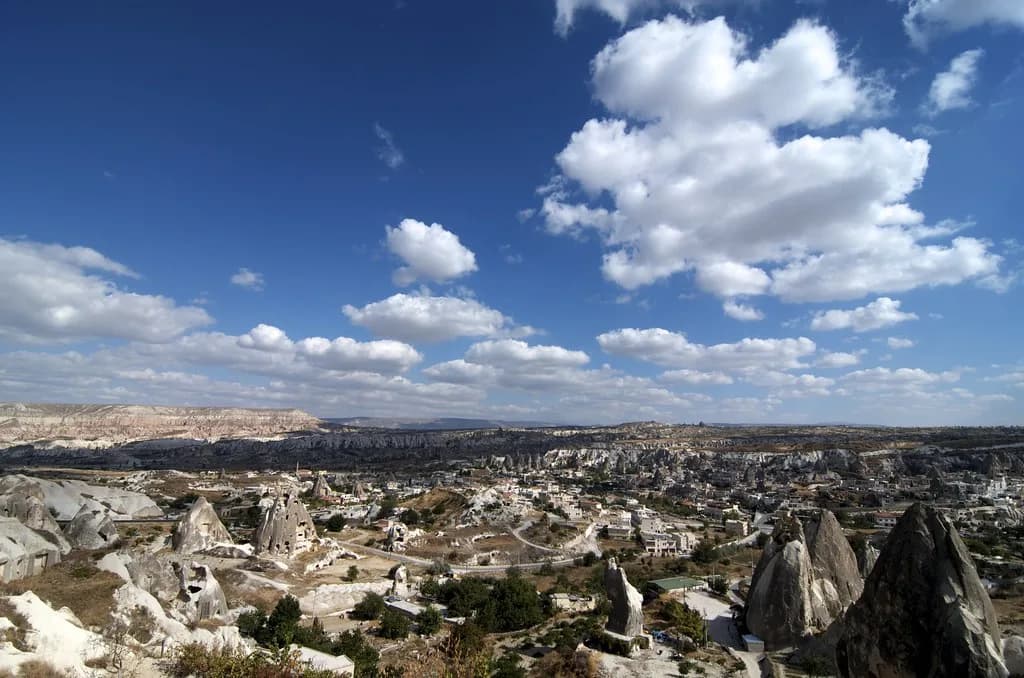
The valleys around Goreme, including Rose Valley and Red Valley, are cut into soft volcanic tuff that crumbles into fine dust and loose gravel. Trails are unmarked in places, sometimes involve scrambling, and can turn slick after rain, so what you wear matters more than what you carry. Long trousers protect your legs from both dust and scratches where the path narrows through rock.
Avoid pale or delicate clothing on hiking days. Tuff dust is fine, pervasive, and stains, and it will find its way onto anything light-coloured; darker, hard-wearing fabrics are a much easier choice. Bring sunglasses to cut glare off pale rock and a scarf or buff that can be pulled up over your nose and mouth when the dust kicks up.
A daypack of around 20 to 25 litres is the right size for a valley walk, holding water, a layer, snacks, and a camera without becoming a burden. Keep the load light, because some routes involve short scrambles where a bulky pack is awkward. If you are carrying a camera, a lens cloth and a sealable bag help protect it from the same fine powder that gets into everything else.
Footwear: What Works, What Slips, and What to Leave at Home
Footwear is the most consequential packing decision for Goreme in autumn. Closed walking shoes or lightweight hiking shoes with a grippy, lugged sole handle loose gravel, dusty slopes, and the worn, uneven stone of the Goreme Open Air Museum far better than flat-soled trainers or fashion sneakers. You do not necessarily need full mountaineering boots, but you do need tread.
Bring two pairs if you can: one for trails and one comfortable pair for town, evenings, and anywhere you might need to remove shoes indoors. Socks matter too, and wool or technical socks handle several wears and dusty conditions better than cotton. Broken-in footwear is essential; a brand-new pair can turn a long valley walk into a blister management exercise.
Leave high heels, formal shoes, and open sandals at home for autumn. Sandals are fine at the hotel but poor on gravel and unsuitable for the worn, sometimes slick stone you encounter underground or after rain. For a general packing framework that applies across destinations, the tramate packing list guide has a useful essential-items overview.
A Compact 4-Day Autumn Packing Example
For a four-day trip in September or early October, start with two short-sleeve or lightweight merino tops and one long-sleeve top. Add one fleece, one packable down jacket for the balloon morning and cold evenings, and one packable rain shell. Two pairs of trousers, one of them a durable hiking pair, covers town and trails, and four pairs of socks and four sets of underwear see you through without laundry if you rinse a base layer once.
For the same trip in November, swap one short-sleeve top for a thermal base layer, upgrade the fleece to a warmer mid-layer or add a second one, and include a warm hat, light gloves, and a scarf. The rain shell stays, and you may want an extra pair of wool socks for cold mornings. Everything else stays the same, which is the advantage of packing around a layer system rather than individual outfits.
On luggage itself, a backpack or soft bag moves more easily than wheeled cases over Goreme's cobbled and uneven streets, which is worth considering if you are staying somewhere up a slope. This is a comfort suggestion rather than a rule, and the right choice depends on how much you carry and where you are staying.
What to Leave Behind
Leave the bulky single-purpose winter coat at home; it is too warm for autumn afternoons in September and October and takes up room you will want for layers. Skip formal shoes, high heels, and anything you would only wear once. A drone is not worth packing; flying is restricted in parts of the region and rules are enforced, so check current regulations with Turkish authorities before considering it.
Do not overpack clothing on the assumption that you cannot wash anything. Many hotels offer laundry, and rinsing small items in a sink is realistic, so five days of clothes is a reasonable ceiling even for a longer trip. Leave the full-size tripod unless photography is the point of your visit, and skip large quantities of toiletries that you can buy locally.
Finally, leave behind the assumption that you already know what Goreme weather will do. A single hot afternoon does not predict the next morning, and the plateau rewards flexibility over confidence.
Before You Fly: Weather and Packing Checks
A few days before departure, check a reliable forecast for Nevsehir or Goreme rather than relying on general country-level temperatures, which are usually measured somewhere else entirely. Pay attention to the overnight low and the pre-dawn temperature, because that is what determines your balloon morning kit. If a cold snap is forecast, add the thermal base layer and heavier mid-layer even for a September trip.
Also confirm what your accommodation provides, since some cave hotels supply extra blankets and a heater while others do not. There is no harm in asking directly about heating and whether they have a terrace for early mornings. If you are travelling in late October or November, check whether rain is in the outlook and make sure your shell is genuinely waterproof rather than merely wind-resistant.
Cross-check your adapter: Turkey uses Type C and F sockets, so bring an appropriate plug adapter for your devices, and check each device's own input rating rather than assuming it will work. For spring travellers comparing layer needs, our what to wear in goreme in april piece covers a similar shoulder-season logic.
Plan Your Visit
Autumn packing for Goreme comes down to a flexible system rather than a fixed list: breathable base layers, a warm mid-layer, a wind-and-rain shell, and footwear with real grip. Build your bag around the coldest moment of your trip, which is almost always the pre-dawn balloon morning, and the warmest, which is usually a sunny afternoon. Everything in between is a matter of adding or removing a layer.
Before you leave, check the actual forecast rather than trusting seasonal averages, and confirm anything you are unsure about with your hotel or the relevant operator. Pack for the transition, keep your clothing choices durable and dark enough to survive tuff dust, and you will spend your time enjoying the landscape instead of worrying about what you brought.
Frequently Asked Questions
What should I pack for Goreme in autumn?
Pack for a wide daily range rather than a single temperature: light base layers, a warm mid-layer such as fleece or a packable down jacket, and a wind-resistant outer shell. September is mild but still cool before dawn, October adds colder evenings and a higher chance of rain, and November brings genuine cold and possible frost, so add a thermal base layer, hat, gloves, and scarf for the later months.
What do you wear on a Cappadocia balloon flight in autumn?
A balloon flight launches before sunrise, so you are standing in an open field and then flying in moving air at the coldest hour of the day. Wear your warmest layers: a thermal base, fleece or down jacket, windproof shell, long trousers, warm socks, and closed shoes suitable for climbing into a basket. A hat, scarf, and light gloves make a noticeable difference even in early autumn.
Do I need hiking boots for Cappadocia in September and October?
Not necessarily full hiking boots, but you do want closed shoes with a grippy, lugged sole. The valleys are loose gravel, dust, and uneven tuff rock, and the stone at sites like the Goreme Open Air Museum is worn and uneven. Flat-soled trainers or fashion sneakers slip on those surfaces, so lightweight hiking shoes or trail shoes are a better trade-off.
How cold does it get in Cappadocia in November?
November is the coldest of the autumn months, with cold mornings, a real chance of frost, and much cooler evenings than September or October. Rather than relying on a fixed figure, check a forecast for the Nevsehir or Goreme area in the days before you travel, and pack a thermal base layer, a warm mid-layer, a hat, gloves, and a scarf so you are covered if a cold snap arrives.
What should I wear for Goreme valley hikes in autumn?
Wear long trousers to protect against dust and scratches, a breathable base layer, and a light or mid-weight layer you can remove as you warm up. Choose darker, durable fabrics because tuff dust stains pale clothing. Bring a daypack with water, a scarf or buff for dust, sunglasses, and shoes with real grip for loose gravel and uneven rock.
Is a rain jacket necessary in Cappadocia in autumn?
A packable rain shell is worth bringing for October and November, when showers become more likely, and it also works as a windbreak on exposed valley rims. In September you could get away without one, but the weight and space cost is small, and having it removes a lot of uncertainty if the weather turns.
How many days of clothing should I pack for Cappadocia?
For a four-day trip, two or three base tops, one long-sleeve layer, a fleece, a packable down jacket, a shell, two pairs of trousers, and enough socks and underwear for four days is realistic, especially if you rinse small items once. For a longer trip, plan on roughly five days of clothing and use laundry or sink washing rather than packing everything for the full duration.
What is the most commonly forgotten item when packing for a Cappadocia trip?
Rather than packing for an average temperature, pack for the coldest and warmest moments you expect. Check the overnight low and pre-dawn temperature as well as the daytime high, confirm whether your hotel has heating, and make sure your rain shell is genuinely waterproof if you are travelling in late October or November.
Sources
Free: The Ultimate Packing Cheat Sheet
A carry-on capsule wardrobe, the complete packing checklist, layering made simple, and what to wear by season — one printable page you'll use on every trip.
You might also like


Continue reading
More guides you'll find useful