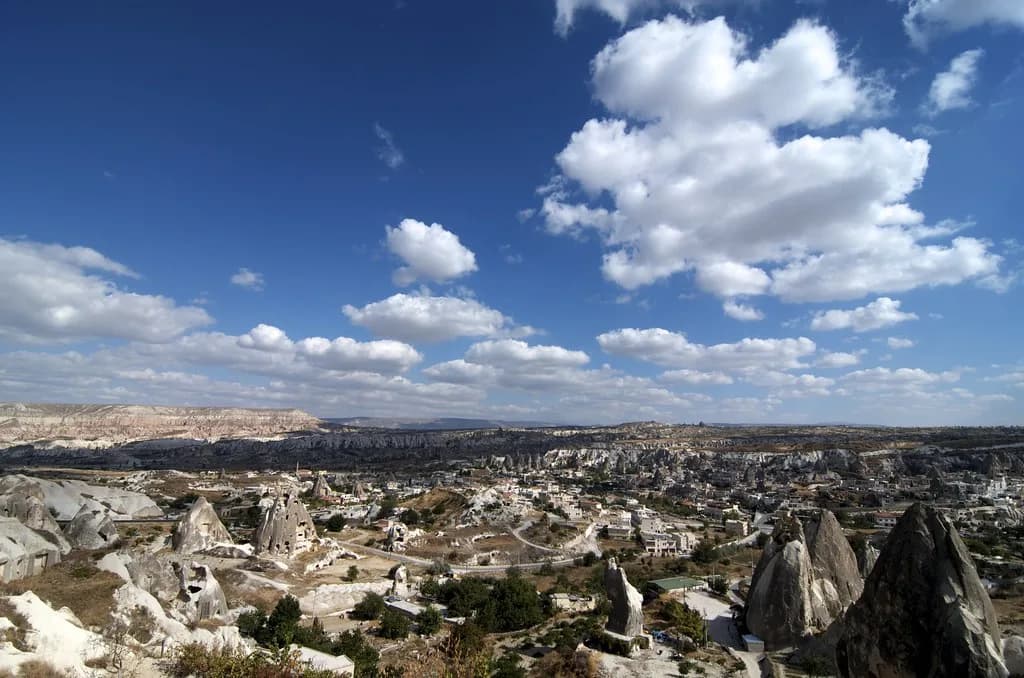
Göreme Winter Packing List: What to Wear in Snow and Cold
Pack for Göreme in winter with thermal base layers, insulated boots, and windproof layers for icy paths, cave hotel chill, and cold balloon mornings.
On this page
Packing for Göreme in December through February is less about one heavy coat and more about how your layers work together across three very different environments: an open balloon basket before sunrise, an icy valley trail at midday, and a stone cave hotel room in the evening. Getting this right means fewer items that each do more, rather than a suitcase full of single-purpose clothing. This guide organises every decision around those three scenarios.
The common mistake is to treat winter here like a city break, where a warm coat solves everything. In practice, cold mornings, midday snow glare, shaded trail sections that stay icy until afternoon, and heated indoor air that dries skin all pull your kit in different directions. Every layer you pack should earn its place by covering at least two of those conditions.
Göreme's Winter in Practical Terms
Winter in Göreme and the wider Cappadocia region historically means snow, freezing nights, and large day-to-night temperature swings. The plateau sits high and inland, so the cold is dry and sharp rather than coastal and damp, and shaded paths and stone streets can stay icy well past sunrise. Visitors who pack for these tendencies rather than a single expected condition tend to be far more comfortable.
Snow and freezing nights are typical in these months, and hot air balloon flights may be cancelled in winter when conditions are unsuitable. Packing should therefore support flexible plans from the start: warm gear that works on any cold morning, and no reliance on a specific date for the experience. A broader Turkey packing list confirms that Cappadocia demands genuine winter kit rather than a shoulder-season layer. Check what the operator publishes about weather cancellations before you commit to a specific morning.
Check a forecast for the days you will actually be there in the week before departure, and again on arrival, because a clear cold snap and a snowy spell call for slightly different outer layers. Treat historical seasonal tendencies as a baseline for deciding what to bring, not as a prediction for your trip. If a forecast looks marginal for flying or walking, your packing should already have absorbed that uncertainty.
The Three-Layer System and Why Wind Matters
The reliable formula for December through February is a thermal base layer against your skin, a fleece or wool mid-layer for insulation, and an insulated windproof outer coat. Each layer has a job: the base moves moisture away, the mid-layer traps warmth, and the outer layer stops wind and snow from undoing the first two. Remove or add one layer as conditions change rather than swapping entire outfits.
Wind protection matters more than raw thickness. A bulky but wind-permeable coat can feel colder than a thinner windproof shell over good insulation, especially in an open balloon basket or on exposed ridge paths. Choose an outer coat with a close-fitting hood, a collar that seals, and sleeves that do not flap, then adjust warmth underneath with your mid-layer. A seasonal Cappadocia packing list makes the same point in its winter section, where snow and ice rather than sheer cold drive the boot and coat recommendations.
This system also explains why a single very heavy item rarely works. A sunny noon walk may need only a base layer and mid-layer, while the same day at dawn needs all three plus gloves and a hat. Layers give you that range without carrying duplicate clothing.
Thermal Base Layers: Synthetic or Merino Over Cotton
For the damp chill of a cave hotel room and long hours outside, choose synthetic or merino base layers rather than cotton. Cotton holds moisture against the skin, which is exactly what you do not want after a cold morning outdoors or when indoor heating creates a stuffy, dry contrast to the cold outside. Merino regulates temperature and resists odour over several wears; synthetics dry faster and cost less.
Pack two full sets so one can be worn while the other dries, and that is usually enough for a short winter trip. If you plan several active days, a third set is a reasonable addition, but it is rarely necessary because cave hotel rooms dry thin layers overnight. Keep the base layers thin and close-fitting, since baggy thermal tops bunch under a mid-layer and reduce the benefit of the system.
Base-layer bottoms matter more than many visitors expect. Trousers alone on an icy valley walk or a pre-dawn balloon morning leave legs cold even when your upper body is well insulated. A single pair of thermal leggings under normal trousers covers the coldest scenarios without adding bulk to your bag.
Mid-Layer and Coat Decisions
A fleece mid-layer is light, packable, and forgiving when you need to shed warmth indoors; a wool mid-layer insulates slightly better when damp and resists odour longer. If you run cold or plan long periods standing still, wool or a wool blend is worth the extra weight. If you move constantly and want to strip down quickly, fleece is easier to manage.
For the outer coat, a packable insulated jacket with a windproof shell is the most versatile choice for this trip, because it layers over the fleece on cold mornings and packs away when you are indoors. A bulkier parka adds warmth but occupies much more of a suitcase and is awkward in cave hotel rooms with limited hanging space. Choose based on whether you prioritise maximum warmth or flexibility.
The balloon morning and the valley walk pull the coat choice in different directions. On the balloon, you are largely stationary in an open basket, so the insulated windproof coat stays on and gloves and a hat do the rest. On the walk, you generate heat, so a breathable mid-layer plus a shell you can open or remove is better than one heavy fixed layer. Planning for both is the whole point of the three-layer setup.
Footwear: Insulated Boots Beat Trainers
Insulated waterproof boots with genuine grip are the single most important winter purchase for Göreme. Icy cobblestones in town and shaded trail sections in valleys like Rose, Love, and Pigeon stay slick long after sunrise, and the tuff terrain is loose and uneven underfoot. Waterproofing keeps your feet dry in snow and slush; insulation keeps them warm while you stand still watching balloons.
Flat-soled trainers and fashion sneakers are the wrong tool here, because their smooth rubber slips on polished stone and wet rock. When judging a boot, check the sole for deep, spaced lugs that shed mud and grip ice, and press the heel to confirm it is firm rather than spongy. If you plan to hike the Ihlara Valley, with its long descent of smoothed stone steps, proper hiking boots rather than casual walkers are the safer choice.
Bring only one pair of boots for the trip if it fits and is broken in before you leave. New boots on icy terrain invite blisters exactly where you want no distractions. If you also want something lighter for hotel evenings or town cafés, add a pair of simple closed shoes, but never rely on them as your main footwear.
Socks and Foot Warmth
Thick wool or thermal socks are the natural partner to insulated boots, and packing at least three pairs lets you rotate a dry pair each day. Wool stays warm even when slightly damp and resists odour across multiple wears, which matters on a trip where laundry is limited. Avoid thin cotton socks that compress underfoot and feel cold the moment you stop moving.
Hand and toe warmers are a small but worthwhile addition for pre-dawn balloon mornings, when you may stand outside for a long time before and during the flight. They supplement good gloves and boots; they do not replace them. If your feet run cold easily, a thin liner sock under a thick wool sock adds warmth without making the boot tight.
Keep one spare pair of socks in your daypack on longer walking days. Stepping in snow or slush can soak a sock within minutes, and a dry change restores warmth for the rest of the walk. This is more effective than carrying extra shoes.
Head, Hands, and Neck
A warm hat, insulated gloves, and a scarf or neck gaiter complete the winter kit, and all three should be windproof or wind-resistant where possible. On an open balloon basket and on exposed valley ridges, thin fashion gloves lose heat quickly and offer no protection against wind. A neck gaiter that pulls over your chin is more practical than a loose scarf that flaps in your face.
Gloves need enough dexterity to handle a phone and camera without constant removal, so consider a liner glove inside a heavier windproof glove for the coldest moments. For balloon mornings, the combination of hat, gaiter, and insulated gloves is what makes standing still tolerable while you watch the inflation and take photos. Loose scarves that could catch on equipment are better avoided; a close-fitting gaiter is safer and warmer.
Test your glove and hat combination outdoors before you travel, ideally on a windy cold day, so you know how they feel after an hour of standing rather than after five minutes from your front door. If your hands run cold, add the hand warmers noted above, but keep gloves as the primary protection.
Cave Hotel Reality: Damp Chill and Dry Air
Cave hotel rooms in Göreme present a two-sided packing problem: stone walls and floors can feel damp and cold, while heating dries the air and your skin. Keep the base layers, mid-layer, and thick socks accessible so you can add them the moment you come in from the cold, and unpack thermal layers immediately rather than leaving them compressed at the bottom of a bag. A light pair of indoor shoes or thick socks helps on cold stone floors.
For the dry-air side, pack lip balm and a small moisturiser, and use them before bed rather than waiting for skin to crack. The dry winter air combined with indoor heating dehydrates skin in a way that surprises many visitors. A compact humidifier is generally not worth packing; a water bottle and regular lip balm are simpler and more effective.
For evening meals in cave restaurants, maintain the same layer logic rather than switching to a single smart outfit. Stone dining rooms can be chilly, so keep a light jacket or fleece available even when the day was clear. There is no strict dress code to plan around, and comfortable, warm smart-casual clothing is the practical choice.
Outfit Combinations by Scenario
Balloon morning: thermal base layer, fleece or wool mid-layer, insulated windproof coat, thermal leggings under trousers, insulated boots with thick wool socks, warm hat, insulated gloves, neck gaiter, and hand or toe warmers. This is your coldest scenario and the one where standing still makes insulation matter most. Keep everything accessible in a small daypack so you are not searching in the dark.
Valley walk: base layer, mid-layer with a shell you can open, thermal leggings if it is a cold day, insulated boots with grip, medium-weight socks, sunglasses for snow glare, and a daypack with water and a spare sock pair. You will warm up as you move, so favour breathability and the ability to vent over fixed maximum warmth.
Göreme town and café day: base layer, fleece, a lighter insulated jacket or shell, ordinary walking trousers, and sturdy closed shoes. This is the mildest scenario, so you can drop the heaviest coat and carry it folded. Add the scarf or gaiter if you plan to sit outside.
Cave restaurant evening: base layer, a clean mid-layer or sweater, light jacket for the stone room, and comfortable shoes. Keep the thermal leggings only if the evening is particularly cold. The goal is smart enough for the room and warm enough for the walk there and back.
A Compact Trip-Length Packing Example
For a three- to four-day winter trip, pack two thermal base-layer sets, one fleece or wool mid-layer, one insulated windproof coat, two pairs of trousers plus one thermal legging layer, one pair of insulated boots, three pairs of wool socks, one hat, one pair of insulated gloves with liners, one neck gaiter, and hand or toe warmers. This kit covers every scenario above and fits in a carry-on bag if the outer coat is worn in transit.
For a longer trip of one to two weeks, the same list works with a modest addition: a third base-layer set and one extra mid-layer so you can rotate while things dry. Rewear trousers across multiple days and layer rather than adding new categories of clothing. The packing-guide approach used for high-altitude destinations such as Cappadocia follows the same logic, prioritising layers and grip over volume. Most travellers overpack bulky outfits and underpack thin, useful layers, which is the opposite of what this destination rewards.
The trade-off is simple: plan to wash or air thin layers and keep bulk low. If you would rather not wash anything, add base layers rather than coats, because base layers are the items that most directly affect comfort and they take up the least space.
What to Leave Behind
Leave high heels and any dress shoes you cannot walk on uneven stone in. They are unsafe on icy cobblestones and useless on trails, and they take up space that layers could use. Similarly, skip white clothing for valley walks, since the dust from the volcanic terrain stains quickly and is difficult to remove.
Do not pack bulky towels, because hotels provide them, and do not bring excess outfits or a different smart outfit for every evening. Cave hotels often have stairs and limited storage, so a heavy suitcase is a daily annoyance rather than a convenience. One flexible smart-casual layer covers restaurant evenings in every scenario described here.
Finally, leave behind any gear you have never used at home, from complex camera rigs to specialised hiking equipment you do not normally carry. If you are unsure whether an item is necessary, test it on a cold local walk before your trip. Things that fail that test rarely become useful in Göreme in winter.
Before-Departure Weather Check
Three or four days before you fly, check a forecast for Göreme for the dates you will be there, looking at overnight lows, wind, and precipitation rather than just daytime highs. Wind is the variable that most affects both comfort and balloon operations. Use the forecast to adjust the outer layer and the number of base layers you pack, not to redesign the whole wardrobe.
If snow or freezing rain is forecast, make sure your boots are waterproof and broken in, and add the hand and toe warmers. If the forecast is cold but dry, the same layering works with slightly less emphasis on waterproofing. Recheck on arrival, because conditions on the plateau can shift within a day.
Keep your plans flexible around balloon flights. Winter flights may be cancelled when conditions are unsuitable, and operators typically rebook or refund in that case. Packing so that a cancelled morning is not a wasted morning, with warm layers for a valley walk or a town morning instead, is the most useful mindset for this season.
Editorial Extras Often Missed
Lip balm and a small moisturiser earn their place in a winter bag here because the combination of cold air and indoor heating dries skin quickly. They weigh almost nothing and are the items most visitors wish they had brought. Neither is a substitute for warm clothing, but both make long days outdoors more comfortable. If you want to see how these extras shift in milder weather, the Göreme spring packing guidance treats sun protection and rain shells as the priority instead.
Sunglasses matter in winter as much as in summer, because snow glare on a bright day can be intense and tiring on the eyes. For cameras, a lens cloth and a sealable bag protect against fine volcanic dust and snow, both of which find their way into equipment on valley walks. These are small additions that protect the gear and comfort you have already packed.
Plan Your Visit
Göreme in winter rewards a small, well-chosen kit: two or three thermal base layers, a fleece or wool mid-layer, one insulated windproof coat, insulated waterproof boots with real grip, and the hat, gloves, and gaiter that make cold mornings tolerable. Build the kit around the decisive scenario, whether that is a pre-dawn balloon morning or an icy valley walk, and let the accessories do the rest.
Check the forecast close to departure, keep balloon plans flexible, and resist the urge to pack a separate outfit for every evening. If you want the full destination overview before you finalise your bag, the Göreme packing list covers the year-round essentials, and the spring guide is there if your dates move outside the coldest months. With the right layers, winter is one of the most atmospheric times to see the valleys.
Frequently Asked Questions
What should I pack for Göreme in winter?
Pack thermal base layers, a fleece or wool mid-layer, an insulated windproof coat, insulated waterproof boots with good grip, thick wool socks, a warm hat, insulated gloves, and a scarf or neck gaiter. Add hand and toe warmers if you have a pre-dawn balloon morning planned, plus lip balm, moisturiser, and sunglasses for snow glare.
Are trainers enough for Göreme in winter, or do I need insulated boots?
Trainers with smooth soles are a poor choice in winter because icy cobblestones and shaded trail sections stay slick. Insulated waterproof boots with deep, spaced lugs give the grip and warmth you need for both town streets and valley walks, and they are the single most important item in a winter kit here.
What do you wear on a winter hot air balloon ride in Cappadocia?
Wear thermal base layers top and bottom, a fleece or wool mid-layer, an insulated windproof coat, insulated boots with thick wool socks, a warm hat, insulated gloves, and a neck gaiter. You are largely stationary in an open basket, so hand and toe warmers are worth carrying for the coldest mornings.
Are cave hotels in Göreme cold at night in winter?
Stone cave rooms can feel damp and cold even when heated, and the heating itself dries the air. Keep your thermal layers and thick socks accessible, unpack warm clothing immediately, and bring lip balm and moisturiser for dry indoor air. A light jacket is useful for chilly cave restaurants in the evening.
Do hot air balloon flights get cancelled in Göreme in winter?
Winter flights may be cancelled when conditions are unsuitable, so build flexibility into your plans and packing. Operators typically offer a rebooking or refund when a flight does not go ahead. Keep warm layers ready so a cancelled morning can be used for a valley walk or a town morning instead.
How many layers do I need for a pre-dawn balloon morning in Cappadocia?
Plan for three layers on your upper body: a thermal base layer, a fleece or wool mid-layer, and an insulated windproof coat. Add thermal leggings under trousers, insulated boots with wool socks, a hat, insulated gloves, and a neck gaiter. Hand and toe warmers are the final addition for standing still in the cold.
What should I leave behind when packing for Göreme in winter?
Leave high heels, dress shoes you cannot walk on uneven stone in, white clothing for valley walks, bulky towels, and excess outfits. Cave hotels often have stairs and limited storage, so a heavy suitcase is a daily annoyance. Skip any specialist gear you have never used at home.
How do I check the weather before a winter trip to Göreme?
Check a forecast for Göreme three or four days before departure, focusing on overnight lows, wind, and precipitation rather than only daytime highs. Wind is the variable that most affects comfort and balloon operations. Recheck on arrival and adjust your outer layer rather than redesigning your whole kit.
Sources
Free: The Ultimate Packing Cheat Sheet
A carry-on capsule wardrobe, the complete packing checklist, layering made simple, and what to wear by season — one printable page you'll use on every trip.
You might also like


Continue reading
More guides you'll find useful