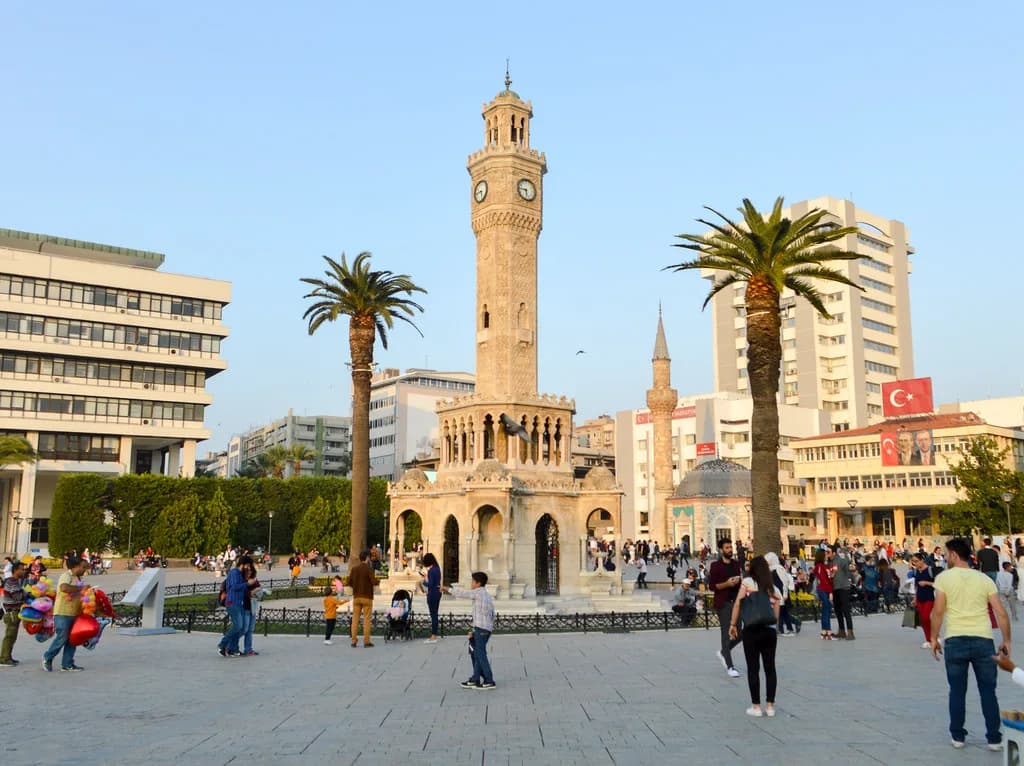
What to Wear in Izmir in November: Layering & Rain Tips
Pack for Izmir in November with light layers, a packable rain shell, and shoes that grip wet pavement. Includes a capsule example and what to leave home.
On this page
Izmir in November: the weather in numbers
Typical November conditions from 30 years of daily weather data, split into early, mid and late month so you can match them to your travel dates.
| Dates | Early Nov (1–10) | Mid Nov (11–20) | Late Nov (21–30) |
|---|---|---|---|
| Afternoon high | 20°C (67°F) | 18°C (64°F) | 15°C (59°F) |
| Night-time low | 10°C (50°F) | 8°C (47°F) | 7°C (45°F) |
| Feels like (afternoon) | 18°C (64°F) | 16°C (60°F) | 13°C (55°F) |
| Range of afternoon highs | 15–24°C | 13–22°C | 10–19°C |
| Days with rain | 2 in 10 days | 3 in 10 days | 3 in 10 days |
| Afternoon humidity | 52% | 55% | 58% |
| Average wind | 9 km/h | 9 km/h | 10 km/h |
| Daylight | 10.2 h | 9.9 h | 9.6 h |
What this means for your suitcase
- Mild days: long sleeves with a light sweater or jacket you can take off at midday.
- Showers on roughly 3 in 10 days — a packable rain jacket or compact umbrella.
- Day-to-day swings: afternoon highs range from about 12°C to 22°C, so pack for both.
Travelling on specific dates? Use our What to Wear Planner for the weather, outfits and a packing list for your exact days in Izmir.
Averages for 1991-2020, modelled from Copernicus ERA5-Land and ERA5 reanalysis via Open-Meteo open data (CC BY 4.0), adjusted to Izmir's elevation. Modelled afternoon highs can read 1–2°C below airport weather-station records.
Izmir's November weather is a transition month: summer heat is gone, but the Aegean keeps daytime temperatures mild enough for long walks along the waterfront. The trade-off is that rain tends to become more frequent and evenings cool down quickly. Packing for this shoulder season means planning for both a mild afternoon and a chilly, possibly damp evening, often on the same day.
The city is hilly near the center, and walking areas such as the Kordon waterfront and the bazaar districts involve uneven pavement and cobblestones. November rain makes those surfaces slick, so footwear traction and drying time matter more than style. A compact layering system plus a rain shell covers most situations without weighing you down.
Why November Packing in Izmir Is Different
Izmir has a Mediterranean climate, and autumn runs from mid-September to November, starting pleasantly warm and becoming rainier as the weeks pass. November is historically one of the wettest months in the city, so a rain plan matters more than it would in September or early October. Daylight also shrinks, which changes when you need an extra layer.
Long-term climate records for Izmir put November average temperatures around 13.5°C (56°F), with lows near 8.3°C (47°F) and highs near 18.6°C (65°F). Rainfall averages about 120 mm over roughly 8 days, and there are only about 5.5 hours of sunshine per day. The sea is cool at around 18.4°C (65°F), so swimming is unlikely to be a priority for most visitors.
Those figures describe long-term tendencies, not a forecast for your specific trip. A mild, dry week is possible, as is a stretch of wet and windy days. The packing strategy is to prepare for the middle of that range and adjust after you check the forecast close to departure. For a comparable shoulder-season approach, see what to wear in Izmir in April, though spring warms up rather than cools down.
How Izmir's November Conditions Shape Your Layers
The main packing challenge in November is the day-to-evening temperature swing, not extreme cold. A daytime high near 18.6°C (65°F) is comfortable in a light long-sleeve shirt or thin sweater, but by evening the temperature can drop toward 8.3°C (47°F), especially near the water. Wind along the Aegean adds a chill that makes a still evening feel cooler than the thermometer suggests.
Humidity averages around 67% in November, which can make cool air feel damper and more penetrating than dry cold. This is why a wind-resistant outer layer often feels warmer than a thick knit alone. It also means quick-drying fabrics are more comfortable than heavy cotton, which stays damp longer if you get caught in a shower.
The day lasts about 10 hours and 5 minutes on average in November, so you may be walking back to your hotel in dusk or darkness earlier than expected. Plan to carry your warm mid layer or shell with you rather than leaving it at the hotel, because the temperature drop often happens while you are still out. If your afternoon involves the waterfront, you will likely want that layer before sunset.
The Core Layering System for Izmir in November
A three-part system works well: a base layer that manages moisture, a mid layer that adds warmth, and a light outer shell that blocks wind and rain. For the base, pack two or three long-sleeve tops in a synthetic or merino blend. These dry faster than cotton and can be worn under a sweater without feeling bulky.
The mid layer can be a thin fleece, a lightweight down or synthetic vest, or a medium-weight sweater. A vest is a smart choice because it warms your core without adding bulk to your arms, which helps when you move between heated interiors and cool streets. If you run cold, a packable down jacket takes little space and provides more warmth for its weight than a heavy knit.
The outer shell should be a water-resistant or waterproof jacket with a hood, ideally one that packs into its own pocket. This layer handles both rain showers and wind along the waterfront. If your mid layer is already wind-resistant, a lighter shell may be enough, but a hood is worth having for sudden downpours. For more detail on matching shoes to the season, see what shoes to wear in Izmir, which covers terrain and weather trade-offs across the year.
Rain Protection That Actually Packs
November's higher rainfall means you should plan for at least one wet day during a short trip. A compact umbrella is convenient for moving between taxis, cafes, and covered bazaars, but it can turn inside out in strong Aegean wind and leaves your hands full. A hooded rain shell keeps your hands free and handles wind better, but it can feel clammy during a long walk if it does not breathe.
The practical trade-off is to bring a lightweight shell as your primary rain protection and add a small folding umbrella only if you expect to spend a lot of time walking between indoor stops. If you choose one, the shell is usually the more versatile option for Izmir's mix of rain and wind. A compact umbrella can stay in your day bag without much weight penalty, but it is not a substitute for a jacket in windy conditions.
Whichever you choose, check the forecast before you leave and again a day or two before you fly. If a wet pattern is predicted, make sure your shoes and outer layer are up to it. If the forecast looks drier, you can still carry the shell for wind and evening chill.
Footwear for Wet Pavement and Longer Walks
Izmir's hilly streets, cobblestone lanes, and waterfront promenades become slippery when wet. Look for shoes with a rubber sole and visible tread rather than smooth leather or worn-down sneakers. A water-resistant upper helps, but the more important factor is grip; a shoe that slips is a bigger problem than a damp toe.
Drying time matters if you plan to walk in the rain more than once. Leather and heavy boots take longer to dry, while synthetic uppers and mesh-lined shoes often dry overnight. If you bring only one pair of walking shoes, choose something that balances support, traction, and quick drying. A second pair of lightweight shoes can serve as a backup for evenings or if your primary pair gets soaked.
For evenings, a pair of comfortable low-profile shoes works for most restaurants and indoor venues. There is no need for formal footwear unless a specific venue states otherwise; check with the venue if you are unsure. The priority is keeping your feet warm and dry, since cold, wet feet can make an otherwise pleasant evening uncomfortable.
What to Wear for Waterfront Evenings and Indoor Bazaar Time
The Kordon waterfront is lovely at sunset, but the sea breeze can make it feel noticeably cooler than inland streets. A wind-resistant mid layer or shell over a sweater is usually enough, along with long trousers rather than shorts. If you are sensitive to cold, add a light scarf that you can wrap around your neck or tuck into your bag when you move indoors.
As the evening cools, many visitors shift to covered bazaars, arcades, and indoor cafes. These spaces are often warmer than the street but can be drafty near entrances. Dressing in layers lets you adjust without carrying a heavy coat. A compact crossbody bag is also useful for keeping your hands free and your layers accessible.
There is no single dress code for Izmir's bazaars or waterfront; people wear a wide range of casual clothing. The practical approach is to dress for comfort and weather rather than trying to match a specific local style. If you plan to visit a mosque, check its published visitor guidelines for coverage requirements, as these can vary by site.
A Compact 4-5 Day Packing Example for Izmir in November
For a four- to five-day trip, start with two pairs of trousers or jeans and one pair of comfortable walking shoes. Add three long-sleeve base layers, one mid layer such as a fleece or sweater, and one packable rain shell. This combination covers mild afternoons, cool evenings, and wet days without overpacking.
For sleepwear and downtime, pack one set of comfortable clothes and one pair of lightweight shoes or slippers for the hotel. Add a small scarf, a warm hat if you feel the cold, and a compact umbrella if you prefer one. Socks and underwear for five days, plus one extra pair of socks, help if your feet get wet.
If you run cold or plan late evenings outdoors, add a lightweight down jacket or vest. If you run warm, you can skip the down and rely on a sweater plus shell. The goal is to fit everything into a carry-on, which makes moving between Izmir's neighborhoods and transit connections easier. For a hotter-weather comparison, see what to wear in Izmir in August, but note that November requires more insulation and rain gear.
What to Leave Behind
Heavy winter gear such as a thick parka or insulated snow boots is overkill for Izmir in November. Daytime highs average near 18.6°C (65°F), and freezing temperatures are not typical. A bulky coat will take up space and likely stay in your hotel room.
Leave behind multiple pairs of heavy shoes, excessive formal wear, and anything you would only use at the beach. The sea is cool, and beach activities are not a priority for most November visitors. Also skip thick cotton jeans if you plan to walk in the rain, because they dry slowly; a synthetic blend or quick-dry fabric is more practical.
If you are traveling with a carry-on only, avoid packing a separate raincoat, a heavy umbrella, and a bulky sweater all at once. Choose the combination that matches the forecast and your tolerance for cold. A light shell plus a warm mid layer is usually more versatile than a single heavy item.
Before You Go: Check the Forecast and Adjust
A few days before departure, check a reliable weather forecast for Izmir. Look at the daily high and low, the chance of rain, and the wind speed, especially if you plan to spend time near the water. If rain is likely, prioritize your shell and quick-drying shoes; if it looks dry, you can still pack the shell for wind and evening chill.
Remember that November averages describe long-term patterns, not a guarantee. Packing layers lets you adapt to either a mild or a cool week without needing to buy anything on arrival.
If your trip extends into late November, expect a stronger chance of rain and cooler evenings, similar to what to wear in Izmir in January, though January is typically colder and wetter. Use the forecast to decide whether to add an extra warm layer or a second pair of shoes.
Plan Your Visit
Packing for Izmir in November comes down to flexibility: mild afternoons, cooler evenings, and a higher chance of rain. A light layer system with a packable shell, quick-drying shoes, and one warm mid layer covers the range. Check the forecast before you leave and adjust the capsule to match the expected conditions.
If you want a broader checklist for the city, the Izmir packing list covers essentials across seasons and activities. Both pages can help you refine your own list once you know the forecast.
Related packing guides
- Izmir Packing List: What to Wear for the Aegean Coast
- What to Wear in Izmir in April: Spring Layers and Rain Gear
- What to Wear in Izmir in August: Packing for Aegean Heat
- What to Wear in Göreme in November: Layers, Boots and Cave Stays
- What to Wear in Abu Dhabi in November: Packing Guide
- What to Wear in Istanbul in November: Layering for Damp Days
- What to Wear in Cape Town in November: Late-Spring Packing Guide
Frequently Asked Questions
What is the weather usually like in Izmir in November?
November is a transition month with mild days and cooler evenings. Rain tends to become more frequent and daylight is shorter, so plan for both mild afternoons and chilly, possibly damp evenings. Check the forecast before you leave for the specific week.
Is it rainy in Izmir in November?
November is historically one of the wetter months in Izmir, so rain is likely on several days rather than an occasional shower. That does not mean constant rain, but you should pack a rain shell and shoes that handle wet pavement.
What should I pack for Izmir in November?
Pack two or three long-sleeve base layers, one warm mid layer like a fleece or sweater, a packable rain shell, and one or two pairs of comfortable walking shoes. Add trousers, socks, and a small scarf. A compact umbrella is optional depending on your preference and the forecast.
Do I need a rain jacket in Izmir in November?
A rain jacket or shell is a smart choice because November rainfall is common and wind along the waterfront can make an umbrella less effective. A hooded, packable shell handles both rain and wind and can be worn over a sweater for extra warmth in the evening.
How should I dress for evenings in Izmir in November?
Evenings are cooler than daytime, especially near the water. Wear long trousers and a sweater, and bring a wind-resistant layer or shell. A light scarf can help if you feel the chill. Layering lets you adjust when you move between outdoor streets and heated indoor spaces.
What shoes are best for Izmir in November?
Choose shoes with good traction and a rubber sole for wet, slippery pavement. Water-resistant or quick-drying uppers are useful if you get caught in rain. Avoid heavy leather boots that stay damp, and bring a second lightweight pair as a backup if your main shoes get soaked.
What should I not bring to Izmir in November?
Leave behind heavy winter parkas, snow boots, and multiple pairs of bulky shoes. You also will not need beach gear or formal wear unless a specific venue requires it. Focus on layers and versatile pieces that work for both mild afternoons and cool, damp evenings.
Sources
Free: The Ultimate Packing Cheat Sheet
A carry-on capsule wardrobe, the complete packing checklist, layering made simple, and what to wear by season — one printable page you'll use on every trip.
You might also like


Continue reading
More guides you'll find useful