What to Wear Paragliding in Pokhara: Flight-Day Outfit Guide
Layer up for a Pokhara tandem flight: breathable base, warm mid-layer, windproof shell, closed shoes for the Sarangkot launch, and sunglasses for the air.
On this page
Pokhara's paragliding day usually starts with a vehicle ride up to Sarangkot, a grassy launch hill above the valley, and ends with a landing near Phewa Lake at Lakeside. Between those two points you pass through two different microclimates: a breezier, cooler launch ridge and a warmer valley floor. Dressing for the flight rather than for a Lakeside cafe is the single biggest comfort decision.
Operators in Pokhara generally provide the harness and helmet as part of the tandem package, so your own kit is about what you wear and carry. The suggestions below are editorial comfort advice, not operator rules or a fixed dress code. Confirm specifics such as pick-up areas, meeting times, and any restrictions when you book.
Why Flight-Day Dressing Differs From Lakeside Sightseeing
Sarangkot sits well above the Pokhara valley, and open launches feel noticeably cooler and windier than the lakeside streets where you had breakfast. Once airborne, the airflow adds a constant chill even on a mild day, especially when your arms and legs are exposed. The landing zone near Phewa Lake is lower and often warmer, which is why a spare light top in your day bag pays off after touchdown.
Most operators collect tandem passengers from the Lakeside area and drive up to the take-off point, then return you afterwards. That round trip means you can leave heavier layers behind at the hotel if the day warms up, or carry a small pack that a friend or driver can hold. If you are flying on your own, ask the operator whether there is somewhere secure for a day bag at the launch.
A morning slot often brings cool air at the launch and a warm afternoon on the ground, while later flights can start warmer but still cool quickly once you are airborne. The practical response is the same either way: dress in removable layers rather than one heavy outer piece. That way you can strip down for the drive and the landing without changing your whole outfit.
The Three-Layer Approach to a Tandem Flight
Think in three simple layers: a base layer that manages sweat, a mid-layer that traps warmth, and a windproof shell that blocks the airflow. A light long-sleeve top or T-shirt works as the base because it dries faster than heavy cotton when you are waiting and walking at the launch. The mid-layer can be a fleece, a light sweater, or a packable insulated jacket depending on the season and the morning temperature.
The windproof shell is the piece that changes the most during the flight, so choose one you can zip up easily while sitting in a harness. A thin rain shell or windbreaker packs small and adds very little weight to your day bag; a packable rain shell is also useful if you have walks around Pokhara planned for the rest of your trip. If you would rather not buy anything new, a light jacket you already own is usually fine.
Some operators may offer a flight suit or an extra layer at the launch, especially on cold mornings, but you should not count on it. Pack as if you will wear your own three layers for the whole flight and treat anything extra as a bonus. This keeps your outfit decision entirely in your control.
Tops That Work and Tops That Trap Sweat
A moisture-wicking T-shirt or a light long-sleeve top under your mid-layer is the most flexible choice. Synthetic or merino blends move sweat away from your skin, which matters when you are walking around the launch with a harness on and then sitting still in cooler air. A light long-sleeve also gives your arms a bit of sun and wind cover without feeling bulky.
Heavy cotton is the main one to avoid because it holds moisture and can leave you damp and cold once the flight starts. If your favourite travel shirt is cotton, save it for the afternoon at Lakeside rather than the morning flight. A spare T-shirt in your day bag lets you change out of a sweaty base layer after landing.
If you run warm, a T-shirt plus a thin windproof shell may be enough; if you feel the cold, add a light fleece or insulated mid-layer. Guides in Pokhara commonly suggest comfortable clothing for the conditions, a warm layer for the cooler air you meet on launch and in flight, full-length pants, closed shoes instead of slippers, and sunglasses with sunscreen for the stronger high-altitude sun. The pilot can usually tell you whether the morning is shaping up cool or mild when you meet, so you can adjust before you drive up.
Bottoms: Full-Length Pants Over Shorts
Full-length pants are the more comfortable option for a tandem flight because the harness straps sit across your thighs and the open air can feel cold on bare legs. Lightweight hiking pants, leggings, or joggers all work, as long as the waistband sits flat and does not dig in when you are clipped in. A soft, stretchy fabric usually feels better under a harness than stiff denim.
Shorts are your call, not a rule, but they leave your legs exposed to sun and wind for the whole flight. If you do wear shorts, a longer cut reduces the chance of the harness rubbing and gives a bit more coverage. Many flyers find that full-length pants are simply one less thing to think about once they are in the air.
Avoid anything with bulky cargo pockets, hard seams, or a thick belt at the front, because those details can press against the harness during the flight. A simple pair of pants with an elastic or flat waistband is the easiest to forget about. Pack a clean pair for after the flight if you plan to walk around Lakeside in the afternoon.
Footwear: Closed Shoes and the Launch-Run Test
A short run down the grassy launch slope is part of a foot-launch flight, so your shoes need to stay firmly on your feet. Closed shoes with laces or a secure strap are the practical choice; sandals, slippers, and loose slip-ons are the common mistake at Sarangkot. One Pokhara operator asks tandem passengers to avoid slippers and open footwear, preferring a T-shirt, full pants, and proper shoes instead.
Before you leave the hotel, do a quick runway test: lace up, jog a few steps, and check that your heel stays put and nothing rubs. Do the same with your waistband to make sure it does not slide when you move. If either item needs adjusting mid-run, it is better to swap it at the hotel than to fumble at the launch.
Some operators may ask you to remove loose items or to tighten your shoes before boarding, but the details vary. Treat the runway test as your own quality check and keep the rest flexible. If you only have one pair of shoes in Pokhara, make sure it is the closed pair.
Footwear Trade-Offs: Trail Shoes, Running Shoes, Hiking Boots
Trail shoes are often the sweet spot for a paragliding trip: they grip on grass, dry quickly, and pack lighter than boots. Running shoes work well too, as long as the sole still has tread and the upper holds your foot snugly. A lightweight hiking boot adds ankle support and protection for rocky approaches but takes up more space and weight in your bag.
If your Pokhara trip also includes short walks around Sarangkot or along the lake path, trail shoes cover both the flight and the sightseeing. Step-in crampons and mountaineering boots belong to a trekking kit, not a tandem day, so leave them at home unless you have a separate trek planned. Whichever shoe you choose, break it in before you travel so the launch run does not become a blister story.
Heels, platform sandals, and flip-flops are poor matches for a grassy launch and a harness strap across the foot area. They also leave your toes exposed if the landing run is uneven. Save them for the evening and wear the secure pair for the flight.
Head and Eyes: Sunglasses, Cap, and Buff
Sunglasses are worth packing because the sky and the snow-capped peaks on the horizon are bright, and the wind in your face can be drying. Operators in Pokhara commonly recommend sunglasses and sunscreen for the stronger UV exposure at altitude. A cap or a light buff adds shade and keeps hair out of your eyes, but a very bulky hat can interfere with the operator-provided helmet, so keep it low-profile.
If you normally wear a cap, test it with your harness and helmet at the launch rather than guessing. A thin neck gaiter or buff can be pulled up over your chin if the airflow feels cold, and it doubles as a way to keep your neck covered from the sun. These are comfort items, not requirements, so bring them only if they fit easily in your day bag.
Some flyers like a light buff because it is easier to adjust than a scarf, which can dangle and catch the wind. Anything long and loose around your neck is worth reconsidering before you clip in. A compact, close-fitting layer is the simpler choice.
Sun Protection at Altitude
Sun exposure is stronger at the Sarangkot launch height than in the shaded streets of Lakeside, and the air is clearer. Sunscreen for your face, ears, neck, and the backs of your hands is a practical addition to your day bag. A small tube or stick is easy to reapply before you drive up and again after landing.
Lip balm with sun protection helps when the wind is dry, and a light long-sleeve top gives your arms a break from the sun without overheating. If you are flying near midday, a little extra coverage on your shoulders and the back of your neck can make the flight more comfortable. These are small items, so they fit easily in a jacket pocket.
There is no need to carry a full beach kit; a compact sunscreen, lip balm, and sunglasses cover the main exposure points. Keep them accessible rather than buried in a locked bag, since you may want them right after landing. A small zip pouch keeps them from rolling around during the drive.
What to Leave in Your Hotel
Loose scarves, dangling jewellery, long necklaces, and anything that can catch on lines or harness straps are better left at the hotel. The concern is practical rather than fashion-related: a loose item can snag or flap in the airflow and become a distraction at the wrong moment. Keep your neckline and pockets close to your body for the flight.
Sharp objects, lighters, and loose items in open pockets are also worth removing before you board; one Pokhara operator lists sharp objects, a lighter, luggage, alcohol, and knives as items participants may not carry. Operators may have their own list of prohibited items, so ask when you check in if you are unsure. A small zip pouch for your phone and hotel key is easier to manage than loose objects in multiple pockets.
If you carry a camera or phone for photos, confirm with the operator how it will be secured during the flight. Some pilots prefer to handle the camera themselves, and some offer photo packages separately. The simplest approach is to travel light and let the pilot advise you at the launch.
A Compact 2-3 Day Pokhara Packing Example
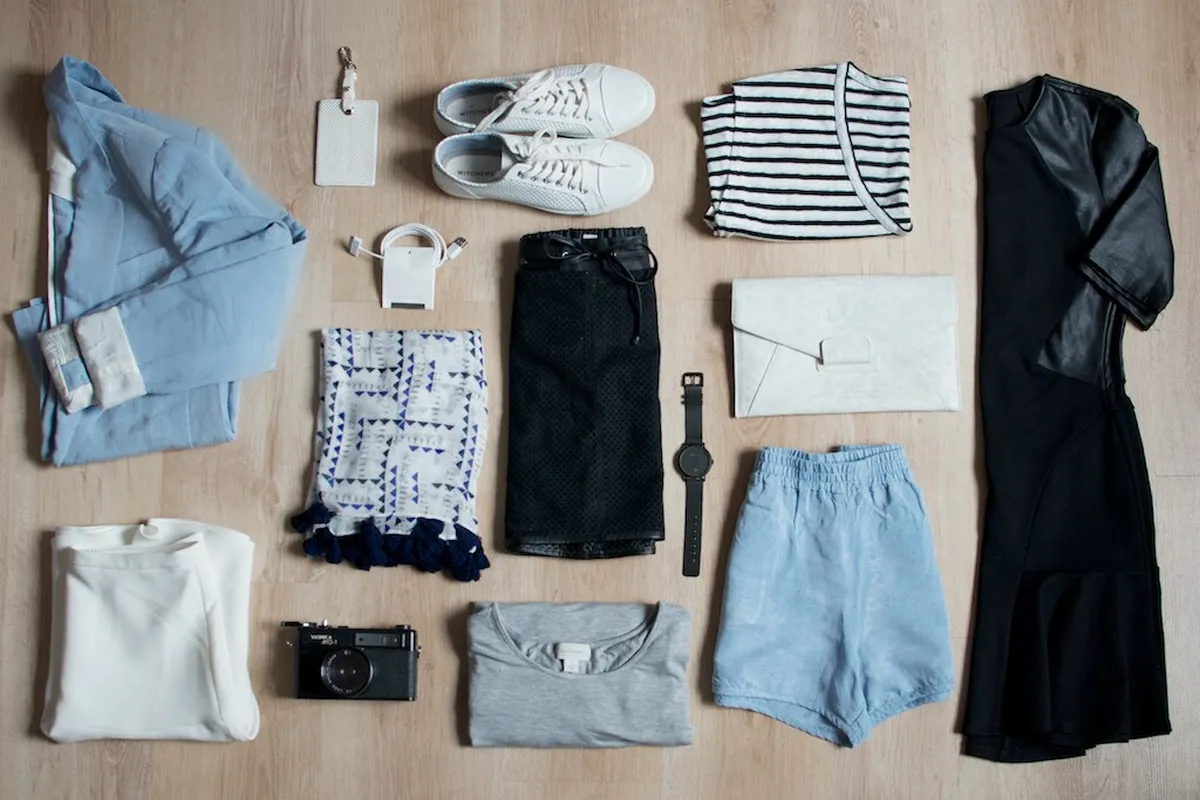
For a short Pokhara trip built around a morning Sarangkot flight, start with two base layers: one T-shirt and one light long-sleeve top. Add one mid-layer such as a fleece or light sweater, one thin windproof shell, and one pair of full-length pants you can move in. Pack one spare T-shirt for after landing so you can change out of a sweaty base layer before lunch.
Footwear is one secure closed pair for the flight plus a lighter pair for evenings if you have space. Add sunglasses, a low-profile cap or buff, sunscreen, lip balm, and a compact day bag that can hold a layer or two during the drive. If rain is in the seasonal picture, a light rain shell does double duty as your windproof layer.
This list assumes you are staying near Lakeside, where most operators pick up and drop off. It also assumes you will leave the heavier half of your luggage at the hotel rather than carrying it to the launch. Adjust the mid-layer thickness to the season, but keep the structure the same.
Seasonal Layering Notes
Autumn and spring are the most commonly described flying windows in Pokhara, with generally clearer skies and more settled conditions than the monsoon months. Mornings in those seasons can still feel cool at the Sarangkot launch, so a mid-layer and a windproof shell are useful even on a sunny day. Treat these as historical tendencies rather than a guarantee for your date.
If your trip falls in November, the shoulder-season pattern often brings crisp, clear mornings at the launch and mild afternoons in the valley, so a warmer mid-layer earns its place in your bag. That article pairs nicely with this one: it explains what to wear in Pokhara in November, while this page narrows the same advice to flight day. The outfit logic is unchanged; only the thickness of your mid-layer shifts.
Winter flights often start cold at the launch, so a warmer mid-layer and a shell that blocks wind are the priority. A light pair of gloves can make the ride up and the flight more comfortable, though they should be thin enough to handle a harness strap if needed. Check the day's conditions with your operator before deciding how thick to go.
Monsoon-season travel brings humid air and a higher chance of rain, so a light rain shell and quick-drying layers become more useful. Even then, operators may delay or reschedule flights when conditions are unsuitable, so build some flexibility into your plan. A spare set of dry clothes in your day bag is a small insurance policy, and full waterproof trekking gear belongs to a monsoon-season packing list rather than a tandem day.
Before-Departure Weather Check
Check the forecast for Sarangkot and Pokhara on the morning of your flight, and look at wind speed as well as rain. Paragliding is weather-dependent, and operators may delay or reschedule a flight if conditions are unsuitable, so a quick weather check is part of the pre-flight routine that operators themselves recommend. A quick look before you leave the hotel helps you decide whether to wear the heavier mid-layer or pack it.
If your flight is rescheduled, keep your outfit flexible rather than repacking for a different day. A light layer you can add or remove covers both a cool morning and a warm afternoon. Ask the operator how they communicate changes so you are not waiting at the wrong place.
Because mountain weather can shift quickly, a small day bag with your shell, sunscreen, and a spare base layer is more useful than a single fixed outfit. That way you can adapt at the launch without returning to the hotel. Keep the bag compact so it does not interfere with the harness.
Plan Your Flight-Day Outfit
The core of a Pokhara paragliding outfit is simple: a breathable base layer, a warm mid-layer, a windproof shell, full-length pants, and secure closed shoes. Add sunglasses, sun protection, and a low-profile cap or buff, then leave loose scarves and dangling items at the hotel. Test your shoes and waistband with a few jogging steps before you commit to them for the flight.
Remember that the harness and helmet are usually provided by the operator, and that dress expectations can vary between companies. Confirm pick-up details, any prohibited items, and what the package includes when you book. If you are also planning walks around Pokhara, the same layers that work for the flight will serve you well on the ground.
Frequently Asked Questions
What should I wear for paragliding in Pokhara?
A breathable base layer, a warm mid-layer such as a fleece, and a thin windproof shell cover most conditions at the Sarangkot launch. Add full-length pants, secure closed shoes, sunglasses, and sunscreen. Treat these as comfort suggestions rather than a fixed dress code, and confirm any operator-specific expectations when you book.
Can you wear shorts paragliding in Pokhara?
Shorts are your choice rather than a rule, but full-length pants are usually more comfortable under the harness and give your legs more protection from sun and wind. If you do wear shorts, a longer cut reduces rubbing and gives a little more coverage. A light layer for your legs is a simple way to stay comfortable in the air.
Are flip-flops or sandals okay for a tandem paragliding flight?
Closed shoes with a secure fit are the practical choice because you take a few running steps at the grassy Sarangkot launch. Flip-flops and loose sandals can slip off or move around during that short run. A pair of trail shoes or running shoes with tread is usually enough.
Do I need a jacket for paragliding at Sarangkot?
A thin windproof shell is worth packing because the launch ridge and the air above it feel windier and cooler than the Pokhara streets. In cooler seasons, add a warmer mid-layer underneath. The exact thickness depends on the day, so check the forecast and ask your operator before you decide.
What should I avoid wearing or carrying during the flight?
Leave loose scarves, dangling jewellery, and anything that can catch on lines or harness straps at the hotel. Sharp objects and loose items in open pockets are also better left behind. A small zip pouch for essentials is easier to manage than objects spread across several pockets.
How should I dress for a paragliding flight in Pokhara's winter versus summer?
Winter flights usually call for a warmer mid-layer and a windproof shell because the launch can feel cold, while summer flights often suit a lighter base layer with a thin shell for wind and rain. These are seasonal tendencies rather than guarantees, so check the day's conditions with your operator. Layers you can add or remove work best in both seasons.
Sources
Free: The Ultimate Packing Cheat Sheet
A carry-on capsule wardrobe, the complete packing checklist, layering made simple, and what to wear by season — one printable page you'll use on every trip.
You might also like


Continue reading
More guides you'll find useful