
What to Wear in Puerto Vallarta in May: Packing Guide
Plan what to wear in Puerto Vallarta in May with breathable fabrics, a packable rain layer and footwear for humid beach days, cobblestones and warm evenings.
On this page
Puerto Vallarta in May: the weather in numbers
Typical May conditions from 30 years of daily weather data, split into early, mid and late month so you can match them to your travel dates.
| Dates | Early May (1–10) | Mid May (11–20) | Late May (21–31) |
|---|---|---|---|
| Afternoon high | 32°C (90°F) | 33°C (91°F) | 32°C (90°F) |
| Night-time low | 21°C (69°F) | 21°C (71°F) | 22°C (72°F) |
| Feels like (afternoon) | 34°C (93°F) | 35°C (95°F) | 35°C (95°F) |
| Range of afternoon highs | 30–34°C | 31–34°C | 30–34°C |
| Days with rain | Rare | Rare | 1 in 10 days |
| Afternoon humidity | 46% | 47% | 51% |
| Average wind | 6 km/h | 6 km/h | 6 km/h |
| Daylight | 12.8 h | 13 h | 13.1 h |
What this means for your suitcase
- Hot afternoons: loose, breathable fabrics like linen or cotton, short sleeves and a sun hat.
- Evenings run about 11°C (19°F) cooler than afternoons — carry a layer for after sunset.
Travelling on specific dates? Use our What to Wear Planner for the weather, outfits and a packing list for your exact days in Puerto Vallarta.
Averages for 1991-2020, modelled from Copernicus ERA5-Land and ERA5 reanalysis via Open-Meteo open data (CC BY 4.0), adjusted to Puerto Vallarta's elevation. Modelled afternoon highs can read 1–2°C below airport weather-station records.
May sits at the hinge of Puerto Vallarta's year, when the dry-season comfort of winter gives way to heavier air and the first scattered showers that announce the rainy season. Packing for that in-between moment is less about warmth and more about how fast your clothes dry and how your feet cope with heat, humidity and uneven ground. Get those two things right and the rest of the bag falls into place.
This is a clothing and packing guide, not an itinerary, so it sticks to decisions you make before you zip the suitcase. Temperatures, rainfall and humidity are described as historical seasonal tendencies rather than a forecast for your dates, because the month behaves differently from one year to the next. Where an exact figure would be useful, the honest answer is to check a reputable local forecast in the final days before departure.
You will find fabric trade-offs, a footwear plan split by surface, a compact carry-on example and a short leave-behind list. The suggestions here are editorial starting points, not rules, and they do not describe what every local wears or what any particular venue requires. Treat them as defaults you can bend to your own comfort.
Quick May Packing Summary
If you read nothing else, build the bag around four ideas: light natural fibers or quick-dry synthetics, three or four swimsuits instead of one, footwear for three different surfaces, and a compact rain layer. Humidity is the organising problem, because it slows drying and makes heavy fabrics feel clammy against the skin. Everything else follows from those constraints.
A workable core is two or three loose tops, two bottoms, one dress or collared shirt for evenings, a light cardigan, a packable shell or umbrella, a wide-brimmed hat, sunglasses, and a sun-protective swim shirt. Royal Caribbean's packing guidance for Puerto Vallarta makes the same general case for breathable fabrics, cover-ups, multiple swimsuits and comfortable walking shoes for the cobblestones. Keep the list short, rotate what you wear, and plan on one laundry session for a longer trip.
What May Conditions Mean for Your Suitcase
May is the transition month before the rains settle in, so the reliable expectation is heat, humidity and the possibility of brief showers rather than all-day storms. Puerto Vallarta sits on Banderas Bay with the Sierra Madre rising behind it, and that combination of warm water and humid air is what makes the month feel stickier than a simple temperature reading suggests. Pack for moisture in the air, not just sun overhead.
The practical consequence is drying time. When the air is heavy, a cotton shirt or swimsuit rinsed in the sink can still be damp the next morning, which is why the number of swimsuits you bring matters more in May than in the dry winter months. Vallarta Adventures notes that humid conditions extend drying times for swimsuits and clothing, which is the reasoning behind rotating several suits rather than washing one overnight. Plan your laundry around that slower cycle instead of fighting it.
May also marks the shift toward the wetter half of the year, so a small rain layer earns its place even though the month is not yet the height of the rainy season. Think brief, passing showers that you wait out under cover rather than a soaking that ruins a day. For a fuller seasonal overview across the year, the packing list covers how the winter dry season and the summer wet season change what goes in the bag.
The May Packing Philosophy: Fewer Pieces, Faster Drying
The winning approach in humid heat is a small capsule where every top works with every bottom, so you get more outfits from less luggage. Pick your two or three bottoms first, then choose tops that pair with all of them, which is the method the Ways of Style Puerto Vallarta carry-on breakdown uses for an eight-day trip. Fewer pieces also means less damp laundry competing for drying space.
Favor fabrics that either breathe well or dry fast, and accept that these are different jobs. Linen and loose cotton handle heat beautifully but hold moisture, while quick-dry synthetics feel less luxurious but rinse and dry overnight. A mixed bag lets you wear natural fibers on dry beach days and synthetics when you expect sweat, spray or a shower.
Weight and packability matter as much as fiber content. A bulky cotton sweatshirt takes up space, dries slowly and will likely stay in the suitcase, whereas a thin linen shirt or gauze button-down folds flat and layers over a swimsuit. If you are flying with carry-on only, that difference decides what makes the cut.
Tops and Bottoms That Work in Sticky Heat
Loose cuts beat fitted ones when the air is heavy, because fabric that sits away from the skin lets air move and reduces the clammy feeling after a walk. Linen pants, gauze button-downs, tank tops and breathable shorts all fit that brief. Royal Caribbean's Puerto Vallarta packing advice frames breathable cotton shirts, linen dresses and breathable shorts as the core daytime pieces for the humid climate.
For bottoms, linen trousers in a light or dark neutral cover both beach-town daytime and a casual dinner, while shorts handle the sand and the pool. One pair of long pants is worth packing even in a hot month, because air-conditioned restaurants and boats can feel surprisingly cold after a day in the sun. The Sierra Madre foothills also run cooler than the coast, so long pants help if you plan a day inland.
Keep the color palette tight, ideally two neutrals plus one accent, so any top works with any bottom and you stop thinking about outfits. Quick-dry underwear and sleepwear round out the system, since those are the pieces most likely to be hand-washed mid-trip. This is the same logic behind packing light for any humid destination.
Swimwear Strategy: Why Multiple Suits Matter
Multiple swimsuits are not a luxury in May, they are a drying strategy. If each suit needs the better part of a day to dry fully, having three or four means you always have a dry one for the beach or the pool while the others hang. Vallarta Adventures recommends three to four suits as a minimum for a week-long trip precisely because of humid drying conditions, and Royal Caribbean advises bringing several so a dry option is always ready.
Choose suits you can rinse and hang without fuss, and rotate them rather than letting one sit damp in a bag. A reusable waterproof pouch keeps wet swimwear separate from dry clothes on beach days. If you snorkel or spend long hours on the water, a UV-protective rash guard adds sun cover and dries faster than a cotton shirt.
Beach-to-Town Cover-Ups and One Transition Outfit
A cover-up earns its place because it moves you from sand to a beachfront restaurant without a full change. A linen dress or a gauze button-down over a swimsuit reads relaxed but tidy, and both dry faster than heavy cotton. Royal Caribbean lists cover-ups specifically for that beach-to-restaurant transition.
For evenings, build one outfit that feels a step dressier than your daytime pieces without adding much weight: a simple dress or a collared shirt with long pants, plus a small crossbody bag. Whether a specific restaurant or rooftop bar has a dress code is a question for that venue, not a general rule, so check directly if you have somewhere particular in mind. Editorial suggestions like these are about comfort and looking put-together, not about mandatory attire.
Footwear: Three Surfaces, Three Jobs
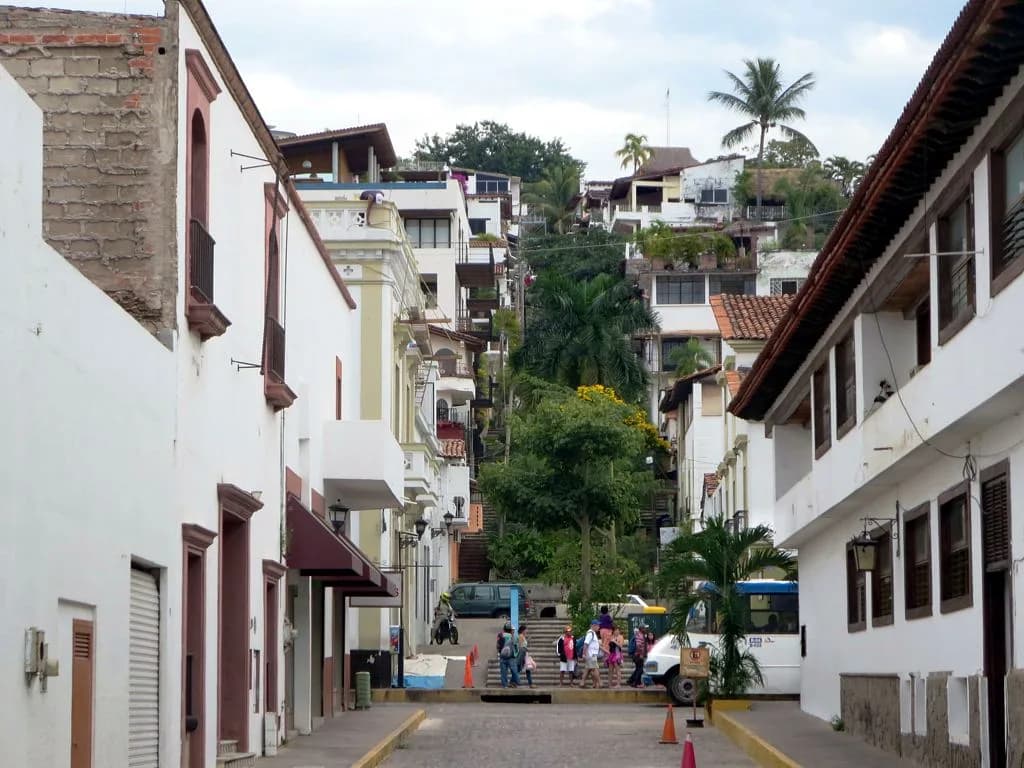
Puerto Vallarta asks your feet to handle three very different surfaces, and one pair of shoes rarely covers all of them. Flip-flops work for the pool, the beach and casual bars, but the cobblestones of the Old Town and the Malecón demand something with grip and support. Royal Caribbean singles out comfortable walking shoes for the city's uneven cobblestone streets, and the Ways of Style Puerto Vallarta notes describe cobblestones as nearly everywhere in the Zona Romántica.
Water shoes cover a third job: rocky coves, boat decks and snorkeling entries where bare feet or loose sandals are a poor idea. If you plan a day trip into the mountains, closed-toe shoes with good tread handle the terrain better than sandals. That is three pairs total, which is a reasonable footprint for a week if you wear the bulkiest pair on the flight.
Break in any new walking shoes before you travel, and prioritize a secure fit over style, because a blister on day one colors the whole trip. A small crossbody bag keeps your hands free on uneven ground and your valuables close in busy areas. Save sandals with thin straps for short, flat walks rather than full days of exploring.
A Light Layer for Air Conditioning and Breezy Evenings
May evenings tend to stay warm, so a heavy jacket is overkill, but a light cardigan or thin long-sleeve layer still earns its space. Air-conditioned restaurants, shops and boats can feel cold after hours in the heat, and a light layer takes the edge off a breezy sunset by the water. Royal Caribbean lists a light windbreaker among useful items for sailing and boat tours.
The most efficient choice is a layer that doubles as sun cover, such as a thin linen shirt or gauze button-down you can also wear open over a swimsuit. If you take an evening boat trip, a light sweater or jacket is a common recommendation because temperatures ease after sunset. Pack one layer, not three, and choose the one that works hardest.
Rain Readiness: Packable Shell Versus Compact Umbrella
Because May showers tend to be brief rather than sustained, the choice between a packable rain shell and a compact umbrella comes down to how you plan to move. A shell keeps both hands free and layers over a daypack, which suits walking, boat trips and excursions. A compact umbrella is lighter and faster to deploy when you are already standing still, but it is awkward on a bike, a boat or a crowded street.
If you only have room for one, take the shell when your days involve water or trails and the umbrella when they center on town and dining. A waterproof phone case and a dry bag protect electronics either way, which Royal Caribbean flags as useful for water activities and unexpected showers. Vallarta Adventures also frames May as the start of the rainy season, which is why a small rain layer belongs in the bag even in a mostly dry month.
Sun Protection That Survives Humidity
Humidity makes sunscreen run and hats feel hot, so sweat-resistant formulas and breathable headwear matter more than usual. A wide-brimmed hat with a chin strap stays put in a breeze, and UV-protective sunglasses with a retention strap save you from losing them over the water. Royal Caribbean recommends high-SPF sunscreen plus a broad-brimmed hat and UV-protection sunglasses.
A long-sleeve rash guard is the single most useful sun item for water days, because it covers arms and shoulders without reapplying lotion every hour. After-sun lotion or aloe vera gel soothes skin after a long day in the sun. Reapply sunscreen more often than you would at home, since sweat and swimming strip it faster.
A Compact 5- to 7-Day Carry-On Packing Example
Start with three or four swimsuits, since they dry slowly and you will want a dry one daily. Add two linen or quick-dry bottoms, three or four lightweight tops, one beach cover-up or linen dress, one evening outfit with a collared shirt or simple dress, and one light layer. Footwear is flip-flops, water shoes and one pair of closed-toe walkers, with the heaviest pair worn on the plane.
Round it out with a wide-brimmed hat, sunglasses with a strap, a rash guard, a packable rain shell or compact umbrella, a waterproof pouch, a crossbody bag, a reusable water bottle and a small toiletry kit with high-SPF sunscreen and after-sun lotion. This mirrors the carry-on approach in the Ways of Style Puerto Vallarta breakdown, where a handful of mix-and-match pieces produce many outfits. Plan one sink-laundry session mid-trip if you are travelling for a full week, and let the three or four swimsuits carry the drying load.
What to Leave Behind
Heavy denim and thick cotton absorb moisture, dry slowly and feel uncomfortable in sticky heat, so leave most of it at home. Leather jackets, boots and anything structured add weight you will regret carrying through a humid airport and a cobblestone street. Save the space for pieces that breathe or dry fast.
Skip multiple heavy layers, since one light cardigan or shell covers both air-conditioned venues and a breezy evening. Leave the overpacked shoe collection behind and take three purposeful pairs instead. If you are unsure whether a specific item fits a venue, that is a question to check with the venue rather than pack defensively for.
Before You Go: Checking the Local Forecast
Historical tendencies tell you how to pack; a current forecast tells you what to adjust in the final days. Check a reputable local or national weather source within a few days of departure, and look at the daily chance of showers rather than a single percentage for the whole trip. If rain probabilities climb, make sure your shell or umbrella is in the bag and your footwear can handle a wet walk.
This is also the moment to confirm anything time-sensitive directly with the operator or venue, because conditions, schedules and requirements change. Treat any specific figure you read about May as background rather than a promise for your dates. Packing for likely conditions, with one flexible rain layer, is the safest posture.
Plan Your Visit
May in Puerto Vallarta rewards a light, fast-drying, mix-and-match bag that treats humidity as the main constraint. Bring three or four swimsuits, breathable tops and bottoms, one light layer, a small rain option and footwear split by surface. Keep the palette tight and the pieces few, and you will spend your trip enjoying the coast instead of managing laundry.
If your travel dates shift toward the drier winter months, the priorities change and the layers matter a little more, so what to wear in Puerto Vallarta in December is worth a look as a comparison. Either way, check the forecast close to departure and adjust from there. The goal is a bag that handles the conditions you actually meet, not the ones you imagined.
Frequently Asked Questions
Is May a good month to visit Puerto Vallarta?
May is the transition month between the dry season and the rains, so it typically brings warm, humid days with a chance of brief showers toward the end of the month. If you prefer drier, cooler conditions, the winter months suit better; if you want warm water and fewer crowds, May can work well. Check a current local forecast close to departure to see how the month is behaving.
What should I wear in Puerto Vallarta in May?
Lightweight, breathable clothing works best: linen or cotton tops, loose shorts or linen pants, and a cover-up for beach-to-restaurant transitions. Add one light layer for air-conditioned venues and breezy evenings, plus a packable rain shell or compact umbrella for brief showers. Treat these as comfortable defaults rather than rules, and adjust for your own plans.
How many swimsuits should I pack for Puerto Vallarta in May?
Three or four is a practical number for a week, because humidity slows drying and you will want a dry suit each day. Rotate them and hang the damp ones to dry instead of leaving them balled up in a bag. If you snorkel or spend long hours on the water, a UV-protective rash guard adds useful coverage.
Do I need a rain jacket for Puerto Vallarta in May?
A compact, packable rain shell or a small umbrella is worth carrying because May marks the start of the wetter season, even though showers tend to be brief rather than all-day. Choose a shell if you will be walking, boating or on excursions, and an umbrella if your days center on town and dining. Confirm conditions with a current forecast before you leave.
What shoes are best for Puerto Vallarta's cobblestone streets?
Closed-toe walking shoes with good grip and support handle the uneven cobblestones of the Old Town and the Malecón better than thin sandals. Keep flip-flops for the pool, beach and casual bars, and add water shoes for rocky coves and boat days. Break in any new walking shoes before the trip to avoid blisters.
What fabrics work best in Puerto Vallarta's humidity?
Linen, loose cotton and quick-dry synthetics handle sticky heat best, though natural fibers hold moisture while synthetics dry faster. A mix lets you wear breathable pieces on beach days and quick-dry items when you expect sweat or spray. Avoid heavy denim and thick cotton, which dry slowly and feel clammy.
What should I leave behind when packing for Puerto Vallarta in May?
Leave heavy denim, leather jackets, boots and multiple bulky layers at home, since they trap moisture, dry slowly and add weight. Take one light layer instead, and limit yourself to three purposeful pairs of shoes. If you are unsure whether an item suits a specific venue, check with that venue directly rather than packing defensively.
Sources
Free: The Ultimate Packing Cheat Sheet
A carry-on capsule wardrobe, the complete packing checklist, layering made simple, and what to wear by season — one printable page you'll use on every trip.
You might also like


Continue reading
More guides you'll find useful


