
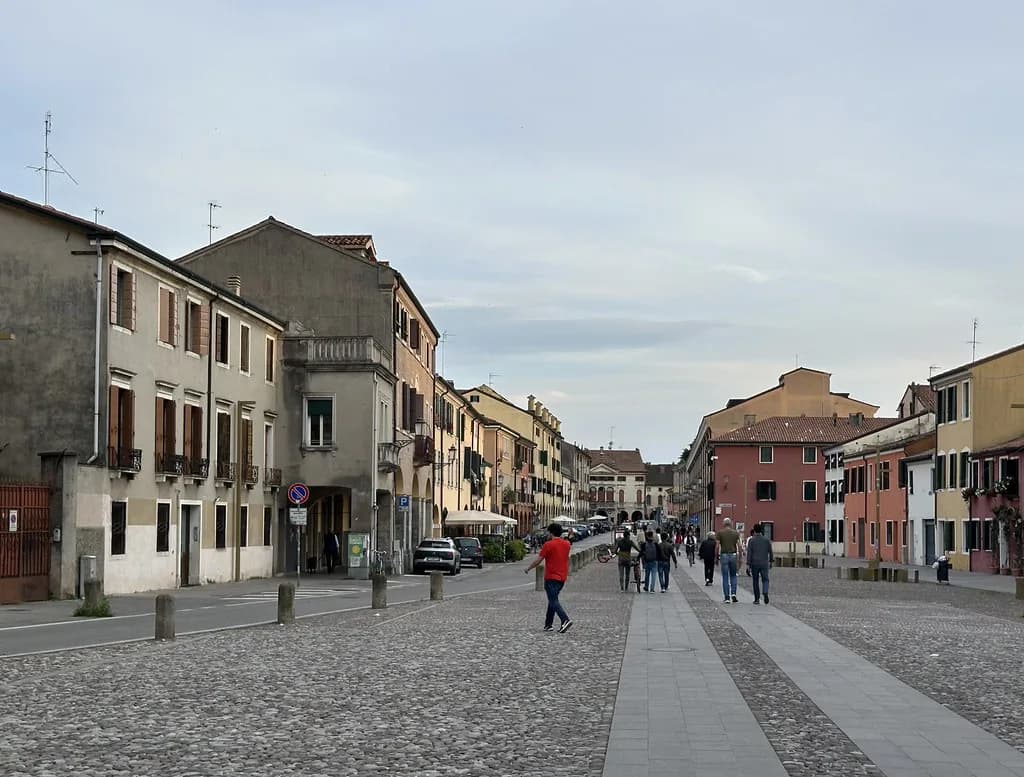
What to Wear to the Scrovegni Chapel and Basilica of Saint Anthony in Padua
Outfits for Padua's Scrovegni Chapel and Basilica of Saint Anthony: covered shoulders and knees, quiet comfortable layers, and stand-all-day shoes.
On this page
Padua puts two of northern Italy's most visited sacred-art sites within a short walk of each other, and they ask slightly different things of your clothing. The Basilica of Saint Anthony is an active place of worship where covered shoulders and knees are the sensible default for men and women alike. The Scrovegni Chapel is a small, carefully managed interior where you sit for a short timed visit and want nothing rustling, pinching, or overheating. The practical answer is one modest base outfit, a quiet removable layer, and shoes you can stand in.
Because the two sites sit close together in the same pedestrian-friendly core, you are not changing clothes between them. Your outfit has to cover church modesty, indoor sitting comfort, and pavement walking in a single pass, ideally with a packable rain layer in your day bag. Building around one flexible combination is far easier than packing separate looks for each site. Start with the basilica's expectations and let the chapel refine the details.
Start With the Basilica: Shoulders and Knees Set Your Base Layer
The Basilica of Saint Anthony is a working church and a pilgrimage destination, so the safest base layer keeps shoulders and knees covered. General guidance for Italian churches applies to men as well as women: sleeveless tops, short shorts, and mini skirts are the items most likely to cause awkwardness. A plain short-sleeved or three-quarter-sleeve top with lightweight trousers, a long skirt, or a maxi dress handles this in one decision. The same base then carries you through the rest of your Padua day without a costume change.
Head covering is the detail people over-pack for. Women are not required to cover their hair in Italian churches, though some may choose a light scarf for personal comfort or reverence; men traditionally remove hats and caps indoors. A scarf earns its place in your bag mainly as a sun and chill layer, not as a mandatory item. If you want certainty about the basilica's expectations on the day, check the notices at the entrance and follow instructions from staff.
Trousers or a long skirt beat shorts here, and ripped jeans are a poor choice because the gaps can expose a knee or thigh even when the overall garment is long. For hot days, choose a breathable fabric such as cotton or a linen blend rather than heavy denim. If you plan to add the nearby Piazza del Santo to your walk, the same covered outfit works outdoors with a hat. Keep the modest layer lightweight so it does not become a burden by afternoon.
Building a Church-Appropriate Outfit for Men and Women
For men, the reliable combination is chinos or lightweight trousers with a polo or short-sleeved shirt that covers the shoulders. A collared shirt reads slightly dressier and works just as well for an evening meal after the sites. Avoid graphic tees with strong slogans and football shirts, which are legal but feel out of place in a pilgrimage church. One pair of neutral trousers and two tops is enough clothing for both sacred sites across a short trip.
For women, a loose blouse with trousers, a midi or maxi skirt without a high slit, or a modest maxi dress all satisfy the covered-knee and covered-shoulder expectations. Breathable fabrics keep you comfortable in humid weather, and a dress in a wrinkle-resistant blend packs smaller than separates. If you prefer a skirt, choose one long enough that sitting and climbing steps does not ride up. A light cardigan doubles as shoulder coverage and as an extra layer for cool interiors.
Jeans are acceptable in Italian churches as long as they are intact and cover the knee, though in summer they can be too hot for a long walking day. In cooler months they become a practical default, especially in the Veneto where damp cold makes heavier fabric welcome. Sandals are not prohibited by church dress conventions, but a sandal with real arch support serves you better than a flimsy pair on Padua's stone pavements. Treat all of these as sensible defaults rather than an enforced uniform.
The Scrovegni Chapel: Dressing for a Quiet, Controlled Visit
The Scrovegni Chapel is the opposite packing problem from a large basilica: a small interior where visitors sit for a short timed viewing. Dressing quietly is more about comfort and courtesy than about any published rule. Choose soft fabrics that do not rustle, avoid very bulky coats you would have to hold on your lap, and skip jangling jewellery or loose metal accessories that make noise in a silent room. Comfortable, low-friction layers let you sit still and look up without fidgeting.
Interiors can feel cooler than the street, so a light cardigan, wrap, or fine-knit layer is worth carrying even on a warm day. If you run warm, a short-sleeved base under a removable layer is easier to manage than a heavy sweater. Entry arrangements are managed directly by the operator, and the official Cappella degli Scrovegni ticket service is the place to confirm what you may bring inside, how early to arrive, and whether any bag restrictions apply on your date. Check that page before you finalise your day bag.
Footwear matters less for modesty here than for steadiness: you may stand while waiting for your entry slot and then sit in a controlled interior. Flat, closed shoes with a secure sole are the least distracting and the most practical on the surrounding pavements of Piazza Eremitani. If you carry a scarf, keep it as a layer for the walk rather than a requirement for the chapel. Anything you would have to take off, fold, or juggle at the entrance is better left at your hotel.
Footwear for Timed Entry, Standing, and Piazza Walking
A Padua day around these two sites involves more standing than continuous hiking, so pick shoes for stability and easy on-off rather than for trail mileage. Broken-in leather trainers, supportive walking shoes, or a low-profile boot all work; a brand-new pair is the classic mistake. Slip-on styles are convenient at entrances but should still have a secure heel so you are not gripping with your toes. One comfortable pair plus a lighter backup is usually enough for a short trip.
Skip high heels and slick-soled dress shoes: Padua's historic centre uses stone paving and cobbles, and the walk between the basilica area and the chapel crosses a mix of surfaces. In wetter months, a water-resistant shoe or a treated leather pair keeps damp from seeping in during a sudden shower. If rain is likely, pack a spare pair of socks in your day bag, since wet socks are what actually ruins an afternoon of standing. Comfort here is an editorial recommendation, not a venue requirement.
Think of your shoes and your modest outfit as one decision. A low-profile sneaker in a neutral colour works with trousers, skirts, and maxi dresses and saves you from packing a second dressy pair. If you want one pair that covers both sacred sites and an evening meal, choose a clean leather-look trainer or a supportive flat. Test the combination at home before you pack so you are not discovering a rubbing strap on the morning of your visit.
Fabric and Layer Choices for Padua's Seasonal Swings
Padua's climate is moderately continental, with cold, damp winters and hot, muggy summers, which is why a layered approach beats any single heavy garment. The coldest month, January, has an average temperature of about 3.1 degrees Celsius, or roughly 37 degrees Fahrenheit, while July averages around 24.5 degrees Celsius, about 76 degrees Fahrenheit. Those monthly averages come from climate statistics for Padua and describe historical tendencies rather than a forecast for your dates. They tell you which weight of fabric to pack, not what the sky will do.
Spring and early summer, along with September, are generally the most comfortable periods, but both shoulder seasons carry a higher chance of rain. October is the wettest month in the annual precipitation record, at about 95 millimetres, with roughly seven rainy days on average, while February is the driest at about 45 millimetres, also with around five wet days. That pattern argues for a compact umbrella or a light waterproof shell rather than a heavy raincoat from May through autumn. For a closer look at the damp, cooling end of the year, what to wear in Padua in November covers the shoulder-season wardrobe.
In practical terms, build a capsule that flexes across about ten degrees either side of the seasonal average. A breathable base layer, a mid-layer such as a fine knit or light fleece, and a packable outer shell cover most conditions from April through October. In winter, swap the shell for a warm waterproof coat and add a scarf, gloves, and a hat, since damp cold feels sharper than the thermometer alone suggests. Natural fibres breathe well in summer humidity; synthetics dry faster if you get caught in a shower.
A Compact Three-Day Packing Example
For three days in Padua covering both sacred sites, build from two bottoms and three tops rather than packing a separate church outfit. A pair of neutral lightweight trousers and one long skirt or a second pair of trousers give you options; add two short-sleeved or three-quarter-sleeve tops and one long-sleeved shirt. That combination yields several outfits, all of which keep shoulders and knees covered for the basilica. It also packs into carry-on space without needing compression.
Add one light cardigan or wrap for the chapel and evening air, one packable rain layer, and a compact umbrella for the shoulder seasons. Two pairs of comfortable shoes, one worn and one packed, is the sensible limit; more just adds weight. Fold in a scarf that works as sun cover, neck warmth, and a breathable extra layer. Socks, underwear, and sleepwear round out the list, and everything else is a want rather than a need.
For a colder-weather version of the same capsule, what to wear in Padua in January shows how to add warmth without doubling the bag, and what to wear in Padua in April covers the unsettled spring transition if your dates land earlier in the year. Keeping the rest of your lineup the same means your church-appropriate base does not change with the season; only the outer layers do. Start with the year-round outfit and layer the weather on top.
What to Leave Behind Before You Leave the Hotel
Leave the beachwear, the very short shorts, and the strappy tank tops at the hotel on any day you plan to enter a church. They are fine for a riverside afternoon but create avoidable friction at the basilica door. The same applies to large backpacks and oversized day bags, which are awkward in a busy pilgrimage church and may be restricted at ticketed interiors. A slim crossbody bag or a small daypack keeps your hands free and your footprint light.
Skip noisy jewellery, clattering bangles, and anything that crinkles loudly when you move, particularly for the chapel, where a quiet atmosphere is part of the experience. Leave the second pair of dress shoes behind if it has slick soles or a high heel; it will not earn its luggage space on Padua's paving. Heavy denim jackets and thick knits are usually the first things to regret in a humid Padua summer. If you are day-tripping onward, what to pack for a Brenta Riviera villa day from Padua covers a different footwear and bag set.
Before-Departure Weather Check
Seasonal averages tell you what to own; a forecast tells you what to carry on the day. Check a reliable forecast for Padua two or three days before departure and again on the morning of each sacred-site visit, and adjust the outer layer and whether you take an umbrella. This matters most in spring and autumn, when a mild morning can turn into a wet afternoon and back again. A short check prevents both overpacking and the damp-shoe problem.
Use the forecast to decide between a light shell and a warmer coat, and to choose between closed shoes and a breathable walking shoe. If heavy rain is expected, add the spare socks and a hooded layer rather than a second full outfit. None of these adjustments change the church-appropriate base, which stays constant in any season. Pack the base, then let the weather decide the outer two items.
How the Two Sites Differ in Practice
The basilica is the stricter of the two for coverage, not because of a published list of rules but because it is a large, active place of worship where modest dress is the norm. The chapel is more about quiet and calm: a small, controlled interior where comfortable, non-distracting clothing helps you sit and appreciate the art. One modest base outfit satisfies both, with a soft layer and a quiet bag as the chapel-specific refinements. That is why this guide recommends one wardrobe, not two.
Plan your route so the dressing decision is made once. Walking from the basilica area toward Piazza Eremitani keeps you outdoors between the sites, so a hat, sunscreen, or a compact umbrella earns its place depending on the season. If your day includes the wider city centre, the Padua packing list is the better reference for non-sacred sightseeing. Keep the sacred-site outfit as the anchor and treat everything else as optional additions.
Plan Your Visit
The short version: cover your shoulders and knees for the Basilica of Saint Anthony, add a soft quiet layer for the Scrovegni Chapel, and wear shoes you can stand in on stone paving. Build the outfit from one modest base, then layer the season on top rather than packing a separate look for each site. Leave beachwear, loud jewellery, and bulky bags at the hotel.
Confirm entry arrangements, timings, and any bag rules through the official Cappella degli Scrovegni ticket service before your visit, and check the basilica's own notices on the day. Recheck the Padua forecast shortly before departure, since spring and autumn can shift quickly. With one flexible outfit and a compact rain layer, both sacred sites fit easily into a single Padua day.
Frequently Asked Questions
What should I wear to the Scrovegni Chapel?
Treat the chapel as a quiet interior rather than a formal venue. Soft, non-rustling layers, a light cardigan or wrap in case it feels cool inside, and a small bag you can keep on your lap are sensible choices. Comfortable, closed shoes help because you may stand while waiting for your entry slot. Modest coverage of shoulders and knees is a reasonable default if you are visiting other churches the same day. Check the official ticket service for current entry arrangements.
Is there a dress code for the Basilica of Saint Anthony in Padua?
The basilica is an active church and a pilgrimage site, so modest dress is the appropriate default: keep shoulders and knees covered, for men as well as women. That means avoiding sleeveless tops, very short shorts, and mini skirts, and skipping jeans with rips that expose the knee. Head covering for women is optional, while men traditionally remove hats indoors. Check any notices at the entrance on the day and follow staff guidance.
Can I wear shorts to churches in Padua?
Shorts that cover the knee are far safer than short ones; very short shorts are the item most likely to cause awkwardness in a church. The practical solution is a pair of lightweight long trousers or a long skirt you can change into, or simply saving the shorts for non-church sightseeing. Since both sites sit close together, planning your day around a covered-knee outfit is easier than changing clothes midway.
Do I need to cover my head inside Padua churches?
Head covering is not required for women in Italian churches, though some choose a light scarf for personal comfort or reverence. Men traditionally remove hats and caps indoors. If you are unsure about a particular church, look for the notices at the entrance or ask staff. A scarf is best treated as a sun and chill layer that happens to be useful.
What shoes are best for visiting the Scrovegni Chapel and the Basilica of Saint Anthony?
Choose broken-in, supportive shoes with a secure sole, since the day involves standing, short waits, and walking on stone paving between the sites. A low-profile leather trainer or supportive walking shoe pairs well with trousers, skirts, and maxi dresses, so you only need one main pair. Avoid high heels and slick soles, and pack a spare pair of socks if rain is likely.
What should I pack for a spring or autumn visit to Padua?
Focus on layers and rain readiness. A breathable base, a mid-layer such as a fine knit, and a packable waterproof shell cover the changeable shoulder seasons, and a compact umbrella is worth carrying. Padua's spring and autumn both carry a higher chance of rain, so water-resistant footwear helps. Confirm the conditions with a short-range forecast just before departure.
What should I leave behind when visiting Padua's sacred sites?
Leave beachwear, very short shorts, strappy tanks, and ripped jeans at the hotel on any church day. Skip noisy jewellery and anything that crinkles, especially for the chapel, and keep bags small rather than carrying an oversized daypack. Slick-soled dress shoes and extra pairs of heels rarely earn their space on Padua's paving.
Sources
Free: The Ultimate Packing Cheat Sheet
A carry-on capsule wardrobe, the complete packing checklist, layering made simple, and what to wear by season — one printable page you'll use on every trip.
You might also like


Continue reading
More guides you'll find useful


