

Padua Packing List: What to Wear for Porticoes and Frescoes
Padua packing list: cushioned shoes for cobblestones and porticoes, layer-friendly clothing, compact rain gear and simple outfits for fresco and basilica visits.
On this page
Padua weather month by month
Typical conditions from 30 years of daily weather data — use it to see how much to pack for the month you are travelling.
| Month | High / low | Days with rain | Afternoon humidity | Daylight |
|---|---|---|---|---|
| January | 7° / 0°C (45° / 32°F) | 2 in 10 days | 62% | 8.9 h |
| February | 10° / 1°C (49° / 33°F) | 2 in 10 days | 56% | 10.2 h |
| March | 14° / 4°C (57° / 39°F) | 3 in 10 days | 53% | 11.6 h |
| April | 18° / 8°C (64° / 46°F) | 4 in 10 days | 53% | 13.3 h |
| May | 22° / 12°C (72° / 54°F) | 4 in 10 days | 53% | 14.7 h |
| June | 26° / 17°C (79° / 62°F) | 3 in 10 days | 53% | 15.5 h |
| July | 29° / 19°C (84° / 66°F) | 3 in 10 days | 50% | 15.1 h |
| August | 29° / 19°C (84° / 67°F) | 3 in 10 days | 51% | 13.9 h |
| September | 24° / 15°C (75° / 59°F) | 3 in 10 days | 56% | 12.3 h |
| October | 18° / 11°C (65° / 51°F) | 3 in 10 days | 60% | 10.7 h |
| November | 13° / 6°C (55° / 42°F) | 3 in 10 days | 64% | 9.3 h |
| December | 8° / 1°C (46° / 33°F) | 2 in 10 days | 64% | 8.5 h |
Travelling on specific dates? Use our What to Wear Planner for the weather, outfits and a packing list for your exact days in Padua.
Averages for 1991-2020, modelled from Copernicus ERA5-Land and ERA5 reanalysis via Open-Meteo open data (CC BY 4.0), adjusted to Padua's elevation. Modelled afternoon highs can read 1–2°C below airport weather-station records.
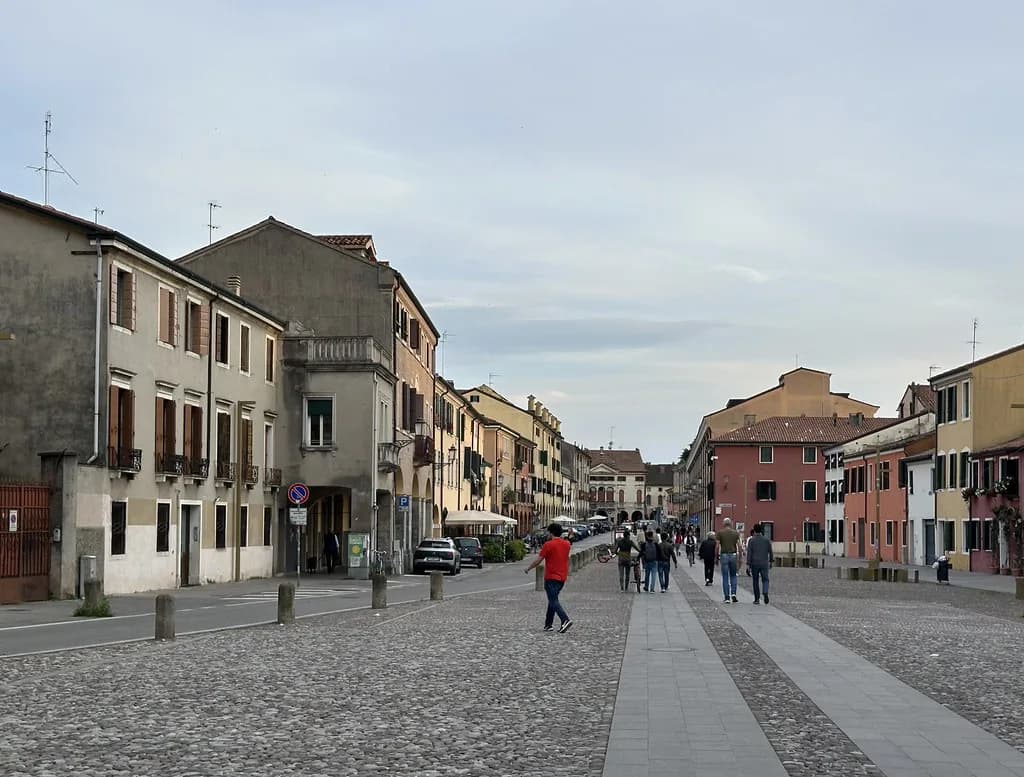
Padua's historic core is small enough to cross on foot in a morning, but the surfaces underfoot shape the packing list. Long porticoes, stone-paved squares and polished thresholds at religious sites mean grip and cushioning do more for your day than a formal outfit. Pack for walking first, then adjust around the forecast you check in the final week before departure.
This is a clothing, footwear and rain-gear guide rather than an itinerary. It stays focused on practical outfit combinations for city walking, fresco and basilica visits, and evenings in the university district, plus what to leave behind and how to build one compact capsule for a short break.
How Padua's Climate Shapes the Packing List
Padua sits on the Venetian plain, where the climate is described as moderately continental: averages for the coldest month sit near 3 °C (37 °F) and the warmest month near 24.5 °C (76 °F), with cold, damp winters, hot muggy summers and occasional windy spells. Treat those figures as historical tendencies rather than a forecast, because the city's day-to-day weather changes and the week before you fly is when the useful numbers appear.
Two practical consequences follow. First, Padua is a layering city rather than a single-outfit city, because mornings and evenings can feel noticeably different from the middle of the day, especially in the shoulder seasons. Second, rain is a probability you plan around rather than an exception you ignore, which is why a packable shell and a small umbrella earn their space.
If your trip falls at the colder end of the year, a dedicated month-by-month walkthrough helps refine the layers. The same logic applies at the other end of the calendar, so read the seasonal pages closest to your travel dates rather than relying on a single year-round checklist.
Footwear for Cobblestones and Porticoes
Footwear is the single highest-impact item on this list. The centre is largely pedestrian and best explored on foot, and the combination of cobblestones, smooth portico floors and stone squares punishes stiff new leather soles and unsupportive flats. Cushioned walking shoes with a grippy rubber outsole handle wet stone far better than a dress shoe, and they still look fine with the rest of a city wardrobe.
Bring a second, already broken-in pair if you are staying more than a couple of nights. Alternating shoes lets the first pair dry out after a damp day and spreads pressure across different contact points. A low-profile sneaker or a lightweight walking shoe is a better second pair than a sandal, because portico floors stay slick well after the rain stops.
Socks matter more than most people expect on a wet-weather trip. Two or three pairs of quick-drying socks keep a damp-shoe day from turning into a blister day, and they take up almost no space. If you wear insole inserts at home, bring them rather than hoping a new shoe will be comfortable out of the box.
A Layering System for Changeable Days
Build the outfit in three parts: a base layer that manages moisture, a mid-layer that holds warmth, and a packable outer shell for wind and drizzle. That structure lets you handle a cool morning, a warm afternoon and a breezy evening without returning to the hotel. It also means you can pack fewer total garments, because the same base layers repeat under different mid-layers across the week.
For the middle layer, a fine-knit sweater or a light fleece is more versatile than a bulky one, because it packs flat and fits under a jacket. Choose a neutral colour you can wear twice without it looking like the same outfit, and skip anything that needs special care. Quick-drying trousers in a dark tone handle both a walking day and an evening table without a change.
A scarf earns its place in almost every season here. In cooler months it seals the gap at the neck where heat escapes, and in warm months a light one covers shoulders at a religious site or takes the edge off air-conditioned interiors. One scarf, not three, is enough for a short break.
Rain Gear That Fits a Compact City Day
Rain protection here is a probability problem, not an emergency kit. Spring and autumn bring the highest number of wet days, and short showers can also interrupt summer, so a compact umbrella and a packable rain jacket cover two different situations: the umbrella for walking between porticoes and the jacket for open squares and wind where an umbrella is awkward.
Keep the shell genuinely packable: a thin, hooded layer that folds into its own pocket takes up less room than a heavy coat and still blocks wind. Pair it with a small dry pouch for your phone, tickets and any paper you are carrying, since a sodden pocket is the most common small disaster of a rainy city day. A single compact umbrella bought before departure usually beats improvising one on arrival.
What to Wear for Fresco and Basilica Visits
Padua's headline cultural stops include the Scrovegni Chapel with its Giotto frescoes and the Basilica of St. Anthony, and both are religious or heritage sites where a little coverage is the practical, respectful choice. Treat shoulder-covering tops and bottoms that reach the knee as an editorial suggestion rather than a verified rule: it lets you move between sites without a separate wardrobe. If a specific venue publishes its own visitor guidance, that guidance is what counts.
The easiest approach is a light layer you can put on at the entrance and take off afterwards, such as a thin cardigan, a wrap or a long-sleeved overshirt that lives in your day bag. Covered shoulders and knees are the conventional shorthand, and they also keep you comfortable in interiors that can feel cool. Avoid planning a bare-shouldered outfit as your only option for a day that includes a chapel or basilica.
Practical extras for these visits are less about appearance than logistics. Soft-soled, quiet shoes are a sensible default anywhere with delicate floors, a small bag that stays close to your body is easier to manage in tight interiors, and a layer that can be removed quickly helps when you move from a cool chapel into warm afternoon air.
Evening Outfits for the Student District
The university district gives Padua its relaxed evening character, and the packing goal is to look put-together without going back to the hotel to change. A dark pair of trousers or good jeans, a clean top and one smarter outer layer handle both an aperitivo and a casual dinner. If you want a single upgrade item, make it a light jacket or overshirt rather than a second pair of shoes.
The main trade-off is footwear. A smarter shoe that you can walk in is worth more than a dressier pair you cannot, because the evening still involves the same cobblestones and porticoes as the afternoon. If you do pack a second, slightly dressier pair, make it a flat you have already worn for a full day at home.
Summer Packing: Heat, Humidity and Cool Interiors
Summer in Padua is hot and muggy, and the Veneto plain can feel stickier than the coast because there is less breeze to break it up. Pack breathable natural fibres or technical fabrics that dry quickly, and favour loose cuts over close-fitting ones. A hat, sunglasses and sun protection belong in the day bag rather than the suitcase, because you will want them on the walk between stops.
Two summer items are easy to forget. A light cardigan or scarf is genuinely useful for air-conditioned interiors and for the drop in temperature after sunset, and a compact umbrella covers the short, intense showers that can break a hot afternoon. A refillable bottle keeps the day moving, and a small crossbody bag is cooler to carry than a backpack against your back.
Winter Packing: Damp Cold, Not Deep Snow
Winter here is cold, damp and often overcast, with occasional frost. The discomfort comes from moisture and wind rather than from deep snow. Pack an insulated jacket that blocks wind, plus a hat, gloves and scarf, and choose water-resistant footwear over fabric shoes that soak through. If your trip is in the coldest stretch of the year, what to wear in Padua in January walks through the specific layers worth carrying.
Because the city is exposed to both the bora and the sirocco winds, a windproof outer layer does more work than an extra sweater on a raw day. Thermal base layers are lighter and more effective than doubling up on knitwear, and a warm mid-layer you can shed indoors keeps you comfortable in heated cafés and museums. Add one pair of warm, dry socks per day rather than assuming you can dry them overnight.
Spring and Autumn Packing: Layers and Quick-Drying Fabrics
Spring and autumn are the seasons where the packing list earns its keep. Both are mild but carry the highest number of rainy days, and the gap between daytime warmth and evening cool can be wide, so versatile layers, a waterproof outer layer and quick-drying trousers outperform a fixed outfit. April and May in particular are noted for frequent wet days alongside mild temperatures, which makes an umbrella a sensible default rather than an optional extra.
Pack around the shoulder seasons as if you will meet both a warm afternoon and a cool, wet morning on the same day. A single waterproof shell over rotating base and mid-layers covers more conditions than two separate outfits, and it keeps the bag light enough to walk with all day. Trousers that dry fast matter more here than a second pair of jeans.
A Compact Trip-Length Packing Example
For a short city break, build one carry-on capsule rather than a checklist per activity. Start with two base layers and two mid-layers that can be mixed, one packable waterproof shell, two pairs of quick-drying trousers in dark tones, one pair of cushioned walking shoes plus a lightweight second pair, and one smarter overshirt or jacket for the evening. Add three to four pairs of socks and underwear, one scarf, one compact umbrella and a small dry pouch for your phone and tickets.
The point of this capsule is repetition. The same trousers and shoes carry you through a morning of frescoes, an afternoon of portico walking and an evening aperitivo, with only the top layers changing. If you are travelling in a colder month, swap one base layer for a thermal version and add hat and gloves rather than adding a second jacket.
What to Leave Behind
Heavy formal wear is the first casualty. Padua's restaurants and bars are relaxed, and a dark, simple outfit covers any occasion you are realistically likely to meet, so a suit or formal dress usually just occupies space. Multiple pairs of heels are the second: they are unstable on cobblestones and portico floors, and one comfortable smarter flat does the same job.
Also leave behind bulky towels, duplicate toiletries and any second item that competes with rain gear for space. The compact city break is a walking trip, and the weight you avoid carrying is worth more than the outfit you never wear. If you are unsure about an item, ask whether it works with the same shoes and trousers as everything else.
Check the Forecast Before You Pack
In the week before departure, check a forecast for your actual travel dates and treat it as the final filter on this list. It will tell you whether the umbrella and shell are essential or merely sensible, and whether you need the thermal base layer or can leave it at home.
Then do one last check in front of the bag: shoes broken in and comfortable, layers that work together in any combination, and rain protection that fits in your day pack. That is the whole game in Padua, and the wardrobe you can walk in all day will serve you better than the one you packed for a photograph.
More packing guides for Italy
- What to Pack for a Brenta Riviera Villa and Boat Day from Padua
- What to Pack for Hiking the Euganean Hills from Padua
- What to Pack for a Padua to Venice Day Trip
- What to Wear for an Aperitivo in Padua's Student Quarter
- What to Wear in Padua in April: Layers and Rain Gear
- What to Wear in Padua in January: Cold-Weather Packing
- What to Wear in Padua in July: Summer Packing Guide
- What to Wear in Padua in November: Layering for Damp Days
- What to Wear to the Scrovegni Chapel and Basilica of Saint Anthony in Padua
- Taormina Packing List: What to Wear for Hills, Beaches, and Etna
- Ravenna Packing List: What to Wear for Mosaics and Humid Weather
Frequently Asked Questions
What should I pack for Padua?
Start with cushioned walking shoes, layered tops, quick-drying trousers, a packable waterproof shell and a compact umbrella, plus a light scarf for shoulders and air-conditioned interiors. Padua's historic centre is largely pedestrian with cobblestones and long portico stretches, so footwear and layers do more for your trip than formal clothing.
What shoes should I wear in Padua?
Comfortable, broken-in walking shoes with a grippy sole are the best choice for cobblestones, stone squares and polished portico floors. Bring a second, already worn-in pair if you are staying more than a couple of nights, and prioritise quick-drying socks so a damp day does not turn into a blister.
Do I need an umbrella in Padua?
A compact umbrella is worth carrying, particularly in spring and autumn when wet days are more frequent. Add a thin packable rain jacket for open squares and windy days, when an umbrella is awkward, and keep a small dry pouch for your phone and tickets.
What should I wear to the Scrovegni Chapel or the Basilica of St. Anthony?
Shoulder-covering tops and bottoms that reach the knee are a sensible, respectful default at Padua's religious and heritage sites, and a light removable layer is the easiest way to manage it. Treat this as a practical suggestion rather than a fixed dress code, and follow any visitor guidance the individual site publishes.
Are Padua and Padova the same place?
Yes. Padua is the English name and Padova is the Italian name for the same city in the Veneto region of northern Italy. Both appear in transport timetables and booking systems, so searches under either name lead to the same destination.
How do I pack light for a short Padua trip?
Build one capsule of two base layers, two mid-layers, a packable shell, two pairs of quick-drying trousers and two pairs of shoes, then make every outfit work with the same shoes and bottom half. Repeating pieces across walking, church visits and evening plans keeps a carry-on manageable.
What should I leave behind when packing for Padua?
Leave out heavy formal wear, multiple pairs of heels, bulky towels and duplicate bulky items. Padua is a walking city, and the space is better used for rain protection, a second comfortable pair of shoes and layers you will actually rotate through.
Sources
Free: The Ultimate Packing Cheat Sheet
A carry-on capsule wardrobe, the complete packing checklist, layering made simple, and what to wear by season — one printable page you'll use on every trip.
You might also like


Continue reading
More guides you'll find useful


