What to Wear in Taormina in April: Spring Layers and Grippy Shoes
April in Taormina mixes mild afternoons, cool evenings and showers. Build a light layer system, pick grippy shoes and pack smart for Etna and church visits.
On this page
Taormina in April: the weather in numbers
Typical April conditions from 30 years of daily weather data, split into early, mid and late month so you can match them to your travel dates.
| Dates | Early Apr (1–10) | Mid Apr (11–20) | Late Apr (21–30) |
|---|---|---|---|
| Afternoon high | 15°C (59°F) | 16°C (61°F) | 17°C (63°F) |
| Night-time low | 9°C (49°F) | 10°C (50°F) | 11°C (52°F) |
| Feels like (afternoon) | 14°C (56°F) | 15°C (58°F) | 16°C (61°F) |
| Range of afternoon highs | 13–18°C | 14–19°C | 15–20°C |
| Days with rain | 3 in 10 days | 4 in 10 days | 4 in 10 days |
| Afternoon humidity | 67% | 67% | 67% |
| Average wind | 8 km/h | 8 km/h | 7 km/h |
| Daylight | 12.6 h | 13 h | 13.4 h |
What this means for your suitcase
- Mild days: long sleeves with a light sweater or jacket you can take off at midday.
- Showers on roughly 4 in 10 days — a packable rain jacket or compact umbrella.
Travelling on specific dates? Use our What to Wear Planner for the weather, outfits and a packing list for your exact days in Taormina.
Averages for 1991-2020, modelled from Copernicus ERA5-Land and ERA5 reanalysis via Open-Meteo open data (CC BY 4.0), adjusted to Taormina's elevation. Modelled afternoon highs can read 1–2°C below airport weather-station records.
April in Taormina sits in the middle of a seasonal shift, so the useful question is not how warm it will be but how many weather modes one day can hold. Mild afternoons, cool evenings, and occasional rain are all part of the same week, and a single outfit built around layers handles all three without a second bag. Pack for change, not for a fixed temperature.
Terrain shapes the shoe decision here more than temperature does. Taormina's lanes and stairways climb steeply above the coast, coastal paths mix paving with rock and gravel, and an Etna day can still involve snow at altitude while the town below is comfortable. One pair of grippy walking shoes plus one smarter pair covers almost every April plan.
The core April principle is to think in three layers rather than one warm coat: a breathable base, a mid layer you can shed, and a packable outer layer for wind and showers. April and early-season trips call for warmer options in the bag than late spring does, but a full summer wardrobe is still premature. Check the forecast close to departure and adjust quantities rather than packing a second suitcase.
April Conditions on the Eastern Sicilian Coast
April on the eastern Sicilian coast is typically pleasant rather than hot, with warm afternoons and noticeably cooler evenings, and a real chance of rain across the month. A local season-by-season reference describes April as pleasant with first beach days possible and layers essential, and notes that Mount Etna can stay snow-capped through April even when the coast is mild — a reminder that altitude changes the packing brief completely.
The day-to-night swing matters more than the headline daytime number. A local packing guide notes that a 15°C gap between day and night is normal in spring and autumn, so the same day can feel like two seasons; that gap is exactly why a mid layer and a scarf earn their space. Treat this as a historical seasonal tendency, not a forecast for your dates.
Rain guidance for the shoulder seasons is consistent across packing sources: showers are possible and often brief, but heavy enough when they arrive that a light waterproof layer and a small umbrella are worth carrying. Build for occasional rain rather than a washout, and leave the heavy storm shell at home. Before departure, verify current conditions with a forecast covering both Taormina and the higher elevations you plan to visit; the same local table lists April averages of about 21°C / 70°F highs, 9°C / 48°F lows and roughly five rain days for the eastern coast, but figures vary by source and location, so compare more than one before finalising your layers.
A Day-to-Evening Layering Formula
Start with a light base layer you would happily wear alone on a warm afternoon: a cotton or linen T-shirt, a blouse, or a simple dress. Add a mid layer you can remove and re-add without thinking, such as a cardigan or light sweater, and finish with a packable outer layer that blocks wind and light rain. Three pieces, three temperature settings, no wasted weight.
The trade-off is between weight and coverage, and April rewards coverage. A thin merino or light wool sweater insulates while staying breathable, while a bulky fleece takes up the same space as two better pieces and rarely gets worn in town. If you run cold, add a second thin mid layer rather than one thick one, since two light pieces also let you tune for a windy terrace.
Wind matters more than most first-time visitors expect, especially on exposed viewpoints, terraces and ancient sites above the water. A light scarf or pashmina doubles as wind protection and as shoulder or knee coverage for a church visit, so it earns its place in the day bag. The same scarf becomes an extra evening layer once the sun drops.
Fabrics for Changeable Spring Weather
Natural fibres handle April's humidity swings better than heavy synthetics: cotton, linen and light wool breathe, dry reasonably fast, and stay comfortable from a warm afternoon into a cool evening. Tight synthetic pieces tend to cling and trap moisture on the coast, which is exactly what you do not want on a day that moves between sun and shower.
Practical packing lists for Sicily in spring and autumn consistently suggest mixing lighter and warmer layers instead of committing to a single weight, with T-shirts and pants, dresses layered over leggings, cardigans and light sweaters as the working set. April and October call for more warm options than May and September, which is the single most useful adjustment you can make if your trip straddles the season.
Linen wrinkles, which matters if you want to look put-together for an evening walk rather than pressed and polished. A cotton-linen blend or a fine-gauge knit gives you the breathability without looking rumpled after a day in a backpack. Choose two or three colours that all combine so every top works with every bottom.
Footwear for Town Stairs and Cobblestones
Taormina is built down a hillside, so a normal day involves more climbing and descending than a flat city break. The main street and the lanes feeding off it are largely paved and stepped, and many routes between the town, the theatre and the lower beach areas involve gradients and uneven surfaces. For a fuller seasonal overview of surfaces and shoe choices, see this Taormina packing list.
Broken-in walking shoes or supportive sneakers with a proper sole are the baseline for daytime exploring. Flat canvas shoes or thin-soled sandals with no grip get uncomfortable quickly on stone steps, and smooth leather soles are the worst option when pavement is damp. If you want one pair that works for an evening meal, choose a smarter walking shoe rather than a dress shoe you cannot walk in.
Sicily's walking surfaces are unforgiving in ways that packing guides repeat for good reason: lava-stone cobblestones, steep hills in Taormina, and uneven ground around historical sites. One packing guide recommends two to three pairs — one practical walking pair, one slightly dressier pair, and optionally a third depending on activities such as hiking or water access.
Footwear for Coastal Paths and Beach Access
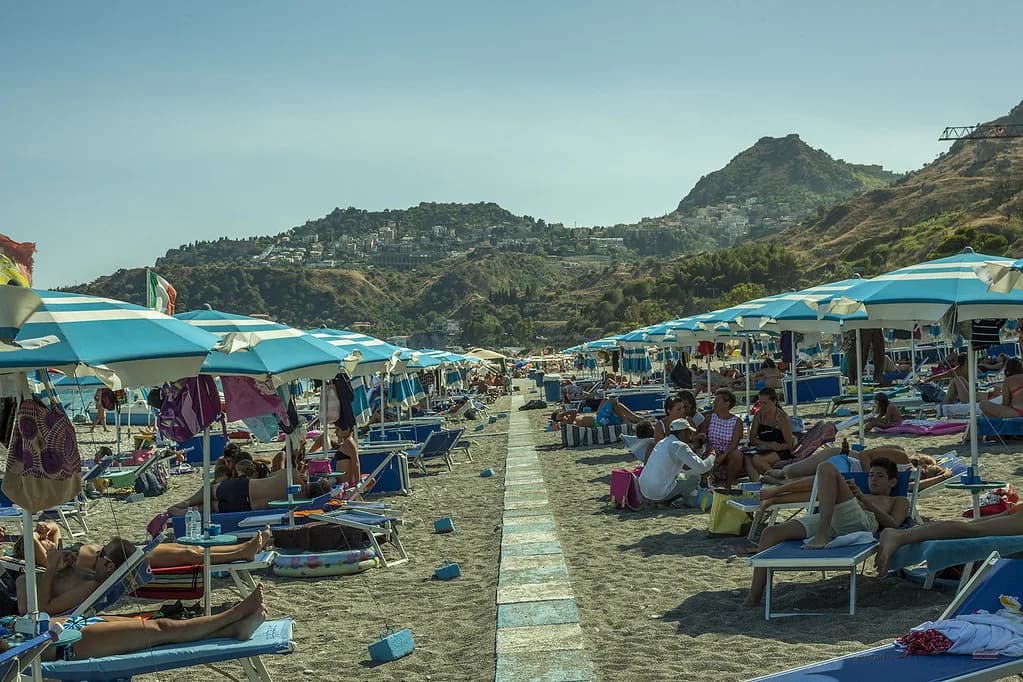
If your April plan includes the beach beneath Taormina — Isola Bella is the obvious example — the ground underfoot is pebbly or rocky rather than fine sand. Flip-flops do not handle wet pebbles well, and many Sicily beaches are described as pebbly or rocky enough that dedicated water shoes are recommended for swimming and water activities. Water shoes pack flat and solve a limited but real problem.
For coastal paths that mix paving, gravel and rock, the same walking shoes you use in town generally work if the sole has tread. Walking sandals with ankle support are a reasonable alternative for warm days, but they need to be sturdy enough for a steep descent to the water and a climb back up. Tired feet and unsure footing are the two failure modes to pack against.
Consider whether an April swim is realistic for you before committing luggage space. A local seasonal table describes first beach days as possible in April with a sea temperature around 16°C / 61°F, so swimming is a personal call rather than a safe assumption. Two swimsuits are more useful than four, and a cover-up matters because walking around in just swimwear is not the local norm.
If Your April Trip Includes Etna
An early-season Etna excursion is the clearest case for packing warmer than the town forecast suggests. A local guide notes that snow can persist on the volcano into April while Catania, about 30km away, can be mild, and wind and altitude make the summit feel materially colder than the coast. Treat Etna as a separate packing problem, not an extension of a town day.
Dedicated hiking footwear with proper tread is the standard recommendation for Etna excursions, and closed shoes are non-negotiable on loose volcanic ground. Bring a warmer mid layer and a windproof outer layer than you would wear in Taormina that day, plus long trousers rather than shorts. Guided tours may have their own equipment guidance, so check the operator's instructions and current mountain conditions before you go up rather than guessing from the town weather.
Church Visits and Coverage
Many Sicilian churches expect shoulders and knees to be covered, and a local packing guide notes that visitors may be turned away or offered a disposable cover-up if they are not dressed appropriately. A light scarf or pashmina kept in your day bag handles shoulders instantly, and long trousers or a midi skirt already cover the knees.
This sits comfortably with an April layering outfit, since the scarf you carry for wind and cool evenings does double duty at the door. Keep it accessible in an outer pocket rather than buried in a packed bag, and plan the day around trousers or a longer skirt rather than relying on improvising.
A Five-Day April Packing Example
For five days in Taormina, start with three or four tops in cotton or linen, either T-shirts or blouses that can be dressed up with the same accessories. Add two bottoms — chinos or linen trousers and one skirt or a second pair of trousers — plus one dress if you want an easy evening option. Round it out with the base, mid and outer layers you already plan to wear on the plane.
Shoes are the heaviest decision, so wear the bulkiest pair on travel days. One grippy walking shoe, one slightly smarter shoe for dinners, and optionally water shoes if you plan to swim or scramble on rocky coves is enough for most April itineraries. Add socks, underwear, sleepwear, a swimsuit, a compact rain shell, a small umbrella and a scarf or pashmina, and the whole set fits reasonably in a carry-on.
If you plan an evening out on a terrace or at a nicer restaurant, include one outfit that feels a step dressier than the day clothes rather than packing for several different moods. One evening layer — a blazer, a cardigan or a light knit — covers most April evening temperatures. Rinse-and-repeat works fine on a city trip where nobody tracks how often you wear the same trousers.
A universal travel adapter block is a small but useful addition if you carry multiple devices; Italy uses more than one plug type, and Sicily-specific packing guidance recommends a universal adapter to avoid mismatches. Confirm the plug requirements for your own electronics rather than assuming, and check airline baggage rules with your carrier, since these vary by fare and route.
What to Leave Behind
Leave the bulky winter coat at home. April can be cool in the evening, but Sicily's shoulder seasons do not call for heavy coats, snow boots, gloves or wool hats, and none of these earn their luggage space for a Taormina town trip. If your itinerary includes Etna, add a warm layer for that day specifically, or ask the tour operator about equipment, rather than packing full winter gear for the whole trip.
Heavy rainwear is another common overpack. April rain tends to be occasional rather than a sustained downpour, so a packable shell and a small umbrella do the job that a full waterproof suit would; the shelter-and-continue approach works because you will often be indoors between showers. Also reconsider beach-only items you would only use on a full summer trip.
Be selective with shoes, which is where most overpacking happens. Style-minded travellers often want options, but dragging multiple pairs of unused shoes up and down Taormina's stairways costs you more than it gives. The same packing guide notes that Sicily's uneven streets, steps and hotel drop-off points make large wheeled suitcases harder to manage than backpacks or smaller cases that can be carried short distances.
Large umbrellas, heavy books and multiple 'just in case' layers also lose value fast. Travel accessories advice for Sicily is generally to skip the gimmicks and keep only items with clear day-to-day use — a compact day bag, a power bank and a first aid kit are regularly recommended as genuinely functional.
Before-Departure Weather Check and Final Packing Decisions
The single most useful pre-trip step is checking a real forecast within a few days of departure, covering both Taormina and any higher-elevation destination you plan to visit. Seasonal patterns tell you what is normal; a forecast tells you what is actually coming, and those can differ substantially in a changeable month. If a wet spell is forecast, pack a heavier shell and reconsider the day you have set aside for Etna.
Adjust quantities, not categories. A cold, wet forecast means more mid layers and socks; a warm, dry one means fewer mid layers and more light base layers. Between Taormina and the coast, dress for a mild spring day and carry your outer layer rather than wearing it, since you will likely need it in the evening.
As a final check, confirm that your bag can be carried over uneven streets, that your main walking shoe is broken in and comfortable, and that the layered outfit you have chosen handles a warm afternoon and a cool evening. If you want to compare how the same shoe and layer decisions shift for the island's windier, wetter shoulder season, see what to wear in Taormina in November.
The April Packing Priorities to Remember
April in Taormina rewards light layering, a packable rain layer and good walking shoes over anything bulky or beach-specific. If you build your wardrobe around one base layer, one mid layer and one outer layer, you can handle warm afternoons, cool evenings and occasional rain without overpacking. Add one smarter evening outfit and one pair of grippy shoes, and you have the practical essentials for the month.
For anything Etna-related, pack warmer than the coast and check current conditions with the tour operator before you go. For anything requirement-related — church coverage, airline baggage rules, electrical plugs — verify with the venue or the airline rather than guessing. Keep it light, keep it layered, and leave the winter coat behind.
More packing guides for Taormina
Frequently Asked Questions
Is April warm enough for the beach in Taormina?
April can offer the first beach days of the season on the Ionian coast, but it is a changeable month and the sea is still cool, so swimming is a personal preference rather than a certainty. Bring a swimsuit and a cover-up if you want the option, and treat beach time as weather-dependent. Many beaches in the area are pebbly or rocky rather than sandy, so water shoes or grippy sandals are more useful than flip-flops.
What should I wear in Taormina in April?
The practical answer is a three-part layering system: a breathable cotton or linen base layer, a light sweater or cardigan you can shed, and a packable outer layer for wind and rain. Add a scarf or pashmina that doubles as church coverage and evening warmth, and choose trousers or a skirt over shorts for most daytime plans. This lets you adapt as the day shifts from a mild afternoon to a cool evening.
Do I need hiking boots for Mount Etna in April?
An early-season Etna visit usually calls for dedicated hiking footwear with proper tread, plus a warmer layer and windproof outer layer than you would need in Taormina. Snow can persist on the volcano into April even when the town is mild, so check current conditions and the guidance from your tour operator rather than assuming the coast weather applies. If you are not hiking on loose volcanic ground, sturdy walking shoes may be sufficient, so confirm what your specific itinerary requires.
What shoes are best for Taormina's stairs and cobblestones?
Choose supportive walking shoes or sneakers with a proper, grippy sole, broken in before you travel. Taormina involves more climbing and descending than a flat city break, and smooth-soled sandals or thin canvas shoes get uncomfortable quickly on paved steps, especially when surfaces are wet. A second, slightly smarter but still walkable pair covers evening meals without leaving you unsteady on uneven streets.
Do I need a rain jacket in Taormina in April?
Yes, a light waterproof layer is worth packing, because April can bring occasional rain even though it is usually not a washout. A packable shell and a small umbrella cover the likely showers; a heavy waterproof suit is unnecessary weight. Pair the shell with your mid layer so the same system handles wind and cooler evenings, not just rain.
Can I wear shorts in Taormina in April?
You can, though many travellers find trousers, a midi skirt or a light dress more useful for April temperatures and easier for church visits that expect covered knees. Shorts are fine for warmer afternoons and for hiking, especially on Etna, but they leave you cold if the evening turns breezy or the day stays overcast. Carrying a light layer over shorts keeps the option open without committing to a summer wardrobe.
Sources
Free: The Ultimate Packing Cheat Sheet
A carry-on capsule wardrobe, the complete packing checklist, layering made simple, and what to wear by season — one printable page you'll use on every trip.
You might also like


Continue reading
More guides you'll find useful