
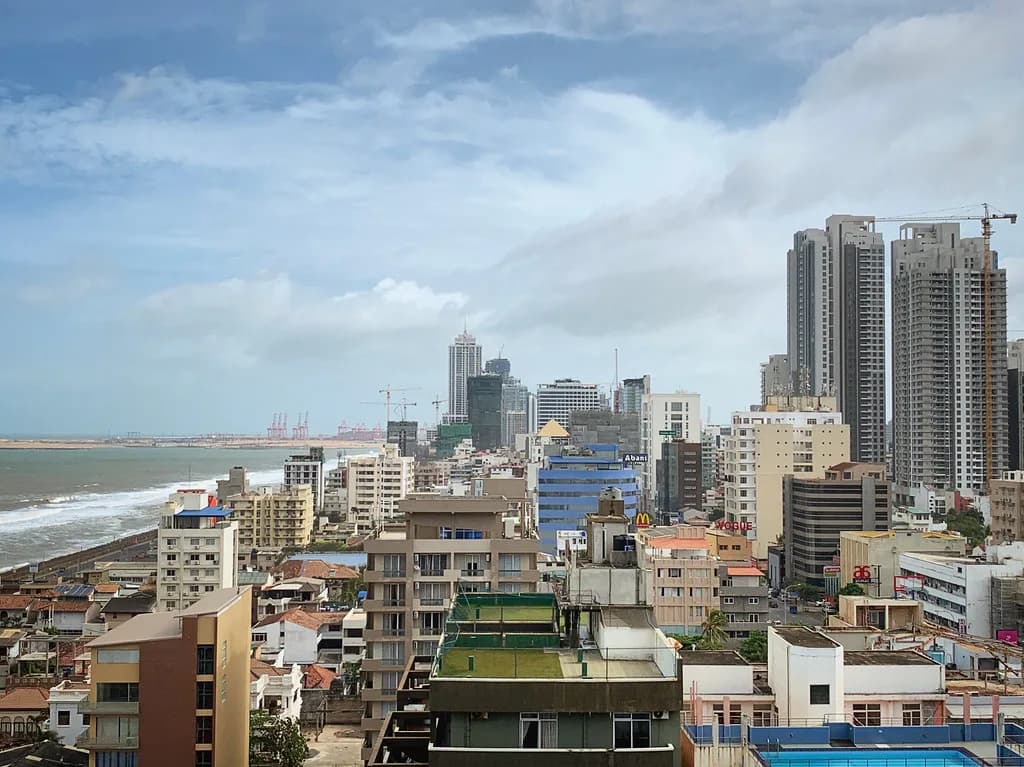
Colombo Packing List: What to Wear in Humid Heat and Rain
Pack for Colombo's humid heat and short downpours with breathable fabrics, slip-on shoes, temple coverage, and a four-day example of what to leave behind.
On this page
Colombo weather month by month
Typical conditions from 30 years of daily weather data — use it to see how much to pack for the month you are travelling.
| Month | High / low | Days with rain | Afternoon humidity | Daylight |
|---|---|---|---|---|
| January | 30° / 23°C (87° / 73°F) | 3 in 10 days | 58% | 11.6 h |
| February | 32° / 23°C (89° / 74°F) | 3 in 10 days | 56% | 11.8 h |
| March | 32° / 24°C (89° / 76°F) | 5 in 10 days | 61% | 12 h |
| April | 31° / 25°C (87° / 77°F) | 8 in 10 days | 68% | 12.2 h |
| May | 30° / 25°C (85° / 78°F) | 10 in 10 days | 75% | 12.3 h |
| June | 29° / 25°C (84° / 77°F) | 10 in 10 days | 77% | 12.4 h |
| July | 29° / 25°C (83° / 77°F) | 9 in 10 days | 77% | 12.4 h |
| August | 28° / 25°C (83° / 76°F) | 9 in 10 days | 76% | 12.2 h |
| September | 29° / 25°C (83° / 76°F) | 9 in 10 days | 76% | 12 h |
| October | 29° / 24°C (84° / 75°F) | 9 in 10 days | 74% | 11.8 h |
| November | 29° / 24°C (84° / 74°F) | 8 in 10 days | 71% | 11.7 h |
| December | 29° / 23°C (85° / 74°F) | 5 in 10 days | 66% | 11.6 h |
Travelling on specific dates? Use our What to Wear Planner for the weather, outfits and a packing list for your exact days in Colombo.
Averages for 1991-2020, modelled from Copernicus ERA5-Land and ERA5 reanalysis via Open-Meteo open data (CC BY 4.0), adjusted to Colombo's elevation. Modelled afternoon highs can read 1–2°C below airport weather-station records.
The single decision that shapes a Colombo packing list is whether you can walk into a temple in what you are already wearing. If shorts and a sleeveless top are the only outfit in your day bag, you will either skip the site or spend the afternoon wrapped in a borrowed sarong. Build the wardrobe so shoulders and knees are covered by default, and everything else gets easier.
Colombo sits on Sri Lanka's west coast and is warm and humid year round. The southwest monsoon from roughly May to September brings the city's wetter stretch, while December through March tends drier, and rain often arrives as short, intense downpours rather than all-day drizzle. Those are historical seasonal tendencies rather than a forecast, so check the outlook for your own dates before you finish packing; a Sri Lanka packing list built around light, breathable layers and a packable rain jacket matches how the city behaves through most of the year.
This guide stays on clothing, footwear, rain, and sun decisions for the city itself, from Galle Face Green to Pettah, Fort, and Cinnamon Gardens, with a short trip-length example so quantities make sense in context.
Colombo's Climate as a Packing Problem
The temperature in Colombo barely moves across the year; the packing challenge is moisture. High humidity means sweat evaporates slowly, wet fabric stays damp, and nothing dries overnight in an unairconditioned room. That combination rewards lightweight, breathable materials and punishes anything heavy or slow-drying.
Rain tends to arrive as short, heavy bursts rather than steady drizzle, particularly during the southwest monsoon from roughly May to September. General island packing advice points to the same materials for that lowland humidity: lightweight clothes plus a rain layer as the baseline, with added warmth reserved for highland stops rather than the coast.
The practical response is to treat the wetter and drier months as the same core kit with one adjustment: lean on a rain shell in the wetter stretch, and accept that a compact umbrella is a reasonable extra then. You do not need two contradictory packing lists. For month-by-month decisions, see what to wear in Colombo in November and what to wear in Colombo in December, which focus on those specific travel windows.
Fabric First: What Actually Works in Coastal Humidity
Cotton, linen, and quick-dry blends handle Colombo's humidity far better than heavy denim or dense synthetics. Cotton and linen breathe well; quick-dry synthetics dry faster after a soaking and pack smaller. A mixed kit rather than a single-fabric wardrobe gives you both comfort and drying speed.
The key trade-off is drying time against appearance. Linen and cotton look better for a day in the city but can stay damp in a humid room; quick-dry fabrics look more technical but will be wearable the next morning. If you plan to rinse items in a hotel sink, lean toward the quick-dry side for at least half your tops and trousers.
Lighter colours help in strong sun. Bottoms matter as much as tops: light, loose trousers or a long skirt cover knees for temples and dry faster than jeans. One pair of shorts is fine for the beach or the hotel, but treat it as a backup rather than your main daytime option.
Temple Coverage: The Layer That Sets the Limits
Buddhist and Hindu temples in and around Colombo expect shoulders and knees covered, for men as well as women, and shoes and hats come off before you enter temple grounds. Many sites also ask visitors to remove shoes. These are site expectations rather than a single legal code, and practice can vary, so check with the specific site before a special visit.
The most efficient solution is a scarf or sarong kept in your day bag. It covers shoulders in seconds, wraps over shorts at a temple entrance, and doubles as a beach cover-up or a light layer on a bus. Choose a light colour and a fabric that folds small, and you have a temple kit that takes up almost no space.
One long, loose trouser or long skirt and one top that covers your shoulders makes a reliable default temple outfit, with the scarf as backup rather than the plan. That avoids arriving at Gangaramaya Temple in beach clothes and relying on a wrap. If you prefer dresses, a knee-length or longer option that reaches below the shoulder works well and needs no separate layer.
Footwear: Slip-Ons Versus One Closed Pair
Temple shoe removal happens repeatedly, sometimes several times in a single day, which makes slip-on sandals the practical default for sightseeing. Laces become tedious fast, and bare feet on stone that has been in the sun all morning is a real consideration. A pair of flat, easy sandals you can step out of without bending down is worth its weight.
The counterweight is Pettah market, where the ground is uneven and not always clean, and where monsoon flooding can leave streets ankle-deep within minutes. One closed pair with decent grip covers market days, wet streets, and any long walking stretch. Aim for two or three pairs total: the slip-ons, the closed pair, and optionally a beach or water shoe for day trips south.
For most city days the sandals will do; keep the closed pair for Pettah, Fort walking, and rainy mornings. Socks matter more than travellers expect in humidity, since damp feet blister. Choose thin, quick-drying socks over thick cotton if you are wearing closed shoes for a full day.
Sun and Rain: Gear That Earns Its Weight
Colombo sits in the tropics and open spots such as Galle Face Green offer almost no shade at midday, so sun protection is a daily item rather than a beach-only one. A strong sunscreen, a wide-brimmed hat, and sunglasses cover most days, and packable sun protection costs little in space. Bring your preferred sunscreen from home if you rely on a specific formulation.
For rain, a packable waterproof shell beats a poncho in heavy tropical rain, and a small dry bag or a couple of zip pouches protects phones and documents during a sudden downpour. The shell should be light enough to live in the bottom of your day bag. Specialists advise packing a rain jacket and a dry bag for electronics for rain on any Sri Lanka trip, which keeps a short downpour from ending your afternoon.
One compact travel umbrella is a reasonable addition in the wetter months, especially if you dislike wearing rain gear in warm humidity. It will not replace the shell on a flooded street or during a windy downpour, so treat it as a supplement rather than the main plan.
The Air-Conditioning Layer
The real cold problem in Colombo is indoor: malls, hotels, restaurants, and long-distance vehicles often run air conditioning hard. A light layer you can pull on indoors, such as a thin cardigan, a cotton scarf, or a lightweight long-sleeve top, solves most of it. It also doubles as your shoulder-covering top for temples.
This is not a hill-country layer, and there is no need to pack a fleece for the city itself. If your Sri Lanka trip includes Nuwara Eliya, Horton Plains, or another highland stop, add a warmer layer for those nights specifically. For Colombo alone, one light extra layer is enough.
Day Bag, Water, and Small Essentials
For Pettah and Fort, choose a day bag that closes securely and can be worn across your front in crowds. A zipped crossbody or a small backpack with a zip top works better than an open tote. Keep phone, cash, and passport separate from your main compartment.
Carry a refillable water bottle and refill from safe sources rather than relying on single-use bottles all day. Rehydration salts are worth having in your kit during the hottest, most humid stretch, and a small supply of plasters and antiseptic covers minor scrapes. Sunscreen, insect repellent, and a compact hand sanitiser round out the daily carry.
Insect repellent is a sensible part of any Colombo day bag given the humid, tropical setting. Follow the product label and your own doctor's advice on which formulation is right for you, and reapply as directed. If you take regular medication, bring your full supply in its original packaging rather than assuming you can replace it locally.
A Four-Day Colombo Packing Example
For a four-day stay, the kit can be genuinely small: three or four lightweight tops that cover your shoulders, two pairs of loose long trousers or one trouser and one long skirt, one pair of shorts for the hotel or beach, and one light layer for air conditioning. Add underwear and socks in quick-dry fabrics, plus one swimsuit if your hotel has a pool.
Add one scarf or sarong, one packable rain shell, one wide-brimmed hat, sunglasses, sunscreen, repellent, a refillable bottle, and a small dry bag. Footwear is the slip-on sandals plus one closed pair. That is a full Colombo kit; laundry facilities or a sink rinse let you extend it to a week without adding much.
For a longer Sri Lanka circuit, add a warmer layer for hill country stops and a second pair of quick-dry trousers for travel days. You do not need a bigger Colombo wardrobe, just one extra layer and a little more drying capacity. Plan for temple coverage first, and everything else follows.
What to Leave Behind
Heavy jeans, bulky towels, and anything that needs ironing do not earn their space in Colombo. Jeans are hot, slow to dry, and uncomfortable in humidity; hotels and guesthouses usually supply towels; and ironing is pointless when clothes will crease in the bag anyway. Leave the formal shoes unless you have a specific occasion booked.
Also leave behind more than two or three pairs of shoes, a wardrobe built on shorts and sleeveless tops alone, and any expectation that you will not need rain protection. If your trip is city-only, a heavy hiking boot is unnecessary. Pack for the temples first, and the rest of the list gets leaner.
Before You Fly: A Quick Weather Check
Check the forecast for your actual travel dates a few days before departure, then adjust layers rather than rebuilding the list. Colombo's wetter months still bring rain, and the drier months can still see showers, so the core kit stays the same. The adjustment is usually just how prominently the rain shell and umbrella sit in your bag.
If your dates fall in March or April, check what to wear in Colombo in March and what to wear in Colombo in April for month-specific guidance. Those months sit between Colombo's main seasons and can feel like the most humid stretch, so a little extra attention to breathable fabric and drying time pays off. Pack for heat and moisture first.
Plan Your Colombo Packing
Start from one rule: build the wardrobe so you can enter a temple without changing, and every other decision gets simpler. Light, breathable fabrics, one slip-on pair of shoes, one closed pair, and a scarf or sarong cover the city's practical demands. Add sun protection and a packable rain shell, and you have a list that works across the year.
Temper the list with the season you are actually travelling in, and confirm current site expectations with the temple or mosque you plan to visit. Check the forecast before you fly, then adjust layers rather than rebuilding the kit. For month-specific packing decisions, the Colombo November and December pages go deeper on those windows.
More packing guides for Sri Lanka
- Colombo Monsoon Season Packing Guide
- Colombo Rainy Season Footwear: Sandals, Dry Socks and Grip
- What to Wear to Colombo Temples and Mosques: A Packing Guide
- What to Wear for Colombo Street Food and Night Markets
- What to Wear in Colombo for Heat and Humidity: Packing Guide
- What to Wear in Colombo in April: Heat, Temples & New Year
- What to Wear in Colombo in December: A Practical Packing Guide
- What to Wear in Colombo in March: Packing Guide
- What to Wear in Colombo in November: Packing Guide
- What to Wear on the Colombo to Kandy Train Trip
- Kandy Packing List: Temples, Hills and Tea Country
- Ella Sri Lanka Packing List: Hill Country Clothing & Gear
Frequently Asked Questions
Do I need rain gear for Colombo in the drier months?
A packable rain shell is worth carrying year round, even in the drier stretch from roughly December to March. Colombo's rain often arrives as short, intense downpours, and the drier months are not guaranteed to be completely dry. Keep the shell light and stow it in your day bag rather than leaving it at the hotel.
Can I buy a sarong in Colombo instead of packing one?
Yes, sarongs and lightweight cotton clothing are widely sold in Colombo markets and shops, and buying locally is a common option if you would rather travel light. If you want coverage from the moment you arrive, or you have a fabric or size preference, bring one from home. Either way, treat a scarf or sarong as a core temple item.
How many pairs of shoes should I bring to Colombo?
Two pairs covers most city trips: slip-on sandals for heat and repeated temple shoe removal, plus one closed pair with grip for Pettah's uneven ground and wet streets. A third beach or water shoe is optional if you are heading to the coast. More than that is usually weight you will not use.
Do I need a warm layer in Colombo?
Outdoor temperatures stay warm, so the cold you will notice is indoor air conditioning. Pack one light layer, such as a thin cardigan, a long-sleeve top, or a scarf, for malls, hotels, and long-distance vehicles. Add a warmer layer only if your wider trip includes hill country stops such as Nuwara Eliya.
What should I wear to temples in Colombo?
Buddhist and Hindu temples expect shoulders and knees covered for both men and women, and shoes and hats come off before entering. Many visitors carry a scarf or sarong as backup coverage. Exact expectations can vary between sites, so check with the specific temple or mosque before you visit.
What fabric is best for Colombo's humidity?
Lightweight cotton and linen breathe well, while quick-dry synthetics dry faster after a downpour or a sink wash. A mix of both gives you comfort and drying speed. Avoid heavy denim and dense fabrics that stay damp overnight in humid rooms.
Sources
Free: The Ultimate Packing Cheat Sheet
A carry-on capsule wardrobe, the complete packing checklist, layering made simple, and what to wear by season — one printable page you'll use on every trip.
You might also like


Continue reading
More guides you'll find useful


