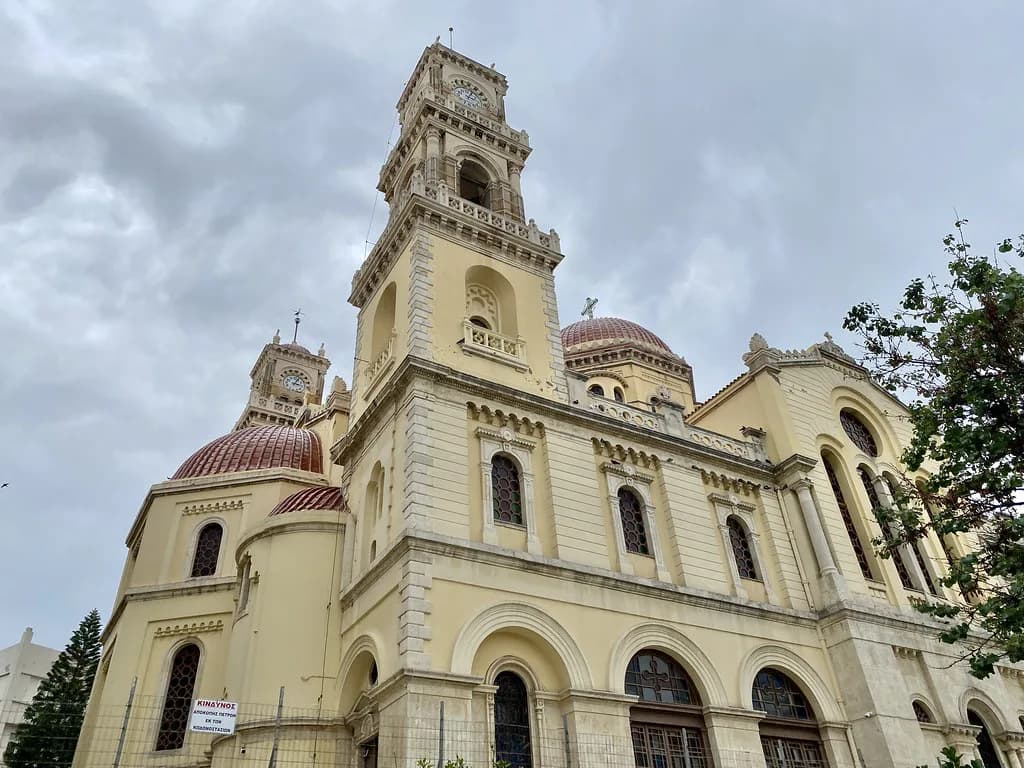
Heraklion Packing List: What to Wear in Crete Year-Round
Pack for Heraklion with layers for hot, dry summers, wetter winters, uneven archaeological stone, sea wind, and modest coverage at churches and monasteries.
On this page
Heraklion weather month by month
Typical conditions from 30 years of daily weather data — use it to see how much to pack for the month you are travelling.
| Month | High / low | Days with rain | Afternoon humidity | Daylight |
|---|---|---|---|---|
| January | 14° / 8°C (58° / 47°F) | 4 in 10 days | 65% | 9.9 h |
| February | 15° / 8°C (59° / 46°F) | 4 in 10 days | 61% | 10.7 h |
| March | 17° / 9°C (63° / 48°F) | 3 in 10 days | 55% | 11.7 h |
| April | 21° / 12°C (70° / 53°F) | 2 in 10 days | 48% | 12.9 h |
| May | 26° / 16°C (78° / 60°F) | 1 in 10 days | 44% | 13.9 h |
| June | 30° / 20°C (85° / 67°F) | 1 in 10 days | 41% | 14.4 h |
| July | 31° / 22°C (88° / 71°F) | Rare | 43% | 14.2 h |
| August | 31° / 22°C (87° / 72°F) | Rare | 46% | 13.3 h |
| September | 28° / 20°C (83° / 68°F) | 1 in 10 days | 49% | 12.2 h |
| October | 24° / 17°C (76° / 62°F) | 2 in 10 days | 56% | 11.1 h |
| November | 20° / 13°C (67° / 55°F) | 2 in 10 days | 62% | 10.1 h |
| December | 16° / 10°C (60° / 50°F) | 4 in 10 days | 66% | 9.6 h |
Travelling on specific dates? Use our What to Wear Planner for the weather, outfits and a packing list for your exact days in Heraklion.
Averages for 1991-2020, modelled from Copernicus ERA5-Land and ERA5 reanalysis via Open-Meteo open data (CC BY 4.0), adjusted to Heraklion's elevation. Modelled afternoon highs can read 1–2°C below airport weather-station records.
Heraklion stretches from a busy port and flat city streets to the exposed, uneven ground of Bronze Age archaeological sites and the cooler terrain that rises inland. Because a single day can move between those settings, the packing problem is contrast: coastal heat, wind on open ground, and a noticeable drop in temperature after dark or at altitude.
Crete's Mediterranean pattern tends toward hot, dry summers and milder, wetter winters, but that is a historical tendency rather than a forecast for your dates. Check the live Heraklion forecast for the week you arrive, then adjust quantities rather than abandoning the layering strategy.
These are editorial outfit and gear suggestions, not rules about what everyone wears. Where site authorities or religious communities set expectations, confirm them locally rather than treating them as fixed requirements.
Start With the Forecast, Not the Season
Seasonal averages hide the days that matter most for packing. Crete is generally regarded as the Greek island with the most reliable warm-weather profile, with dry summers suited to beaches and outdoor sightseeing and mild winters on the southern coast. Even so, check a live Heraklion forecast about a week before departure and again after you land.
Use that forecast to set quantities, not categories. If the week ahead looks dry and hot, cut the rain shell and add a second breathable top; if rain is likely, keep the shell and reduce the number of cotton items that dry slowly. That single adjustment is the most useful thing you can do before zipping the bag.
Summer: Hot, Dry Days and Bright Midday Sun
Peak summer in Greece is hot and dry, and July is generally the hottest month, with average temperatures often exceeding 30°C (86°F) in southern regions and on popular Greek islands. Heraklion fits that southern pattern, so build the summer wardrobe around breathable dresses, skirts, and light pants rather than heavy denim.
Tops should be light and quick to dry, with at least one long-sleeve button-up that works for sun coverage on your arms and shoulders during exposed walks. A broad-brim hat, sunglasses, and high-factor sunscreen handle the rest, and a light scarf or sarong can double as neck shade when the sun is directly overhead. For a closer look at the hottest stretch of the season, see what to wear in Heraklion in July.
Evenings stay warm through midsummer, but a light jacket or overshirt earns its place for breezy waterfront dinners and air-conditioned transport. Pair sandals with one pair of secure closed shoes, and keep a refillable water bottle in your day bag so you can top up between stops. Travellers commonly build a Greek summer capsule from dresses, skirts, a single linen button-up, a light jacket, sneakers, and sandals, which is a workable template for Heraklion as well.
Winter: Mild, Wetter, and Damp Underfoot
Greece's rainy season runs from November to March, with the most rainfall generally falling in December and January, while Crete tends to stay warmer than the mainland through the colder months. For Heraklion that means fewer beach items and more attention to staying dry, especially on stone surfaces that hold moisture.
A compact rain shell with a hood beats a bulky coat, and a warm mid-layer such as a sweater or fleece lets you adapt between a mild afternoon and a cool, damp evening. Water-resistant shoes with grip matter more than insulation, because cold feet in Heraklion usually come from wet ground rather than deep frost.
Pack one pair of trousers that can handle drizzle and a spare pair of socks for wet days. Layers you can remove indoors are more useful than a single heavy garment, since museums, shops, and transport tend to be warmer than the street. For a month-level breakdown, check what to wear in Heraklion in November.
Shoulder Seasons: Warm Days, Cooler Edges
May, June, September, and October usually combine warm days with softer heat, and those months are often recommended for Greek island travel because crowds ease outside midsummer. Plan a thin-layer system: a base top, a light mid-layer you can shed, and a packable outer layer for wind or an unexpected shower.
April is cooler and changeable, with average temperatures around 15–17°C (59–63°F) across the Greek mainland and islands, while May climbs toward 21°C (70°F) in many areas. Those broader figures are a reason to treat April and May differently rather than a substitute for the local forecast, so check what to wear in Heraklion in April before you pack.
October still feels warm along the coast, though rain becomes more frequent late in the month in northern Greece, while southern areas including Crete often remain pleasant. For Heraklion, add a light rain layer and one warmer top, and see what to wear in Heraklion in October.
Footwear for Uneven Stone and Paved Streets
Archaeological sites around Heraklion, including the Knossos area, involve walking on uneven, sometimes polished stone and loose gravel. Closed-toe shoes with a grippy sole and a secure fit are the safer editorial choice for those days, even in summer, because sandals can shift on worn surfaces and leave toes exposed.
Reserve sandals for flat, paved city walking, the port promenade, and beach time, where airflow and easy removal matter more than traction. A practical compromise is one pair of closed walking shoes and one pair of sandals, worn on alternating days so each pair has time to dry and your feet get a break from the same pressure points.
Break in new shoes before the trip, and pack blister plasters rather than relying on buying them on arrival. If you plan to add another Crete stop, the footwear logic carries over to a Chania packing list, where coastal walking and stone streets create the same grip-versus-breathability trade-off.
Sun Protection and Wind Layers
Ultraviolet exposure in Greece is intense through the summer months, and sightseeing in cities is often best planned for early mornings or evenings to avoid the midday heat. Pack a broad-brim hat with a chin strap, sunglasses, and sunscreen you will actually reapply after sweating.
Wind on open coastal ground and elevated sites can make a warm day feel cooler than the thermometer suggests, so a light wind-resistant layer is worth the space. A scarf or sarong earns its place because it can cover shoulders in the sun, block wind at your neck, and act as a light wrap when temperatures drop after sunset.
Keep lip balm with sun protection and a small tube of moisturizer in your day bag. Sunburn and windburn are easy to underestimate on a breezy day, and a light layer also softens the temperature swing between exposed ruins and shaded interiors.
Coverage for Churches and Monasteries
Crete has many active churches and monasteries, and communities may ask visitors to cover shoulders and knees as a sign of respect. Treat that as a practical option rather than a fixed rule: carry a light layer that can cover your shoulders, and wear bottoms that reach the knee, ready to add or adjust when you enter.
A large scarf or sarong handles most situations because it folds flat, weighs little, and can wrap over shoulders or around the waist. Confirm specific expectations with the site or your host on the day, since individual communities may apply their own standards.
A One-Week Capsule Built Around Two Pairs of Shoes
A one-week Heraklion trip can work with two pairs of shoes: one closed walking pair worn on travel days, and one pair of sandals for paved streets and the beach. Build the clothing around three bottoms, four to five tops, one light mid-layer, and one outer layer suited to the season.
Choose pieces that mix and match, such as neutral skirts or light trousers that pair with every top, so you can recombine outfits rather than pack distinct sets. Add one dress or smart-casual outfit for evening dinners, and plan to wash quick-dry items rather than stretching quantities.
Swimwear and a cover-up take little space if you plan beach time, and a single small day bag serves both city and site days. The fewer distinct outfits you pack, the more room you have for the layers that genuinely change how a Heraklion day feels.
What to Leave Behind
Formal clothing rarely earns its weight on a Heraklion trip centred on archaeological sites and the port. If a hotel or restaurant has a dress code, check directly with them rather than packing a full formal outfit just in case.
Extra heavy shoes create weight and bulk without adding much value, since one secure walking pair covers the roughest ground. Bulky towels, full-size toiletries, and beach gear are easy to buy locally if needed, so leave them at home unless a specific plan requires them.
Outfit Combinations by Day Type
For an archaeological-site day, wear the closed walking shoes, light long pants or a skirt that covers the knee, a breathable top, and a hat, with a long-sleeve layer in the bag for sun and shoulder coverage. This combination handles uneven stone, strong sun, and the possibility that you will enter a small chapel on the same outing.
For a port and city-walking day, sandals and lighter clothing work well on flat pavement, with a light layer for sea breeze and a small bag you can keep zipped. A beach day calls for swimwear, a cover-up, sandals, and sun protection, with one warm layer for the trip back as temperatures ease.
For dinner or an evening out, swap the walking shoes for a cleaner pair and add the light jacket or a long-sleeve top. The same base pieces serve all four day types, which is why one compact capsule can carry you through a varied week.
Materials, Trade-Offs, and Day Bag Essentials
Linen breathes well in heat but creases quickly, while quick-dry synthetics and blends resist wrinkles and dry overnight after a hand wash. A sensible compromise is linen for outer layers where appearance matters and quick-dry blends for base layers and anything that may get sweaty or damp.
One versatile jacket earns its space over several single-use pieces because it can handle a breezy evening, an air-conditioned ferry or bus, and light rain in the shoulder seasons. Test your layers together before the trip so you know they fit over each other without restricting movement.
Your day bag should hold a refillable water bottle, sunscreen, lip balm, a light layer, a hat, and a small pouch for tickets and a charged phone. Keep a copy of your documents separate from the originals, and carry medications you rely on in your hand luggage rather than checked bags.
If your trip also includes mainland Greece, the layer and footwear logic overlaps with this Athens packing list, but coastal wind and rougher archaeological ground in Crete make grip and wind protection slightly higher priorities.
Check the Forecast, Then Pack in Layers
Heraklion packing comes down to layers, grip, and sun protection rather than a long list of single-use items. Lock in one secure pair of walking shoes, one pair of sandals, a light mid-layer, an outer layer suited to the season, and quick-dry clothing you can recombine.
Confirm the live forecast for your dates, keep the coverage layer for religious sites in your bag, and leave the formal bulk at home. If you extend your trip elsewhere on Crete, the same two-shoe, wash-and-wear approach transfers easily.
More packing guides for Greece
- Packing for Knossos and Heraklion's Archaeological Sites
- What to Wear for a Cretan Mountain Village Day Trip from Heraklion
- What to Wear in Heraklion in April: Layers for Spring Showers
- What to Wear in Heraklion in July: Heat-Proof Packing Guide
- What to Wear in Heraklion in November: Layers for Mild Days and Cooler Nights
- What to Wear in Heraklion in October: Layers, Rain & Warm-Sea Days
- Mykonos Packing List: Beach, Town, and Ferry Day Essentials
- Santorini Packing List: What to Wear and Bring
Frequently Asked Questions
What should I wear in Heraklion in summer?
Choose breathable dresses, skirts, or light pants with quick-drying tops, and add a long-sleeve button-up for sun and shoulder coverage. A broad-brim hat, sunglasses, sunscreen, and sandals handle most days, while one closed pair of shoes covers uneven archaeological ground. Keep a light layer for breezy evenings and air-conditioned transport.
Do I need rain gear for Heraklion in winter?
Greece's wetter period runs from November to March, so a compact rain shell and water-resistant footwear are worth bringing for winter visits. A warm mid-layer under the shell handles cooler evenings better than one heavy coat. Check the live forecast before departure, since individual weeks vary.
What shoes are best for archaeological sites in Crete?
Closed-toe shoes with a grippy sole and a secure fit are the safer choice for uneven stone and gravel at sites such as Knossos. Reserve sandals for flat, paved city streets, the port promenade, and the beach. Alternating between two pairs also gives each one time to dry.
How should I dress for churches and monasteries in Greece?
Carry a light layer that can cover your shoulders and wear bottoms that reach the knee, then adjust when you arrive. Some communities ask visitors to cover up as a sign of respect, but expectations vary. Confirm specifics with the site or your host rather than assuming one universal rule.
How many outfits should I pack for a week in Heraklion?
Three bottoms, four to five tops, one mid-layer, one outer layer, and one evening outfit form a workable week. Combine pieces across days and plan to hand-wash quick-dry items instead of packing a fresh set for every day. Two pairs of shoes keeps the bag light.
Do I need a jacket for evenings in Heraklion?
A light jacket or overshirt is useful for breezy waterfront dinners and air-conditioned transport, even in summer. In winter, a warmer mid-layer under a rain shell is more practical than a single heavy coat. Judge the thickness from the forecast close to departure.
What should I keep in my day bag for sightseeing in Heraklion?
Pack a refillable water bottle, sunscreen, lip balm, sunglasses, a hat, and a light layer for sun or wind. Add a small pouch for tickets and a charged phone, and keep a separate copy of your documents. Carry any medication you rely on with you rather than in checked luggage.
Sources
Free: The Ultimate Packing Cheat Sheet
A carry-on capsule wardrobe, the complete packing checklist, layering made simple, and what to wear by season — one printable page you'll use on every trip.
You might also like


Continue reading
More guides you'll find useful