Packing for Knossos and Heraklion's Archaeological Sites
What to pack and wear for Knossos and Heraklion's archaeological sites: shoes for uneven ground, sun and wind layers, a secure daypack, and water tips.
On this page
Knossos and the Heraklion Archaeological Museum are often visited together, yet they ask for different things from your bag. Knossos is an open-air site that is partly covered and partly exposed, with reconstructed walkways and worn stone, while the museum is an indoor gallery where you stand and walk slowly for a couple of hours. Packing for both in one outing means solving for sun, heat, uneven ground, and a climate-controlled interior at the same time.
Because much of the site is open and the ground includes gravel and ancient stone, footwear choice affects your comfort more than any gadget. A hat, sunscreen, and water also matter, because shade is limited over long stretches. A small, secure bag is easier to manage through crowded walkways and gallery rooms than a large pack.
This guide covers packing decisions: footwear trade-offs, sun and wind protection, layers for moving between the site and the gallery, bag choice, water and heat comfort, a compact three-day example, what to leave behind, and what to check before departure. It does not quote fixed temperatures or predict conditions; check the forecast for your dates and confirm current site and museum rules before you travel.
Footwear for Gravel, Walkways, and Ancient Stone
The ground at Knossos mixes gravel paths, reconstructed walkways, and original stone worn smooth by centuries of feet and weather. Grip matters on loose gravel and uneven steps, while cushioning matters because you may be on your feet for two to three hours. A closed-toe shoe with a grippy sole is a safer default than open sandals, especially if you plan to explore beyond the main court.
The trade-off is heat. Closed shoes keep grit out and protect your toes on uneven ground, but they can feel heavy in summer, while sandals breathe better and still work if the fit is secure and the sole grips. If you prefer sandals, choose a pair you can walk in for hours without straps rubbing, and avoid smooth, slick soles. Break the shoes in before the trip; new footwear plus uneven stone is a reliable way to end a day early.
Take the same shoes to the Heraklion Archaeological Museum. It is an indoor gallery with hard floors and plenty of standing, so cushioning helps there too, and you can keep a light pair of socks in your bag if your feet get hot. If you combine Knossos with a Heraklion city walk in one day, pick footwear that handles pavement as well as ruins rather than switching to something purely technical. A spare pair of lightweight sandals in your daypack is an option, but only if you are happy carrying the extra weight.
Sun and Wind Protection for Exposed Ruins
Knossos is partly covered and partly open, and the exposed sections get very hot in summer, so sun protection is core kit rather than an optional extra. A hat with a secure brim is the most useful item because it shades your face and neck while you read information panels or listen to a guide. Sunglasses and high-SPF sunscreen matter too, and you will want to reapply after a couple of hours outside, especially if you are sweating.
The site also catches wind, particularly on open ground and around the higher parts of the palace, so a light layer you can pull on over a sleeveless top is worth carrying even on a warm day. A compact windproof layer adds little weight and prevents that uncomfortable chilled feeling when the breeze picks up in the shade of a reconstructed room. If you burn easily, a light long-sleeved shirt or a sun wrap covers your arms without making you overheat.
Light and heat both shift through the day. May and September are commonly described as the most comfortable months, while July and August are the hardest for heat and crowds. That does not make summer visits impossible; it means planning to be outside early or late and carrying more water and sun protection if you go in the middle of the day. Check the forecast for your travel dates rather than relying on any fixed monthly figure.
Clothing That Works for Ruins and a Museum in One Day
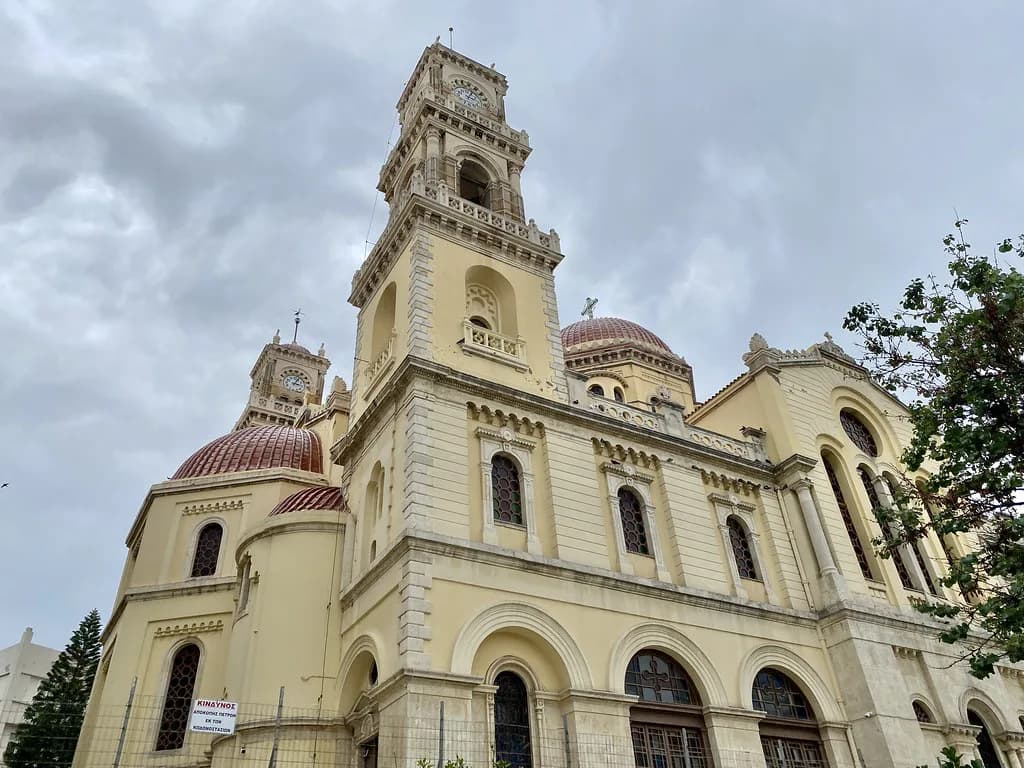
Breathable layers are the practical answer because you move between hot, exposed ruins and a cool indoor gallery in the same outing. A light, quick-drying top plus a thin overshirt or cardigan lets you adjust without carrying a heavy sweater, and a scarf or wrap doubles as shoulder coverage if you stop at a church such as St. Minas Cathedral or St. Titus Church in Heraklion. Religious sites may ask for shoulder or knee coverage, so check before you go rather than treating it as a fixed rule for the whole trip.
For the lower half, choose something you can walk and sit in comfortably, and avoid anything that drags on the ground at the ruins. Loose trousers, tailored shorts, or a skirt with a full hem all work; the important part is that the fabric moves with you and does not stay damp after a hot walk. If your day includes the museum after Knossos, a clean layer you can change into makes the gallery feel more comfortable than staying in dusty site clothes.
One outfit combination that works well is a breathable short-sleeved top, a light overshirt, and trousers or a skirt you have already walked in, with a compact sun hat and a scarf in the bag. Add a thin rain shell if the forecast suggests showers, especially outside high summer, and keep a spare top in the car or at your hotel if you plan to eat out after the museum. The goal is not a formal dress code; it is being able to add or remove a layer quickly between the site and the gallery.
Choosing a Small Daypack for Crowded Walkways
A compact daypack with a secure closure is the best carry for Knossos and the museum because you need your hands free for water, a camera, and handrails. Crowded walkways and gallery rooms make a wide or dangling bag annoying to you and to people around you, so a slim profile beats a large hiking pack. Look for a bag that sits close to your back and has a zip you can close fully rather than an open top.
You do not need capacity for a full day of hiking. The essentials are water, sunscreen, a hat, a light layer, your phone and wallet, and possibly a small snack; anything beyond that is weight you will carry over uneven ground. If you are also visiting the open-air market or the city center, a slightly larger daypack can work, but keep the bulk down so you can move through a museum gallery without brushing against display cases.
Site and museum rules on bags and bottles can change. Operator guidance for this kind of visit asks visitors to bring a bottle of water with no glass. Confirm current rules for your dates on the official site and museum channels before you travel, and be ready to check a larger bag if staff ask. A small crossbody bag is a reasonable alternative for the museum, but it gives you less room for a water bottle on a hot day at the ruins.
Water and Heat on the Exposed Sections
The shade runs out over long stretches of Knossos, and the site is large, so carry more water than you think you need and drink before you feel thirsty. A refillable bottle is practical and lighter than several small plastic bottles, but glass is not welcome on this kind of visit, so choose a non-glass bottle. If you are visiting in summer, start with a full bottle and plan a refill or a drink stop before you return to the city.
Heat affects people differently, and this is not medical advice. Pace yourself, use the shaded and covered areas when you can, and take breaks rather than pushing through the hottest part of the day. Pair water with a salty snack if you are sweating a lot, and let someone in your group know if you are feeling unwell so you can sit down in the shade.
If you are moving on to other Minoan sites, such as Phaistos, apply the same approach: carry water, watch the sun, and confirm local guidance on arrival. A day trip outside the city will change some of these decisions with terrain and altitude, so check what to wear for a Cretan mountain village day trip from Heraklion before you finalize your bag.
A Compact Three-Day Heraklion Packing Example
For a three-day trip based in Heraklion, a carry-on works if you build the packing around two core outfits and one layer for the ruins. Pack two breathable tops, one light overshirt or cardigan, one pair of trousers or a skirt you can walk in, and one pair of broken-in closed shoes, with a compact sun hat, sunglasses, sunscreen, and a non-glass water bottle in your daypack. Add socks, underwear, sleepwear, and a small toiletry kit, and you have the base.
For the second outfit, choose something that also works for an evening meal near Lion Square, so you are not packing separate city clothes. A light scarf or wrap covers shoulders for a church stop and adds warmth if the wind picks up at Knossos. If the forecast suggests rain, add a thin rain shell and one pair of shoes that can handle a wet pavement; if it looks hot and dry, prioritize sun protection and a second lighter top over extra layers.
Keep the extras minimal: a power bank for your phone, a small first-aid kit with blister plasters, and a folding tote for market purchases. If you are traveling in a cooler, wetter season, the Heraklion packing list and what to wear in Heraklion in November give useful layer guidance when the weather turns.
What to Leave Behind
Leave bulky luggage at your hotel, because large bags are awkward on crowded walkways and in museum rooms. A traveler review notes that visitors with luggage have been turned away at the Heraklion Archaeological Museum, so plan to arrive with a small daypack or crossbody bag rather than a suitcase or a large hiking pack. If you are arriving directly from a ferry or flight, arrange to drop bags first.
Skip glass bottles, hiking poles, and anything sharp, since these are commonly restricted on guided archaeological visits and can be refused at entry. A tripod is another item to leave behind unless you have confirmed it is allowed; it is heavy and tends to be unwelcome in busy rooms. Valuables are also better left in a hotel safe than carried over uneven ground where a strap or pocket can snag.
Do not overpack technical gear you will not use. A large first-aid kit, multiple pairs of shoes, and a heavy rain jacket add weight without solving the main problems of sun, heat, and uneven ground. If you are unsure about an item, ask whether you would be happy carrying it for three hours in the sun; if the answer is no, leave it behind.
Before-Departure Checks
Check the forecast for your travel dates in the days before you go, not weeks in advance, and pack for the range rather than a single number. Conditions at an exposed site can feel different from the city, so look at wind as well as temperature and rain. This is also the moment to confirm current site and museum rules on bags, bottles, and entry, since these can change.
If you are visiting in a busy period, book entry in advance and plan to arrive early or late to avoid the worst crowds and heat. Bus line 2 runs from Plateia Eleftherias to Knossos in about twenty minutes, which is a practical option if you are not driving. Check the official site and museum channels for current details that affect your packing, such as whether a bag must be checked.
For trips outside high summer, look at month-specific clothing guidance so your layers match the season rather than a generic summer list. If you are traveling in spring, what to wear in Heraklion in April helps with changeable temperatures, and for high summer, what to wear in Heraklion in July focuses on heat and sun protection. Pack once you have both the forecast and the site rules in front of you.
Plan Your Visit
The packing problem at Knossos and the Heraklion Archaeological Museum is really about transitions: from sun to shade, from gravel to gallery, and from hot ruins to a cool interior. Solve it with broken-in grippy footwear, breathable layers, a secure small bag, and a non-glass water bottle. Then check the forecast and confirm current site rules before you leave, so your kit matches the day you actually get.
If you are staying longer or traveling in a different season, use the Heraklion packing list and the month guides to adjust the same base. The goal is not to carry everything, but to carry the few things that make uneven ground, strong sun, and a long museum visit easier.
Frequently Asked Questions
What should I wear to Knossos Palace?
Choose breathable layers you can add or remove, a light overshirt, and comfortable trousers or a skirt you can walk in. Take a sun hat, sunglasses, and sunscreen, because much of the site is open, and pack a light scarf or wrap in case you stop at a church later in the day. Religious sites may ask for shoulder or knee coverage, so check before you go.
What shoes are best for Knossos and other Minoan sites?
Broken-in footwear with a grippy sole and enough cushioning for a couple of hours on your feet is the practical choice for gravel paths, reconstructed walkways, and worn stone. Closed shoes protect your toes and keep grit out, while secure sandals can work if they fit well and do not slip. Avoid brand-new shoes and smooth soles.
How much water should I carry around Knossos?
Carry more than you think you need, especially in summer, and drink before you feel thirsty. A non-glass refillable bottle is practical and permitted on guided visits of this kind, but rules can change, so confirm current guidance for your dates. Shade is limited over long stretches, so plan a drink stop before you leave the site.
Can I bring a backpack into Knossos and the Heraklion Archaeological Museum?
A small, secure daypack is the sensible carry for both, but large bags and luggage can be refused, particularly at the museum. Keep your bag compact for crowded walkways and gallery rooms, and check the official site and museum channels before your visit in case bag rules have changed. If you arrive with a suitcase, drop it at your hotel first.
Do I need sun protection at Knossos if I go early?
Yes. Much of the site is open, and even an early visit can mean strong sun by mid-morning, so a hat, sunglasses, and sunscreen are worth carrying. Reapply sunscreen if you stay for two or three hours, and take a light layer for wind on exposed ground. Check the forecast for your specific date rather than relying on monthly averages.
What should I leave behind when visiting archaeological sites in Heraklion?
Leave bulky luggage, glass bottles, hiking poles, and anything sharp at your hotel, since these can be restricted or refused at entry. A tripod is also better left behind unless you have confirmed it is allowed. Carry only what you need for sun, water, and a layer, and keep valuables secure rather than in an open pocket.
Sources
Free: The Ultimate Packing Cheat Sheet
A carry-on capsule wardrobe, the complete packing checklist, layering made simple, and what to wear by season — one printable page you'll use on every trip.
You might also like


Continue reading
More guides you'll find useful