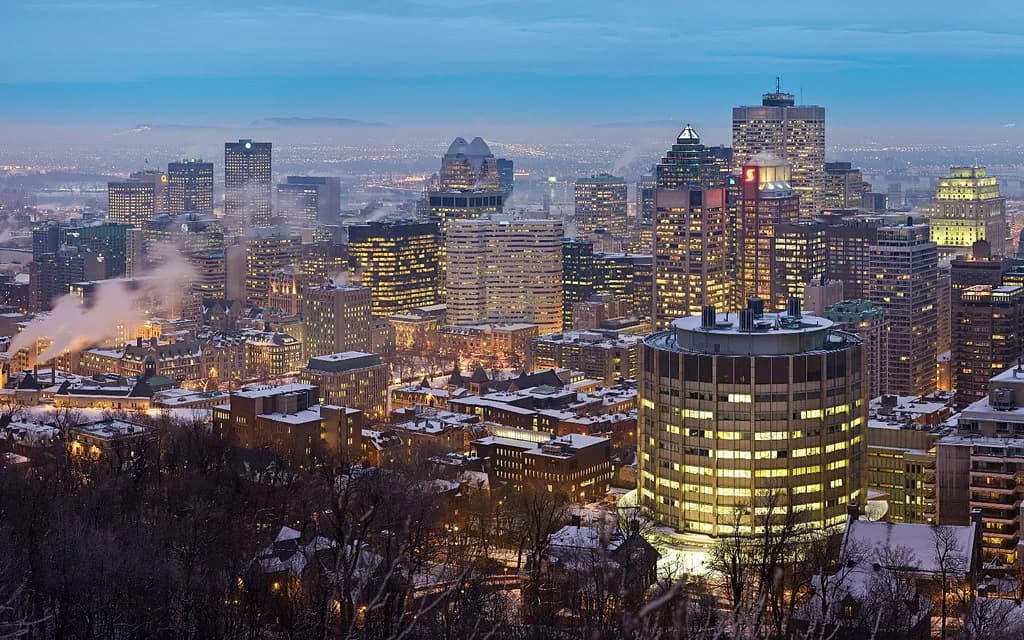
Montreal Winter Activities Packing List: What to Wear
Use this Montreal winter activities packing list to dress for skating, snowshoeing and festivals with smart layering, hand protection and warm footwear.
On this page
A Montreal winter activities packing list starts with a simple idea: the coat is only one part of the system. Skating at the Old Port, playing in snow on Mont-Royal and standing through a festival evening put different demands on your base layer, hands and feet. Build the kit around those differences rather than around one heavy jacket.
Tourisme Montréal approaches winter dressing as a layering problem: thermal long johns and long-sleeved undershirts in moisture-wicking fabrics such as polypropylene, merino wool or silk, thin mid-layers you can remove indoors, and then a serious winter coat or a thin shell over the top.
That structure matters most when your day mixes outdoor activity with indoor breaks. A science centre, a restaurant or a museum can turn a heavy insulated outfit into a liability, so the ability to strip layers down to a base and carry the rest is worth planning for.
How Montreal Winter Conditions Shape Your Packing Decisions
Treat Montreal winter climate as a set of historical seasonal tendencies, not a forecast. Cold, wind and snow are the recurring themes, and the practical packing consequence is that exposed skin, hands and feet decide whether an outing stays comfortable. Check an updated forecast close to departure rather than relying on any seasonal summary.
Tourisme Montréal frames the city's winter as genuinely cold and notes that visitors from warmer countries may struggle to imagine how cold it gets, while still describing snow, sun and twinkling streets as part of the appeal.
One family travel account describes a Montreal visit between Christmas and New Year with young children, motivated partly by a wish to see real snow, and treats winter weather gear and transit as central planning topics.
The packing lesson is not a single temperature threshold but a decision about coverage and adaptability. If you plan to be outside for hours at a skating rink or a festival site, your kit needs to handle both active heat and standing-around cold in the same trip.
The Three-Layer System for Winter Activities
Think of three jobs: move moisture away from your skin, hold warmth close to your body, and block wind and wetness. Assign one garment to each job and you can adjust as your activity level changes. This is editorial layering advice based on how the cited sources describe winter dressing, not a mandatory uniform.
Tourisme Montréal advises starting from the inside out, with thermal long johns and long-sleeved undershirts in moisture-wicking textiles such as polypropylene, merino wool or silk, fitted like a second skin without being constricting.
For the middle, the same source recommends thin, warm layers such as long-sleeved tops in nylon, polartec or wool, and notes that something you can unzip is ideal. That is the layer you shed first when you step indoors or start moving hard.
For the outside, Tourisme Montréal presents two paths: a serious winter coat from a Montreal maker, or a thin shell like a raincoat that keeps the under layers dry. Which you choose depends on whether you want maximum warmth with one garment or maximum adaptability from several.
Base Layers for Skating, Snowshoeing and Festival Nights
Merino, silk and polypropylene each behave differently against skin, and the right pick depends on how much you will sweat. Merino tends to feel warm and less clammy over long, low-output evenings, silk is thin and packs small, and polypropylene is a workhorse for high-output activity. All three appear in Tourisme Montréal's packing guidance.
Skating is intermittent effort: you glide, then you stand, then you glide again. A base layer that handles that stop-start pattern without leaving you chilled is more useful than the thickest option available. Bring a spare base layer if you plan several rink sessions, because a damp base layer is the fastest way to lose warmth.
Snowshoeing and snow play are steadier work, so the base layer's moisture job matters more than its raw warmth. If you overheat while moving and then cool down quickly during a break, you have packed the wrong base for the activity.
Festival evenings are the opposite case: low output, long exposure, and often a walk between sites. A warmer base plus more insulation makes sense there, and the ability to open or remove a mid-layer when you duck into a venue keeps the evening manageable.
Mid-Layers and Outer Shells: Thin and Adaptable Versus Insulated
The main trade-off for a short winter trip is between a thin shell over multiple layers and one heavy insulated coat. Tourisme Montréal notes that a layering approach can spare travellers the expense of a heavy-duty jacket they would wear only once.
A thin shell wins on adaptability because you can add or remove mid-layers as the day moves between a rink, a warm interior and a wind-exposed square. A heavy insulated coat wins on simplicity when you would rather not think about layers at all.
Tourisme Montréal also points out that thin layers help you move from outdoors, such as a walk up Mount Royal, to indoors, such as dinner by a fireplace, without returning to your hotel, and that unzippable pieces are especially useful.
Whichever route you take, keep the mid-layer thin enough to fit under the shell without compressing the insulation. A mid-layer that is too bulky under a tight shell reduces the warmth you paid for.
Hand Protection: Liners, Mitts and Reusable Warmers
Hands are the first thing to suffer during low-output winter activities, and the right answer changes with the task. Tourisme Montréal treats gloves as essential and recommends lined gloves, which is the baseline for grip and dexterity.
Mitts are the warmer choice for standing around at a festival or waiting at a rink edge, because fingers share heat. A thin liner inside a mitt adds a layer you can keep on when you need to use a phone or handle a zipper, and liners dry faster than bulky mitts.
Tourisme Montréal mentions reusable hand warmers for people who have trouble getting their hands warm and also notes hand or foot warmers as useful extras for long outdoor events such as Montréal en Lumière or a dance night at Igloofest.
If you skate, keep a second pair of gloves or mitts for the walk to and from the rink. Rink-side gloves can pick up moisture, and swapping to a dry pair afterward is a small change with a large comfort payoff.
Head, Neck and Face: Accessories That Matter Most on Windy Sites
Accessories are where a lot of winter comfort is won or lost, especially at open, windy sites. Tourisme Montréal calls a soft, thick wool hat an absolute must in Montreal and also recommends a neck tube or traditional scarf to keep the breeze out.
A neck tube is easier to manage than a long scarf when you are skating or moving around, because there is less loose fabric to catch or adjust. A scarf offers more coverage and can be tied over a coat for extra warmth, which Tourisme Montréal also suggests.
For long festival evenings, a hat that covers your ears plus a neck tube gives you a compact kit you can stuff in a pocket when you step inside. This is a suggestion for managing indoor-to-outdoor transitions, not a rule about what anyone must wear.
Footwear and Socks: Insulating Boots and the Moisture Problem
Feet are the hardest part of a Montreal winter kit to get right, because warmth and moisture fight each other. Tourisme Montréal recommends starting with warm socks and, as a precaution, adding legwarmers to bridge the gap between pants and socks.
Winter boots are described as ideal, but the same source notes they are another area where short-stay visitors may not want to invest, suggesting waterproof hiking boots or sneakers with insulating textiles, or sturdy leather work boots with extra socks in a pinch.
Moisture is the real enemy: keep it out from the outside with a waterproof layer, and manage it from the inside with socks that move sweat away from skin. If your feet get wet early in the day, no amount of extra insulation will rescue the afternoon.
Bring at least one dry spare pair of socks for any day that combines activity with a long outdoor evening. Changing socks before a festival or a return to the rink is one of the simplest comfort upgrades available.
Traction devices for ice and snowshoe-specific equipment details are not covered by the cited sources, so this guide does not prescribe them. Check with the rental operator or venue you plan to use if you need guidance on what is suitable for their terrain.
Activity Profile: Skating at the Old Port and Beaver Lake
Skating is the activity most likely to leave you both hot and cold in the same hour. One family travel account describes a large ice skating rink at the edge of the Old Port of Montréal and, at Lac-aux-Castors or Beaver Lake in Parc du Mont-Royal, frozen water with people skating and a building with rentals available inside.
The same account notes that Beaver Lake was crowded and advises arriving early, which is a scheduling decision with direct packing consequences: early starts are colder, so a warmer base layer and better hand protection are worth the extra weight.
For skating specifically, prioritise a base layer that handles sweat, a mid-layer you can remove, and gloves with enough grip for laces or a rental counter. Skating in a heavy coat that cannot be opened is a recipe for overheating on the ice and shivering once you stop.
At Beaver Lake there was a building with rentals available inside for skating, according to the family guide. Treat any rental arrangement as something to verify directly with the operator rather than as a guaranteed service.
Activity Profile: Snowshoeing and Snow Play Around Mont-Royal
Snow play and snowshoeing around Parc du Mont-Royal mean more continuous movement than skating, so overheating is a bigger risk than freezing at the start. The same family guide describes sledding just behind Beaver Lake and notes that the glissade rental tent was closed during their Christmas-to-New-Year visit.
That closure is a reminder not to build a packing plan around a specific rental service. If your activity depends on rented equipment, confirm availability before you commit a day to it, and pack as though you may need to be self-sufficient.
For active snow time, a thin mid-layer beats a bulky one because you will generate heat quickly. Pack a dry base layer or at least a dry spare top for the trip home, since damp clothing after snow play is the main comfort failure.
The family guide also mentions taking a bus for the return trip from the park, which is a practical note for packing: you may be carrying extra layers, mitts and warmers on public transit after a cold, active morning.
Activity Profile: Winter Festivals and Long Outdoor Evenings
Festivals are the low-output, long-duration end of the winter activity range, and packing for them is closer to packing for standing outside than for sport. Tourisme Montréal names Montréal en Lumière and Igloofest as examples of outdoor adventures where hand or foot warmers and a thermos of a hot drink can make a real difference.
A festival kit should favour warmth that does not require movement to work: an extra mid-layer, mitts over liners, a hat that covers the ears, and a neck tube. Reusable warmers in pockets or boots add comfort when you are standing still for a set or a light installation.
Because festival sites often sit near other indoor options, the ability to strip down matters as much as the ability to bundle up. A shell over thin layers keeps you flexible when you move between an outdoor site and a warm interior.
Do not assume any venue's rules about bags, clothing or what you may bring inside. Check the festival organiser's own published information before you travel, and plan your layers so nothing essential depends on an unverified rule.
A Compact Trip-Length Packing Example: One Week of Winter Activities
For a one-week winter activity trip, build the kit around repeatable layers rather than a new outfit for every day. Two thermal base-layer sets, one or two thin mid-layers, one shell or insulated coat, one warm hat, one neck tube and two hand options cover most combinations.
For feet, bring warm socks and one dry spare pair alongside insulating footwear you already trust. If you plan to skate, snowshoe or play in snow across several days, a second base-layer set is the single most useful addition, because it lets you start each day dry.
Tourisme Montréal notes that some Montreal shops stock thermal underwear, including outdoor and sporting retailers, which means a gap in your kit can be filled on arrival rather than forcing you to buy everything at home.
Keep the kit modular: a packing cube for base layers, one for mid-layers and accessories, and a dry bag or plastic bag for anything wet. That organisation makes hotel-room drying and transit days far easier.
What to Leave Behind When Packing for Montreal Winter Activities
Leave behind cotton next-to-skin layers, heavy single-purpose coats you would wear for nothing else, and footwear you have never tested on snow. Tourisme Montréal's guidance leans on thin, adjustable layers, which is the opposite of packing one heroic garment for every situation.
Skip the assumption that you need a full winter wardrobe for a short visit. The same source explicitly frames layering as a way to avoid investing in an expensive heavy jacket for a single trip.
Also leave behind duplicate bulky accessories you will not carry. One reliable hat, one neck tube and one tested pair of mitts do more than three pairs that stay in the hotel room when you head out for the evening.
Before-Departure Weather Check: What to Verify in the Days Before You Fly
Run a weather check in the final days before departure and again on the morning of each activity, because winter conditions in Montreal shift and historical patterns are not a forecast. Use the forecast to decide which base layer and which outer option goes in your day bag.
Check three things for each planned activity: expected temperature and wind, precipitation type, and how long you will be outside without a warm indoor break. Those answers decide whether you carry the insulated coat or the shell plus mid-layers.
If a day looks wetter or colder than you packed for, adjust the plan toward an indoor option rather than assuming your clothing will cope. If you are relying on rented gear, confirm availability and conditions with the operator before you travel to the site.
Tourisme Montréal describes situations where activity-specific gear can really help, such as a full day at Montréal en Lumière or a dance night at Igloofest, which is the kind of day where a forecast check should change what you carry.
Renting Versus Bringing: Where Gear Rentals Change Your Packing List
Rental is the main alternative to packing a full winter kit, and it changes your list rather than replacing it. Tourisme Montréal describes renting a complete winter wear outfit from a Montreal operator, with a starter kit including a coat, snow pants, gloves or mitts, a tube scarf, a tuque, winter boots and ski goggles.
The same source notes another Montreal business that offers warm clothing for rent or for sale alongside sporting equipment such as skis, snowboards, toboggans and skates. Availability, pricing, sizing and hours are volatile, so confirm them directly with the operator before relying on a rental plan.
Even if you rent outerwear, still bring your own base layers, socks and hand liners. Those are the pieces most tied to fit and hygiene, and they are the ones rental kits are least likely to cover comfortably.
Compare the cost of renting against the cost of one heavy coat you would never wear again, but do the comparison yourself using current quotes. This guide cannot state rental prices or availability, and neither should your trip plan until you have confirmed them.
FAQ: Montreal Winter Activity Packing Questions
The most common questions about packing for Montreal winter activities come down to layers, hands, feet and whether to buy or rent. Use the answers below with the sections above, and treat every recommendation as an editorial suggestion rather than a rule.
If you are comparing this trip with a warmer-season visit, the same destination pages that cover spring layers help you see how the packing logic changes; for example, what to wear in Montreal in April focuses on transitional conditions rather than deep-winter activity gear.
For a broader view of the city's clothing decisions across the year, start from the Montreal packing list and then narrow to the specific activity or month you are travelling.
Pack for the Activity, Not Just the City
A Montreal winter activities packing list works when it answers the question your day actually asks. Skating needs sweat management and grip, snow play needs moisture control and layers you can shed, and festival evenings need warmth that works while you stand still.
Start with moisture-wicking base layers, add thin mid-layers, then choose either a shell over layers or one insulated coat based on how you will spend your days. Finish with a wool hat, lined gloves or mitts, a neck tube, warm socks, insulating footwear and reusable warmers for long outdoor events.
Verify current weather and any rental or venue arrangements before you fly, keep the kit modular, and leave the cotton and the untested single-purpose gear at home.
Frequently Asked Questions
What should I wear for winter activities in Montreal?
Start with a moisture-wicking base layer such as merino, silk or polypropylene, then add one or two thin mid-layers and either an insulated coat or a thin shell that keeps the under layers dry. Finish with a wool hat, lined gloves or mitts, a neck tube or scarf, warm socks and insulating footwear. Adjust the balance between warmth and breathability depending on whether you will be skating, moving through snow or standing at a festival.
Do I need special boots for skating or snowshoeing in Montreal?
You do not need a separate pair of boots for each activity. Winter boots are described as ideal, but waterproof hiking boots or sneakers with insulating textiles, or sturdy leather boots with extra socks, are presented as workable alternatives for short visits. What matters most is keeping moisture out and managing sweat inside, so bring footwear you have already tested and at least one dry spare pair of socks. For any activity-specific equipment question, check with the rental operator or venue you plan to use.
What hand protection works best for Montreal winter activities?
Lined gloves are the baseline for grip and dexterity, while mitts are warmer for standing around because the fingers share heat. A thin liner inside a mitt lets you keep your hands covered when you need to use a phone or adjust a zipper. Reusable hand warmers and foot warmers are recommended as useful extras for long outdoor events. Bring a second pair so you can swap to dry gloves or mitts after skating or snow play.
Can I rent winter gear in Montreal instead of packing it?
Rental is an option mentioned by Montreal tourism sources, including a complete winter wear outfit with a coat, snow pants, gloves or mitts, a tube scarf, a tuque, winter boots and ski goggles, and another business offering warm clothing for rent or sale alongside sporting equipment. Availability, sizes, hours and pricing change, so confirm directly with the operator before you rely on it. Even if you rent outerwear, bring your own base layers, socks and hand liners for fit and hygiene.
What layers should I wear to a Montreal winter festival?
Festival evenings are low-output and long, so favour warmth that works while you stand still: a warmer base layer, an extra thin mid-layer, mitts over liners, a hat that covers your ears and a neck tube. Reusable hand or foot warmers and a thermos of a hot drink are described as useful for long outdoor events. Because festival sites often sit near indoor options, wear layers you can remove so you can move between outdoor and indoor spaces without overheating.
What should I leave behind when packing for Montreal winter activities?
Leave cotton next-to-skin layers at home, along with heavy single-purpose coats you would never wear again and footwear you have not tested on snow. Tourisme Montréal presents layering as a way to avoid buying an expensive heavy jacket for a single trip, so thin, adjustable pieces are more useful than one bulky garment. Also skip duplicate bulky accessories that will stay in your hotel room while you are outside.
How do I check the weather before a Montreal winter activity trip?
Check an updated forecast in the final days before departure and again on the morning of each activity, because winter conditions shift and historical seasonal patterns are not a forecast. Look at expected temperature and wind, precipitation type, and how long you will be outside without a warm indoor break. Use those answers to decide between an insulated coat and a shell over mid-layers, and to confirm any rental or activity arrangements directly with the operator.
Sources
Free: The Ultimate Packing Cheat Sheet
A carry-on capsule wardrobe, the complete packing checklist, layering made simple, and what to wear by season — one printable page you'll use on every trip.
You might also like


Continue reading
More guides you'll find useful