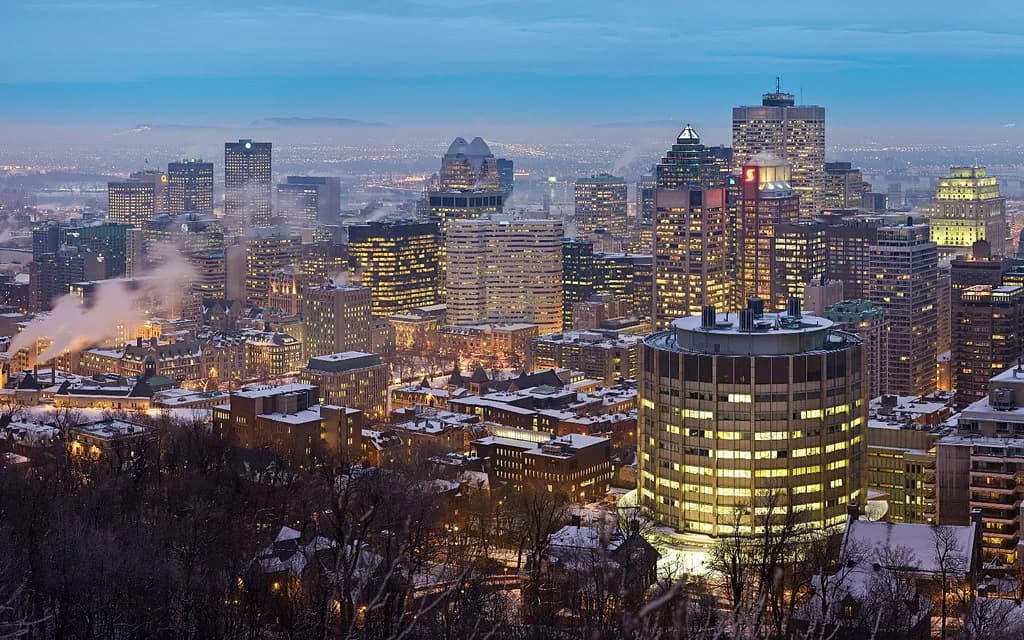
What to Wear in Montreal in May
Pack for Montreal in May with a layer-first wardrobe for cool, changeable spring days, damp cobblestones, and chilly patio evenings.
On this page
Montreal in May: the weather in numbers
Typical May conditions from 30 years of daily weather data, split into early, mid and late month so you can match them to your travel dates.
| Dates | Early May (1–10) | Mid May (11–20) | Late May (21–31) |
|---|---|---|---|
| Afternoon high | 16°C (60°F) | 17°C (62°F) | 19°C (67°F) |
| Night-time low | 5°C (41°F) | 6°C (44°F) | 10°C (49°F) |
| Feels like (afternoon) | 12°C (54°F) | 13°C (56°F) | 17°C (62°F) |
| Range of afternoon highs | 9–23°C | 11–23°C | 13–26°C |
| Days with rain | 4 in 10 days | 4 in 10 days | 4 in 10 days |
| Afternoon humidity | 49% | 49% | 51% |
| Average wind | 12 km/h | 13 km/h | 13 km/h |
| Daylight | 14.3 h | 14.7 h | 15.1 h |
What this means for your suitcase
- Mild days: long sleeves with a light sweater or jacket you can take off at midday.
- Evenings run about 10°C (18°F) cooler than afternoons — carry a layer for after sunset.
- Showers on roughly 4 in 10 days — a packable rain jacket or compact umbrella.
- Day-to-day swings: afternoon highs range from about 11°C to 24°C, so pack for both.
Travelling on specific dates? Use our What to Wear Planner for the weather, outfits and a packing list for your exact days in Montreal.
Averages for 1991-2020, modelled from Copernicus ERA5-Land and ERA5 reanalysis via Open-Meteo open data (CC BY 4.0), adjusted to Montreal's elevation. Modelled afternoon highs can read 1–2°C below airport weather-station records.
May in Montreal is a transition month, and the practical way to pack for it is to plan for two conditions in one day: a milder, brighter midday and a cooler, often damper evening. That means packing for range rather than committing to a single temperature. Nothing here is a rule, and none of it is a claim about how locals dress; these are suggestions you can adapt to your own closet.
Build every day around three pieces you can add or remove: a base layer, a mid layer, and a packable outer shell. Spring conditions in the city are generally cool and changeable, so rather than guessing the weather weeks out, check a current forecast in the days before you fly and adjust your layer count, not your whole wardrobe. Seasonal tendencies describe the season, not your specific trip.
How Montreal's Spring Transition Behaves
Afternoon warmth tends to build faster than the evening cools down, so a light layer that feels right at lunch can feel thin by dusk. Damp wind near the water makes exposed spots feel cooler than a sheltered street a block away. Treat all of this as a historical seasonal tendency rather than a forecast for any one day.
Drizzle can arrive without much warning in this shoulder season, and grey damp can linger rather than pass quickly. Many interiors stay heated in cooler stretches or swing to strong air conditioning once buildings warm up, so a layer you can carry indoors matters as much as one you wear outside. Layering is the core strategy for this city, and a Montreal packing list worth following suggests bringing sweaters year round and recommends sneakers for the walkable, cobblestoned center, while advice on May weather in Montreal suggests layering long-sleeved shirts and sweaters with cardigans and fleece for the same reason.
The Layering Formula: Base, Mid, Shell
Start with a base layer that works both in a warm interior and on a cool street: a short-sleeve or light long-sleeve tee in a smooth fabric that layers without bulk. Add a mid layer you can strip off fast, such as a cardigan, a light sweater, or a thin fleece. Finish with a packable outer shell that blocks wind and light rain, then plan to move between these three states through the day.
A useful way to keep packing simple is a small capsule approach: pick a limited palette, then choose tops, bottoms, and shoes that all work together, the way a compact packing list organizes a short trip into coordinating pieces you will actually wear. If you prefer a named heuristic, the widely used 3-3-3 grouping of three tops, three bottoms, and three pairs of shoes is a convenience rather than a standard. Adjust your layer count based on what a current forecast suggests, and remember that a warm day does not remove the need for an evening layer.
Fabric and Footwear Trade-Offs for Damp Streets
For drizzle and trampled sidewalks, the useful distinction is how a fabric handles moisture, how fast it dries, and how it hangs when slightly damp. Cotton and denim are comfortable and hold their shape, but they dry slowly and feel heavy when wet, so they suit short damp walks better than a long day in the rain. Wool blends resist a light damp chill well and layer neatly, while synthetics dry fastest but can feel less polished for an evening out.
Footwear deserves more attention than clothing volume, because Old Montreal's cobblestones and the paths and stairs of Mount Royal put uneven, sometimes slick surfaces underfoot. One editor noted regretting barely-there sandals on the cobblestones during a trip to the city, which is a fair argument for a broken-in walking shoe instead. Choose a pair you have already worn for long days, add socks that manage dampness, and pack a second option only if it genuinely covers a different need.
Daytime Outfit Combinations for City Exploring
For a day of walking, a classic combination is relaxed denim or a slip skirt paired with an elevated white top or a striped set, finished with classic sneakers; one editor on a Montreal trip noted striped sets and elevated white tops as standout pieces she kept seeing. These are editorial outfit ideas, not a local uniform and not a requirement. The advantage of a white top or a striped set is that it reads put-together while remaining easy to layer under a shell, and a second useful layering source recommends long-sleeved shirts and sweaters over short-sleeved pieces for May.
If you want one outfit that covers most of the day, wear the base and mid layers with jeans, carry the shell in your bag, and swap to the slip skirt only if your evening plans call for it. Tucking a light scarf into your bag adds a small, inexpensive way to close the gap at your neck when the wind picks up. Pairing shoes and layers this way is the same approach as what to wear in Montreal in April, where damp streets and cool air make a lighter jacket and flat boots more useful than open shoes.
Evening Outfits and Patio Season Adjustments
Evenings can drop noticeably below the afternoon, so the simplest upgrade is to keep the daytime outfit and add one real layer: a light jacket, a knit cardigan, or a mid-weight layer over your top. A patio seat adds wind exposure, so choose the layer that blocks wind rather than the one that merely looks warm. Swap accessories instead of rebuilding the outfit, and keep footwear you can walk home in.
If you are deciding how dressy to go, note that no dress code is being asserted here, and any venue guidance should come from the venue itself. A slightly more polished top, or a clean slip skirt with the same sneakers, is an easy way to move from a daytime look to a dinner look without packing a second outfit. Keeping the bag light also matters if you are moving between neighbourhoods on foot.
A Compact Packing Example for a Four-Day Trip
For four days in Montreal, start with two base layers, one mid layer, one packable shell, two bottoms, two pairs of shoes at most, and one evening layer you would also wear by day. Choose a palette that mixes easily so every top works with every bottom. The shell carries the most weight in terms of usefulness, so prioritize one you have already tested rather than an untested emergency alternative.
For a two-day trip, keep the same structure but cut a base layer and a bottom, and rely on the shell and mid layer for weather changes. For a week, add one base layer and one bottom, then plan a laundry moment rather than packing seven distinct outfits. If your travel window shifts later, a guide to what to wear in Montreal in July covers a very different packing problem, while a guide to what to wear in Montreal in October covers the cooling side of the year.
What to Leave Behind
Leave the heavy winter coat behind; a bulky layer you cannot remove mid-afternoon is the most common packing mistake in a shoulder-season city. If you are traveling specifically for cold-weather activities, that calls for different gear, which a Montreal winter activities packing list covers. Skip single-use rain gear you have never worn, multiple pairs of shoes that compete for the same purpose, and duplicate mid layers in similar weights.
If you are coming from a colder trip, note what changes on the calendar, but apply the same wardrobe logic: cooler, wetter outings reward a warmer sweater and closed shoes over thin layers and open sandals. Skip items you are saving for a hypothetical occasion, since spring weather in Montreal tends to reward practical layering over formal single-purpose pieces.
Before You Fly: Check the Forecast, Adjust Layers
In the days before departure, check a current forecast for Montreal and read it in terms of layer count: a cooler, wetter pattern calls for the warmer mid layer and the shell, while a milder pattern lets you drop the heaviest knit. Do not rebuild the entire wardrobe at the last minute; changing one or two layers is usually enough. Pack by outfit slot rather than by item count so this adjustment stays simple.
Seasonal averages describe how a month usually behaves in Montreal, not what your specific dates will bring, so treat the forecast as the deciding input. Consult a reliable weather service for current conditions rather than relying on a general climate summary. Use the packing list above as your item reference, and let the forecast set how many layers you carry.
Plan Your Visit
Pack for the range May delivers in Montreal: a base layer, a mid layer, and a tested packable shell, plus footwear you can walk in over cobblestones. Let the forecast change your layer count rather than your entire packing list, and keep the evening layer in your bag even on a mild day.
Frequently Asked Questions
Do people wear jeans in Montreal in May?
Jeans are a practical choice for cool, damp spring weather, and jeans are treated as a wardrobe staple in Montreal packing guidance. The trade-off is that denim dries slowly if it gets wet, so for a long rainy day consider a quicker-drying alternative or carry a shell. This is an editorial suggestion, not a rule about what everyone wears.
Do I need a rain jacket in Montreal in May?
A packable wind- and rain-resistant shell is one of the most useful pieces for a changeable spring month, because drizzle and damp wind can arrive with little warning. No source states a mandatory waterproof standard, so choose a shell you have already tested. Even if a forecast shows a dry spell, the shell still earns its place for wind and evening chill.
Is it warm enough for a dress in Montreal in May?
It can be, depending on the day, which is why layering matters more than the dress itself. Combine a dress or slip skirt with a base layer and a light jacket so you can adapt as the temperature falls toward evening. Check a current forecast in the days before your trip rather than relying on a seasonal average.
What shoes are best for cobblestones in Old Montreal?
A broken-in pair of classic sneakers or flat walking shoes is the practical choice, because Old Montreal's cobblestones reward stable, comfortable footwear over thin soles or new shoes you have not tested. One style guide describes regretting sandals on the cobblestones, which supports choosing a closed walking shoe for long days. Bring a second pair only if it serves a genuinely different purpose.
What is the 3-3-3 rule for clothes?
It is a popular packing heuristic that groups a small number of tops, bottoms, and shoes around a coordinated palette, and it helps keep a bag light. It is not authoritative packing science, and it does not account for the range of temperatures May can bring. Use it as a starting framework and adjust the layer count to a current forecast.
How should I adjust my packing if the Montreal forecast changes?
Change the layer count, not the whole wardrobe. If the forecast turns cooler and wetter, add your warmer mid layer and keep the shell accessible; if it turns milder, drop the heaviest knit and rely on base layers. Packing by slot rather than by item count makes this last-minute adjustment quick.
Sources
Free: The Ultimate Packing Cheat Sheet
A carry-on capsule wardrobe, the complete packing checklist, layering made simple, and what to wear by season — one printable page you'll use on every trip.
You might also like


Continue reading
More guides you'll find useful