Positano Packing List for Stairs, Beaches, and Boat Days
Pack light for Positano with breathable linen and cotton, walkable sandals, beach-ready shoes, a modest wrap, and easy resort-casual evening outfits.
On this page
Positano weather month by month
Typical conditions from 30 years of daily weather data — use it to see how much to pack for the month you are travelling.
| Month | High / low | Days with rain | Afternoon humidity | Daylight |
|---|---|---|---|---|
| January | 12° / 8°C (54° / 47°F) | 4 in 10 days | 61% | 9.4 h |
| February | 12° / 8°C (54° / 47°F) | 4 in 10 days | 59% | 10.4 h |
| March | 14° / 10°C (57° / 49°F) | 3 in 10 days | 60% | 11.7 h |
| April | 17° / 12°C (62° / 53°F) | 4 in 10 days | 62% | 13.1 h |
| May | 20° / 15°C (69° / 60°F) | 3 in 10 days | 62% | 14.3 h |
| June | 24° / 19°C (76° / 66°F) | 2 in 10 days | 62% | 14.9 h |
| July | 27° / 22°C (81° / 71°F) | 1 in 10 days | 60% | 14.6 h |
| August | 28° / 23°C (82° / 73°F) | 1 in 10 days | 60% | 13.6 h |
| September | 24° / 20°C (76° / 67°F) | 3 in 10 days | 59% | 12.3 h |
| October | 21° / 17°C (70° / 62°F) | 3 in 10 days | 62% | 10.9 h |
| November | 17° / 13°C (62° / 56°F) | 5 in 10 days | 63% | 9.7 h |
| December | 13° / 10°C (56° / 49°F) | 4 in 10 days | 62% | 9.1 h |
Travelling on specific dates? Use our What to Wear Planner for the weather, outfits and a packing list for your exact days in Positano.
Averages for 1991-2020, modelled from Copernicus ERA5-Land and ERA5 reanalysis via Open-Meteo open data (CC BY 4.0), adjusted to Positano's elevation. Modelled afternoon highs can read 1–2°C below airport weather-station records.
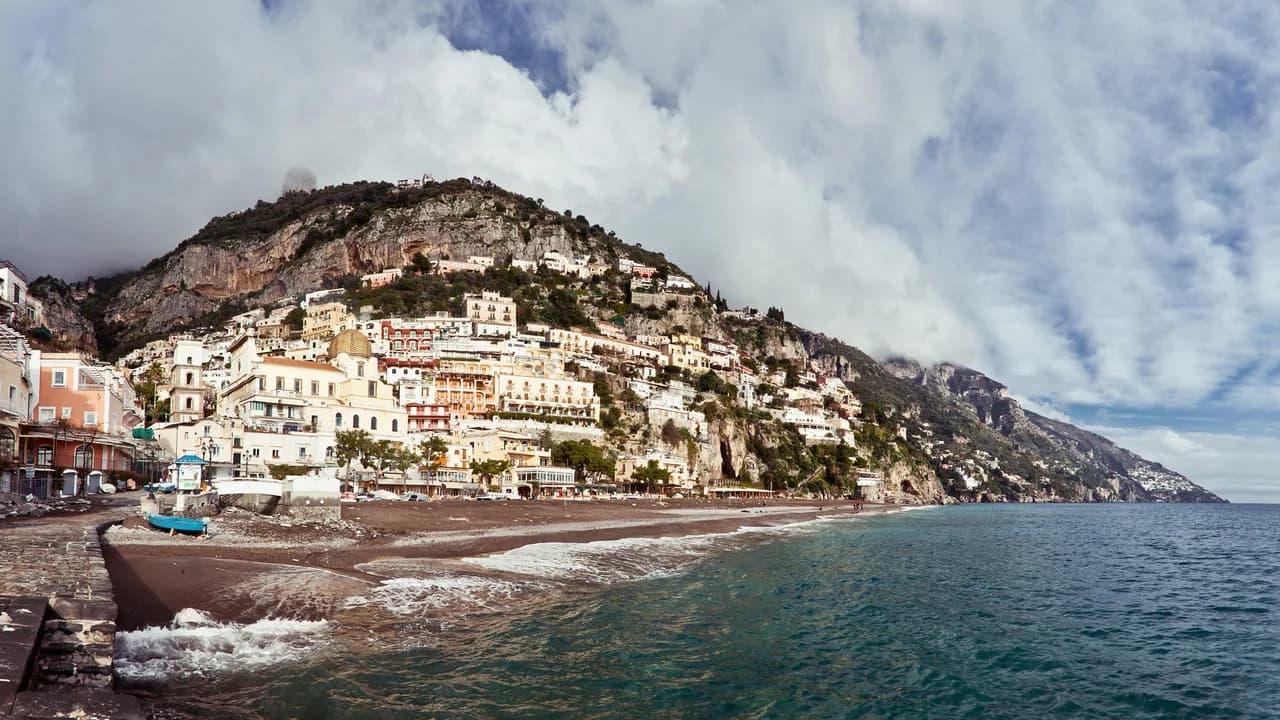
Positano climbs a cliff above the Tyrrhenian Sea, so a normal resort wardrobe does not always survive a day that starts with a ferry, continues up stone steps, and ends on a terrace above the water. The destination is less about packing more and more about packing pieces that dry quickly, feel light in humid heat, and can move from beach to town without a full change. This guide focuses on those packing decisions, not on a sightseeing schedule, so you can adapt the list to your own days.
A useful way to start is by naming your trip shape: mostly beach clubs and boat days, mostly town time and dinners, or a mix of both. Your accommodation provider can confirm what is walkable from where you stay and whether the final approach involves steps or a vehicle-accessible drop-off. Packing around those realities beats packing around a generic summer wardrobe, especially if you plan to visit churches, dine outdoors, or take ferries between coastal towns. If your dates fall in a shoulder month, a month-specific guide can help you shift the balance of layers and swimwear.
Start With Your Trip Shape, Not a Generic Checklist
Most Positano trips mix four kinds of days: town time on uneven stone, beach or beach-club time on pebbles, a boat day, and at least one dinner where you want to look a little polished. Each one asks something different from your bag, so overlap matters more than item count. If you know you have two boat days, for example, one quick-dry cover-up and a swimsuit rotation can carry both without doubling up.
Adults travelling without children can often pack lighter than they expect, because a single linen set or midi dress can serve lunch, shopping, and an early dinner. Families with young children should prioritise grip, sun protection, and a bag that leaves hands free for stairs; a stroller is awkward on stepped alleys and should be left behind unless your accommodation confirms otherwise. Decide this before you pack, because it changes both footwear and bag choice.
Daytime in Positano: Linen and Cotton Built for Heat and Humidity
Summer on the Amalfi Coast tends to bring long sunny stretches with little rain, and the coast typically feels hot and humid. Because historical seasonal tendencies like these are not a forecast, check the actual outlook for your dates a few days before departure and adjust the balance of tops, layers, and cover-ups accordingly. Light, breathable fabrics such as linen and cotton handle that combination better than heavy blends that cling and stay damp.
Outfit formulas work better here than single items: a linen two-piece set with a woven tote and flat sandals, a flowy cotton midi dress with simple jewellery, or lightweight linen trousers with a relaxed tank. Pale colours reflect sun and photograph well against the pastel cliffside, while a printed midi hides the dust and salt spray that find their way onto hems after a day of stairs. Choose fabrics that can be rinsed in a sink and hang dry overnight, which is a realistic routine in a small hotel room.
For peak-summer visits, when heat and ferry queues shape the day, the practical move is a loose dress or linen set by morning and a swimsuit under your clothes for the afternoon. A wide-brim hat and sunglasses matter in an open-air village with limited shade, and a light scarf doubles as sun cover on boat decks. For exact monthly advice, see what to wear in Positano in July.
Evening in Positano: Resort-Casual Outfits for Outdoor Terraces
Evenings in Positano tend to be warm, and many restaurants seat guests outdoors, so the practical evening uniform is resort casual rather than formal. A linen midi dress, a maxi dress, or linen trousers with a nicer top, paired with simple jewellery and a dressy flat sandal, covers most terraces without packing a separate evening capsule. Dressier fabrics and cleaner lines read better than gym wear or beachwear once the sun goes down.
Restaurants set their own expectations, and some may ask guests not to arrive in wet swimwear or bare beach attire; check the specific venue's published guidance or ask when booking, rather than assuming a blanket code. A collared shirt or linen blouse, closed sandals or loafers, and a small clutch is a safe editorial suggestion for a smart-casual dinner. Keeping a lightweight layer in the bag covers the cooler air that sometimes arrives after sunset, especially in the shoulder months.
Footwear That Handles Stone Stairs, Pebble Beaches, and Boat Decks
Walkable footwear is the single biggest packing decision in Positano, because village life means uneven stone staircases, sloped alleys, and plenty of standing. Flat sandals you can walk in for hours are the most useful core item, with an optional pair of supportive sneakers for longer walking days or travel days. Very high heels and stiff new sandals are the usual casualties of the terrain, so leave anything you have not already broken in.
Beach shoes are a separate job: pebbles and dark beach sand get hot underfoot, and getting in and out of the water is easier with quick-dry rubber sandals or water shoes you do not mind soaking. Keep them in your beach bag rather than your suitcase, so they are ready when you arrive at the shore. Boat days rarely need more than a slip-on flat for stepping onto the dock or into town at lunch.
A compact footwear line-up of three pairs covers nearly every warm-season trip: one flat sandal for town, one rubber or water-friendly pair for the beach, and one dressier sandal for dinner. If your trip includes a lot of town walking, swap the dressy pair for sneakers and keep evenings simple. Whatever you choose, wear new shoes at home first, because a blister on day one follows you up every staircase for the rest of the week.
Bags: One Daytime Tote and One Compact Evening Bag
A large woven tote is the workhorse here, holding sunscreen, water, a portable charger, a hat, and a change of clothes for full days between the beach and town. Look for a bag with a secure closure and straps wide enough to stay comfortable over a shoulder, since you will carry it up steps rather than rolling it. One tote plus one small clutch is enough for most people, and it keeps your hands free on crowded stairways.
For evenings, a raffia or woven clutch that also works during the day means you only pack one small bag. Avoid clutches so tiny they cannot hold a phone, key card, and lipstick, because you will end up carrying items loose. Wheeled suitcases are useful for the airport transfer but awkward on stepped alleys, so plan to carry a soft bag up the final stretch if your accommodation sits above the road.
Beach Club and Boat Day Kit: Swimwear, Cover-Up, and a Quick-Dry Layer
For beach clubs and boat days, build around two swimsuits so one can dry while you wear the other, plus a lightweight cover-up you can pull on over damp skin to walk to lunch. A linen shirt or button-front cover-up does double duty on a boat deck and over a dress in town. Confirm towel and lounger arrangements with the specific beach club or boat operator before departure, because policies differ by venue and booking type.
Boat days move between sun, spray, and walking in a harbour town, so a wide-brim hat with a chin cord, sunscreen, and a quick-dry layer matter more than a second outfit. You will spend much of the day barefoot or in easy sandals on deck, which makes slip-on flats the sensible choice for docking. A dry bag or a large zip pouch inside your tote keeps phones and documents safe from sea spray.
Layers for Shoulder Seasons and Cooler Evenings
Spring and autumn on the Amalfi Coast can swing between warm afternoons and cool evenings, and the shoulder months often require a cardigan or light jacket on top of summer pieces. In May, afternoons can already feel beach-warm while evenings still call for a layer, so packing for both is realistic. See what to wear in Positano in May for a month-specific balance of light layers and warm-weather pieces.
By late autumn, the balance shifts: late October and November usually rule out daily swimming, and rain showers become more likely, so a waterproof outer layer and a compact umbrella earn their place in the bag. If your visit falls in that window, what to wear in Positano in November sets out how to shift toward layers and rain protection. A pashmina or lightweight wrap remains useful in every season, serving as an evening layer and as a modesty cover for church visits. Check the forecast for your actual dates rather than relying on seasonal averages, and add or drop layers accordingly.
Church Visits: A Modest Layer You Already Packed
Italian churches typically expect visitors to cover shoulders and knees, and the practical item is a layer that does that without adding bulk to your suitcase. A pashmina, large scarf, or lightweight wrap handles shoulders, while a midi or maxi skirt, long trousers, or a dress that falls below the knee covers legs. This is an editorial suggestion based on common expectations, not a universal rule, and individual churches publish their own guidance.
If you plan to visit churches during your stay, check the specific church or diocese website for current visiting rules, since requirements and opening arrangements can change. Keep the wrap in your daytime tote so you are not caught out. The same modest layer works for a monastery, a shrine, or a quiet chapel in town.
A Compact Packing Example for a 5-Night Trip
For a five-night warm-season trip, a realistic capsule starts with two swimsuits and one cover-up, two daytime outfits such as a linen set and a cotton midi dress, one pair of linen trousers with two tops, and one dinner outfit you can rewear with different accessories. Add one light layer for evenings, one beach bag, one evening clutch, and the three-pair footwear line-up. That combination covers beach, boat, town, and dinner without a separate outfit for every day.
Pack in a soft-sided carry-on or duffel if you can, since you will likely carry it up steps at some point and a rigid wheeled case is harder on stairways. Roll breathable fabrics to reduce creasing, and place water shoes, sunscreen, and a swimsuit at the top of the bag so they are accessible on arrival. If you are packing for a cooler month instead, a season-specific guide can help you decide how much swimwear, knitwear, and outerwear to bring.
What to Leave Behind
Leave behind the items that consistently go unused on this kind of trip: heavy swimsuit cover-ups that stay damp, clutches too small for a phone, hard-to-walk-in heels, and too many casual sightseeing outfits that all do the same job. Workout clothing is rarely needed unless you have a specific training plan, and denim is heavy and slow to dry in humid coastal air. Packing fewer, more versatile pieces leaves room for anything you decide to buy locally.
Skip full-size toiletries, multiple towels, and more than one large bag; hotel rooms in the village can be compact and drying space is limited. Unless your trip extends into the Alps or a cold-weather city, winter gear such as heavy coats and snow boots has no place in a Positano bag. A compact cross-body or pouch for documents and a single universal charger will cover most practical needs.
Before You Go: Check the Forecast and Confirm Ferry or Boat Plans
A few days before departure, check the forecast for your actual travel dates rather than relying on seasonal averages, and adjust the balance of light layers, rain protection, and beachwear. If rain is likely, add a compact umbrella and a water-resistant outer layer, and swap suede shoes for something that tolerates damp stone. If the outlook looks hotter than expected, add one more breathable top and plan to rinse and dry rather than overpack.
Ferry and boat schedules can change with weather and season, so confirm your crossing with the operator close to your travel date and keep a land-based backup plan. Pack your ferry-day outfit as a layer you can remove, since decks can be breezy while town streets feel hot. Confirm luggage and bag policies with your airline and with any boat operator directly, because limits and rules vary and are not something to guess.
Pack Light, Then Wear It Well
Positano rewards a small wardrobe chosen for fabric and footwear over volume. Linen and cotton dry faster and feel cooler, flat walkable sandals handle the stairs better than anything pretty but precarious, and one tote plus one clutch keeps your hands free for the climb. Add a modest wrap for churches, a quick-dry beach kit, and a layer for evenings, and you have covered nearly every day of a warm-season trip.
The night before you leave, check the forecast for your dates and adjust the layers and rain protection rather than adding more clothes. If your trip lands in a cooler month, a season-specific guide will help you shift the ratio of swimwear, knitwear, and outerwear. Otherwise, trust the capsule you built and leave room in the bag for something you find in a local boutique.
More packing guides for Italy
- What Shoes to Wear in Positano: A Practical Footwear Guide
- What to Pack for a Positano to Capri Boat Day
- Packing for Positano Beach Clubs: What to Wear
- What to Wear for Positano Church Visits
- What to Wear in Positano in July: Hot-Weather Packing Guide
- What to Wear in Positano in May: Packing for Warm, Unsettled Days
- What to Wear in Positano in November: A Packing Guide
- Lecce Packing List: What to Wear in Salento Through the Seasons
- Perugia Packing List: What to Pack and Wear
Frequently Asked Questions
What should I pack for Positano?
Build around breathable linen and cotton pieces, two swimsuits with a light cover-up, one pair of flat walkable sandals for town, water-friendly shoes for pebble beaches, a dressier sandal for dinner, a large daytime tote, a small clutch, and a modest wrap for church visits. Add a cardigan or light jacket if you are travelling in the shoulder months, and check the forecast for your dates before you finalise layers.
What shoes should I wear in Positano?
Flat sandals you can walk in for hours are the most practical choice for Positano's uneven stone stairways. Add rubber sandals or water shoes for pebble beaches and hot sand, and keep one dressier sandal for evening dinners. Supportive sneakers are a reasonable option if you plan long walking days, but avoid new shoes and very high heels because they tend to cause problems on the terrain.
Can I wear shorts in Positano?
Shorts are common and practical around the town and beach areas during the warmer months, particularly for walking. For church visits, a layer that covers your shoulders and knees is the safer choice, and some churches publish their own guidance, so check the specific site if you plan to go inside. For dinners, many people choose slightly more polished resort-casual outfits rather than beach shorts.
What do you wear to dinner in Positano?
Most restaurant terraces call for resort casual: a midi or maxi dress, or linen trousers with a nicer top, paired with simple jewellery and a dressy flat sandal. Restaurants set their own expectations, and some may prefer guests not to arrive in wet swimwear, so check the venue's guidance or ask when booking. A small clutch and a light layer for cooler evenings complete the outfit.
Do I need a cover-up for churches in Positano?
Italian churches typically expect visitors to cover shoulders and knees, so a pashmina, large scarf, or lightweight wrap is worth keeping in your daytime bag as a shoulders-and-legs layer. Individual churches set their own rules and visiting arrangements, so check the specific church or diocese website if a visit matters to your plans. A modest layer you already packed covers this without extra bulk.
How many outfits do I need for a 5-day Positano trip?
A five-night warm-season capsule usually works with two swimsuits, one cover-up, two daytime outfits, one pair of linen trousers with two tops, and one dinner outfit you can rewear with different accessories. Add one light layer for evenings and the three-pair footwear line-up of town sandals, water-friendly shoes, and a dressier pair. If you are visiting in a cooler month, adjust the mix toward layers and away from swimwear.
What should I leave behind when packing for Positano?
Leave behind heavy cover-ups that stay damp, clutches too small for a phone, heels you cannot walk in, too many casual sightseeing outfits, and workout clothing unless you have a specific training plan. Denim is heavy and slow to dry in humid coastal air, so limit it if you are packing light. Winter coats and snow gear belong only on trips that continue to colder destinations.
Sources
Free: The Ultimate Packing Cheat Sheet
A carry-on capsule wardrobe, the complete packing checklist, layering made simple, and what to wear by season — one printable page you'll use on every trip.
You might also like


Continue reading
More guides you'll find useful