Quebec City Packing List: Seasonal Clothing and Footwear Guide
Pack for Quebec City by season: insulated layers and grip-ready boots for winter, lighter clothing and evening layers for summer, plus a compact packing example.
On this page
Quebec City weather month by month
Typical conditions from 30 years of daily weather data — use it to see how much to pack for the month you are travelling.
| Month | High / low | Days with rain | Days with snow | Afternoon humidity | Daylight |
|---|---|---|---|---|---|
| January | -7° / -16°C (19° / 3°F) | 4 in 10 days | 4 in 10 days | 53% | 8.7 h |
| February | -5° / -14°C (23° / 7°F) | 4 in 10 days | 4 in 10 days | 51% | 10.1 h |
| March | 1° / -8°C (33° / 17°F) | 3 in 10 days | 3 in 10 days | 51% | 11.6 h |
| April | 8° / -2°C (47° / 29°F) | 4 in 10 days | 2 in 10 days | 50% | 13.4 h |
| May | 17° / 7°C (63° / 44°F) | 4 in 10 days | Rare | 48% | 14.8 h |
| June | 22° / 13°C (72° / 55°F) | 4 in 10 days | Rare | 53% | 15.6 h |
| July | 24° / 16°C (76° / 60°F) | 5 in 10 days | Rare | 57% | 15.3 h |
| August | 23° / 15°C (74° / 58°F) | 4 in 10 days | Rare | 58% | 14 h |
| September | 19° / 10°C (66° / 51°F) | 4 in 10 days | Rare | 58% | 12.3 h |
| October | 11° / 4°C (52° / 39°F) | 4 in 10 days | Rare | 58% | 10.6 h |
| November | 4° / -3°C (39° / 27°F) | 4 in 10 days | 2 in 10 days | 59% | 9.1 h |
| December | -3° / -11°C (27° / 12°F) | 4 in 10 days | 4 in 10 days | 58% | 8.4 h |
Travelling on specific dates? Use our What to Wear Planner for the weather, outfits and a packing list for your exact days in Quebec City.
Averages for 1991-2020, modelled from Copernicus ERA5-Land and ERA5 reanalysis via Open-Meteo open data (CC BY 4.0), adjusted to Quebec City's elevation. Modelled afternoon highs can read 1–2°C below airport weather-station records.
Quebec City packing starts with a season, not a single master checklist. The city spends most of the year in cold-season mode, then shifts into a short warm stretch where lighter clothing and evening layers matter more than insulation. Getting that split right prevents the two classic mistakes: hauling a parka in July or arriving in January with fashion sneakers for cobblestone streets.
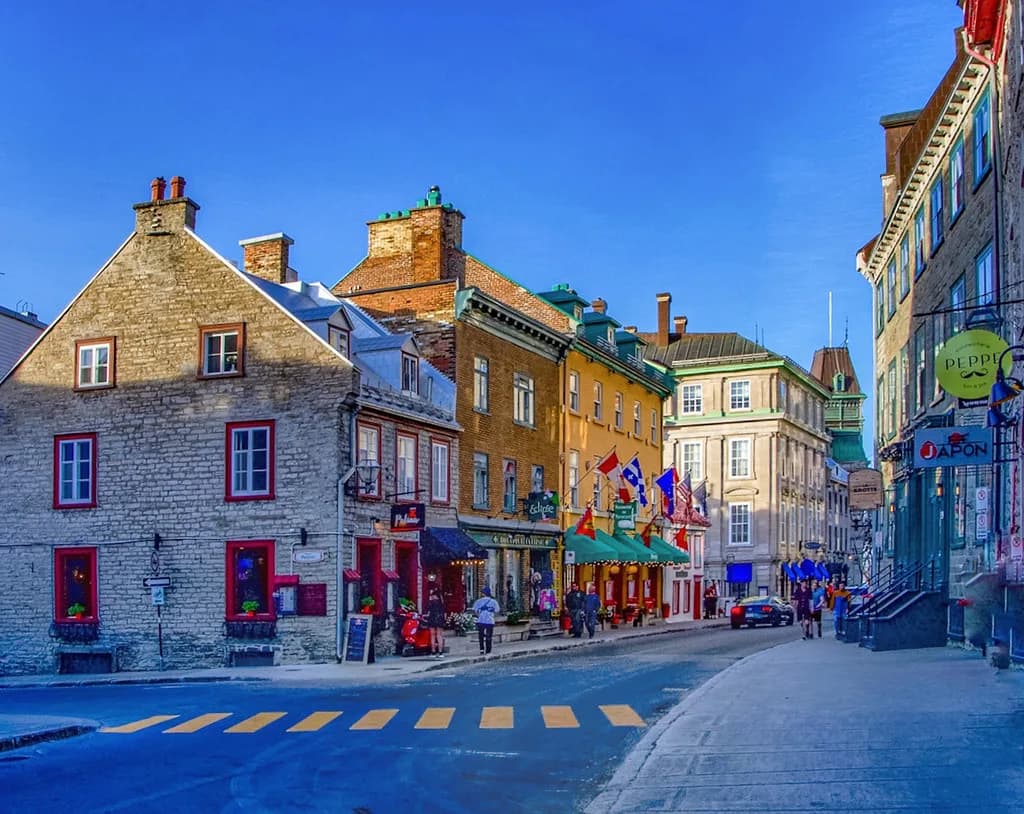
The second organizing idea is the walking surface. Old Quebec, the Plains of Abraham, and the waterfront all involve slopes, stairs, and uneven stone, and winter adds slush, packed snow, and ice to that terrain. Footwear and traction are therefore not an afterthought here; they shape which boots you bring, how much space they take, and what you can leave at home.
Everything below is an editorial outfit suggestion rather than a rule, and seasonal patterns are described as historical tendencies, not predictions for your dates. Check an actual forecast before you fly and again a few days out, because freeze-thaw swings can change what the same trip demands.
How to Read the Forecast Before You Pack
Start with a seasonal reality check rather than a daily number. Winter in Quebec City generally begins in November and can stretch into April or even May, with November and early December bringing chill, some snowfall, and freezing rain before mid-December snowfall becomes frequent. January and February are typically the coldest stretch, when temperatures can fall as low as -25°C (-13°F) or lower once windchill is factored in.
Then check the short-range forecast twice: about a week before departure for wardrobe planning, and again 48 hours out for footwear and accessories decisions. Look at the daily high and low, the wind, and the precipitation type, because rain, sleet, and snow each call for different outer layers. If the forecast shows a warm spike after snowfall, plan for slush rather than fresh powder.
Summer visitors should read the forecast for evening dips instead of daytime heat. Warm-season packing advice for Quebec City centres on lighter clothing such as shirts, t-shirts, and shorts, plus a sweater or layer for cooler evenings, comfortable walking shoes, and sunscreen. That evening layer is the item people most often forget when they pack only for midday temperatures.
Winter Core: What the Cold Season Asks of Your Wardrobe
The cold core of the Quebec City year rewards a wardrobe built around one warm jacket, one pair of serious boots, and enough layers to adjust. A down-filled or similarly insulated parka is the anchor piece, and a waterproof or water-resistant shell matters because sleet, freezing rain, and slush all show up across the season. Resist the urge to over-insulate: if you sweat while walking, the cold bites faster once you slow down.
Snow pants belong in the winter conversation here in a way they might not in a milder city. They are treated as core winter gear alongside a good parka and warm gloves, and they make long stretches outdoors far more comfortable. If you are weighing bulk against warmth, choose a pair that packs down rather than a stiff, overbuilt style you will only wear once.
For a January trip specifically, the packing emphasis shifts toward maximum insulation and wind protection. Use the January guide for what to wear in Quebec City in January when you want month-level detail on layering, head and hand coverage, and how to handle the coldest stretch of the season without overpacking.
November is a different packing problem: chill and wetness without deep freeze. Build the bag around a water-resistant outer layer, room for a mid layer, and boots that can handle wet ground, then use the November guide for what to wear in Quebec City in November to fine-tune the transitional pieces.
Building the Winter Layer System: Base, Mid, and Outer
Treat winter dressing as three working layers rather than a flat list. The base layer, long underwear or a thermal top and bottoms, sits against the skin and manages moisture; wool or merino is a common choice because it stays comfortable under regular clothing. Thermal shirts and underwear are especially worth packing if you plan long outdoor blocks rather than quick hops between heated buildings.
The mid layer is your actual outfit and gives you creative room. Sweaters, turtlenecks, and a fleece or thick cardigan add insulation without adding much weight, and baggy trousers or culottes can sit over a base layer without looking bulky. Plan to wear roughly three to five layers on cold days, since indoor heating means you will be shedding and re-adding pieces all day.
The outer layer does the heavy lifting against wind and precipitation. Choose a warm coat that is waterproof or water-resistant, and consider length: a longer coat that covers your seat helps if you are wearing jeans or leggings instead of snow pants. Packing both a long winter coat and a lighter rain jacket covers most of what a Quebec City winter trip can throw at you.
Group similar activities on the same day so your layers stay consistent. A morning of tobogganing and an afternoon in a museum demand different amounts of insulation, and switching repeatedly means peeling layers on and off for hours. Matching the day's plan to one layer configuration keeps your bag lighter and your day smoother.
If your trip lands around carnival season, the same layer system applies but the stakes for hands and feet go up. The what to wear to Quebec Winter Carnival guide covers event-specific choices for long, cold evenings outdoors without duplicating the general winter build here.
Winter Footwear for Cobblestones, Hills, Stairs, and Slush
Footwear is the highest-value packing decision for a Quebec City winter. The city combines steep hills, sloping roofs that shed snow and ice, cobblestoned streets, and lots of stairs, and maintenance crews cannot eliminate ice from every sidewalk and road. A sturdy, waterproof boot with reliable traction is the baseline; insulated linings help, but avoid boots so warm that your feet sweat and then chill.
Traction is worth treating as a separate item rather than a boot feature you hope for. Ice cleats or crampons that fit over boots are the classic solution for walking the historic district and other neighbourhoods, and boots with built-in traction hardware are an alternative if you would rather not carry a separate pair. Either way, this is the accessory that changes how confidently you walk downhill on ice.
Build in a spare pair of shoes for indoor time. A light pair of sneakers or comfortable flats takes little space and saves your boots, and your feet, during long museum or restaurant stretches. Leave the high heels at home unless you have a specific event: they are optional here, and cobblestones plus winter conditions make them a poor default choice.
For a spring visit, the same traction logic applies with a different wardrobe around it. Freeze-thaw mornings leave ice on shaded paths while afternoons turn slushy, so waterproof boots stay useful; the April guide for what to wear in Quebec City in April handles the transitional clothing decisions while you keep the grip-ready footwear.
Winter Accessories That Change a Day Outside
Accessories decide whether a cold day is tolerable or miserable. Warm hats and insulated gloves or mittens are essential, and a couple of scarves protect your neck and face from wind coming off the Saint Lawrence River. Mittens generally keep fingers warmer than gloves because the fingers share heat, which matters on long outdoor blocks in January and February.
Pack more warm wool socks than you think you need. Wet or sweaty socks accelerate heat loss, and having dry replacements in your bag lets you reset mid-day after a slushy walk. Rotating two pairs across a day is a small packing cost with a large comfort payoff.
On the coldest, windiest days, ski goggles can be a genuine comfort item for exposed walks, particularly along the waterfront or across open ground where windchill does the most damage. Hand and body warmers are a lightweight addition for long evenings outdoors, and they fit easily into gloves and boots.
Rain, Sleet, and Freeze-Thaw Days: Waterproof Pieces Worth Adding
Quebec City winter weather is not uniformly dry snow. Early in the season, sleet, a mix of rain and snow, is a real possibility, and a warm spell after a big snowfall produces slushy roads and sidewalks. A compact travel umbrella and waterproof boots cover most of this, and a water-resistant outer layer protects the mid layers underneath when precipitation turns wet.
Pack a dry bag or a couple of plastic pouches for small electronics. Freezing rain and slush soak through fabric faster than expected, and keeping a phone and camera dry is easier than replacing them. This is a small item with an outsized effect on a wet winter day.
Choose your mid layers with wet weather in mind. Jeans and leggings work under a long coat in dry cold, but a waterproof shell over them makes more sense when the forecast shows rain or freezing rain. That layering flexibility is why a rain jacket earns a place in a winter bag rather than staying home.
Brief Warm Season: Lighter Clothing, Evening Layers, and Sun Protection
Summer packing in Quebec City is genuinely light, with one evening caveat. Plan on shirts, t-shirts, shorts, and a dress for dinners, plus a sweater for night chills, comfortable walking shoes, and sunscreen. The temperature drop after sunset is the reason a warm-weather bag still needs one substantial layer.
Plan outfits rather than bringing a separate look for every day. A three-day warm-season bag can work from two nice shirts, one t-shirt, one sweater, shorts, overalls, a dress, and leggings, with a pair of easy slip-on shoes for walking. Versatile pieces that mix well let you pack less and still handle both sightseeing and dinners.
Do not skip comfortable walking shoes in summer, because the cobblestones and stairs do not disappear when the weather warms. Bring a pair you have already broken in, and consider that Old Quebec's historic streets are uneven underfoot even on dry days. Sunscreen and sunglasses round out the warm-season kit for long walks along the Plains of Abraham and the waterfront.
Shoulder Seasons: Variable Late Autumn and Early Spring Conditions
Late autumn and early spring demand flexibility more than any single garment. November can bring chill, some snowfall, and freezing rain, while April can swing between icy mornings and mild, slushy afternoons. The practical response is a water-resistant outer layer, a mid layer you can remove, and boots that handle wet ground.
Pack gloves and a hat even in shoulder seasons. They weigh very little and rescue a cold morning or a windy waterfront walk, when the sun dips and temperatures fall faster than expected. A light scarf doubles as neck protection and can be tucked away when the afternoon warms up.
A Compact Trip-Length Packing Example You Can Scale
For a one-week winter trip, build around two base-layer sets, three mid layers you can rotate, one parka, one rain shell, one pair of snow pants, and one pair of waterproof boots with traction. Add two hats, two pairs of mittens, three or four pairs of wool socks, two scarves, and a small pack of hand warmers. That combination covers a full week of outdoor blocks and indoor resets without a checked bag.
For a long weekend in summer, cut to one light layer for daytime, one sweater for evenings, two pairs of shorts or a dress, and one pair of comfortable walking shoes. A three-day warm-season list can realistically be two shirts, one t-shirt, a sweater, shorts, overalls, a dress, and leggings. Scaling down is mostly about removing duplicates, not removing categories.
If you are comparing Canadian destinations, the same layering approach translates to mountain climates. The Banff packing list shows how a base, mid, and shell system adapts to colder, wetter mountain conditions, and the Calgary packing list is useful if your trip includes a stopover with variable weather.
What to Leave Behind So Your Bag Stays Walkable
Leave the heavy dress shoes and heels at home unless you have a specific event that demands them. Cobblestones, stairs, and winter conditions punish formal footwear, and you will not want to carry the weight up and down the hills of Old Quebec. One pair of boots and one pair of comfortable shoes covers nearly every situation.
Cut duplicate bulky items rather than small ones. Two parkas, multiple thick sweaters, or several pairs of heavy boots consume space that a second base layer or an extra pair of socks would use better. Weigh your bag after packing the outerwear first, because that is where the bulk concentrates.
Skip full-size toiletries and everyday routine extras for a short trip. Travel-sized versions of your regular items keep the bag light, and most forgotten items are replaceable on arrival. If you are travelling carry-on only, plan to wear your chunkiest sweater and boots on the plane to stretch the space you have.
Before You Go: A Short Pre-Departure Weather and Gear Check
Run a final check about 48 hours before departure. Confirm the forecast high and low, the wind, and the precipitation type, then adjust your outer layer and footwear accordingly. If snow or freezing rain is in the picture, make sure your traction device is in the bag rather than in a drawer at home.
Verify that your boots, gloves, and base layers are dry and undamaged before packing. A small hole in a waterproof boot or a missing mitten turns a manageable cold day into a short one. Check that any battery-powered warmers or lights work, and pack spare batteries if needed.
Finally, confirm the essentials you will carry every day: a compact umbrella or rain shell, a dry pouch for your phone, and a spare pair of socks. These small items handle most of the wet, cold, or slushy surprises that Quebec City weather produces in any season.
Plan Your Visit
Quebec City rewards a bag built around the season and the walking surface. For the long cold core, prioritize an insulated parka, waterproof boots, traction hardware, and a layer system that moves with indoor heating. For the brief warm season, keep things light but keep one evening layer and broken-in walking shoes.
Check the forecast before you leave and again a few days out, then let the numbers, not a generic checklist, make the final call on outerwear and footwear. Scale the packing example to your trip length, leave the formal shoes at home, and your bag will stay walkable through Old Quebec's cobblestones, hills, and stairs.
More packing guides for Canada
- Old Quebec Footwear Guide: Cobblestones, Stairs and Winter
- What to Pack for an Ile d'Orleans Day Trip from Quebec City
- What to Wear in Quebec City in April: Melt-Proof Packing
- What to Wear in Quebec City in January: Deep-Winter Packing Guide
- What to Wear in Quebec City in July: Packing Guide
- What to Wear in Quebec City in November: Packing Guide
- What to Wear in Quebec City in September
- What to Wear to the Quebec Winter Carnival
- Whistler Packing List: A Year-Round Layering Guide
- Niagara Falls Packing List: What to Wear in Every Season
Frequently Asked Questions
What should I pack for a week in Quebec City?
In winter, build around two base-layer sets, three rotating mid layers, one parka, one rain shell, one pair of snow pants, and one pair of waterproof boots with traction, plus hats, mittens, wool socks, scarves, and hand warmers. In summer, cut to a light daytime layer, one sweater for evenings, shorts or a dress, and one pair of broken-in walking shoes.
What should I wear in Quebec City in winter?
Dress in layers: a moisture-managing base layer, a sweater or fleece as a mid layer, and a warm parka or water-resistant coat as the outer layer. Add snow pants for long outdoor blocks, a hat, mittens, a scarf, and warm wool socks. Waterproof boots with good traction matter because the streets and stairs can be icy or slushy.
What should I pack for Quebec City in summer?
Pack lighter clothing such as shirts, t-shirts, and shorts, plus a dress for dinners, a sweater for evening chills, comfortable walking shoes, and sunscreen. Keep an eye on the evening temperature drop, which is why the extra layer matters even on warm days.
Do I need snow pants in Quebec City?
Snow pants are treated as core winter gear in Quebec City, alongside a good parka and warm gloves. They make extended time outdoors far more comfortable, especially on windy days or during long evening events. If you are short on space, choose a pair that packs down rather than a bulky style.
What shoes should I bring to Quebec City?
Bring sturdy, waterproof boots with reliable traction for winter, plus a lighter pair of sneakers or comfortable flats for indoor time. In summer, one pair of broken-in walking shoes is enough, since cobblestones and stairs remain uneven underfoot. Leave high heels at home unless you have a specific event.
Do I need ice cleats in Quebec City?
Traction is one of the most useful winter additions because of the city's steep hills, cobblestones, and stairs, and snow and ice on sidewalks can persist even when crews are working. Ice cleats or crampons that fit over boots are the classic option, and boots with built-in traction hardware are an alternative. Check the forecast and trail conditions before deciding.
Sources
Free: The Ultimate Packing Cheat Sheet
A carry-on capsule wardrobe, the complete packing checklist, layering made simple, and what to wear by season — one printable page you'll use on every trip.
You might also like


Continue reading
More guides you'll find useful