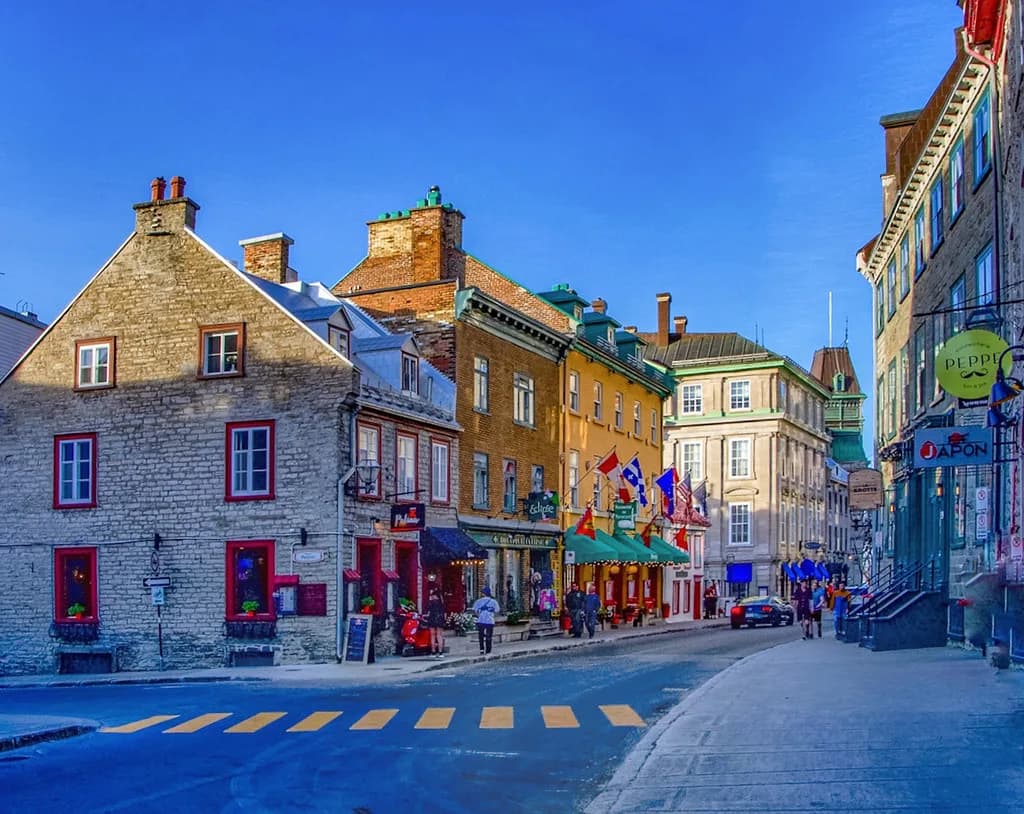
What to Wear in Quebec City in July: Packing Guide
July outfits for Quebec City: breathable layers, a packable rain shell, sun protection, and broken-in shoes for Old Quebec's cobbled hills, stairs, and evenings.
On this page
Quebec City in July: the weather in numbers
Typical July conditions from 30 years of daily weather data, split into early, mid and late month so you can match them to your travel dates.
| Dates | Early Jul (1–10) | Mid Jul (11–20) | Late Jul (21–31) |
|---|---|---|---|
| Afternoon high | 24°C (75°F) | 25°C (76°F) | 24°C (76°F) |
| Night-time low | 15°C (60°F) | 16°C (60°F) | 16°C (60°F) |
| Feels like (afternoon) | 24°C (74°F) | 24°C (76°F) | 24°C (76°F) |
| Range of afternoon highs | 20–29°C | 20–28°C | 21–28°C |
| Days with rain | 5 in 10 days | 5 in 10 days | 4 in 10 days |
| Afternoon humidity | 56% | 57% | 57% |
| Average wind | 10 km/h | 9 km/h | 9 km/h |
| Daylight | 15.5 h | 15.3 h | 15 h |
What this means for your suitcase
- Warm days: T-shirts and light trousers or skirts, plus one light layer.
- Rain on about 5 in 10 days — a waterproof jacket and water-resistant shoes.
- Day-to-day swings: afternoon highs range from about 20°C to 28°C, so pack for both.
Travelling on specific dates? Use our What to Wear Planner for the weather, outfits and a packing list for your exact days in Quebec City.
Averages for 1991-2020, modelled from Copernicus ERA5-Land and ERA5 reanalysis via Open-Meteo open data (CC BY 4.0), adjusted to Quebec City's elevation. Modelled afternoon highs can read 1–2°C below airport weather-station records.
Packing for Quebec City in July hinges on three things working at once: humid warmth, sudden showers, and a lot of walking on sloped, uneven ground. Old Quebec's cobbled lanes, stairways, and the climb between Petit-Champlain and the upper town turn footwear and fabric choice into the decisions that shape your day. Weather here is a seasonal tendency rather than a guarantee, so treat every figure below as a planning baseline and confirm the actual forecast close to departure.
The approach throughout this guide is a small, flexible kit rather than a long checklist: light breathable layers, one packable outer shell, sun protection, and shoes you have already broken in. Air-conditioned interiors, evening breezes off the Saint Lawrence River, and festival crowds on the Plains of Abraham and around Place D'Youville all give you reasons to carry a light extra layer rather than wear it. Suggested items are editorial recommendations, not rules about how residents dress.
What July Weather Usually Feels Like in Quebec City
July in Quebec City typically brings warm, humid daytime conditions and noticeably milder nights. Historical seasonal figures for the city put typical July highs near 25°C (77°F) with lows around 14–15°C (about 57–59°F), which is a comfortable range but a wide one across a single day. Pack so that a warm afternoon and a cool late evening are both covered by the same small set of layers.
The month also tends to bring generous sunshine interrupted by showers that can be brief but intense, so a dry morning does not remove the case for a rain layer. In fact, July in Quebec averages roughly fifteen sunny days, with the remainder punctuated by those short, sharp showers and a light raincoat that stays handy in your bag. Humidity is the part people underestimate: it makes heavy fabrics cling and makes a mid-afternoon stop for shade welcome. Plan your day's clothing around drying speed, not just warmth.
The Three-Layer Formula: Base, Light Mid, and Packable Shell
Think in three removable pieces rather than one heavy outfit. A thin, quick-drying base layer handles the humid midday, a light mid layer such as a shirt, overshirt, or thin knit covers air-conditioned interiors and breezy terraces, and a packable rain shell sits on top when a shower rolls through. Each layer should be able to disappear into a day bag without taking up much room.
The shell is the piece that earns its place in July because it does double duty: it repels a sudden downpour and blocks wind on an exposed riverside walk along Dufferin Terrace. Look for something that folds small enough to live at the bottom of your bag all day. If you would rather leave a dedicated rain jacket at home, a tightly woven overshirt sheds light rain but will not handle a sustained soaking.
For a full-year view of how these layers change with the seasons, the Quebec City packing list covers the same logic applied to colder months, which helps you see why July's kit is deliberately thin.
Fabrics and Colours: Choices That Matter More Than Item Count
Linen, lightweight cotton blends, and quick-dry synthetics move air and release moisture far better than heavy cotton, denim, or thick knits in humid heat. Denim shorts or jeans are fine for a short dinner, but a full day of climbing cobbled streets in dense fabric gets uncomfortable fast. Two breathable bottoms you can rotate will out-perform four heavy ones in the same bag space.
Colour is a practical decision in a historic city full of pale stone and dust. Mid-tones and prints hide street dust and the light sheen that humidity leaves on fabric, while very light colours show every mark. Choose materials that dry overnight in a hotel room, because hand-washed items that stay damp are what usually fill a bag with unwearable clothes.
Footwear for Cobblestones, Stairways, and Long Days
Footwear is the single highest-impact July decision in Quebec City. Old Quebec is built on slopes, with cobbled lanes, the Breakneck Stairs between the upper and lower town, and long boardwalk stretches, so shoes need cushioning and a sole that grips smooth stone when it is wet. Bring pairs you have already worn for full days at home; breaking in new shoes on a cobbled hill is the fastest way to lose an afternoon.
A practical combination is one cushioned walking shoe or trainer for daytime and one slightly smarter but still flat, stable pair for evenings. Sandals are pleasant in the heat but offer little support on uneven stone, so treat them as a backup rather than the default. For a closer look at terrain-specific trade-offs, the Quebec City Old Quebec footwear guide breaks down what works on the inclines and stairs.
Daily Carry: Bag, Water, Sun Protection, and a Spare Layer
A crossbody or small backpack keeps your hands free on stairways and lets you shed a layer without stopping. Include a refillable bottle, because warm, humid days plus uphill walking make hydration a comfort issue, and refilling is easy around the city. Sunglasses and a hat matter on the exposed squares and the Plains of Abraham, where shade can be scarce in the middle of the day.
Pack a spare layer in that bag every morning, even when the sky looks clear. It covers the temperature drop after sunset, the chill of strong air conditioning in museums and restaurants, and the damp feeling after a short shower. Keeping the shell and the light mid layer together in one pocket means you never have to think about it again during the day.
Outfit Combinations for Daytime, Evenings, and Wet Weather
For daytime exploring, pair a breathable top with lightweight trousers or a skirt and your cushioned walking shoes, then add a hat and sunglasses. For an evening out, keep the same base but swap in the smarter flat shoes and add the light mid layer; a terrace dinner by the Saint Lawrence can feel considerably cooler than the afternoon did. For a wet day, wear the quick-dry base with the packable shell over it and choose the shoe with the most grip rather than the lightest sandal.
Festival season brings long stretches of standing outdoors, often in crowded areas, so dress for hours on your feet rather than for a short walk. A light crossbody bag is easier to manage in a crowd than a shoulder bag, and a layer you can tie around your waist or stuff away keeps you flexible as the evening cools. Comfort at hour four matters more than how the outfit photographs at hour one.
A Five-Day Packing Example for One Carry-On
For five days, start with three breathable tops you can rotate and two lightweight bottoms, which gives you enough combinations without overfilling the bag. Add one light mid layer, one packable rain shell, one pair of cushioned walking shoes worn in transit, and one smarter flat pair packed flat along the side, then complete the kit with sleepwear, underwear and socks for the full trip, a hat, sunglasses, and a refillable bottle. This is a compact starting point, not a fixed quantity requirement; adjust it to your own laundry habits and plans.
If your trip stretches longer, the better move is to repeat the same three-top, two-bottom rotation and plan one laundry stop rather than to add more of everything. Extra items mainly add weight you carry up the hills, while a single well-chosen layer covers most of the conditions you will actually meet. Keep the shoes compartment separate so wet or dusty footwear does not touch clean clothes.
What to Leave Behind in July
Leave the heavy knit sweater, the thick denim jacket, and any bulky insulated outerwear at home; they are dead weight in humid heat and rarely worn in July. Skip shoes that have never been worn for a long day, delicate heels for cobblestones, and any clothing that needs ironing after a few hours in a suitcase. Heavy cotton items that stay damp overnight are the classic packing mistake for this month.
Also skip beach-style flip-flops as your main walking shoe and any rain gear heavy enough that you would leave it in the hotel to avoid carrying it. The goal is a bag you can close easily and carry comfortably up a stairway at the end of the day. If you find yourself packing an item only for a hypothetical scenario, it usually will not be used.
Before You Go: Check the Forecast and Adjust the Bag
A few days before departure, check an official forecast for Quebec City and let it adjust the balance of your bag rather than its contents. A stretch of confirmed heat means more breathable tops and less mid layer; a wet pattern means the shell moves from the bottom of the bag to the top. Seasonal averages describe the tendency of the month, not the weather of your specific week, so the forecast is the piece that closes that gap.
Confirm anything operational you plan to rely on, such as opening times or whether a specific outdoor event is running, directly with the organiser or the venue's own channels, since these details change. If a colder month is also on your radar for a future trip, what to wear in Quebec City in November explains how the layering logic shifts as temperatures fall.
Plan Your Visit
Build a July bag around breathable layers, one packable shell, sun protection, and shoes already worn for full days on sloped ground. Rotate three tops and two bottoms for a five-day trip, keep the spare layer in your day bag, and leave heavy denim, thick knits, and unworn shoes behind. The result is a light bag that handles humid afternoons, cool evenings, and a sudden shower without a single decision mid-walk.
More packing guides for Quebec City
Frequently Asked Questions
What should I wear in Quebec City in July?
Plan around a thin, quick-drying base layer, a light mid layer for air-conditioned interiors and evenings, and a packable rain shell for short heavy showers. Add a hat, sunglasses, and broken-in walking shoes with cushioning and grip for Old Quebec's cobbled slopes and stairways.
What temperatures should I expect in Quebec City in July?
July in Quebec City is generally warm and humid by day with milder evenings. Rather than relying on a single figure, check an official forecast shortly before you travel and let it adjust how many warm-weather versus evening layers you pack.
Do I need a rain jacket in Quebec City in July?
A packable rain shell is the most useful outer layer for the month because showers can be brief but intense, and it also blocks wind on exposed riverside walks. It should fold small enough to stay in your day bag, since a dry morning does not rule out an afternoon downpour.
What shoes are best for Old Quebec's cobblestones?
Cushioned walking shoes or trainers you have already worn for full days work best on the uneven stone, stairs, and inclines. Add one flatter, stable pair for evenings, and treat sandals as a backup rather than your main walking shoe.
Should I pack a warm layer for July evenings in Quebec City?
Yes, a light mid layer is worth carrying even on warm days. Nights are milder than the daytime peak but can feel cool near the river, and strong air conditioning in restaurants and museums is another reason to keep a thin layer within reach.
How many outfits do I need for a five-day July trip?
A workable rotation is three breathable tops and two lightweight bottoms, which mix into enough combinations for five days without overfilling a carry-on. Repeat the same rotation and plan one laundry stop for longer trips rather than packing more of everything.
What should I leave at home for a July visit?
Leave heavy knits, thick denim, bulky insulated outerwear, unworn shoes, and clothing that needs ironing. These items add weight for the hills while rarely being used in humid summer heat, and damp heavy cotton is the most common packing regret for this month.
When should I check the weather before my trip?
Look at an official Quebec City forecast a few days before departure and again the day before you fly. Use it to shift the balance of your bag, moving the rain shell to the top during a wet pattern or trimming the mid layer if sustained heat is expected.
Sources
Free: The Ultimate Packing Cheat Sheet
A carry-on capsule wardrobe, the complete packing checklist, layering made simple, and what to wear by season — one printable page you'll use on every trip.
You might also like


Continue reading
More guides you'll find useful