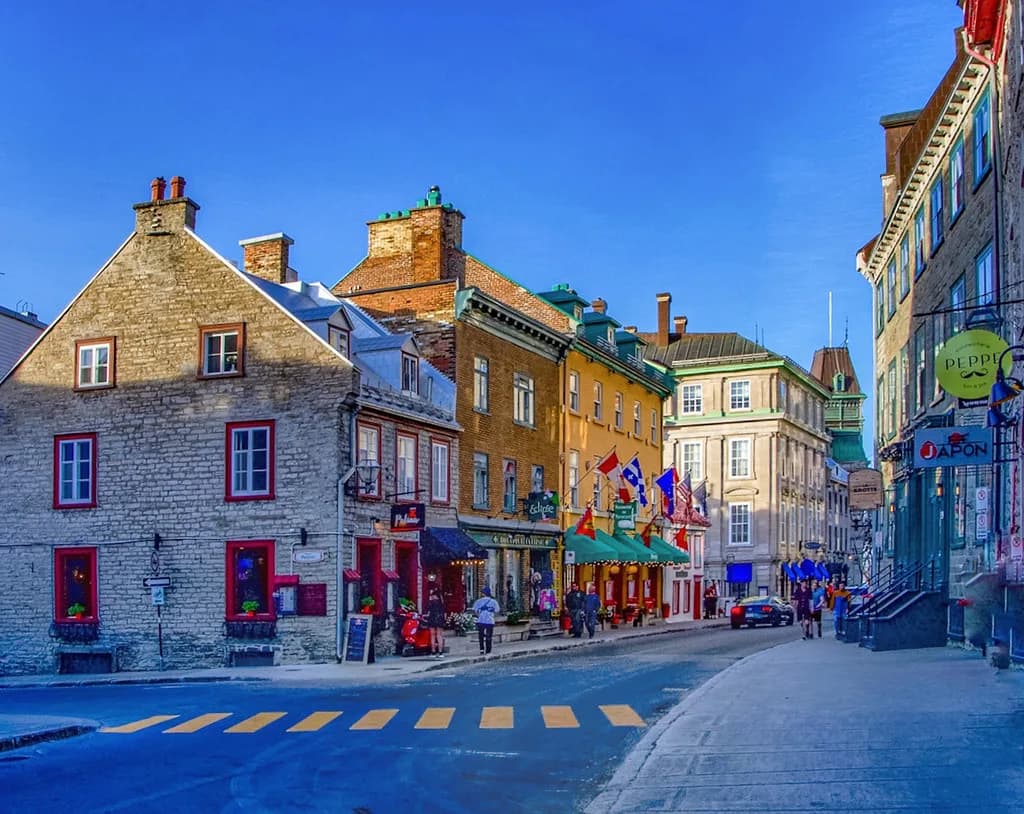
What to Wear in Quebec City in January: Deep-Winter Packing Guide
January packing for Quebec City means expedition-level layering, insulated waterproof boots with traction, and warm mittens. Here is what to wear and why.
On this page
Quebec City in January: the weather in numbers
Typical January conditions from 30 years of daily weather data, split into early, mid and late month so you can match them to your travel dates.
| Dates | Early Jan (1–10) | Mid Jan (11–20) | Late Jan (21–31) |
|---|---|---|---|
| Afternoon high | -6°C (20°F) | -7°C (20°F) | -8°C (18°F) |
| Night-time low | -15°C (6°F) | -16°C (3°F) | -17°C (2°F) |
| Feels like (afternoon) | -12°C (10°F) | -12°C (10°F) | -13°C (8°F) |
| Range of afternoon highs | -17–2°C | -17–3°C | -17–1°C |
| Days with rain | 4 in 10 days | 4 in 10 days | 3 in 10 days |
| Days with snow | 4 in 10 days | 4 in 10 days | 3 in 10 days |
| Afternoon humidity | 56% | 53% | 50% |
| Average wind | 12 km/h | 12 km/h | 12 km/h |
| Daylight | 8.5 h | 8.7 h | 9.1 h |
What this means for your suitcase
- Cold days: a winter coat, hat, gloves and a thermal base layer.
- Snow falls on about 4 in 10 days — waterproof boots with good grip.
- Showers on roughly 4 in 10 days — a packable rain jacket or compact umbrella.
- Day-to-day swings: afternoon highs range from about -17°C to 2°C, so pack for both.
Travelling on specific dates? Use our What to Wear Planner for the weather, outfits and a packing list for your exact days in Quebec City.
Averages for 1991-2020, modelled from Copernicus ERA5-Land and ERA5 reanalysis via Open-Meteo open data (CC BY 4.0), adjusted to Quebec City's elevation. Modelled afternoon highs can read 1–2°C below airport weather-station records.
January is the month when Quebec City stops being a city you stroll through and becomes a city you dress for. Historical city climate data show January average highs near -8°C (18°F) and average lows around -18°C (0°F), but wind off the Saint Lawrence regularly makes exposed skin feel far colder, and sidewalks in Old Quebec can be packed snow one block and polished ice the next.
That combination changes the packing math. You are not choosing between warm and stylish outfits; you are building a system that keeps you dry, blocks wind, and lets you shed a layer in a heated museum or restaurant without overheating. Traction matters as much as warmth, because steep streets and cobblestones under ice are a common reason winter walks get cut short. For the broader seasonal version of this advice, the Quebec City packing list gathers the full year in one place.
Why January Packing in Quebec City Is Different
Most cold-weather destinations give you a few freezing mornings and milder afternoons. Quebec City in January tends to stay below freezing all day, so there is no warm window to wait for and no moment when a light jacket becomes enough. The practical result is that your outer layer needs to work for the entire day outdoors, not just the walk between buildings.
Wind makes the second difference. Because the city sits along the Saint Lawrence River, exposed sections of the upper town, the boardwalk at Dufferin Terrace, and open squares funnel cold air across your face and hands. A jacket that feels fine on a calm street can feel inadequate on a windy terrace, which is why a windproof shell or a tightly woven parka matters more than raw thickness alone.
The third difference is the ground under your feet. Old Quebec's hills, staircases, and cobblestone lanes collect snow that gets packed into ice by foot traffic, so grip and warmth are separate problems to solve. Plan for both before you pack: insulated boots handle the cold, while removable traction cleats or deeply treaded soles handle the slipping.
January Conditions and How to Check the Forecast
Treat published averages as a planning baseline, not a prediction for your travel dates. Environment Canada data cited by the city put January's average high near -8°C (18°F) and average low near -18°C (0°F), which tells you what a typical January day looks like but not what the week of your trip will do.
Before you leave home, check a short-range forecast for the days you will actually be there, and look at the feels-like or wind chill number rather than only the air temperature. A day that reads as merely cold with a strong wind can call for more face and hand protection than a colder calm morning. If the forecast shows a mild swing toward freezing, pack a waterproof layer as well, because thawed slush is wetter and messier than dry cold snow.
Seasonable swings happen, and local winter dressing guidance notes that temperatures can move from about -20°C (-4°F) up to around 0°C (32°F) within a few days. That range is the reason a rigid, single-outfit packing strategy fails. Build layers that can be added or removed so the same wardrobe works whether your week lands on the cold side or the mild side of January.
The Three-Layer System Explained
The layering approach that works in Quebec City separates three jobs: moving moisture away from your skin, trapping warmth, and blocking wind, snow, and wet. Destination Québec cité describes this as a three-layer rule for winter fun, and it is the same logic hikers use in the mountains. Each layer has a distinct role, so substituting one for another usually leaves you either damp or cold.
Your base layer sits against your skin and should wick rather than hold sweat. Your mid layer insulates and is the piece you remove first when you step indoors. Your outer layer is the weather shield, sized roomy enough to fit over the other two without compressing the insulation, because squashed insulation traps less warm air.
A practical test before you pack is to put on all three layers and raise your arms, bend forward, and sit down. If the outer layer pulls tight across your back or restricts your shoulders, it is too small for the system, and you will feel colder, not warmer, once you start moving. Comfortable range of motion in layered clothing is a better indicator than how thick the jacket looks on a hanger.
Base Layers: Merino, Technical Fabrics, and Why Cotton Fails
For January, pack long underwear as well as a base-layer top, because legs lose heat quickly when you are standing still watching outdoor entertainment or waiting for a table. Merino wool and technical synthetics both work; merino tends to resist odour over repeated wear, while synthetics usually dry faster. Two sets is a sensible minimum for a short trip so one can dry while you wear the other.
Cotton is the layer to avoid against your skin. It absorbs moisture and holds it, so sweat from walking uphill in Old Quebec stays cold and damp against your body instead of evaporating. Local winter dressing advice explicitly recommends avoiding cotton for this reason, which is why a cotton T-shirt under a parka is a common and avoidable mistake.
Fit matters here too. Base layers should be snug but not restrictive, with no bunched fabric at the knees or under the arms, because creases create pressure points and cold spots. If you run warm or plan indoor time, a lighter-weight base layer under a heavier mid layer usually manages heat better than a heavy base layer alone.
Mid Layers: Fleece, Wool, and the Indoor Shed
Think of your mid layer as the piece that does the visible work. A wool sweater, a fleece, or a light down or synthetic vest all trap heat, but they behave differently: fleece handles damp and dries quickly, wool insulates well and looks tidier for indoor stops, and a vest adds core warmth without bulk in the arms. On a deep-cold day you may wear two mid layers, a thin fleece plus a sweater.
Destination Québec cité suggests fleece or softshell jackets as mid-layer options and notes the mid layer is the one you remove in warmer conditions or during physical activity. That makes it the layer to choose deliberately, because it is the one you will be taking on and off in cafés, museums, and shops.
Choose a mid layer that looks presentable on its own, since indoor stops often mean shedding the parka and sitting in a restaurant or gallery in whatever is underneath. A half-zip fleece in a neutral colour or a fine-knit wool sweater photographs better than a technical base layer, and it means you do not need to carry a separate outfit for lunch.
Outer Layer: The Parka Decision
The outer layer does the heaviest lifting in January. It should block wind and resist snow, and it should be long enough to cover your hips and upper thighs, because a short jacket leaves a cold gap when you sit or bend. A hood is worth prioritizing even if you plan to wear a hat, since a hood cuts wind across the neck and back of the head that a toque alone does not.
Down versus synthetic is the main trade-off. Down gives more warmth for its weight and packs down small, but it loses insulating power if it gets soaked; synthetic insulation keeps working when damp and dries faster, which suits slushy days and long, active walks. Either works for a city trip as long as the shell fabric blocks wind and the fit leaves room for layers.
Local packing advice stresses that the point is warmth without overheating, because sweating in a parka makes you cold once you stop moving. If you run hot or plan a lot of indoor time, a slightly lighter parka plus a warmer mid layer will regulate better than a single very heavy coat you cannot take off indoors without freezing on the way out. Details on insulation and footwear choices appear in the Quebec City Old Quebec footwear guide.
Head, Face, and Neck Protection
A toque is not optional in any practical sense. Destination Québec cité calls tuques an essential part of any cold-weather outfit and notes they protect your ears, which are among the first areas to feel the cold. Pack at least one, and consider a second in case the first gets damp from snow or sweat.
For the neck and face, a scarf or neck warmer is the most flexible piece you can carry. Destination Québec cité notes that a scarf or neck warmer can be pulled up to cover your nose and mouth, which is exactly what you want on windy riverside stretches or during an evening walk through town. A balaclava is a step further and works well under a hood on the coldest days, though it can be overkill once you step inside.
Face protection is where most visitors under-pack. If your trip coincides with a cold snap, a neck warmer pulled over the nose plus a hood over a toque does more for comfort than an extra sweater, because exposed skin is what makes wind chill feel brutal. Pack a lip balm and a rich moisturizer as well, since both cold air and indoor heating dry skin out.
Hands: Mittens Versus Gloves
This is a warmth-versus-dexterity decision rather than a rule. Mittens keep fingers together and share heat, so they are warmer for the same bulk, which makes them the better choice for long walks, outdoor events, and standing around watching winter activities. Gloves give you the ability to use a phone, camera, or transit card without removing everything, at the cost of warmth.
Destination Québec cité describes insulated gloves as fine for walking around town and waterproof mittens as best for playing in the snow, which points to the sensible compromise for a mixed trip: bring mittens as your default and a thinner liner glove for tasks that need fingers. Liner gloves also add a second layer of warmth when temperatures drop further than expected.
Pack a spare pair. Wet mittens from snowball fights, sledding, or simply brushing snow off a bench lose most of their insulating value, and having a dry pair in your bag prevents a miserable afternoon. Disposable hand warmers are a lightweight backup for the coldest days and fit easily into mittens or pockets.
Footwear, Traction, and Sock Strategy
Boots are the single most consequential item on your list. You want insulated, waterproof winter boots with deep tread, sized to fit a warm sock without cramping your toes, because tight boots restrict circulation and make feet colder. Destination Québec cité notes that winter boots need good grip, insulation, and above all waterproofing, with a removable lining as a bonus for drying overnight.
Traction deserves separate attention. Removable ice cleats that slip over your boots are the flexible option, and they stow in a daypack when you move indoors, where they can scratch floors. Some boots come with built-in grip or studs, which avoids the on-and-off routine but locks you into one pair of footwear for the whole trip.
For socks, bring wool or synthetic blends and skip cotton for the same reason you skip cotton base layers: it holds moisture and gets cold. Wear a thin liner under a thicker wool sock if you blister easily, and pack at least one extra pair per day outdoors, since wet socks from slush can end a walk early. Many winter travellers also change out of boots into a light pair of indoor shoes at the hotel, so packable flats are worth including.
The Old Quebec Terrain Factor
Old Quebec is not flat and it is not smooth. The climb between the upper and lower town involves steep streets and staircases, and the historic lanes are cobblestoned, which means snow gets packed into uneven, polished surfaces rather than clearing cleanly. That combination raises your fall risk and your effort level compared with walking the same distance on flat pavement.
Plan for slower movement. Steps that look short on a map take longer when you are picking your way down an icy slope, and you will want breaks indoors more often. Building extra time into each outing is more useful than trying to walk faster, and it also reduces the chance of working up a sweat that then turns cold.
Traction aids matter most on these surfaces. Walkers who spend a whole day between the upper and lower town often find removable cleats worth the small packing space, and a daypack makes it easy to stow them when you go into a shop or museum. If you plan to visit earlier in the season for comparison, the guide to what to wear in Quebec City in November covers the transition period when ice has not yet taken over the streets.
A Compact Packing Example for Three Days
A three-day January trip can fit in a carry-on if you treat the bulky items as worn rather than packed. Wear your parka, boots, and heaviest sweater on the plane, and pack two base-layer sets, one mid layer, two pairs of warm socks per day, mittens plus liner gloves, a toque, a neck warmer, and one presentable outfit for indoor dining. One pair of trousers plus the ones you wear is usually enough, with long underwear handling the warmth.
For accessories, add sunglasses or ski goggles if wind bothers your eyes, a small daypack, lip balm, moisturizer, and removable traction cleats. Carry a spare pair of socks and mittens in the daypack, because dry extremities are the difference between a long afternoon outside and an early retreat. If you are travelling carry-on only and want a tested packing structure, this carry-on packing guide for winter in Quebec City walks through the same problem.
If your trip overlaps with carnival season events, some of the same clothing decisions apply but with more time standing outdoors. A dedicated look at what to wear to Quebec Winter Carnival can help you plan for evening events and outdoor activities without duplicating the layering advice here.
What to Leave Behind
Leave the cotton base layers and cotton socks at home. They hold moisture and turn cold against your skin, and they take far too long to dry in a hotel room, which makes them worse than useless on a multi-day trip. Denim alone is also a poor choice for long outdoor days, because it stiffens in the cold and offers little insulation once it gets damp.
Skip footwear you cannot walk in on ice. Fashion boots with smooth soles, heels, and thin-soled shoes are liabilities on cobblestones and slopes, and they take up luggage space you need for real winter boots. If you want one smarter pair for indoor dining, keep it light and packable rather than expecting it to work outside.
Do not over-pack formal clothing. Build your wardrobe around warmth and mobility and let a presentable sweater or clean pair of trousers handle nicer meals, rather than packing outfits that only work indoors. Leave behind anything that only works for one photograph and nothing else.
Moving Between Cold Outdoors and Heated Indoors
Indoor-outdoor transitions are where layering earns its keep. Step into a heated museum, restaurant, or shop and your parka becomes a problem within minutes, so the goal is a wardrobe that still looks intentional with the outer layer off. A base layer plus a decent mid layer achieves that; a technical base layer alone does not.
Choose a mid layer you would be comfortable sitting in for an hour, and keep your hat and mittens in your bag rather than in your coat pockets if you plan to check the coat. Unzipping vents or removing a mid layer before you start sweating is easier than drying out afterwards, and it prevents the chilled feeling that follows damp clothing.
If you are planning a mix of outdoor time and indoor attractions, one approach from local winter packing advice is to group similar activities on the same day to reduce constant peeling and re-layering. That is a planning choice rather than a packing one, but it shapes what you carry: a lighter daypack for indoor days, a fuller one with spare socks and mittens for long outdoor stretches.
If You Do Not Own Winter Gear
You do not have to buy a full winter wardrobe for one trip. Destination Québec cité notes that winter coats, boots, and accessories can be rented, with some operators delivering directly to your hotel, and names rental options in both the upper and lower town, including Quatre Natures, Echo Sports Tours, and Tuque & bicycle expériences. Confirm current availability and delivery details directly with the operator before you rely on it.
If you would rather buy, plan time in a shopping centre after arrival and prioritize boots and mittens, which are the hardest items to substitute. A rented parka plus your own base and mid layers is often the most efficient combination, since base layers are small and cheap to buy at home. Verify sizes and what is included in a rental package before you commit, because helmet, cleat, and boot availability varies by operator.
Whichever route you take, do not wait until the morning of an outdoor activity to sort it out. Rental counters and shops get busy during winter event periods, so arranging gear on arrival gives you time to test fit and break in boots before a long walking day.
Plan Your Visit
January in Quebec City rewards preparation more than any other month. Build a three-layer system with a windproof outer layer, pack insulated waterproof boots with real tread and a traction option, protect your head, face, and hands, and keep a dry spare of socks and mittens in your bag. Check a short-range forecast before departure and let the wind chill number, not the air temperature alone, decide how much face protection you bring.
For a wider seasonal reference, the Quebec City packing list covers the city across the year, and the guide to what to wear in Quebec City in April is useful if you are comparing late-winter and early-spring conditions. Both are worth reading before you finalize what goes into the suitcase.
More packing guides for Quebec City
Frequently Asked Questions
What is the three-layer rule for clothes in winter?
The three-layer rule separates your clothing by job. The base layer sits against your skin and moves moisture away, the mid layer traps warmth and is the one you remove indoors, and the outer layer blocks wind, snow, and wet. In Quebec City in January you may add a second mid layer on the coldest days, but the three jobs remain the same.
Do I need special boots for Quebec City in January?
You need insulated, waterproof winter boots with deep tread rather than ordinary fashion boots. Sidewalks and cobblestones in Old Quebec can be packed snow or ice, so grip matters as much as warmth. Removable traction cleats that slip over your boots are a flexible addition, and boots with a removable lining dry faster overnight.
Are mittens better than gloves in Quebec City in January?
Mittens keep your fingers together and share heat, so they are warmer for the same bulk, which makes them better for long outdoor stretches. Gloves give you dexterity for phones, cameras, and cards. A practical compromise is warm mittens as your default plus thin liner gloves for tasks that need fingers, and a spare pair in case the first gets wet.
Can I rent winter clothing in Quebec City?
Yes, winter clothing rental exists in Quebec City, including coats, boots, and accessories, with some operators offering delivery to your hotel. Destination Québec cité lists rental options in the upper and lower town. Availability, sizing, and what is included vary, so contact the operator directly to confirm before your trip.
What should I leave behind for a January trip to Quebec City?
Leave cotton base layers and cotton socks at home, since they hold moisture and get cold. Skip smooth-soled fashion boots and heels that cannot handle ice, and do not over-pack formal clothing. Build your wardrobe around warmth, waterproofing, and mobility instead.
How do I check the forecast before my Quebec City trip?
Check a short-range forecast for your actual travel dates a few days before departure, and pay attention to the feels-like or wind chill value rather than only the air temperature. If the forecast shows a mild swing toward freezing, add a waterproof layer, because slush is wetter and messier than dry cold snow.
Sources
Free: The Ultimate Packing Cheat Sheet
A carry-on capsule wardrobe, the complete packing checklist, layering made simple, and what to wear by season — one printable page you'll use on every trip.
You might also like


Continue reading
More guides you'll find useful